Move Back from Canada to India: CRA, CPP, RRSP 2026
Canada exit checklist: CRA non-residency, CPP/OAS, RRSP/TFSA, banking, school docs, and first 60 days in India.
The 60-second version
Search demand around Canada-to-India moves is broad, but the decision points are not. The work usually comes down to tax exit timing, pension continuity, banking cleanup, school timing, and whether your first landing city is permanent or transitional.
Why the Canada move is its own planning problem
People moving back to India from Canada often treat the move as a generic NRI return. That misses the real friction. Canada creates a distinct mix of tax-exit questions, pension continuity questions, and day-one banking questions that feel manageable in isolation but become noisy together.
The strongest plan is to separate what changes when you become a non-resident of Canada, what can keep paying while you live abroad, and what has to be updated with banks, schools, and service providers before you lose easy local access.
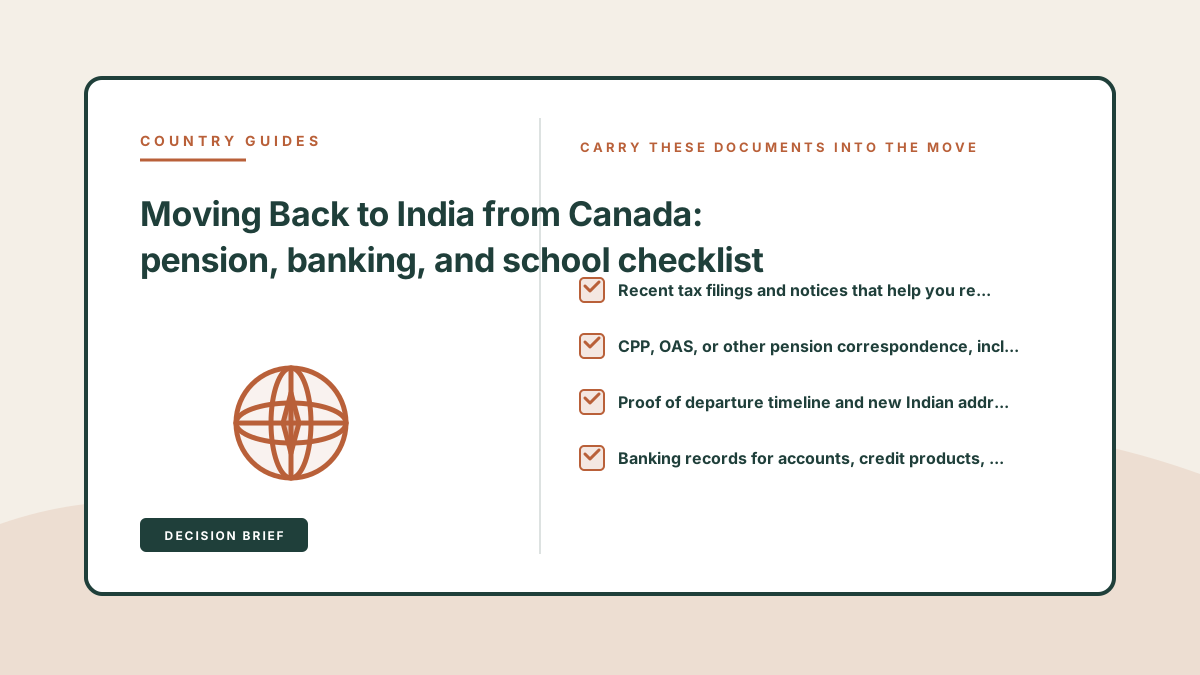
The Canada-to-India Transition
The CRA Departure Tax (Deemed Disposition) Workflow
The five Canada-specific checkpoints worth locking first
| Checkpoint | Question to answer | Why it matters |
|---|---|---|
| Tax exit timing | On what date do you likely become a non-resident of Canada? | That date affects reporting, payer notifications, and your first year of split-country paperwork. |
| CPP and OAS continuity | Which benefits can continue and what withholding applies when you live abroad? | A pension assumption made casually can distort your post-move cash-flow plan. |
| Canadian banking cleanup | Which institutions need your non-resident update before the move? | Banks and payers do not like learning about residency changes late. |
| School timing | Is your family moving between terms, boards, or exam stages? | School friction is easier to manage when the timing is deliberate rather than rushed. |
| Landing city | Is the first city a forever choice or a transition base? | The answer changes rent, school, commute, and family-support tradeoffs. |
Key steps for tax and pension planning
Settle your likely tax-residency date
CRA guidance for emigrants focuses on the date you leave, when your family leaves, and when you become a resident of the country you settle in. You need your own fact pattern clear before filing season catches up.
Ask what continues abroad and what gets withheld
CPP and OAS can continue in some situations, but withholding, residency conditions, and communication steps still matter. Do not treat gross pension estimates as net cash-flow.
Notify payers and banks in the same planning window
When you become a non-resident of Canada, Canadian financial institutions and payers may need updated status information. This is easier before you lose local address access and call-centre patience.
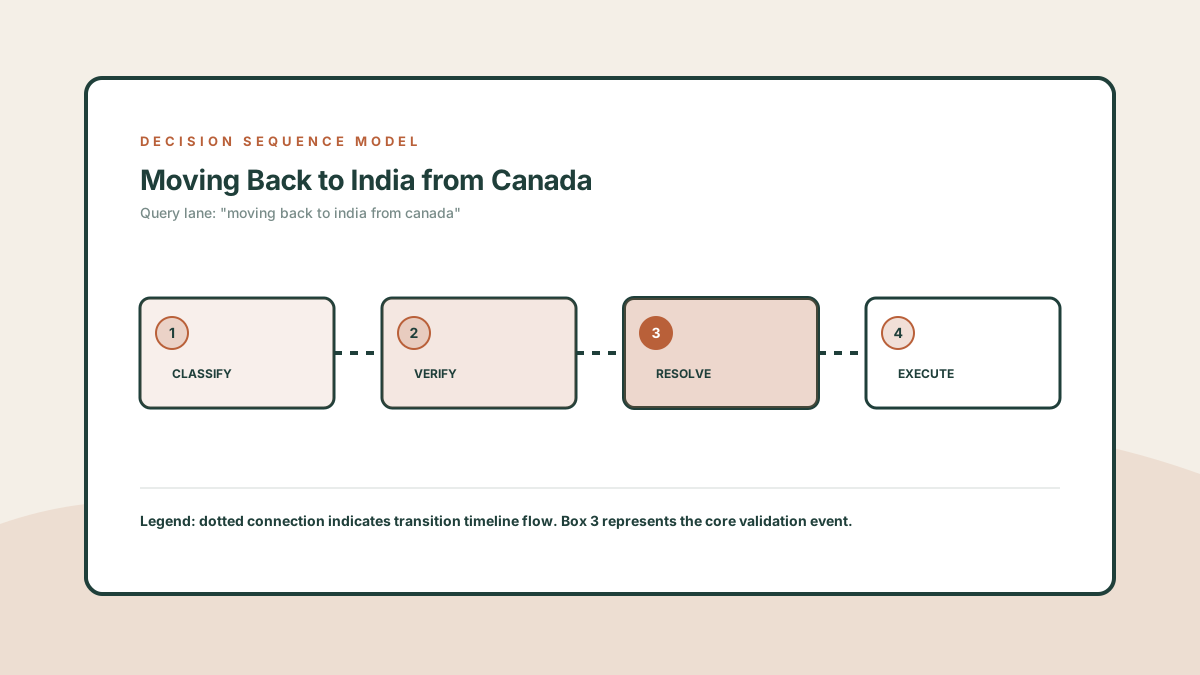
Carry these documents into the move
- Recent tax filings and notices that help you reconstruct your Canada exit year.
- CPP, OAS, or other pension correspondence, including any payment or withholding notices.
- Proof of departure timeline and new Indian address trail where relevant.
- Banking records for accounts, credit products, and auto-pay arrangements that need reclassification or closure.
- Children's transcripts, report cards, board details, and transfer documents if a school move is involved.
Need help with Country Guides?
Share your blocker in one line. Our experts will reply with practical next steps.
The planning mistake to avoid
Do not build the India-side budget from Canadian gross pension assumptions or from an undefined tax-exit date. Use the official Canada-side rules first, then fit the India-side banking and RNOR plan around that reality.
Animated decision map

Interactive checkpoint
Turn this guide into a decision file
0 of 4 checked
Can I receive OAS while living outside Canada?
Yes, in some cases. Canada.ca explains that eligibility depends on how long you resided in Canada after age 18 and, in some cases, whether a social security agreement helps you qualify.
Does moving back to India automatically stop CPP or OAS?
Not automatically, but residency, eligibility, withholding, and notification rules matter. Check the official Service Canada guidance for your exact pension mix.
What is the most important tax question when leaving Canada?
The highest-leverage question is usually the date on which you become a non-resident of Canada for tax purposes, because it shapes the rest of the paperwork and notifications.
Should I lock school admissions before I finalise the India city?
If you have school-age children, yes. The school shortlist often narrows neighbourhoods more effectively than browsing cities in the abstract.
Your country's rules are the starting point, not the finish line.
Tax exits, pension continuity, banking notifications — the India side has its own rules too. Get both sides clear.