The 60-second version
Most people are not asking for a theory of NRE and NRO accounts. They want to know what to operate on day one after landing, which accounts should be redesigned, what can stay open, and how joint holding changes after return.
The right question is not 'Which account is best?'
A cleaner approach is to decide which account handles domestic life immediately, which legacy NRI account needs redesignation and repatriation planning, which account is still useful for transition money, and whether joint holding creates confusion once residency changes.
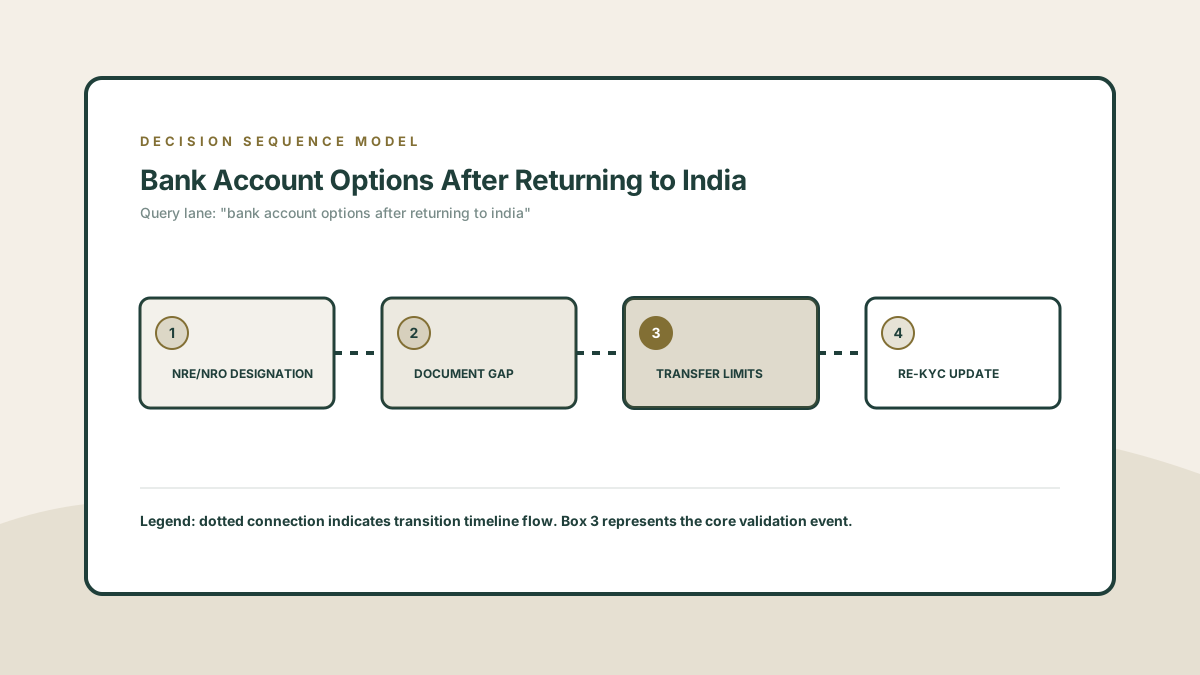
Bank Account Transition Logic
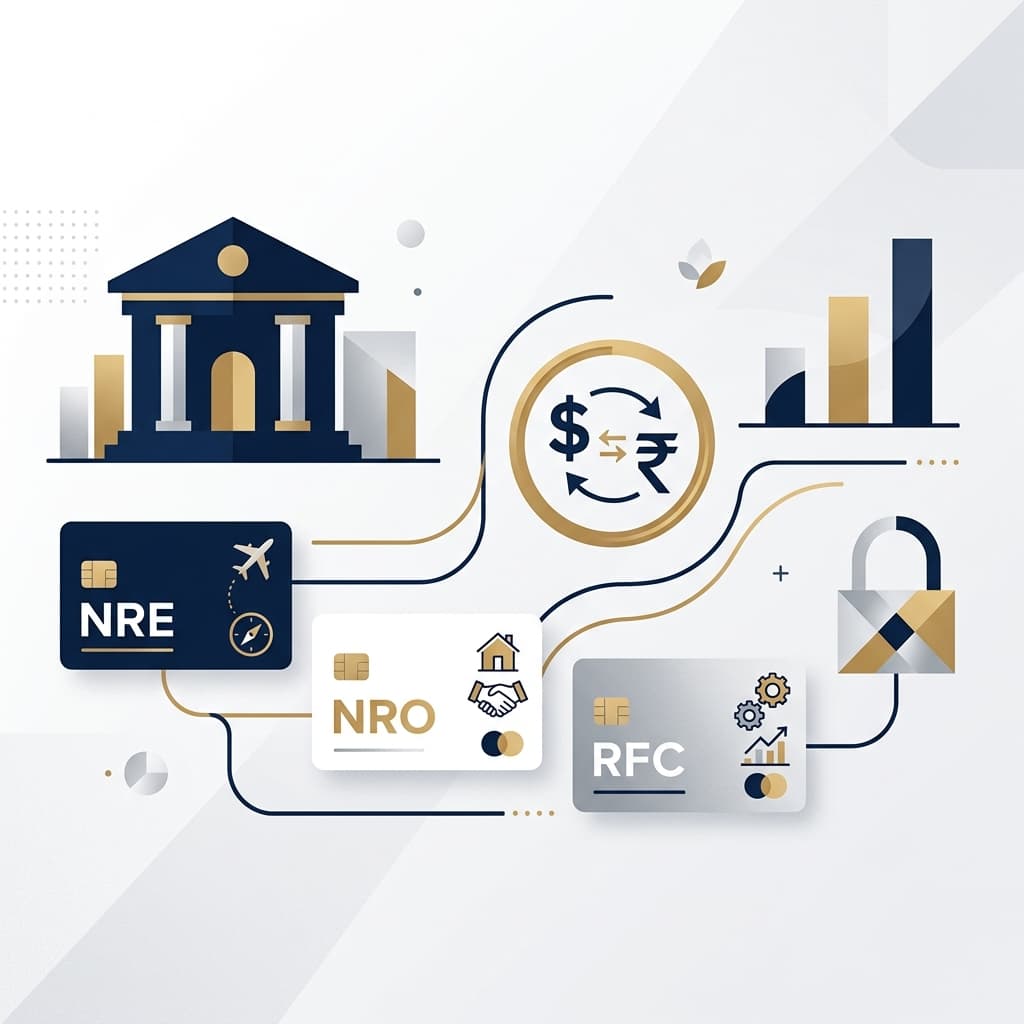
What each account lane is actually good for after return
| Account type | Best use | Joint holding | What to watch |
|---|---|---|---|
| NRE | Useful while you are still genuinely in the NRI phase | RBI FAQ notes resident-relative joint holding on a former-or-survivor basis in specified situations | Once your status changes, do not assume the account can stay untouched forever. |
| NRO | Useful for India-linked income streams and legacy flows tied to India | RBI FAQ allows resident joint holding on a former-or-survivor basis in specified situations | Good for some transition scenarios, but it is not a substitute for a domestic spending plan. |
| Resident savings account | Core domestic operating account after return | Resident accounts can include a close relative abroad under RBI conditions | Do not mix it up with old NRI product assumptions. |
| RFC | Relevant when you have eligible foreign-currency balances to park after return | Depends on bank product structure | Useful only if it matches your actual post-return cash pattern. |
A safer account-conversion sequence
List your live accounts by function, not by bank
Group them into domestic spending, Indian income, foreign income, investments, and family support. This makes redesignation decisions clearer.
Ask which products need redesignation because your status changed
The operational problem is rarely opening accounts. It is leaving old account assumptions unchanged after you are no longer using them for the same residency pattern.
Open or activate the resident operating lane early
School fees, rents, reimbursements, and everyday domestic payments need a stable home quickly.
Only then optimise RFC or foreign-currency handling
Specialised currency decisions matter, but they should not delay the domestic operating stack.
Where joint-account confusion usually starts
People often mix up three separate situations: an NRE account with a resident relative, an NRO account with a resident, and a resident account held with a close relative abroad. RBI guidance treats these situations differently, so do not assume the rule from one lane carries into the others.
Need help with Banking?
Share your blocker in one line. Our experts will reply with practical next steps.
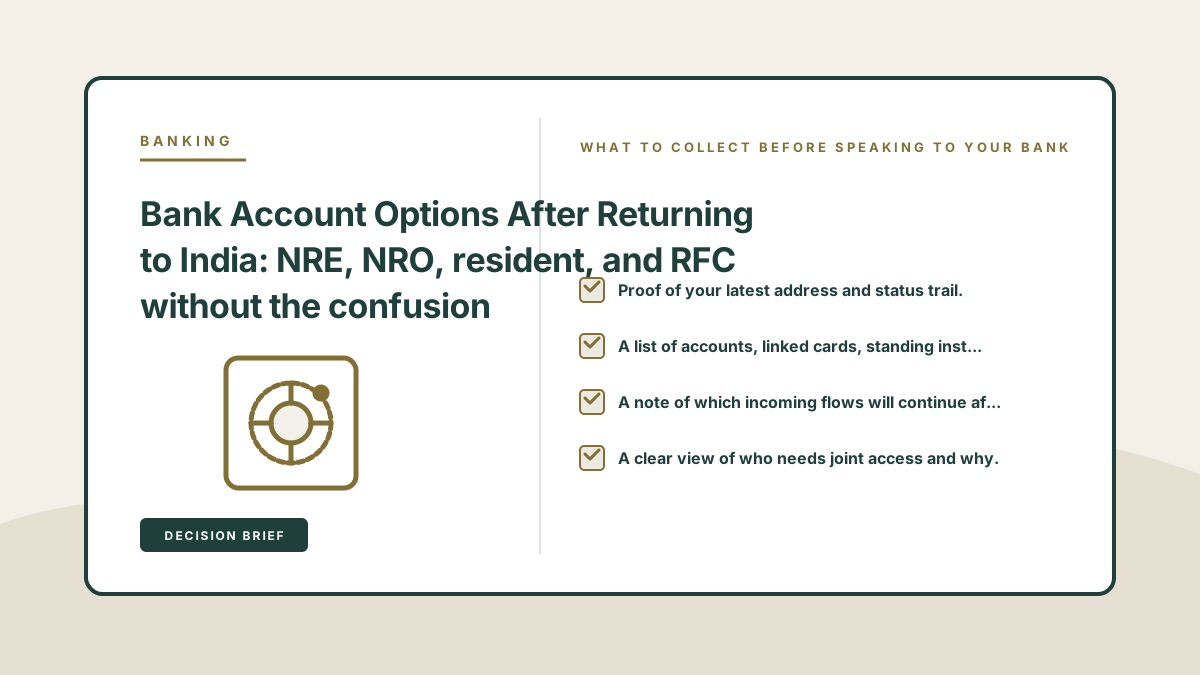
What to collect before speaking to your bank
- Proof of your latest address and status trail.
- A list of accounts, linked cards, standing instructions, and investment links.
- A note of which incoming flows will continue after your move and in which currency.
- A clear view of who needs joint access and why.
Animated decision map

Interactive checkpoint
Turn this guide into a decision file
0 of 4 checked
Do I need only one account after returning to India?
Usually no. Most returning households need at least one domestic operating lane and a separate plan for legacy NRI or foreign-currency flows.
Can a resident relative be on an NRE or NRO account?
RBI guidance addresses joint holding in specific formats, including former-or-survivor structures. Check the exact account type and holder relationship before assuming the same rule applies everywhere.
Is an RFC account necessary for everyone who returns to India?
No. It becomes relevant only when your eligible foreign-currency balances and cash-flow pattern justify it.
What is the first banking move to make after landing?
Stabilise the resident operating lane first, then handle redesignation and specialised foreign-currency decisions with less pressure.
Your NRE account redesignation has a deadline.
Banks don't remind you. You need the right account stack before salary, rent, and EMIs start moving. Get the exact sequence.