Double Taxation After Returning to India: DTAA, Form 67
Avoid double tax after returning by mapping residency, DTAA, foreign tax credit, Form 67, Schedule FSI/TR, and filing order.
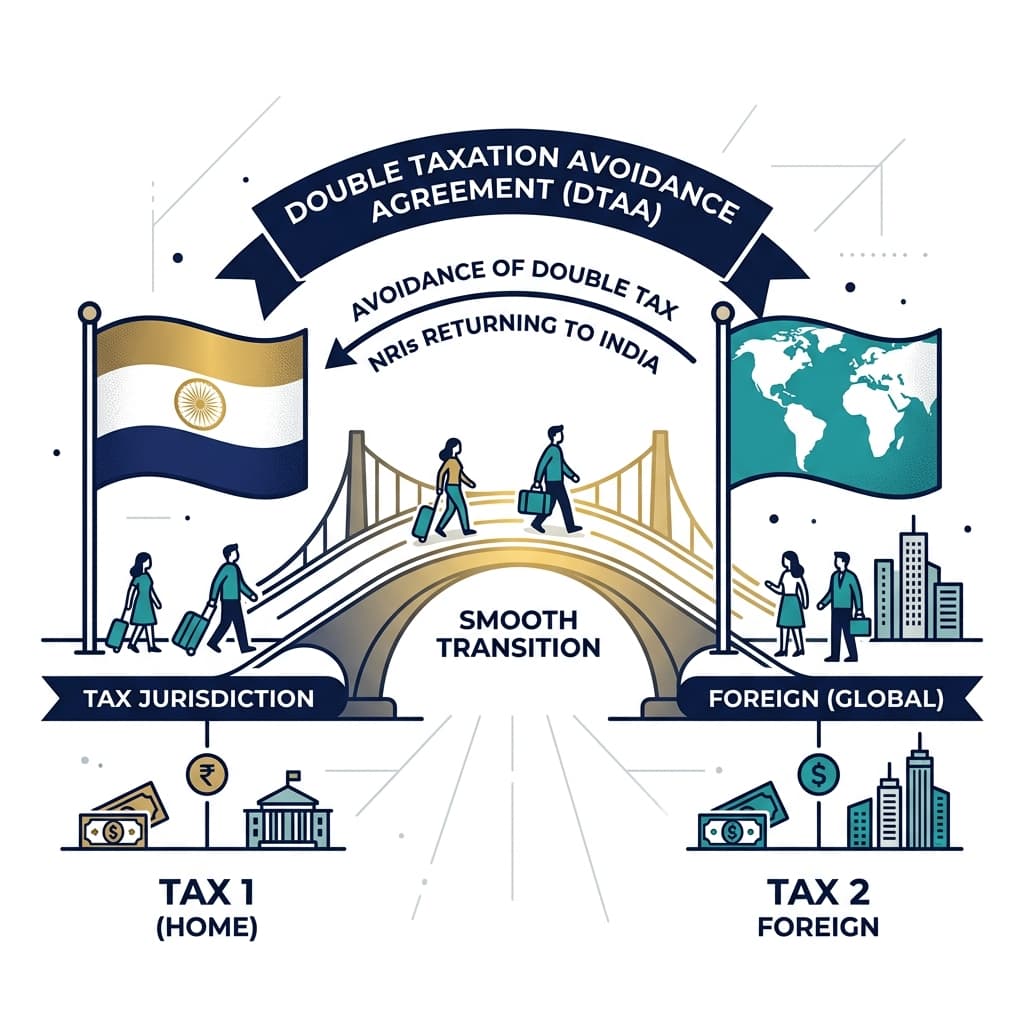
The 60-second version
Returning professionals often say 'I do not want to be taxed twice' without separating the real sub-questions: which country taxes the income first, whether the treaty changes that answer, how foreign tax credit works in India, and why the move year often requires two filing conversations.
Why double taxation becomes the move-year panic point
The move year often produces the same emotional complaint: 'I am filing in two countries, so I must be getting taxed twice.' Sometimes that is true in the raw sense that the same item is visible to two systems. But the practical tax answer depends on a sequence: what your India residential status is for the year, whether the income is taxable in the other country under domestic law or treaty, and whether India then gives treaty or foreign-tax-credit relief.
Classify the move-year overlap correctly so salary, bonus, RSU proceeds, pension, dividends, interest, or capital gains are handled properly.
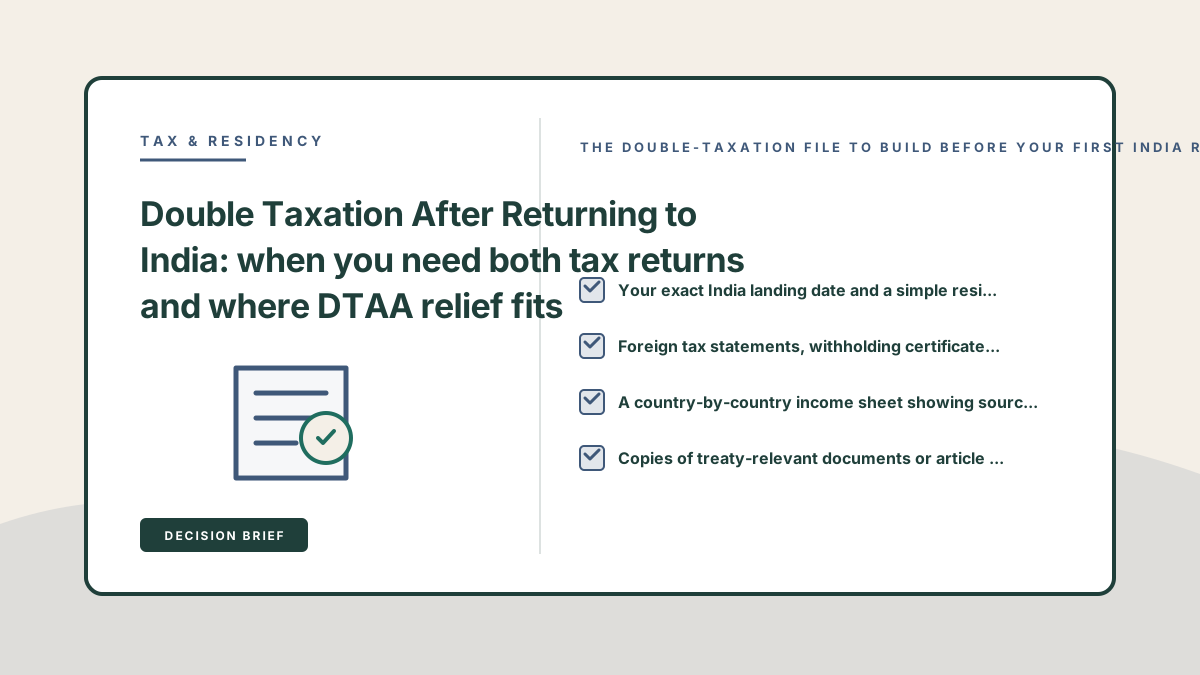
Canadian Pension Portability Map
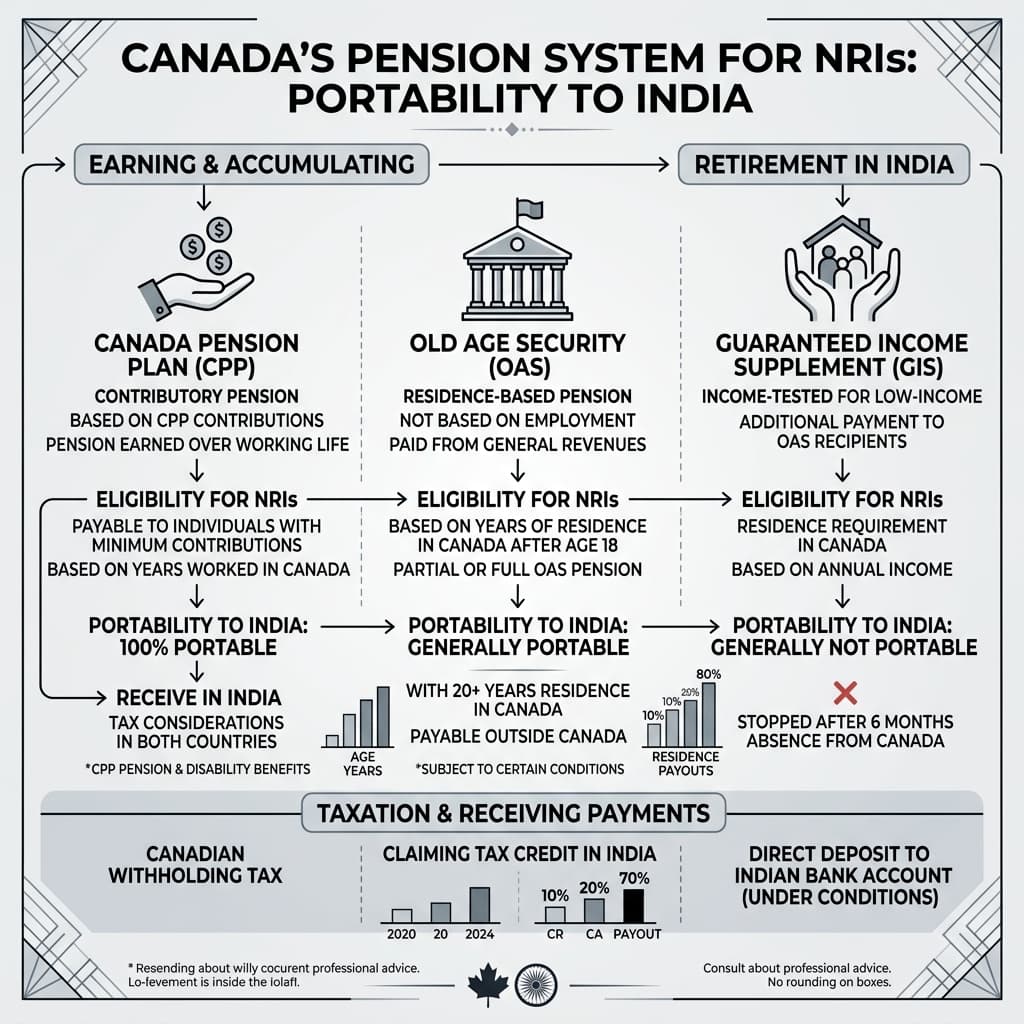
DTAA Relief Mechanism
The four overlap patterns people confuse under the label 'double taxation'
| Pattern | What is actually happening | What usually fixes it | What people get wrong |
|---|---|---|---|
| Same income item is visible in both countries in the move year | The country where the income arises taxes it under its rules, and India may also care depending on your status and treaty position | Residential-status analysis first, then treaty article and foreign-tax-credit review | People jump straight to filing software or random social posts before they classify the income properly |
| The income is taxable abroad and also reportable in India once you are resident | This is the classic foreign-tax-credit case | Rule 128 and Form 67 become important on the India side | People assume paying tax abroad automatically prevents any India compliance work |
| The treaty assigns or limits taxing rights differently from domestic intuition | The DTAA may change who gets first taxing rights or how relief is calculated | Read the relevant treaty article instead of relying only on generic domestic-law summaries | People say 'there is a treaty' without checking which article applies to salary, pension, dividends, or capital gains |
| The income is not actually being taxed twice; it just feels duplicated because both returns need disclosure | Reporting and taxation are not always the same thing | A clean income map and documentation file | People treat every duplicate appearance on two returns as duplicate tax rather than duplicate reporting |
Use this order before you ask 'will I be taxed twice?'
The answer usually gets cleaner once you stop asking one giant question and start sorting the components.
Lock your India residential status for the relevant financial year
Income Tax India makes status year-specific. NR, RNOR, and ROR do not create the same scope of taxation, so this is the first branch, not a later footnote.
Classify the income by type before you classify it by country
Salary, deferred compensation, pension, bank interest, dividends, and capital gains do not all live under the same treaty article or domestic-law logic.
Ask whether the treaty changes the domestic-law answer
The U.S.-India treaty documents matter because the same income item can be handled differently from what either country would suggest if you looked only at local rules.
If India will still tax it, check foreign-tax-credit mechanics immediately
India's relief page and Rule 128 make it clear that foreign-tax-credit relief is procedural as well as conceptual. Form 67 and proof of tax paid are not optional afterthoughts.
Need help with Tax & Residency?
Share your blocker in one line. Our experts will reply with practical next steps.
How the common income types should be framed in the move year
This is a decision frame, not a substitute for country-specific advice on your facts.
| Income type | First question | Why the treaty may matter | Why timing still matters |
|---|---|---|---|
| Salary, bonus, or deferred compensation near the return date | Which country treats the services as performed there and in which year | Employment-income articles and relief articles can change the final net-tax picture | The move year can split one compensation stream across two residence positions |
| Pension or retirement distributions | Whether the treaty gives one country primary taxing rights or requires relief in the residence country | Pension articles are often not identical to salary articles | RNOR versus ROR can materially change how nervous you need to be on the India side |
| Dividends and interest from foreign accounts | Whether the foreign tax withheld can be credited when offered to tax in India | Treaties often cap or coordinate withholding but do not eliminate documentation needs | A resident-year filing without statements and withholding proof is where the pain starts |
| Capital gains on foreign securities or property | Which country gets to tax the gain and whether India then gives relief | Capital-gains treatment can differ sharply from passive-income treatment | People often sell after moving without realizing the resident-year consequence changed |
The double-taxation file to build before your first India return season
- Your exact India landing date and a simple residency timeline for the relevant Indian financial year.
- Foreign tax statements, withholding certificates, broker statements, payroll records, and pension letters for every income stream that still touches the move year.
- A country-by-country income sheet showing source, gross amount, tax withheld, currency, and whether the income has also appeared in India-side records.
- Copies of treaty-relevant documents or article references you actually relied on, especially if you are taking a position on pensions, passive income, or capital gains.
- Form 67 support documents and proof of payment or deduction of foreign tax where India foreign-tax-credit relief will be claimed.
- A memo for yourself explaining which items are reporting-only overlaps versus true tax-credit items so the same confusion does not recur every filing cycle.
The expensive mistake
Using the phrase 'double taxation' before classifying the income is how people overpay, under-document, or miss relief they were entitled to claim. The phrase is not the analysis.
Need help with Tax & Residency?
Share your blocker in one line. Our experts will reply with practical next steps.
Why the India-side relief process matters as much as the treaty theory
A lot of bad advice stops at 'the treaty will save you.' That is incomplete. India's own relief page makes the compliance side explicit: treaty relief and foreign-tax-credit relief are tied to domestic provisions, and Form 67 plus supporting proof sit inside the process. In practice, documentation quality often determines whether the move-year filing stays calm or turns adversarial.
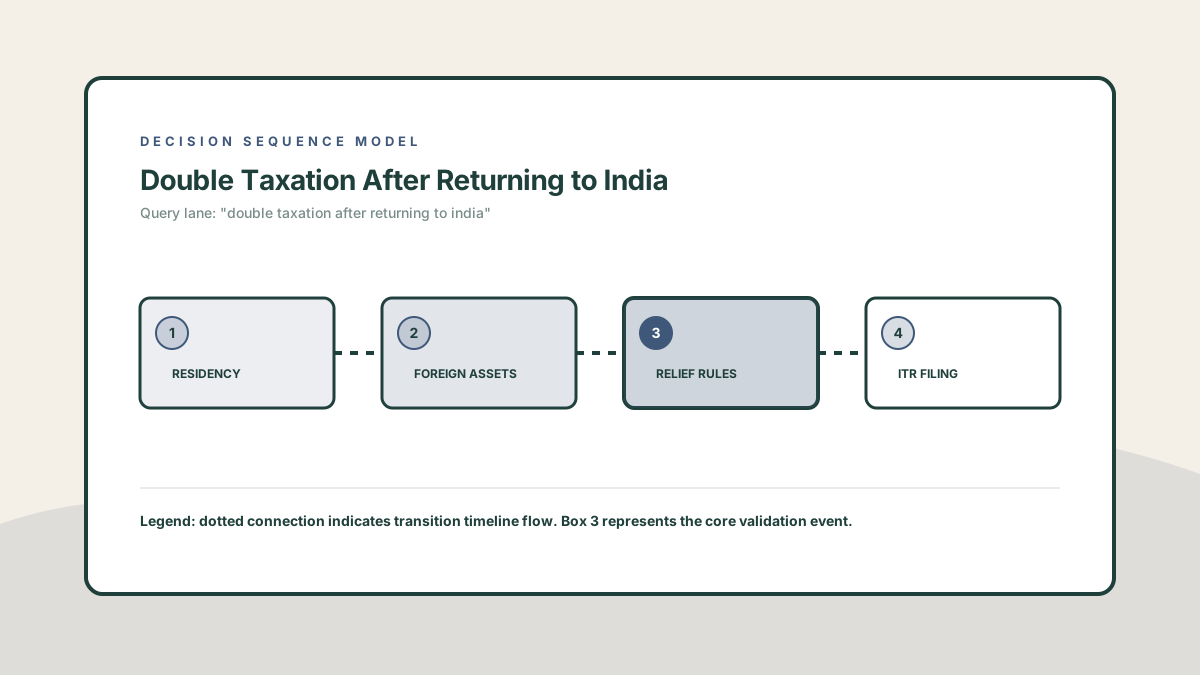
The page should therefore leave you with a stricter mental model. First identify whether India taxes the item in your status lane. Then ask whether the treaty changes or coordinates that result. Then ask whether foreign-tax-credit relief is claimable and documented. If you skip that order, the phrase 'double taxation' becomes a source of panic instead of a solvable filing job.
Animated decision map

Need help with Tax & Residency?
Share your blocker in one line. Our experts will reply with practical next steps.
Interactive checkpoint
Turn this guide into a decision file
0 of 4 checked
Does filing in two countries automatically mean I am being taxed twice?
No. Two returns can reflect the same income item for reporting reasons even when treaty relief or foreign-tax-credit relief prevents the same economic income from being fully taxed twice.
What is the first thing I should check in a move-year double-taxation question?
Your India residential status for the relevant financial year. That determines the first scope-of-income answer before you even reach the treaty or foreign-tax-credit step.
Where does DTAA relief end and foreign tax credit begin?
The treaty tells you how the two countries coordinate taxing rights and relief. India's domestic relief and Rule 128 mechanics then matter when you actually claim foreign-tax-credit relief in an Indian return.
Why do people specifically mention Form 67 in these cases?
Because India requires foreign-tax-credit claims to be backed procedurally as well as conceptually. If you are claiming relief for foreign tax paid, Form 67 and the supporting evidence become part of the workflow.
Your tax year is already running.
RNOR status, exit timing, and DTAA benefits all depend on decisions you make before you land. Don't guess.