RRSP After India Move: Keep vs Cash Decision
Keep RRSP invested or withdraw after Canada exit: CRA withhold reality, RNOR timing, Schedule FA — cash only after net model.
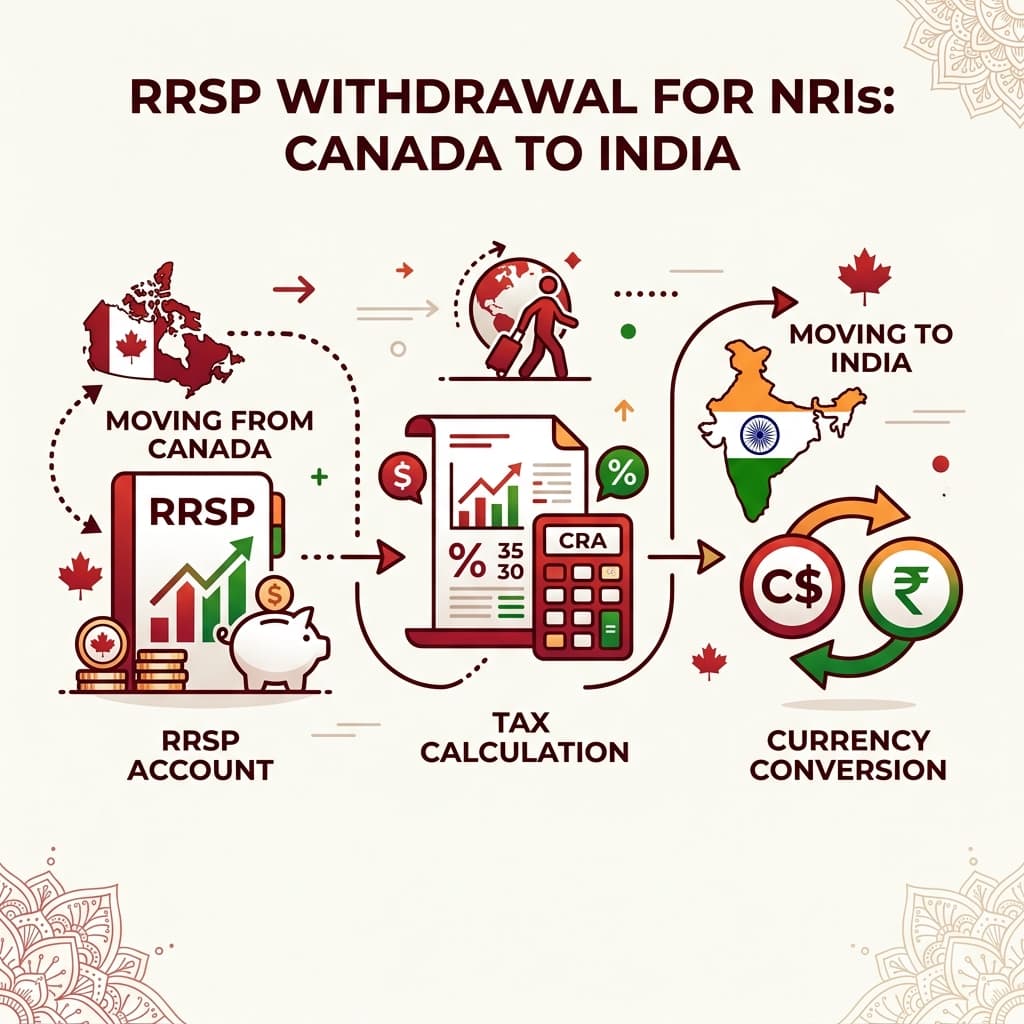
The 60-second version
Most RRSP mistakes happen because people solve the account before they solve residency. The high-value questions are whether you will still be a Canadian resident when you withdraw, whether you will be a non-resident receiving Canadian-source RRSP income, whether India-side tax scope has changed yet, and whether a specialist transfer path fits better than a rushed cash-out.
Why RRSP deserves its own page inside the Canada return cluster
The broad Canada move guide should own the move itself. The CPP, OAS, and GIS page should own pension continuity. RRSP needs a separate page because the decision is not simply whether you like Canada or India better. It is a timing problem involving Canadian residency, non-resident withholding, India-side tax scope, and whether a withdrawal is even the right move now.
That is why the best RRSP question is usually not 'How do I move it to India?' It is 'What tax and residency lane will I be in on the date I touch it?' Solve that first and the rest of the decision tree gets much clearer.
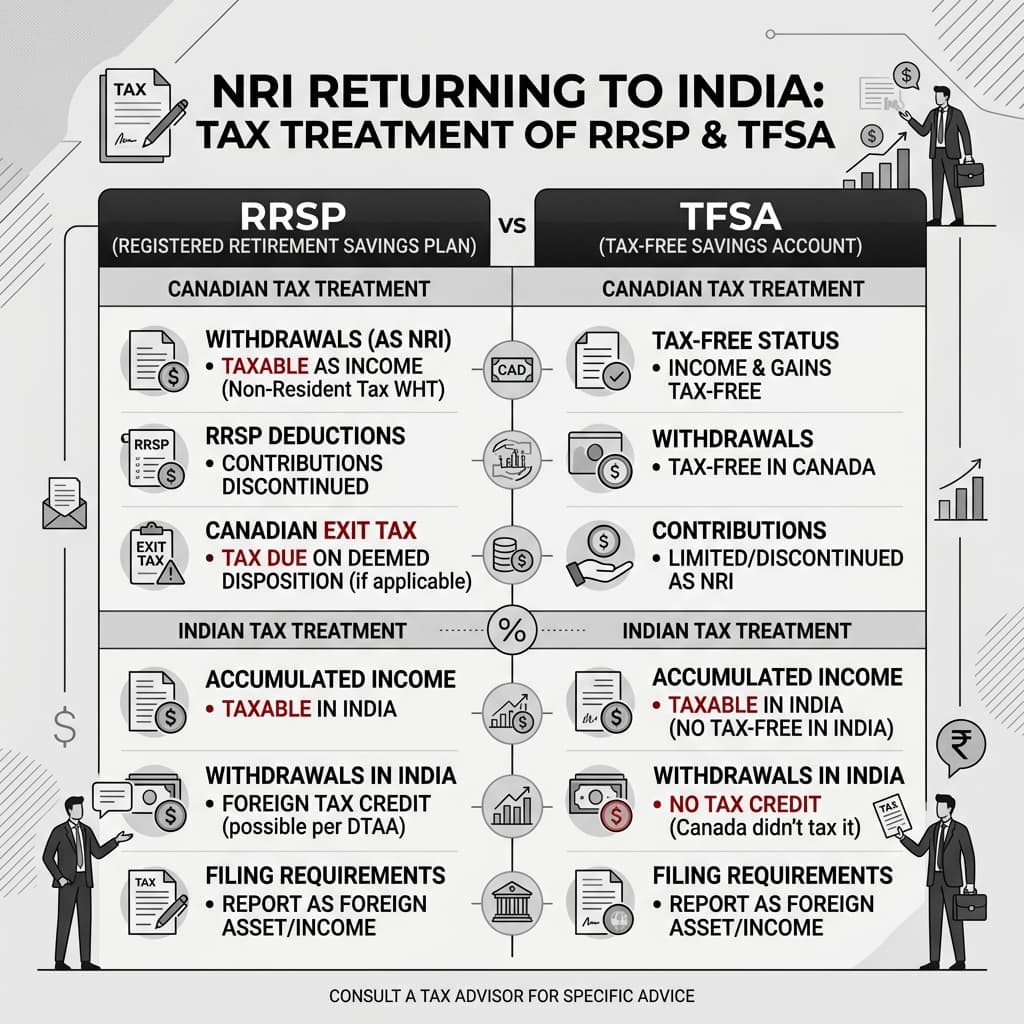
RRSP & TFSA India Tax Treatment
RRSP Withdrawal Tax Logic: Resident vs Non-Resident
Use this RRSP map before you cash out anything
One wrong assumption about residency or withholding can turn a neat-looking withdrawal into a messy two-country tax year.
| Lane | When it tends to fit | Main tax or admin question | What usually goes wrong |
|---|---|---|---|
| Leave the RRSP invested for now | When the move is live but the tax timing and India-side cash need are still unclear. | Will staying invested buy you time without forcing a rushed Canadian or Indian tax answer? | People withdraw just to feel decisive even though the operating need in India is still small. |
| Withdraw while still a Canadian resident | When you intentionally want the withdrawal to land in your Canada resident return year. | How will the resident withholding interact with your final Canadian return and your broader departure-year income? | People confuse withholding with final tax cost and assume the amount withheld tells the whole story. |
| Withdraw after you become a non-resident of Canada | When the account can stay in place and the post-departure lane is cleaner than the departure year. | Canada.ca says non-resident withholding is 25% unless reduced by treaty, and your payer needs the right country-of-residence information. | People leave without telling the payer they are non-resident, then the paperwork or withholding setup gets fixed late. |
| Use a direct transfer path into another eligible registered plan or fund | When your situation fits a specialist transfer rather than a taxable cash withdrawal. | T4058 says some direct transfers can happen without non-resident tax withheld, but the transfer must be direct and the authorization has to be in place first. | People assume every transfer is just a workaround for tax when it is actually a narrow administrative path with eligibility rules. |
Key steps before you touch the RRSP
Fix the Canada residency date before you model the withdrawal
CRA's emigrants guidance makes the departure date and non-resident status central. Your RRSP decision should follow that date, not guess ahead of it.
Decide whether the money is actually needed in India now
If the account is not funding an immediate operating need, leaving it alone for a while may be better than forcing a move-year tax event.
Ask your institution which lane they will process you under
Before you withdraw, confirm whether they still treat you as a resident, what slip you should expect, and what they need once you are non-resident of Canada.
Check whether section 217 is even relevant to your case
Canada says some non-residents receiving eligible Canadian-source income may elect under section 217. That can be useful, but it is a review step after identifying the right lane, not the first decision itself.
Only then place the India-side RNOR or ROR analysis on top
India's residential-status rules determine when foreign income enters the India tax frame in full. The RRSP decision should be tested against that timeline rather than handled in isolation.
Need help with Country Guides?
Share your blocker in one line. Our experts will reply with practical next steps.
Why RNOR timing still matters on the India side
India's official residential-status guidance makes the big distinction clear: RNOR and ROR do not have the same tax scope. That does not mean every returning Canadian should automatically withdraw during RNOR. It means the India-side analysis cannot be skipped, because the same RRSP withdrawal can look very different depending on when it lands relative to your India residency position.
If Canadian tax is withheld and the corresponding income is also offered to tax in India, Rule 128 foreign-tax-credit mechanics may matter. In practice, that makes paperwork discipline important: keep the Canadian tax slip, confirm what income was actually recognized, and do not assume your accountant can reconstruct a messy cross-border file from memory later.
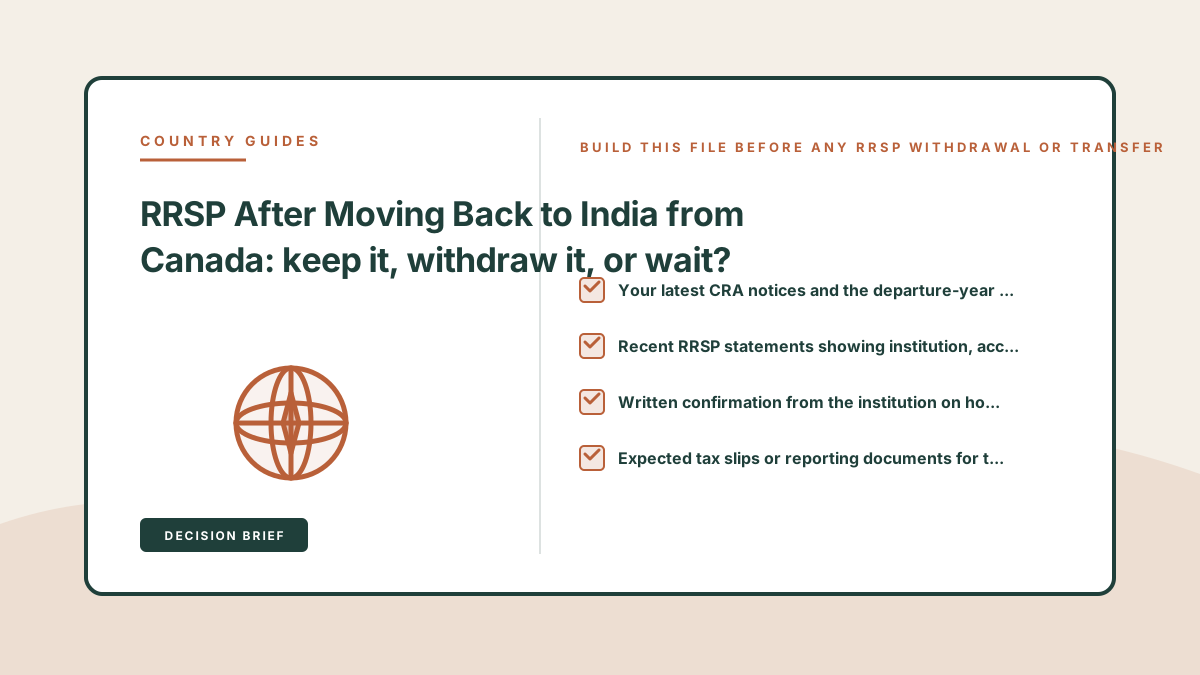
Build this file before any RRSP withdrawal or transfer
- Your latest CRA notices and the departure-year timeline you are relying on for residency.
- Recent RRSP statements showing institution, account type, and whether any portion is locked in.
- Written confirmation from the institution on how non-resident withholding or direct transfer handling will work in your case.
- Expected tax slips or reporting documents for the year of withdrawal, such as the resident or non-resident reporting slip the payer says you should receive.
- Your India-side arrival date plan and the residency analysis you are using for RNOR or resident status.
- A note on what the money is for in India: living costs, housing buffer, school fees, debt cleanup, or simply 'no urgent use'.
Do not turn the RRSP into a move-cleanup ritual
A rushed RRSP withdrawal often solves the emotional need to simplify, not the financial need to optimize. If the move-year tax picture, non-resident withholding setup, or India residency position is still uncertain, the default should be to slow down before creating a taxable event.
Need help with Country Guides?
Share your blocker in one line. Our experts will reply with practical next steps.
The practical questions worth asking before you act
Start with the institution: if the RRSP is locked in, Canada.ca says you generally will not be allowed to withdraw it, so your real question may be portability or future payout handling rather than a simple cash-out. If the account is not locked in, the choice becomes one of timing and reporting, not access alone.
Then ask the tax question in plain language. Are you trying to minimize move-year complexity, spread taxable events more deliberately, preserve flexibility until India cash needs are clearer, or trigger a withdrawal because your Canada resident tax year still gives you the better answer? Those are different jobs. The biggest mistake is forcing one action to solve all of them at once.
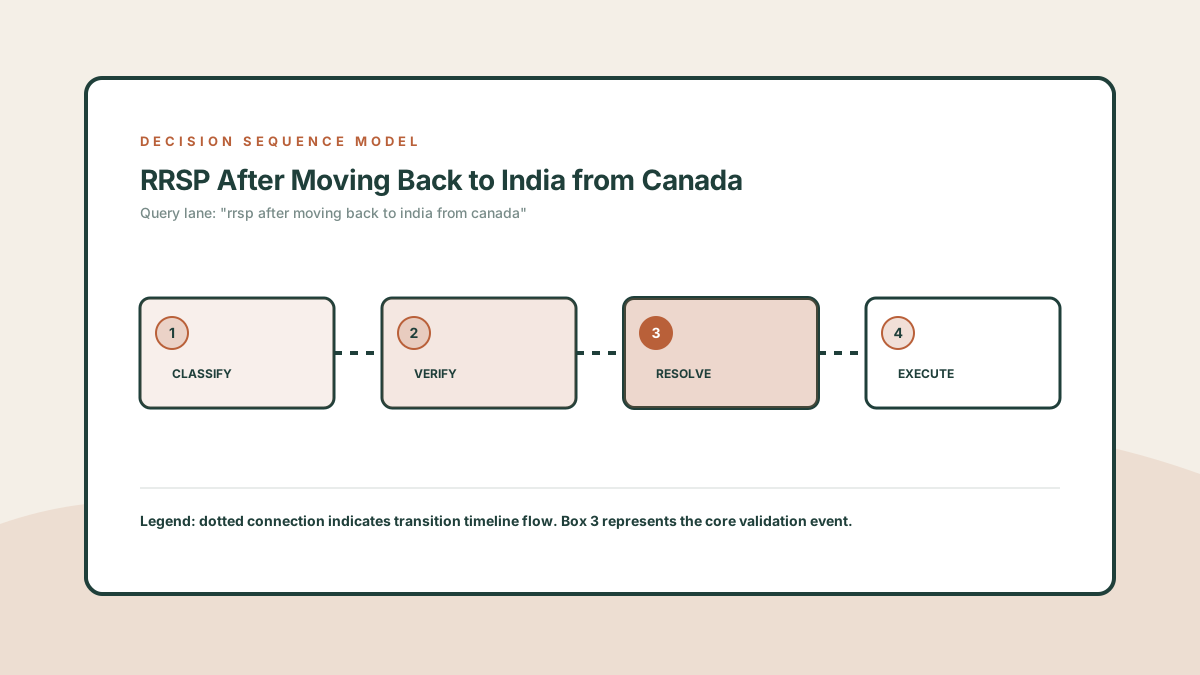
Animated decision map

Need help with Country Guides?
Share your blocker in one line. Our experts will reply with practical next steps.
Interactive checkpoint
Turn this guide into a decision file
0 of 4 checked
Can I keep my RRSP after moving from Canada to India?
Generally yes. The stronger question is whether keeping it in place gives you more flexibility than forcing a move-year withdrawal. Many people do not need to touch the RRSP on the same day they change countries.
What withholding applies if I withdraw from an RRSP after becoming a non-resident of Canada?
Canada.ca says non-resident withholding on RRSP withdrawals is 25% unless reduced by treaty. The payer also needs the correct non-resident and country-of-residence information for the right treatment to be applied.
Does section 217 matter for RRSP withdrawals after I leave Canada?
It can matter in some cases because Canada allows certain non-residents and part-year residents with eligible Canadian-source income to elect under section 217. It is worth checking after you know which income lane you are in, rather than using it as a shortcut around the basic residency analysis.
Should I withdraw my RRSP during RNOR in India?
RNOR can be relevant, but it is not an automatic yes. The correct answer depends on the Canadian residency lane, how the withdrawal is taxed or withheld in Canada, whether the income is offered to tax in India, and whether the cash is actually needed now.
Can I always cash out a locked-in RRSP before leaving Canada?
Not usually. Canada.ca's RRSP withdrawal guidance says locked-in RRSPs generally cannot be withdrawn, so first confirm whether your account is locked in before you build a plan around a lump-sum withdrawal.
Your country's rules are the starting point, not the finish line.
Tax exits, pension continuity, banking notifications — the India side has its own rules too. Get both sides clear.