Moving Back to India from UK: ISA, Pension, Tax Exit
UK-to-India return for NRIs: split-year tax, ISA freeze, State Pension abroad, NI stop, schools, and 60-day landing plan.

The 60-second version
The UK-to-India move looks generic from far away, but the real work sits inside a small set of systems: the date you cease UK tax residence, whether split-year treatment applies, what happens to ISAs, how pensions and National Insurance should be handled, and whether you are keeping a UK property or closing that chapter cleanly.
Why the UK move is its own planning problem
People moving back to India from the UK often assume the hard part is emotional: leaving London or another familiar base, winding down a lease, and deciding where to land in India. In practice, the move becomes expensive when the UK systems are handled casually. Tax residence, split-year treatment, ISA contribution rules, pension taxation, National Insurance top-up decisions, and any UK property you keep can all reopen the plan after you thought the move was already closed.
That is why the strongest UK-to-India plan starts with dates and wrappers, not with broad lifestyle talk. You need to know when HMRC should be told you are leaving, whether split-year treatment is likely to apply, which accounts stop accepting new money once you are non-UK resident, and whether your first India city is permanent or just the base from which schools, housing, and family routines will be validated.
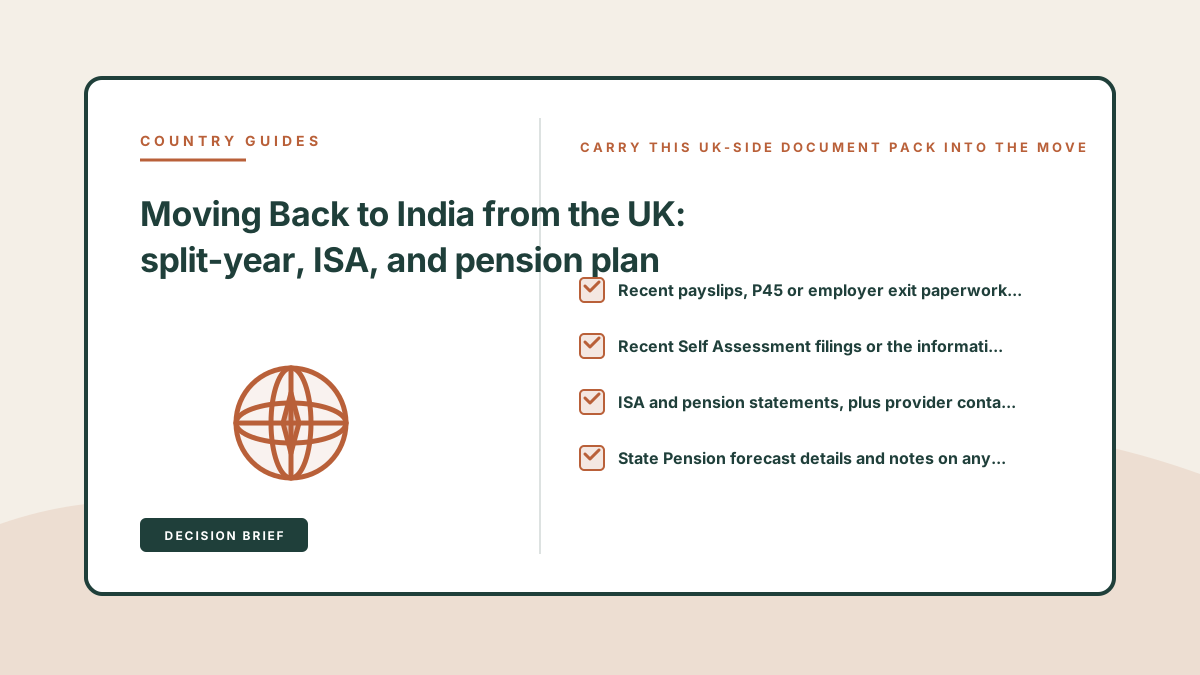
The UK-to-India Transition

HMRC Split-Year Treatment Logic
The five UK checkpoints that change the rest of the move
| Checkpoint | Question to answer | Why it matters |
|---|---|---|
| Departure tax position | On what date do you likely become non-UK resident, and does split-year treatment apply? | That date shapes refunds, ongoing filing, pension tax expectations, and how much of the tax year is treated as UK versus overseas. |
| ISA status | Which ISAs are you keeping, and have you stopped treating them like active contribution accounts after non-residence? | You can usually keep existing ISAs, but contribution rules change once you are no longer UK resident. |
| Pensions and NI record | Which workplace or personal pensions continue, and do National Insurance top-ups still make sense under the rules in force after 6 April 2026? | The pension cash-flow plan and the NI top-up decision should be made together, not in separate years. |
| UK property and rental income | Are you selling, leaving empty, or becoming a non-resident landlord? | Keeping a UK property creates an ongoing tax and admin lane even after the physical move is over. |
| Family landing sequence | Is the first India city permanent, or is it a practical base for schools, parents, and settling-in? | This answer affects rent, school timing, and whether the move needs temporary assumptions rather than permanent commitments. |
Key steps before you treat the UK chapter as finished
The common mistake is notifying everyone at random. Use a date-led sequence instead.
Fix your likely departure tax story first
GOV.UK expects HMRC to be told when you leave to live abroad, often through form P85 if you do not usually file Self Assessment, or through the residence section and SA109 if you do. Before filing anything, settle the fact pattern: departure date, work pattern, and whether split-year treatment is likely to apply.
Audit every wrapper that behaves differently once you are non-UK resident
ISAs, pensions, brokerage accounts, bank accounts, and payroll arrangements do not all change in the same way. Build one list of what stays open, what stops accepting contributions, and what needs a status update.
Decide whether the UK property stays part of your operating model
If you keep a UK property, you may still have UK tax and non-resident landlord obligations. That is not a side detail; it is a recurring admin lane and should be priced into the move.
Only then lock the first 90 days in India
School admissions, housing choice, and family routines should be planned after the UK-side legal and financial story is coherent, not while it is still fuzzy.
Need help with Country Guides?
Share your blocker in one line. Our experts will reply with practical next steps.
What usually changes once you stop being UK resident
| System | What to check | What usually changes | What not to assume |
|---|---|---|---|
| ISA | Cash ISA, Stocks and Shares ISA, Lifetime ISA | You can usually keep the ISA open, but you generally cannot keep paying into it once you are non-UK resident unless a specific Crown-service exception applies. | Do not assume that keeping the account open means you can keep using it like before. |
| State Pension and NI | Forecast, missing years, voluntary contributions | You may still be able to claim or top up, but the rules for voluntary NI abroad tightened from 6 April 2026 and now need date-specific checking. | Do not leave the NI question until years later if your pension forecast is already marginal. |
| Workplace or personal pension | Provider process, withholding, treaty position | Tax can depend on residence and treaty treatment, so the gross pension number is not the planning number. | Do not build the India budget from a headline pension estimate without checking tax treatment. |
| UK rental property | Rent receipts, letting agent process, HMRC reporting | UK rental income can still remain taxable in the UK and may require non-resident landlord handling. | Do not treat a retained property as passive background income with no admin cost. |
| Banking and OTP continuity | Cards, recovery flows, phone number dependence | The account may remain open, but access can become fragile if logins or security flows still depend on a UK number you stop maintaining. | Do not confuse account existence with account usability from India. |
Carry this UK-side document pack into the move
These are the items most likely to save you when HMRC, a pension provider, or a school asks a sharper question than expected.
- Recent payslips, P45 or employer exit paperwork, and any records needed to support the date you stopped UK work or left the country.
- Recent Self Assessment filings or the information needed for form P85 and SA109 where relevant.
- ISA and pension statements, plus provider contact details and any non-residence guidance they have given you.
- State Pension forecast details and notes on any missing National Insurance years you may want to review.
- UK property, tenancy, mortgage, or letting-agent paperwork if a property remains in the picture after you move.
- Children's school records and transfer documents if your landing sequence depends on admissions timing in India.
The April 6, 2026 rule change is not a footnote
As of 21 April 2026, the UK has already changed the rules for voluntary National Insurance contributions for periods abroad. Voluntary Class 2 is no longer available for periods abroad from the 2026 to 2027 tax year onward, and the Class 3 route is tighter unless transitional rules apply for people who applied by 5 April 2026. If topping up your UK record matters, treat it as a date-led decision now.
Need help with Country Guides?
Share your blocker in one line. Our experts will reply with practical next steps.
What the first 90 days in India should actually accomplish
Stabilise the India-side payment stack
Get the resident or redesignated banking setup, essential bill rails, and school or rent payment flows working before you optimize secondary admin.
Test which UK systems still need to stay alive
If a pension portal, ISA provider, or bank still expects a working UK number or fresh identity checks, find out in the first month while alternatives still exist.
Delay the irreversible India commitments until the operating model survives real life
Long leases, school transport patterns, major purchases, and city-level assumptions are easier to judge after the UK-to-India admin story has actually held up under use.
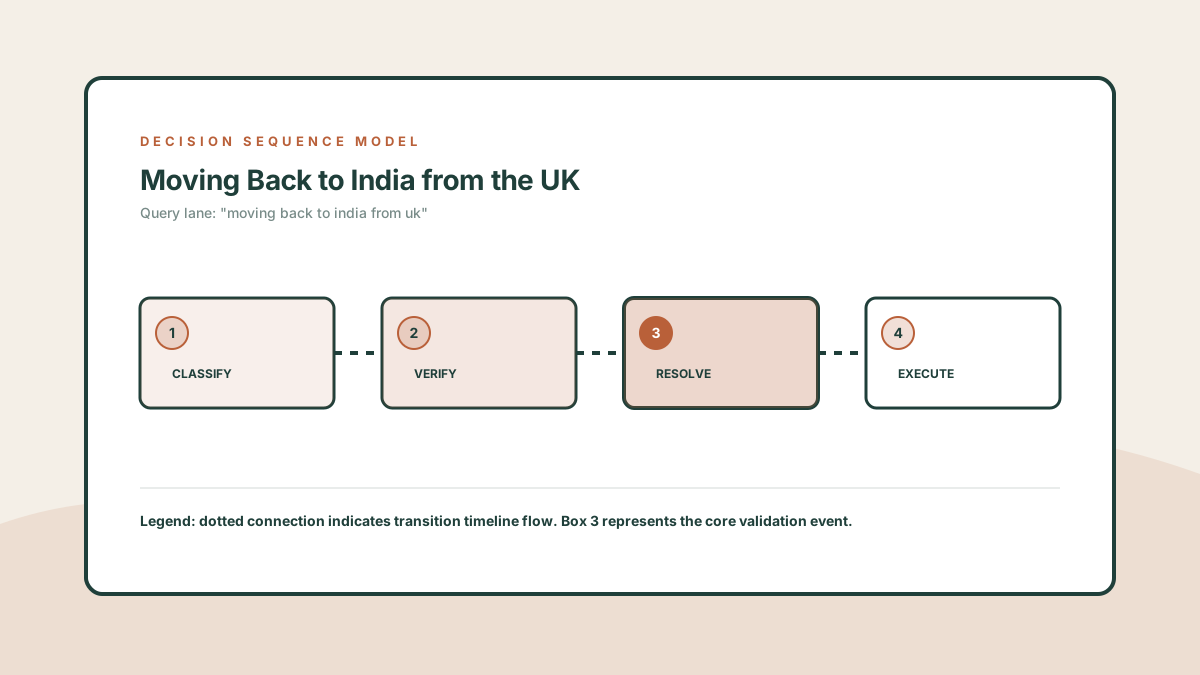
Animated decision map

Need help with Country Guides?
Share your blocker in one line. Our experts will reply with practical next steps.
Interactive checkpoint
Turn this guide into a decision file
0 of 4 checked
Do I have to tell HMRC when I leave the UK to live in India?
Usually yes. GOV.UK says you should tell HMRC if you are leaving the UK to live abroad permanently or working abroad full-time for at least one full tax year. The route often depends on whether you normally file Self Assessment.
Can I keep my ISA after moving from the UK to India?
You can usually keep an existing ISA open, but GOV.UK says you generally cannot keep contributing once you are non-UK resident unless a specific exception applies. That is why the ISA decision is about operating model, not just account closure.
Will I still pay UK tax on pensions after moving to India?
Possibly. GOV.UK explains that pension taxation can depend on where you are resident and on the relevant double taxation agreement. The right way to plan is to check the treaty position and provider process before using the pension amount in your India budget.
What changed in April 2026 for National Insurance contributions abroad?
From 6 April 2026, the UK changed the voluntary NI rules for periods abroad. Voluntary Class 2 is no longer available for those periods from the 2026 to 2027 tax year onward, and the Class 3 route now has tighter conditions unless transitional rules protect an earlier application.
Your country's rules are the starting point, not the finish line.
Tax exits, pension continuity, banking notifications — the India side has its own rules too. Get both sides clear.