RNOR After Return: Day-Count Rules (What It Does Not Cover)
RNOR vs ROR after you land: Section 6 day-count, foreign income scope, move-year timing, and the myths RNOR does not erase.

The 60-second version
RNOR is not a magic tax coupon, but it is one of the highest-leverage planning concepts for people returning to India with foreign income, foreign assets, or a flexible landing timeline. The value comes from timing, documentation, and avoiding false assumptions.
Why RNOR shows up in so many return-to-India searches
RNOR matters because the move back to India is not just a physical relocation. It is a change in how your income, assets, and reporting obligations are viewed. If your move timing is flexible, residential status can become one of the few planning levers that changes the shape of the first India tax years.
The official Income Tax India residential-status guidance separates people into non-resident, resident but not ordinarily resident, and resident and ordinarily resident categories. That means a returning professional should understand not just whether they become resident, but what type of resident they become and in which year.
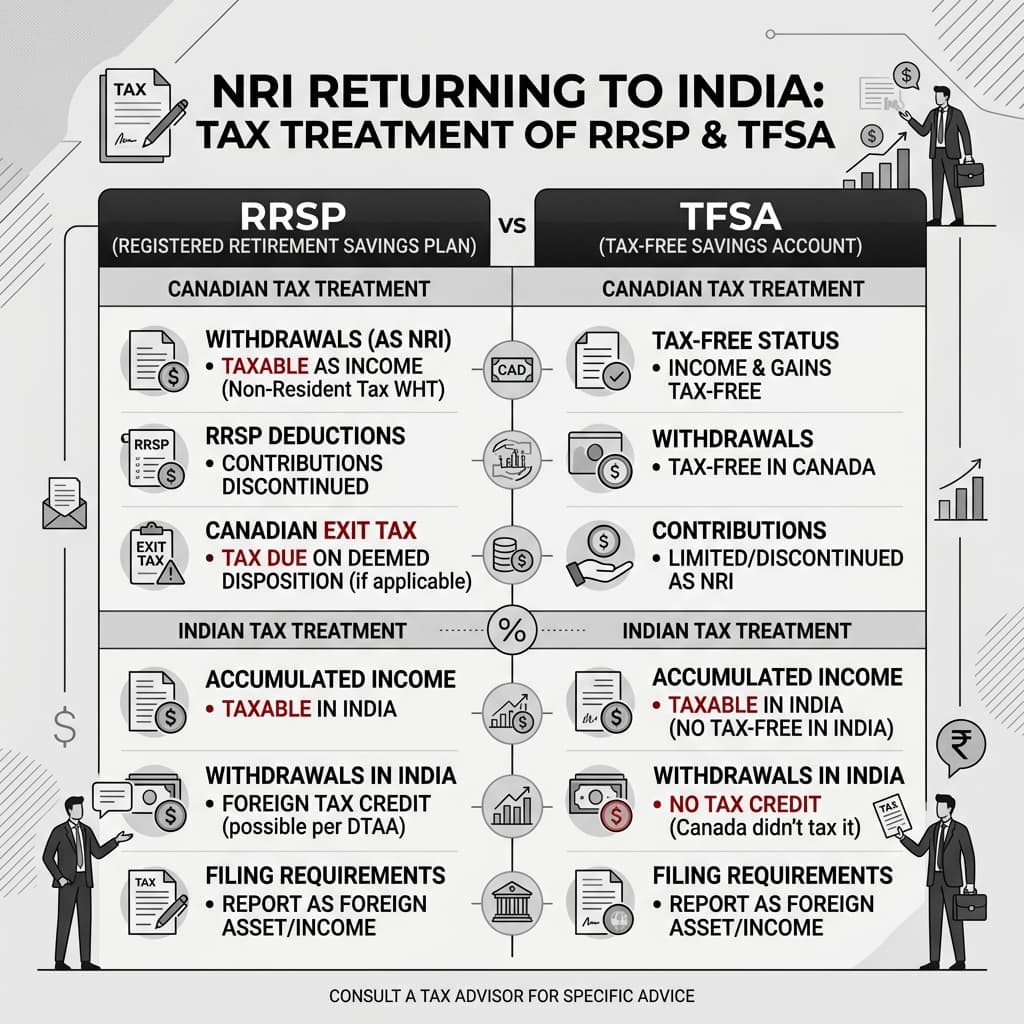
RRSP & TFSA India Tax Treatment
RNOR Eligibility Flowchart
A practical view of the three residency lanes
| Status | When it matters | What to be careful about |
|---|---|---|
| Non-resident | Before you cross into Indian tax residency for the year | Do not assume you can reconstruct exact day counts later from memory. |
| RNOR | The transition phase after return when conditions are met | Useful only if your wider income and asset picture actually needs the breathing room. |
| ROR | The fully settled resident phase | If you never planned the transition years, the shift can feel abrupt. |
How to judge whether RNOR timing is worth planning around
Check whether your landing date is flexible
If the move date is fixed by school or employer constraints, the RNOR analysis is still useful, but it may be descriptive rather than strategic.
List the foreign income and asset relationships that still matter after return
If nothing meaningful remains abroad, RNOR may matter less than banking, school, and housing execution.
Document your day count instead of treating it as a rough estimate
Residential status runs on evidence, not memory. Preserve travel records and the reasoning behind the chosen move date.
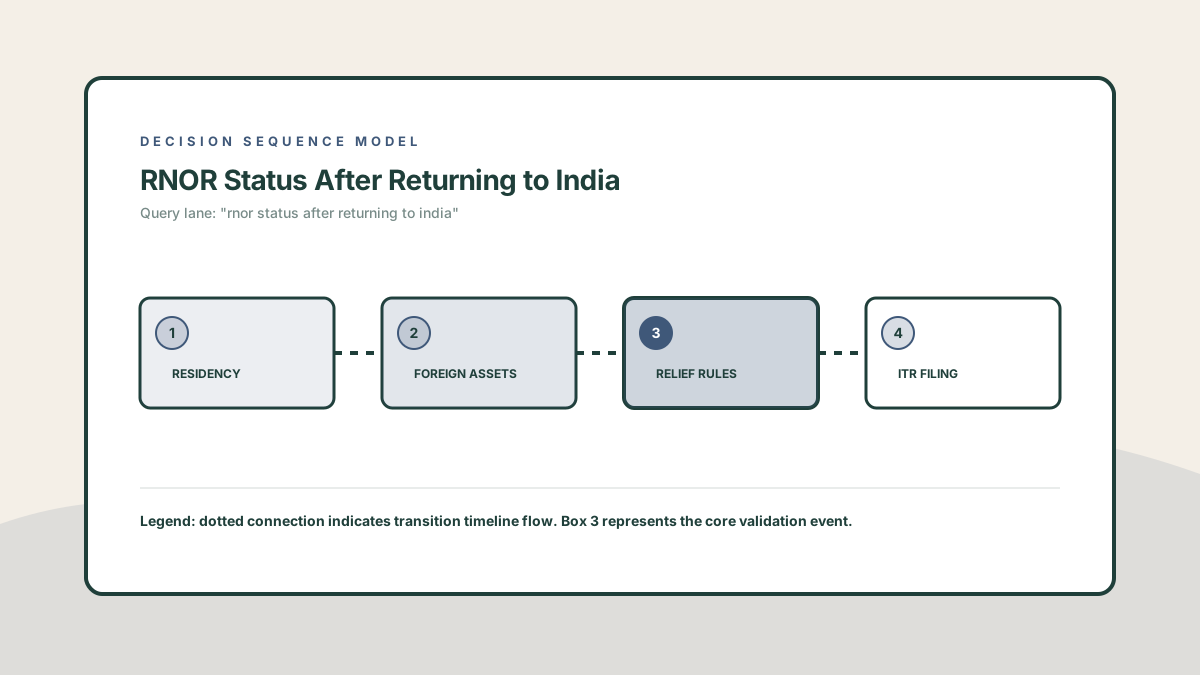
What RNOR is not
RNOR is not a promise that every foreign item disappears from Indian tax relevance. Use it as a transition-planning tool and review the exact fact pattern with a qualified professional when stakes are meaningful.
Need help with Tax & Residency?
Share your blocker in one line. Our experts will reply with practical next steps.
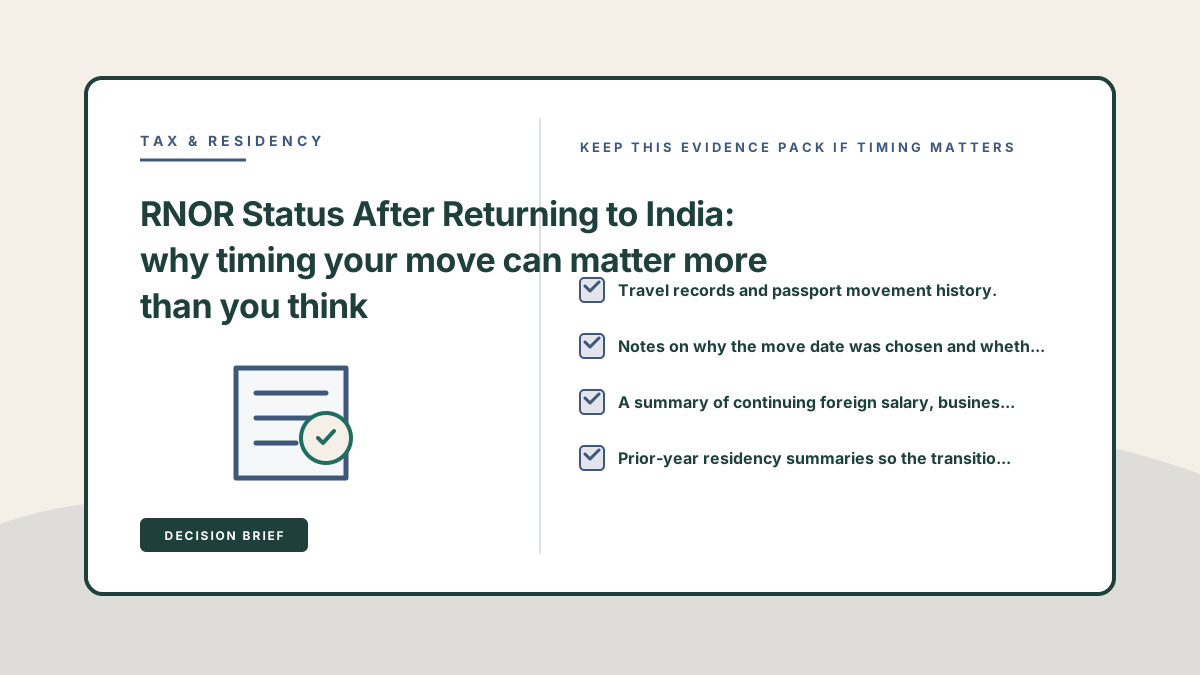
Keep this evidence pack if timing matters
- Travel records and passport movement history.
- Notes on why the move date was chosen and whether it changed.
- A summary of continuing foreign salary, business, investment, or pension relationships.
- Prior-year residency summaries so the transition year is not analysed in isolation.
Animated decision map

Interactive checkpoint
Turn this guide into a decision file
0 of 4 checked
Why does RNOR matter when returning to India?
It matters because the transition from non-resident to resident is not just binary. RNOR can change how the early return years are planned and documented.
Can I plan my move date around RNOR?
If your move is flexible, yes, the date can matter. If your move date is fixed, you should still understand the resulting status even if you are not optimising for it.
Is RNOR useful for everyone moving back to India?
No. It is most useful when a person still has meaningful foreign income, foreign assets, or a transition period that benefits from careful tax timing.
What is the biggest RNOR mistake?
Treating RNOR like a slogan instead of a documented, year-specific residential-status outcome.
Your tax year is already running.
RNOR status, exit timing, and DTAA benefits all depend on decisions you make before you land. Don't guess.