The 60-second version
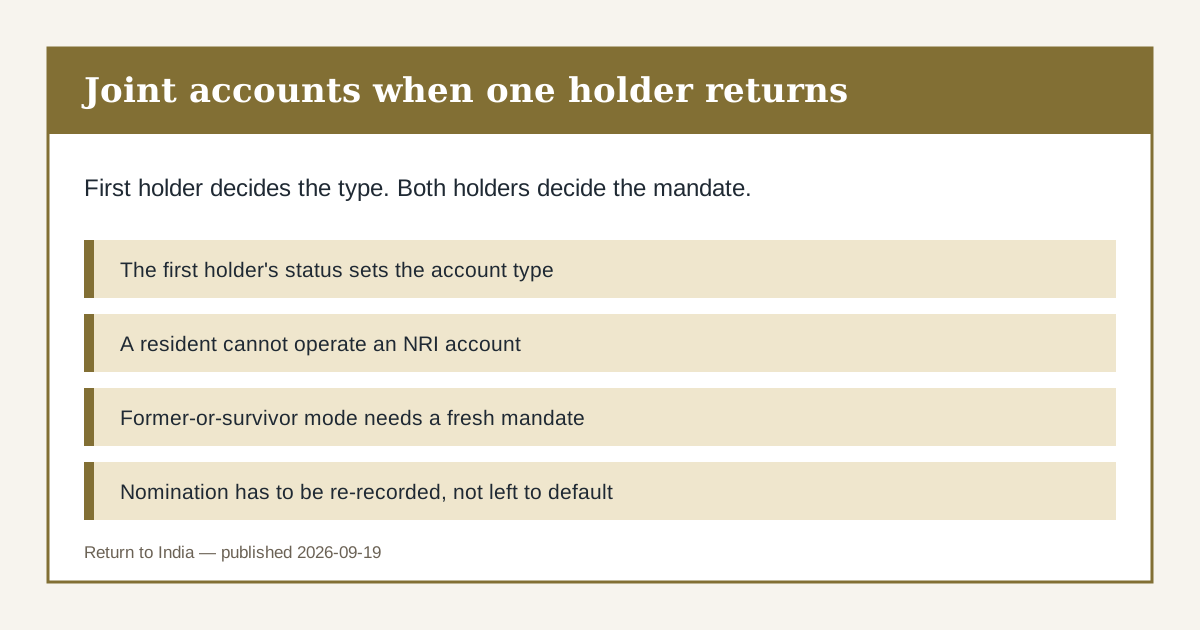
In a joint account, only the first holder's status and residence determine the account type and the operating mode. When one joint holder returns and the other remains abroad, the account has to be re-papered: the resident holder cannot operate an NRI account, and the non-resident holder cannot be the survivor of a resident account without a fresh mandate.
The first holder's status decides; both holders' signatures execute
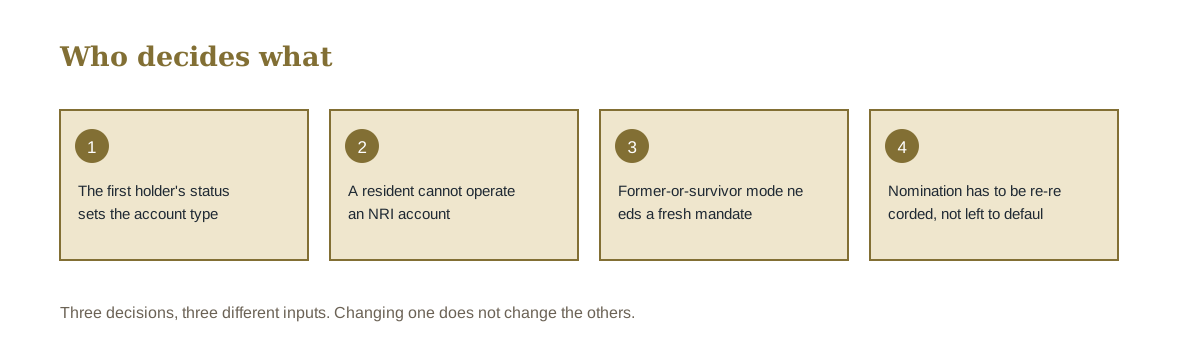
Joint accounts in the NRI framework turn on a single question: who is the first holder and what is that person's status? Account type, permissible funding source and repatriation treatment all follow the first holder. A joint account whose first holder is a person resident outside India is an NRI account. Change only the second holder's status and the account type does not move.
What that means in practice is that when you return and your co-holder remains abroad, you cannot simply keep operating the joint NRI account in your own right. Your status as a resident is inconsistent with the account's designation. If you are the first holder, the account must be redesignated to reflect your resident status, and the continuing non-resident co-holder is then a non-resident joint holder in what is now a resident account — with the restrictions that implies. If the non-resident is the first holder, the account stays an NRI account and your access has to be re-recorded as a resident joint holder.
The operating mode is the part people miss. Accounts are usually opened either as former or survivor or as either or survivor. Changing holders' status does not convert one mode into the other. If the mode was set years ago for a situation that no longer exists, it needs a fresh mandate, signed, not assumed.
Then comes nomination. A joint account with a survivor clause and a separate nomination can point to two different people, and banks resolve that inconsistently unless the instruction is explicit. Deal with the nomination at the same visit as the mandate, and set out the wider record sweep for the follow-up.
Joint account combinations and what results
Read the first two columns to find your situation, then the last two for what has to happen.
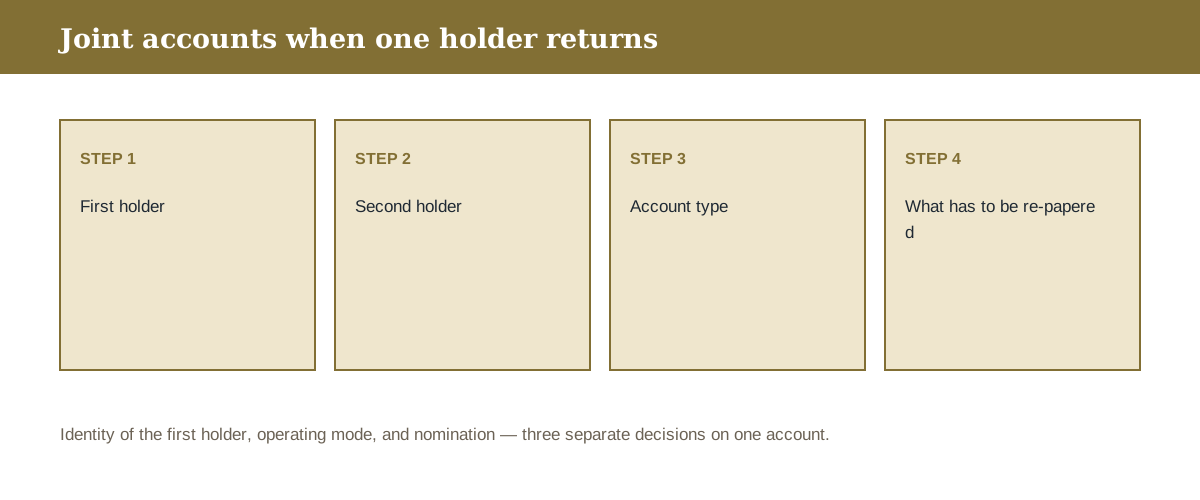
| First holder | Second holder | Account type | What has to be re-papered |
|---|---|---|---|
| Non-resident | Non-resident | NRI account (NRE or NRO as chosen) | Nothing on status; review mandate and nomination |
| Non-resident | Resident | NRI account, with a resident joint holder | Resident joint holder's operating rights recorded explicitly |
| Resident | Non-resident | Resident account, with a non-resident joint holder | Redesignation to resident, plus mandate for the non-resident holder |
| Resident | Resident | Resident account | Ordinary resident joint account rules apply |
Re-papering a joint account
All four holders-and-forms steps normally happen in one appointment if both signatures are available.
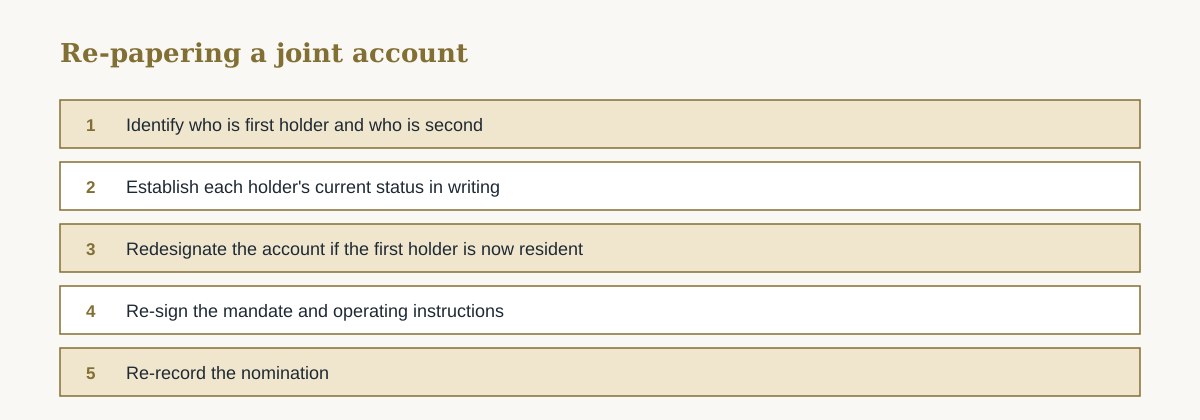
Identify who is first holder and who is second
Pull the account opening form or ask the bank to confirm the recorded order. Everything downstream depends on getting this right.
Establish each holder's current status in writing
One declaration per holder, each stating their residency status today and the date it changed. Banks will ask for this separately from the account redesignation.
Redesignate the account if the first holder is now resident
The account becomes a resident account. The continuing non-resident holder's position is then recorded within that frame.
Re-sign the mandate and operating instructions
Confirm the mode the bank has recorded — former or survivor, or either or survivor — and change it deliberately if the original no longer fits.
Re-record the nomination
Nomination is separate from survivorship. Where both exist, make the bank's record explicit so the two instructions do not conflict later.
Verify on the next statement and the next debit
Check that standing instructions still work under the new mandate. A mandate change that breaks an auto-debit is a common and avoidable failure.
Joint account pack
Both holders' signatures, or a notarised form from the one abroad.
- Account opening form showing the recorded first and second holder
- Status declaration from each holder with the date of change
- Bank redesignation request for the account as a whole
- Fresh mandate naming the operating mode you want
- Nominated person's details, with survivorship and nomination reconciled
- Joint holder's signature, or notarised and attested forms if abroad
- Confirmation that standing instructions survive the mandate change
Who decides what
Need help with Banking?
Share your blocker in one line. Our experts will reply with practical next steps.
Podcast: NRE and NRO joint holdings in practice
"The account-type episode, useful if you are still deciding which side of the joint account you sit on."
Read on youtube ->Community explainer: operating rights the bank enforces
"Why a mandate recorded years ago can still govern a debit today."
Read on youtube ->Joint account decision tree
Need help with Banking?
Share your blocker in one line. Our experts will reply with practical next steps.
Survivorship and nomination are not the same instruction
An either-or-survivor or former-or-survivor clause and a registered nomination can point to different people. Left unreconciled, the bank resolves it inconsistently, and the dispute lands on your family at the worst possible time. Re-record both at the same visit.
The one-sentence answer
The first holder's residency sets the account type, the second holder's residency changes the mandate, and redesignation, operating mode and nomination all have to be re-recorded deliberately rather than inherited.
Animated decision map
Need help with Banking?
Share your blocker in one line. Our experts will reply with practical next steps.
Which account change applies to you?
Four questions. You get the course of action, in order, for your situation.
Question 1 of 4
Interactive checkpoint
Turn this guide into a decision file
0 of 4 checked
Can an NRI hold a joint account with a resident Indian?
Yes. The account type follows the first holder's status. Where the first holder is non-resident, the account remains an NRI account and the resident joint holder's operating rights are recorded explicitly.
What changes when I return but my joint holder stays abroad?
If you are the first holder, the account must be redesignated as a resident account, and the continuing non-resident holder's position must be recorded within that. If your co-holder is the first holder, the account stays an NRI account and your own access changes.
Does the second holder's status change the account type?
No. Only the first holder's status determines the account type. The second holder's status affects operating rights and the mandate.
What does former or survivor mean?
It is an operating mode where the second holder can operate the account only after the first holder's death or incapacity. It is the more restrictive of the two common modes and needs a fresh mandate if the arrangement has changed.
Can I change the operating mode later?
Yes, with a fresh mandate signed by the holders the bank requires. Changing holders' residency does not convert one mode into another on its own.
Do both holders need to be present?
Ideally yes. Where one is abroad the bank will usually accept notarised and attested forms, but the specific requirement varies, so confirm with the branch before the appointment.
What happens to joint fixed deposits?
Each deposit carries its own designation and maturity instruction. Treat deposits as separate items on the worklist rather than assuming the joint account redesignation covers them.
How does nomination interact with a joint account?
Nomination governs what happens to the balance; the survivorship mode governs who may operate. Where both exist, make the bank's record explicit so the two do not conflict.
Will changing the mandate break my standing instructions?
It can. Confirm after the change that auto-debits and ECS mandates still work, and re-register any that fail — this is a common and easily avoided problem.
Can a resident joint holder receive foreign remittances into the account?
That depends on the account type and the remittance purpose, and the rules differ between resident and NRI accounts. Ask the bank for the specific treatment before relying on the account for that purpose.
Your NRE account redesignation has a deadline.
Banks don't remind you. You need the right account stack before salary, rent, and EMIs start moving. Get the exact sequence.