Joint Accounts After Return: NRE/NRO Mandate Map
Joint NRE/NRO after return: resident relative rules, redesignation, mandate holder, dual KYC, and freeze prevention before first INR payments.

The 60-second version
Joint holding becomes confusing because people often combine three different RBI rule lanes into one mental model. This guide separates them so you can decide who can be added, on what basis, and what changes after return.
Why joint-account rules get misunderstood so easily after return
I split joint holding into three RBI lanes after return: NRE with a resident close relative, NRO with residents, and resident accounts with an NRI close relative abroad. If the account still has legacy balances, read NRO repatriation planning before you add anyone.
The lane decides survivor rules, what credits can land in the account, and what happens after redesignation. Mix the lanes up and you only find out at the bank counter.
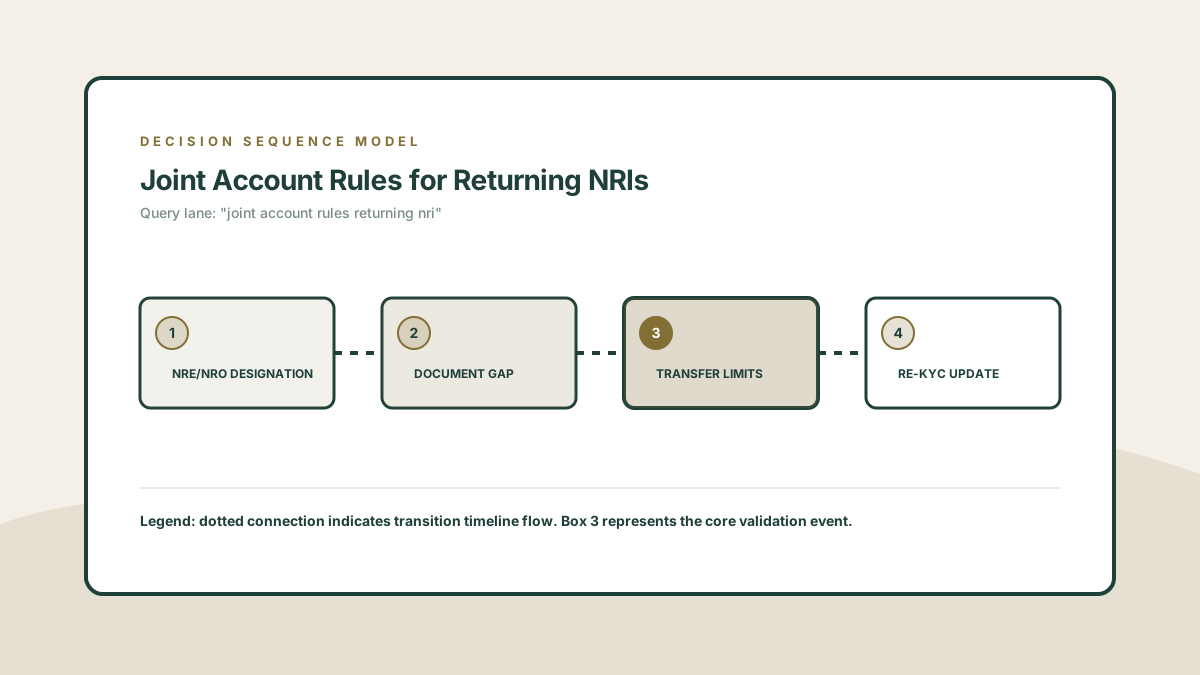
Joint Account Combination Matrix
The three rule lanes you need to keep separate
| Situation | What RBI allows | Operating basis | What to remember |
|---|---|---|---|
| NRE / FCNR(B) account with a resident close relative | Permitted with a resident close relative | Former or survivor basis; resident relative may operate as Power of Attorney holder during the NRI holder's lifetime | Do not treat this like an ordinary resident joint account. It sits inside the NRE / FCNR(B) rule frame. |
| NRO account with a resident | Permitted jointly with residents | Former or survivor basis | It is still an NRO lane, so the repatriation and tax position is not the same as an NRE account. |
| Resident account with an NRI close relative | Banks may include an NRI close relative as joint holder in an existing or new resident account | Either or survivor basis, subject to RBI conditions | If the NRI becomes sole survivor, the account should be categorized as NRO and the bank should be informed. |
Key steps before you ask the bank to add anyone
Identify the base account correctly
Ask whether the account is still an NRE / FCNR(B) lane, an NRO lane, or a resident account after your return. The right answer drives the joint-holding rule.
Be precise about the relationship and the operating need
The practical question is not just who you trust. It is whether the joint holder is a resident relative, a close relative abroad, or someone you only need as a temporary operating convenience.
Review the rule again at redesignation time
Once residential status changes, the account lane may change too. That is the right moment to recheck whether the joint setup still fits the account's new regulatory home.
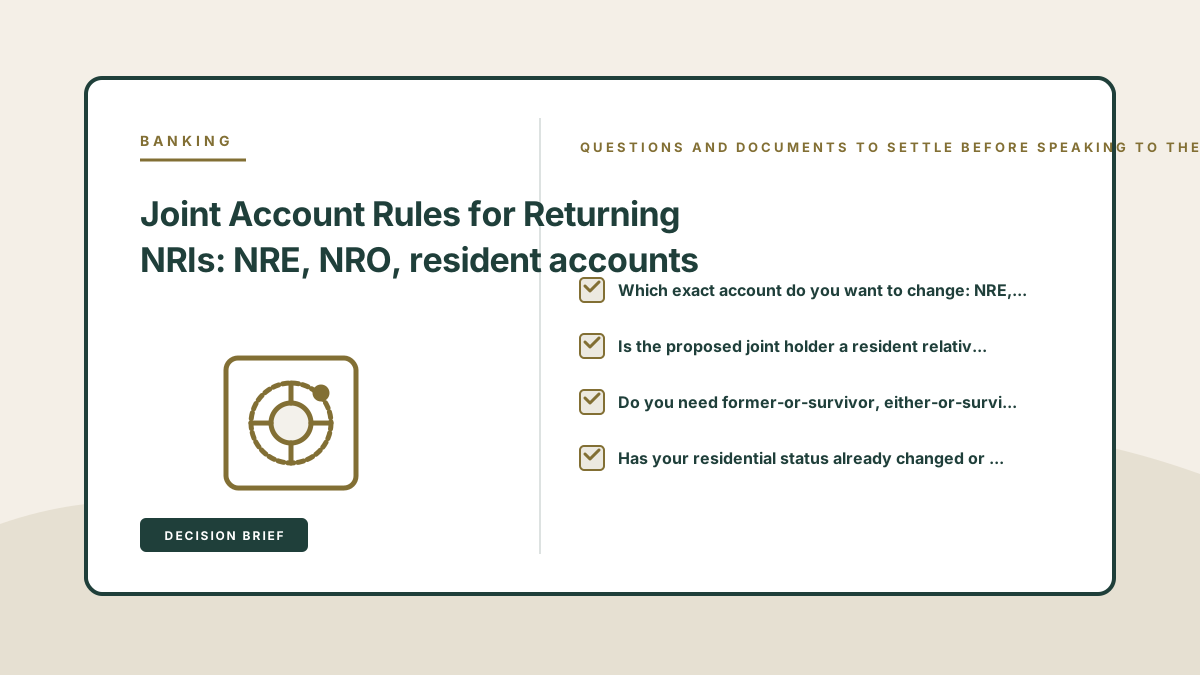
Questions and documents to settle before speaking to the bank
- Which exact account do you want to change: NRE, NRO, FCNR(B), or resident savings?
- Is the proposed joint holder a resident relative, an NRI close relative, or someone else?
- Do you need former-or-survivor, either-or-survivor, or only limited operating access through a Power of Attorney?
- Has your residential status already changed or is redesignation still pending?
- Will any continuing income, card, or OTP flow break if the account setup is changed without testing access first?
The main mistake to avoid
Joint holding does not erase the underlying account type. An NRE, NRO, or resident account keeps its own rule frame even when another person is added, which is why repatriation, credits, and survivor outcomes should never be assumed from the word 'joint' alone.
Need help with Banking?
Share your blocker in one line. Our experts will reply with practical next steps.
What still depends on the bank
RBI sets the rule frame, but paperwork, forms, and how quickly redesignation or joint-holder changes are processed can still vary by bank. Use the official rule first, then ask the bank exactly how it wants the change documented.
Animated decision map

Interactive checkpoint
Turn this guide into a decision file
0 of 4 checked
Can an NRI hold an NRE account jointly with a resident relative?
Yes, RBI guidance allows NRE and FCNR(B) accounts to be held with a resident close relative on a former-or-survivor basis. The resident relative may operate the account as a Power of Attorney holder during the lifetime of the NRI or PIO account holder.
Can an NRO account be held jointly with a resident?
Yes. The RBI FAQ states that NRO accounts may be held jointly with residents on a former-or-survivor basis.
Can a resident keep a resident account jointly with a close relative abroad?
Yes, subject to RBI conditions. Banks may include an NRI close relative in an existing or new resident account on an either-or-survivor basis, but the account remains a resident account for all applicable regulations until circumstances change.
What happens if the NRI becomes the sole survivor on a resident account?
The RBI circular says the account should be categorized as an NRO account and the non-resident account holder must keep the bank informed so the right treatment is applied.
Your NRE account redesignation has a deadline.
Banks don't remind you. You need the right account stack before salary, rent, and EMIs start moving. Get the exact sequence.