The 60-second version
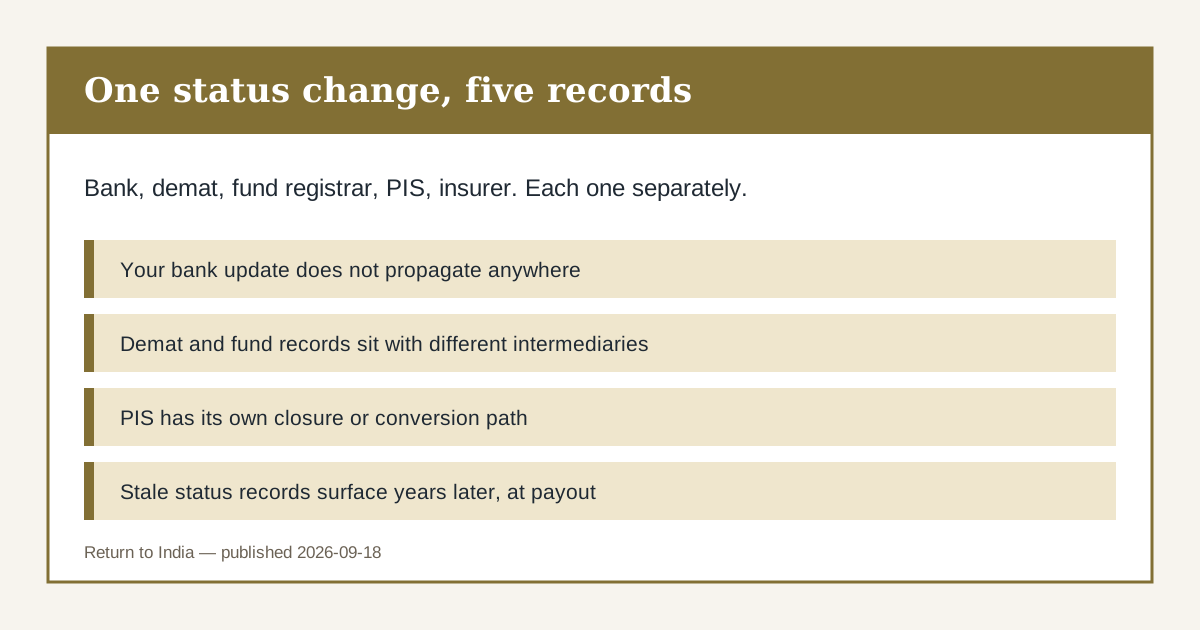
Residency status is recorded separately by the bank, the depository, every mutual fund registrar and each insurer. Redesignating one account updates one record. The sweep is: bank first, then demat and mutual fund Re-KYC, then the PIS account if you held one, then insurance nominees and contact records.
Nothing propagates. That is the whole problem.
Banking status is recorded by the bank. Depository holdings are recorded by the depository through your depository participant. Each mutual fund folio sits with a registrar, and insurers keep their own policyholder record. Changing one does not change the others, and none of them can see the others' files. So the correct mental model is not 'update my KYC' but 'update five records, in a known order'.
The order matters because each later step uses an earlier artefact as evidence. The bank advice showing your redesignated resident account is what the depository participant and the registrar will ask for. Doing the demat Re-KYC first usually means doing it twice.
The PIS account deserves its own line. If you held one for equity investment as a non-resident, it does not simply become a normal trading account when you become resident. It has a closure path, and in some cases the underlying holdings and bank linkages have to be re-papered. Leaving it live is the single most common source of a later problem, because the account keeps operating while the status it was granted under no longer applies.
The SIP question people search for — whether an NRI can keep a SIP running in a resident demat account after the bank status changes — is really the same question as this page. The answer is that a systematic instruction is not a legal status. What matters is whether the folio, the bank mandate behind the debit, and the holding account are all consistent with your current status. Fix three and leave one, and the debit eventually fails.
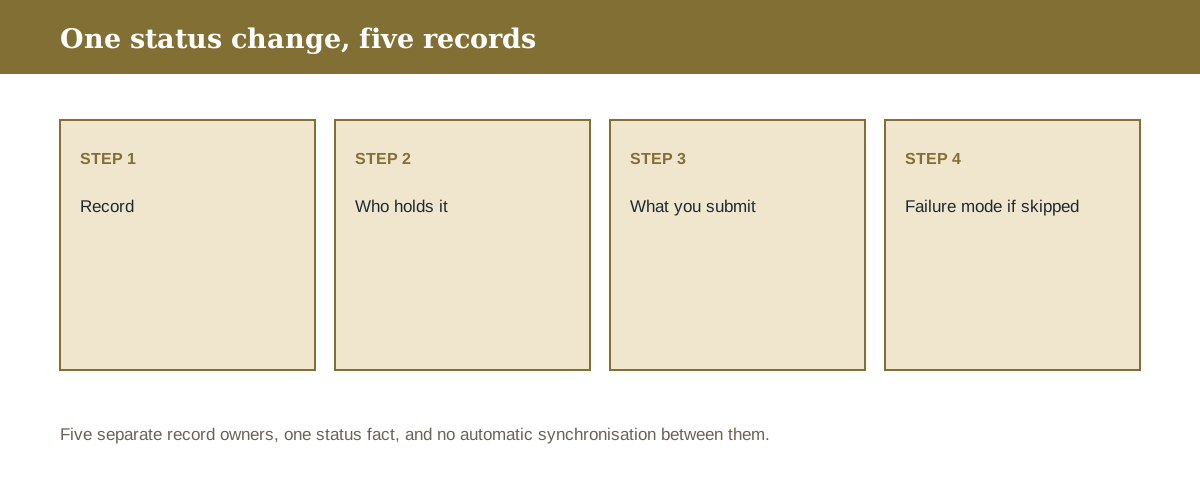
The five records and what each one wants
Work top to bottom. Each row's evidence comes from the row above it.
| Record | Who holds it | What you submit | Failure mode if skipped |
|---|---|---|---|
| Bank account | Your bank | Status declaration and proofs | Restricted or frozen debits |
| Demat account | Depository participant | Bank redesignation advice plus Re-KYC form | Debit or credit blocked at settlement |
| Mutual fund folios | Registrar per folio | Updated KYC record with resident status | Redemption proceeds held or rejected |
| PIS account | Designated bank and broker | Closure request or conversion as applicable | Account continues on an expired premise |
| Insurance policies | Each insurer | Updated contact, nomination and address | Claim and maturity correspondence goes astray |
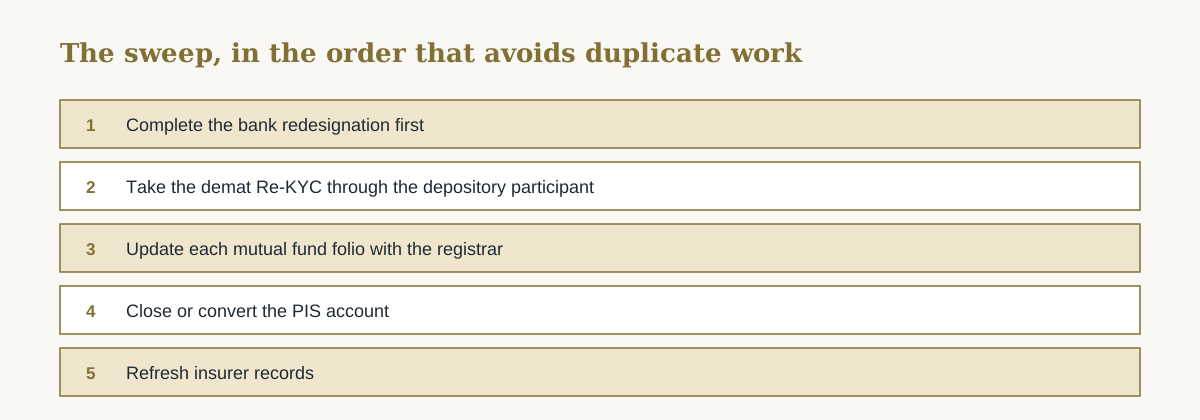
The sweep, in the order that avoids duplicate work
Budget a month of elapsed time. Most of it is waiting, not working.
Complete the bank redesignation first
Get the acknowledgement showing the redesignated resident account. Every later step leans on this document.
Take the demat Re-KYC through the depository participant
Submit the updated status with the bank advice. Confirm the change appears on the holding statement rather than assuming the form was actioned.
Update each mutual fund folio with the registrar
Folios are held per registrar, and a change at one registrar does not reach another. Work through the folio list rather than the fund list.
Close or convert the PIS account
If you held a Portfolio Investment Scheme account, decide on closure or the applicable conversion and get the closure confirmation in writing.
Refresh insurer records
Address, contact details and nominee details, especially where the nominee is a parent or spouse resident in India.
Re-verify every record a month later
Check statements across the bank, demat and folios. The sweep is only complete when each record reflects the new status, not when the forms were submitted.
Record-owner inventory
Build this list once and keep it. It also becomes your annual check.
- Every bank where any account, deposit or mandate exists
- Demat accounts and the depository participant for each
- Mutual fund folios listed by registrar, not by fund house
- Any PIS account and its designated bank and broker
- Insurance policies with the nominee details as recorded
- NPS or PPF records with the current address and nominee
- A single folder holding every acknowledgement
- A calendar reminder to re-verify one month later
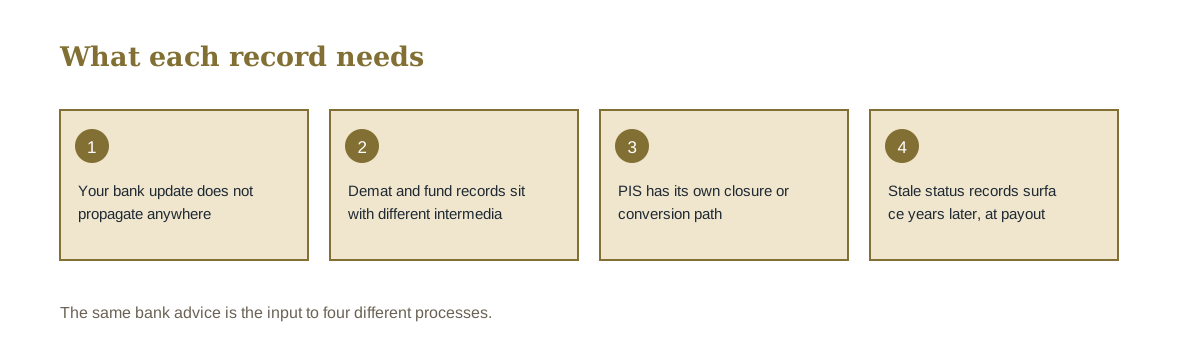
What each record needs
Need help with Banking?
Share your blocker in one line. Our experts will reply with practical next steps.
Community explainer: the account rule behind the Re-KYC
"Why intermediaries ask for the status change at all, and what they do when they do not get it."
Read on youtube ->Podcast: FEMA status versus tax status
"The distinction that decides which records need changing, and from when."
Read on youtube ->Sweep order
Need help with Banking?
Share your blocker in one line. Our experts will reply with practical next steps.
A running SIP is not a legal status
A systematic investment instruction keeps debiting because the mandate is live, not because it is permitted. If the folio, the funding account and the holding account do not all reflect your current residency, the arrangement is running on a mismatch that will surface at redemption.
The one-sentence answer
Redesignate the bank account first, then sweep the demat, every mutual fund registrar, the PIS account and each insurer, and re-verify all five records a month later.
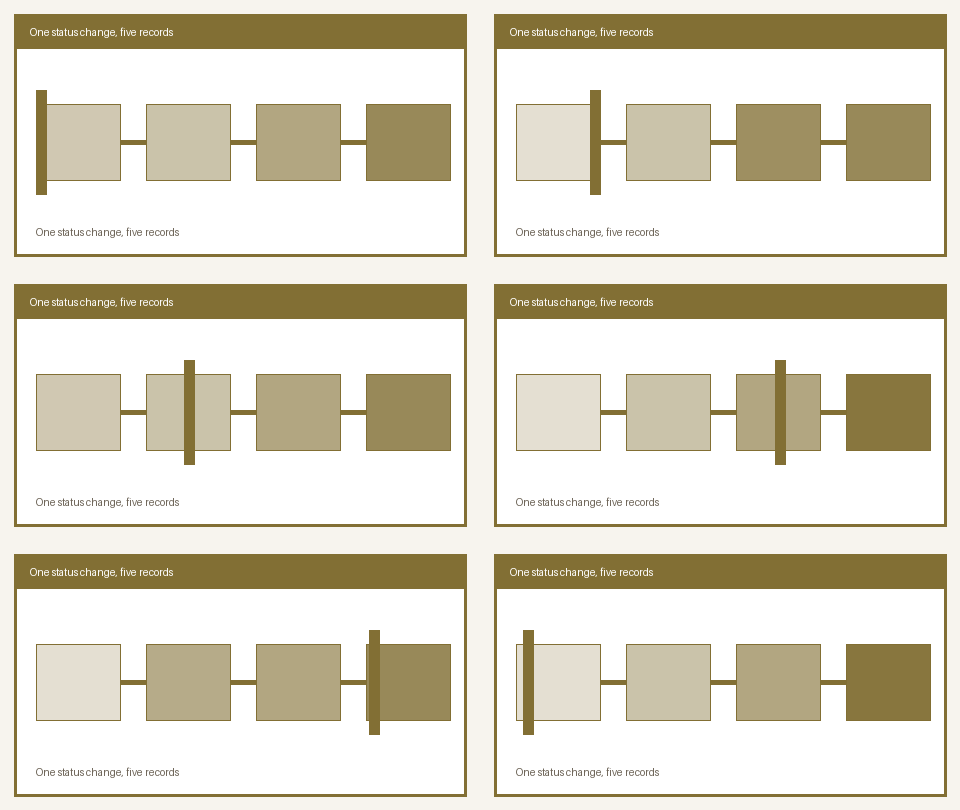
Animated decision map
Need help with Banking?
Share your blocker in one line. Our experts will reply with practical next steps.
Interactive checkpoint
Turn this guide into a decision file
0 of 4 checked
Does updating my bank KYC update my demat and mutual funds?
No. Each intermediary holds its own record and cannot see another's file. The bank advice is evidence you present, not a change that propagates.
Can I continue my SIP after returning to India?
You can continue investing, but the account, folio and mandate all have to reflect your current residency. A live SIP debit on a stale status record is a mismatch that eventually fails.
What is a PIS account and do I need to close it?
The Portfolio Investment Scheme account is the route a non-resident used for equity investment. Once you are resident, it no longer fits your status, so it should be closed or converted as applicable, with the confirmation kept on file.
How do I know which registrar holds my folios?
Your account statements name the registrar. Folios are grouped by registrar rather than by fund house, so build the worklist from the statements.
Will my redemption be blocked if the record is stale?
It can be. Proceeds being held or a transaction being rejected for a KYC or status mismatch is a common outcome, and it usually appears at the worst possible moment.
Do I need a fresh KYC or just an update?
Usually an update to the existing record with the new status details. Some intermediaries treat it as a Re-KYC, which is a refresh of the same record rather than a new identity.
What about my insurance policies?
Update the address, contact details and nomination with each insurer. Policies are individual contracts, so one insurer's update does not reach another.
Does this affect joint accounts and joint holdings?
Yes. A joint holder's status is recorded separately and may not have changed. That affects mandates and operating rights, so handle joint records deliberately rather than as an afterthought.
How long does the whole sweep take?
Commonly three to six weeks of elapsed time, mostly waiting on intermediaries. The verification pass a month after submission is what actually closes it out.
What happens if I never update one of them?
It surfaces at the worst time, usually a payout, a claim or a large transaction, and it is harder to fix because you are then also explaining why it was stale for years.
Your NRE account redesignation has a deadline.
Banks don't remind you. You need the right account stack before salary, rent, and EMIs start moving. Get the exact sequence.