The 60-second version
Large transfers break when people choose a channel before classifying the money. This guide shows how to separate foreign savings, NRO balances, property-sale proceeds, and resident-era outward remittances so the route, documents, and provider choice actually match the rule.
The first decision is not which app to use. It is what kind of money you are moving.
That is why the right operating model starts with source and destination. If the money is your own foreign savings held outside India, the question is mainly about receiving account design, cost, speed, and proof of source. If the money is already in India as rent, sale proceeds, inheritance, or other NRO balances, the question becomes remittance eligibility, tax compliance, and the USD 1 million annual facility. And if you are already resident and want a foreign-currency lane, LRS and IFSC rules matter in a different way again.
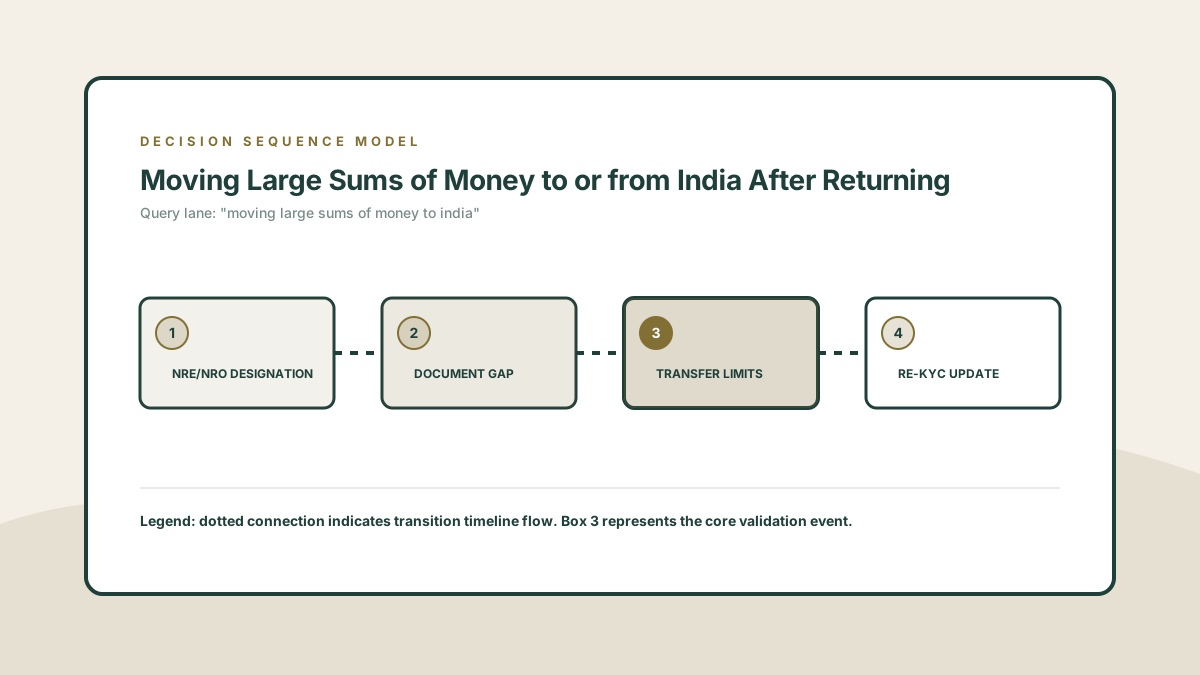
Large Money Transfer Workflow
Use this route map before you move anything large
One clean classification at the start prevents the most common bank-compliance and tax-document mistakes later.
| Money lane | Typical route | What the rule is doing | What usually goes wrong |
|---|---|---|---|
| Foreign savings already abroad | Bank wire or specialist FX platform into the India-side account that actually fits your status | This is generally an inward remittance decision, not an NRO-repatriation decision. | People optimise the transfer fee before they decide whether the receiving account should stay non-resident, become resident, or remain temporary only. |
| NRO balance, Indian rent, or sale proceeds in India | Authorised-dealer bank remittance out of NRO, sometimes into your own overseas account or eligible NRE lane | RBI's non-resident account FAQ points to the USD 1 million facility and the remittance-of-assets rules, subject to conditions and tax compliance. | People treat it like a normal outward transfer and discover late that the CA forms and source-of-funds file are the real bottleneck. |
| Assets you built abroad before becoming resident again | Often no immediate transfer at all | RBI's clarification on FEMA section 6(4) means returning to India does not automatically force you to liquidate or repatriate every foreign asset you legally built while non-resident. | People bring everything back just because the move happened, even when the operating need is not immediate and the currency decision is still weak. |
| Resident-era outward remittance after return | Resident remittance under LRS, sometimes through an IFSC foreign-currency account | RBI's LRS direction sets the resident outward-remittance framework; IFSC is a specialist extension, not a substitute for basic account hygiene. | People confuse LRS with NRO remittance and assume one limit or document pack covers both. |
Key steps before you push a large transfer through
The goal is not only compliance. It is choosing the cheapest route that will still survive scrutiny from the sending and receiving institutions.
Label the money by source before you label it by size
Separate foreign salary savings, brokerage cash, NRO balances, property-sale proceeds, inheritance, and current income. A USD 200,000 transfer can be simple in one lane and paperwork-heavy in another.
Decide what the receiving account is supposed to do on day one
If the money is coming into India, decide whether it is short-term landing liquidity, long-term rupee spending, or foreign-currency continuity. The account decision should come before the transfer-provider decision.
Build the document file before you book the transfer
For NRO remittances this often means tax evidence, CA support, source-of-funds proof, and bank forms. For foreign savings it usually means KYC, source-of-funds clarity, and clean beneficiary details.
Choose the provider based on the job, not the ad copy
A transparent FX platform can be excellent for clean personal savings within its corridor and published limits. A bank-led route is often stronger when the transfer is asset-based, documentation-heavy, or operationally unusual.
Only then decide whether one transfer or staged transfers make more sense
A single transfer is not automatically superior. Staging can reduce execution risk if your receiving setup, rates, or compliance file still need live confirmation.
When a bank wire is stronger and when a specialist FX platform is stronger
Bank wires are usually the sturdier choice when the transaction is documentation-heavy: property-sale proceeds, inheritance, NRO remittance, or any case where a relationship manager and compliance desk need to understand the full file. They are also the default lane when the receiving or sending bank wants the transaction handled entirely inside the banking system rather than through a consumer-facing FX tool.
Specialist FX platforms are often strongest when the transfer is your own clean foreign savings, the corridor is supported, and the provider's published limits are enough for the amount involved. Wise currently publishes USD personal-account transfer routes up to very large amounts, while Xe publishes a USD 500,000 online daily transfer limit for U.S. personal customers. The practical lesson is not that one brand always wins. It is that platform suitability should be checked live for your corridor, payment method, and KYC profile before you promise yourself a specific route.
The expensive mistake is assuming that 'cheaper' means 'better' in every lane. A slightly cheaper route that triggers avoidable compliance friction, rejects the payment method, or lands money in the wrong account type can become the most expensive path in the whole move.
Need help with Banking?
Share your blocker in one line. Our experts will reply with practical next steps.
The document pack that usually matters more than the transfer app
Large transfers rarely fail because someone forgot the SWIFT code. They fail because the file behind the money is weak.
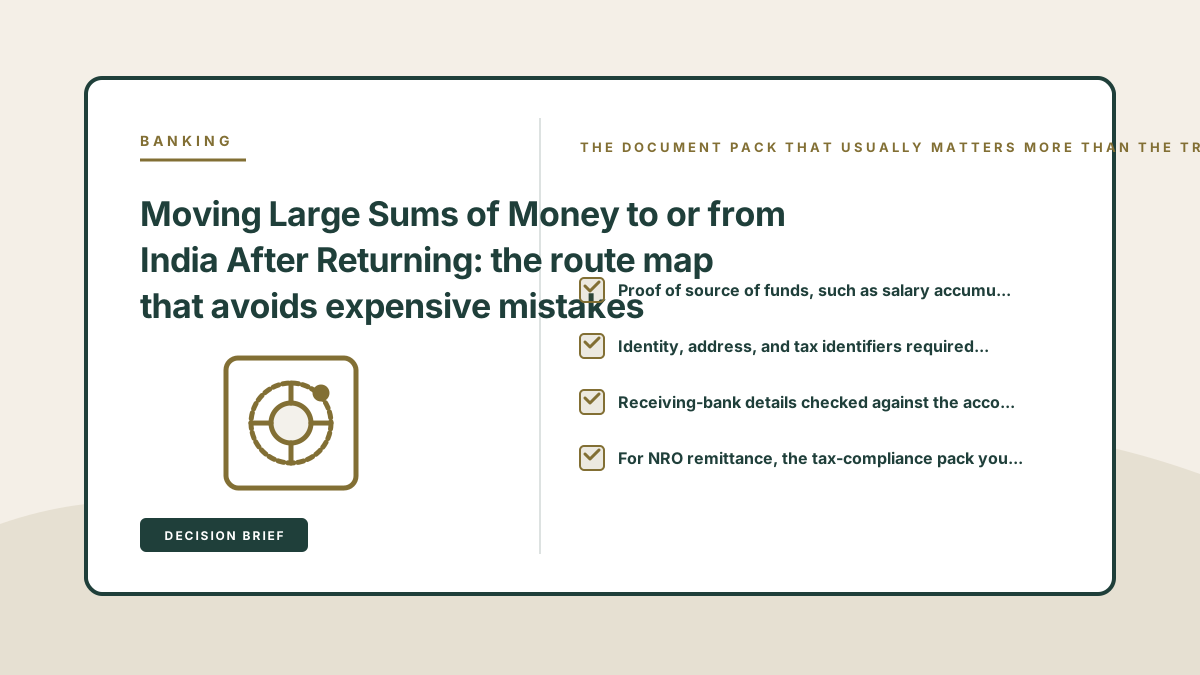
- Proof of source of funds, such as salary accumulation, brokerage withdrawal record, sale deed, inheritance papers, or rent trail.
- Identity, address, and tax identifiers required by the sending bank, receiving bank, or FX provider.
- Receiving-bank details checked against the account that should actually receive the funds after your return status changes.
- For NRO remittance, the tax-compliance pack your bank or CA asks for, including the forms relevant to the remittance.
- A written note for yourself on why the money is moving now, not just how, so you do not reverse the decision because rates move for a week.
- A backup route in case the first provider declines the amount, the corridor, or the payment method.
IFSC is a specialist lane, not the default answer for every returning family
RBI now allows resident individuals to remit to IFSCs under LRS, and IFSCA has issued operating directions for these foreign-currency accounts. That can be useful if you intentionally want a foreign-currency operating lane. It is not a shortcut around basic receiving-account design, tax documentation, or NRO remittance rules.
The biggest money-movement mistake after return
People often treat the first large transfer as a referendum on whether they are truly back in India. That turns a financial routing decision into an emotional one. The result is over-conversion, rushed transfers, or moving money into a structure that looked convenient for a week but is awkward for the next two years.
A better approach is boring on purpose. Decide what amount is needed for landing liquidity, what can remain abroad because section 6(4) still protects your ability to hold it, what India-side money may later need NRO remittance planning, and what part of the move genuinely benefits from an IFSC or foreign-currency lane. Then move only the tranche that serves the actual operating model.
Need help with Banking?
Share your blocker in one line. Our experts will reply with practical next steps.
Large Money Transfer Decision Tree
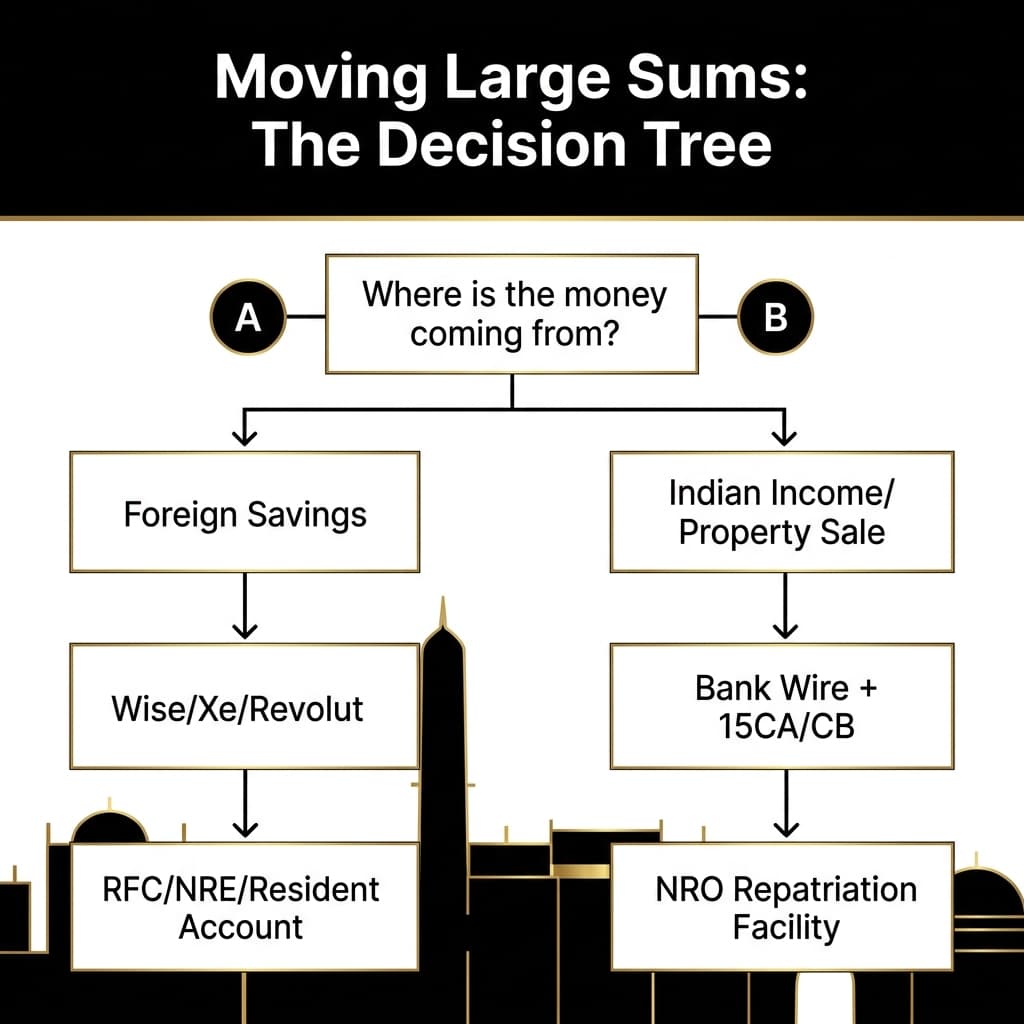
Animated decision map

Need help with Banking?
Share your blocker in one line. Our experts will reply with practical next steps.
Interactive checkpoint
Turn this guide into a decision file
0 of 4 checked
Do I need to bring all my foreign savings to India as soon as I return?
No. RBI's clarification on FEMA section 6(4) makes clear that a person resident in India can continue to hold eligible foreign assets acquired while non-resident. The smarter question is what amount India actually needs now and what amount is better left outside until the operating plan is clearer.
Can I remit money out of an NRO account after returning to India?
NRO remittance is a separate rule lane. RBI's non-resident account FAQ points to remittance of current income abroad and the broader USD 1 million annual facility for NRIs and PIOs, subject to conditions, documentation, and tax compliance. Treat it as a bank-and-CA workflow, not a casual app transfer.
Is a bank wire always safer than Wise or Xe for a large transfer?
Not automatically. A bank wire is often stronger for documentation-heavy or unusual cases. A specialist FX platform can be more transparent and cheaper for clean personal transfers within its supported limits and corridors. The correct route depends on the source of funds, required documents, live provider limits, and the account receiving the money.
When does an IFSC or GIFT City account actually make sense?
Usually when you intentionally want a foreign-currency lane under the resident outward-remittance framework and understand the extra compliance context. It is a specialist tool for specific use cases, not the default operating account for every family landing in India.
Your NRE account redesignation has a deadline.
Banks don't remind you. You need the right account stack before salary, rent, and EMIs start moving. Get the exact sequence.