US Stocks & Options After India Return: Access Map 2026
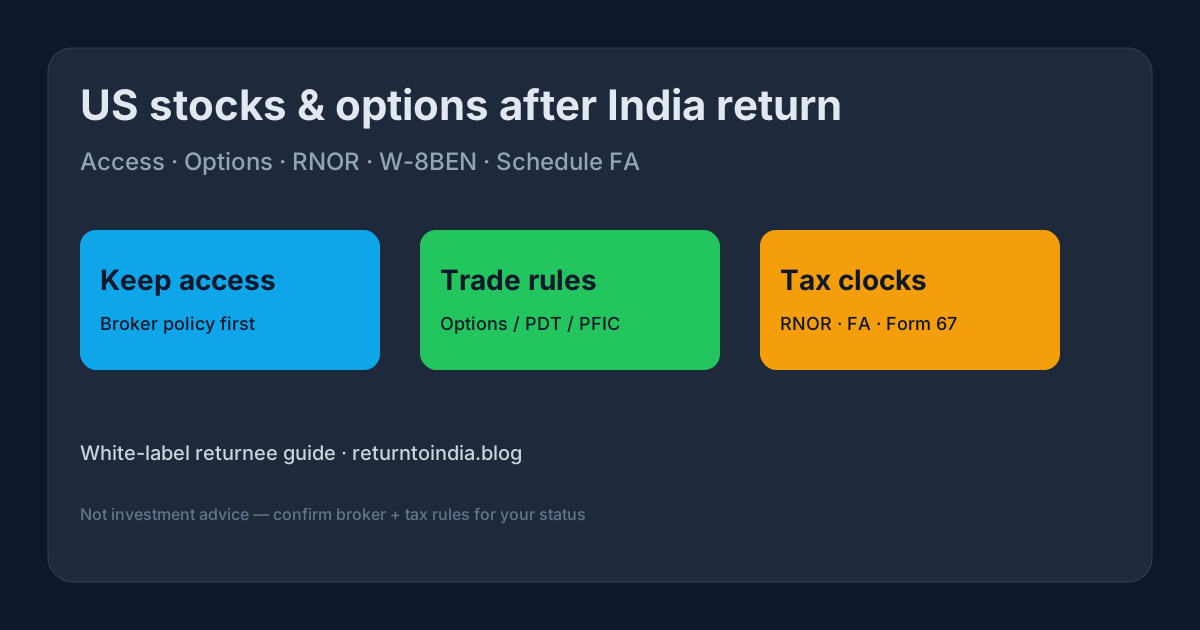
Trade US stocks/options after return: broker residency, options level, PDT, W-8BEN, RNOR sale timing, Schedule FA, Form 67 — access first.
The 60-second version
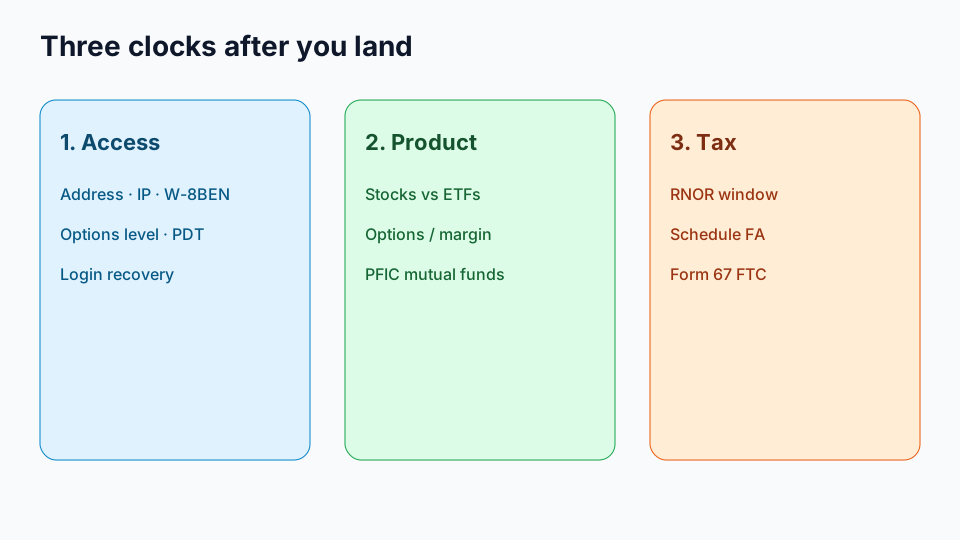
The returnee question is not “should I day-trade from Bangalore?” It is three separate clocks: can the broker still let you log in and trade; which products stay allowed (stocks vs options vs mutual funds); and which India/US tax clocks fire when you sell. Mix those clocks and you get frozen logins, restricted options, or a tax surprise in the RNOR window.
Why access, product rules, and tax are three different problems
A US taxable brokerage can stay open after you move, and you can still lose the ability to open new options, fund the account, or log in from an India IP. That is an access and product policy problem — not the same as whether India will tax a sale in the RNOR year.
Treat the stack in order: (1) export statements and cost basis before changing address; (2) confirm the broker’s non-US resident policy for stocks, options, margin, and new accounts; (3) file the correct W-8BEN/W-9 status the broker requires; (4) only then plan sells against RNOR/ROR and Schedule FA / Form 67. Skipping steps is how people discover a freeze the week they need liquidity for a flat deposit in Pune.
Access matrix: what usually breaks first
Exact rules are product- and broker-specific. Use this matrix to interview the desk before you change the mailing address.
| Layer | What fails | Typical trigger | Pre-move move |
|---|---|---|---|
| Login / recovery | OTP on dead US SIM; locked account | Phone number change, India IP, failed 2FA | Authenticator + backup codes + secondary recovery path |
| Address / residency | Account restricted or forced close | India residential address on file | Ask written policy for existing customers vs new accounts |
| W-8BEN / W-9 | Withholding rate wrong; dividends blocked | Expired W-8; wrong US-person status | Renew W-8BEN on broker timeline; keep PDF of acceptance |
| Funding | ACH from closed US bank fails | Bank closed after move | Keep one clean US funding path or plan wire/RFC logistics |
| Options level | Cannot open new multi-leg or naked risk | Non-US address; risk re-approval | Screenshot current options level; ask if re-approval needed |
| Margin / PDT | Day trades blocked or liquidations | Equity under PDT threshold; margin call while abroad | Know PDT and maintenance rules before active trading |
Product matrix: stocks vs options vs funds
| Product | Common post-move reality | Extra trap for returnees |
|---|---|---|
| US listed stocks / many ETFs | Often still tradable if the account stays open | Corporate actions + tax lots still need clean export |
| Equity / index options | May stay, may be frozen for new risk, or level-capped | Assignment, early exercise, and cash for settlement still US-hours problems |
| US mutual funds (non-ETF) | Often restricted; PFIC mess for US persons | Do not buy Indian mutual funds inside a US-person stack without PFIC plan |
| Margin / short stock | Frequently first to be reduced | Forced delever when markets gap overnight India time |
| New account open from India | Harder than keeping an existing one | Do not assume you can reopen the same product set later |
Ten-step execution sequence (before and after landing)
Export the proof file first
Cost basis, trade history, 1099 samples, statements, options level, margin agreement, beneficiary designations. If the login dies, this file is the recovery spine.
Map every account: taxable, IRA, RSU broker, joint
Different legal wrappers. An IRA is not a taxable brokerage. RSU/ESOP employer portals are not Fidelity retail. List each login separately.
Call the broker with a script
Ask: existing customer moving to India — can I keep stocks? Options? Margin? What address is required? What happens to options level? Get the answer in writing or a ticket ID.
Fix 2FA and phone recovery
Move off a US SIM you will lose. Authenticator apps and backup codes beat SMS. Test a login from travel before you depend on it for a sale.
Align W-8BEN / W-9 with real tax status
Broker forms are not a substitute for residency analysis, but wrong forms create wrong withholding and support friction. Renew before expiry.
Decide active trading vs hold-only for year one
Year one of return is high operational load (housing, school, KYC). Many returnees reduce options frequency until access and tax filing cadence are stable.
Plan RNOR-aware sales — do not FOMO the week after landing
RNOR can change which foreign income is in the India tax net. Coordinate large sales with a cross-border tax professional who understands your day-count facts — not a random chat tip.
Build the India reporting spine
Schedule FA for foreign assets, FSI/TR where income is reported, Form 67 when claiming foreign tax credit. Keep year-end statements even if you did not sell.
Separate liquidity from long-horizon US equity
India first-year cash (rent, deposits, school) should not depend on a same-day options premium in a restricted account. Keep a rupee runway outside US market hours risk.
90-day review after redesignation
After NRO/resident banking and address stabilise, re-check broker profile, W-8 status, and whether options level still matches how you trade.
Returnee scenario map
| Scenario | Highest risk | First move |
|---|---|---|
| Buy-and-hold index ETFs, rare trades | Login/recovery + year-end FA statements | Export basis; secure 2FA; confirm account can stay open |
| Active options (spreads, weeklies) | Options level freeze + assignment cash | Confirm options policy in writing; reduce size before address change |
| Concentrated single stock + RSUs | Vest calendar vs move calendar + tax lots | Map employer equity portal separately from retail brokerage |
| US mutual funds inside brokerage | Access + PFIC complexity for US persons | Inventory fund types; get tax advice before panicking into sales |
| Need cash for India home down payment | Wire timing + tax year of sale | Liquidity plan months ahead; do not rely on one gap-down Monday |
US equity after-return kit
- Account inventory (taxable / IRA / joint / employer equity).
- Cost-basis and statement export (PDF + CSV where available).
- Broker call notes: stocks Y/N, options Y/N, margin Y/N, ticket ID.
- Current options level screenshot.
- W-8BEN/W-9 status and expiry date.
- 2FA recovery path that does not depend on a US SIM.
- Funding path after US bank changes.
- RNOR day-count worksheet with advisor assumptions.
- Schedule FA / Form 67 document folder for the first ITR year.
- Liquidity runway in India that does not require same-day US options income.
Need help with Tax & Residency?
Share your blocker in one line. Our experts will reply with practical next steps.
Decision flow
Not investment or tax advice
Broker policies, options approvals, treaty withholding, RNOR day-count, and PFIC rules are fact-specific and change. This page is an operating checklist for returnees, not a recommendation to buy, sell, or trade any security. Confirm with your broker and a qualified cross-border tax professional before you act.
PFIC is not “the same as stocks”
US persons holding Indian mutual funds can face PFIC reporting (Form 8621) complexity. Separately, some US mutual fund products inside a US brokerage create their own mess if you are not careful. Do not equate “I can see it in the app” with “this is tax-simple after I move.”
Animated decision map

Community signal
What to watch in real discussions
Treat repeated complaints as risk signals rather than official advice. This page does not link to community search results.
Interactive checkpoint
Turn this guide into a decision file
0 of 4 checked
Can I keep trading US stocks after moving back to India?
Often yes if the existing brokerage relationship remains open and the broker allows non-US residents on that product. Confirm in writing. New account openings from India are frequently harder than keeping an existing account.
Can I trade options from India on Fidelity, Schwab, or IBKR?
It depends on the broker, your options approval level, and residency policy. Some accounts keep long stock and basic options; others freeze new options risk after an address change. Ask the desk before you need a roll.
Does RNOR mean US stock gains are tax-free in India?
Not automatically for every fact pattern. RNOR can change the India tax scope for certain foreign income, but day-count, asset type, and timing matter. Get a professional view on your facts before you schedule a large sale “because RNOR.”
Do I need Schedule FA if I only hold and never sell?
Foreign asset disclosure can still apply based on residency status and asset categories even without a sale. Keep year-end statements. Do not assume “no trade = no reporting.”
What is W-8BEN and why does the broker care?
W-8BEN is a withholding certificate brokers commonly collect for non-US beneficial owners. Wrong or expired forms can affect withholding on US-source dividends and create support friction. It is not a complete tax-residency opinion.
Should I close the US brokerage when I land?
Not by default. Closing can force sales, lose lot history convenience, and remove a funding path. First secure access and tax reporting. Close only with a deliberate reason (policy force-close, estate simplicity, or a planned transfer).
What about pattern day trader (PDT) rules after I move?
PDT is a US broker-enforced framework for frequent day trading in margin accounts when equity is under the threshold. Moving countries does not magically remove it. If you day-trade, know the equity and day-trade limits your broker applies.
Is this the same as 401(k) or IRA decisions?
No. Taxable brokerage, IRA/401(k), and employer RSU portals are different wrappers with different withdrawal, withholding, and access rules. Keep them on separate checklists.
Your tax year is already running.
RNOR status, exit timing, and DTAA benefits all depend on decisions you make before you land. Don't guess.