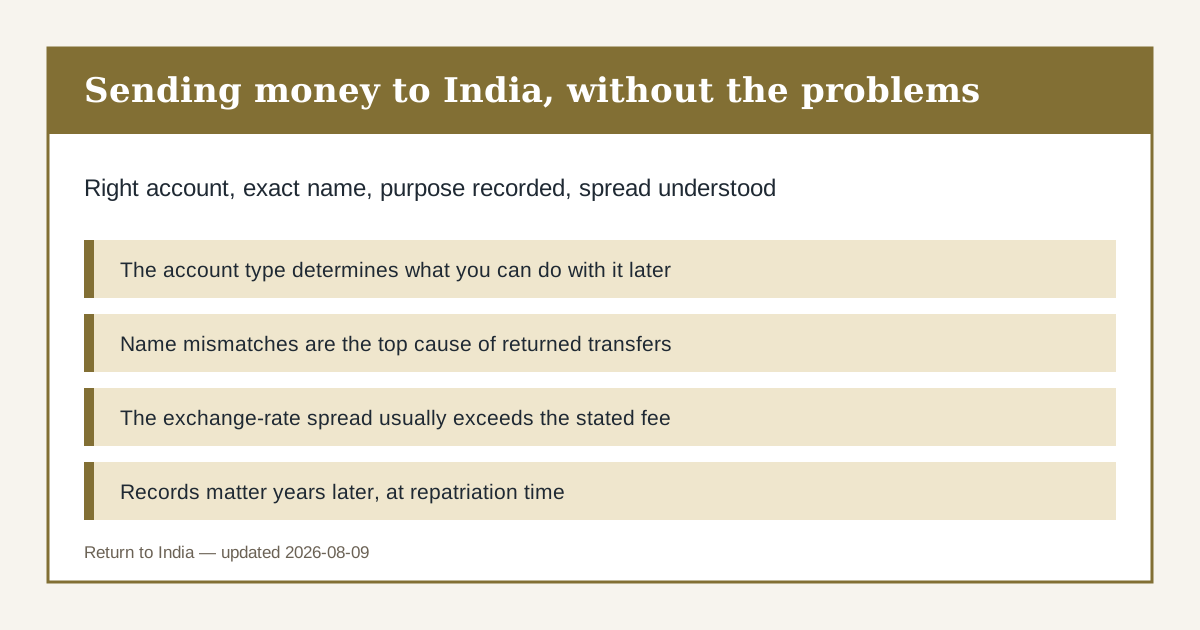
The 60-second version
Most remittance problems come from three causes: sending to the wrong account type, a beneficiary name that does not match exactly, and no record of what the money was for. The exchange rate spread costs more than the advertised fee.
Fast answer: the account you send to matters more than the service you send with
Most articles about sending money to India compare transfer services on fees and speed. That comparison is worth making, but it addresses the smallest of the three problems. The larger ones are structural: which Indian account the money lands in, and whether you can prove years later what the money was and where it came from.
Account type is the decision that echoes. Money remitted from abroad into an NRE account retains its character as foreign-sourced funds, which keeps it freely repatriable later. The same money sent into an NRO account mixes with Indian-sourced income and becomes subject to the capped, documented repatriation route. People routinely send to whichever account number they had handy, and discover the consequence years later when they want to move funds back out.
The third issue is records. Foreign inward remittance advices, transfer confirmations and a simple ledger of what each transfer was for cost nothing to keep at the time and are extremely difficult to reconstruct later. When a repatriation request is questioned, or when a tax position on a large transfer needs explaining, those records are the entire answer.
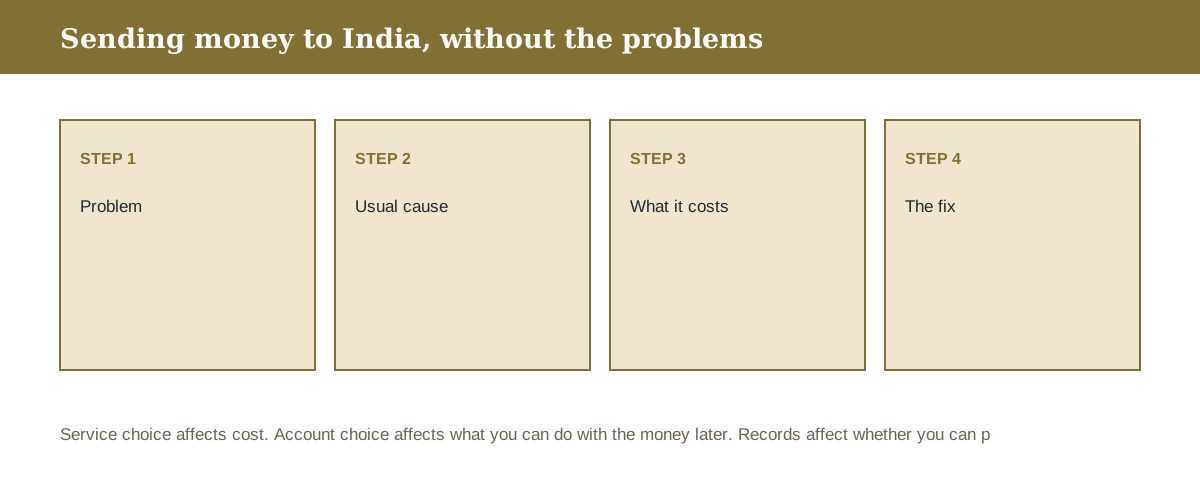
The problems, their causes and the fixes
Almost every remittance failure falls into one of these rows. The fix column is what prevents a repeat.
| Problem | Usual cause | What it costs | The fix |
|---|---|---|---|
| Transfer returned | Beneficiary name does not match the account exactly | Days of delay plus return charges on both sides | Copy the name character for character from the bank record, not from memory |
| Transfer delayed for verification | Large amount, new beneficiary or an unclear purpose | Days of delay, sometimes with follow-up questions | Warn the receiving bank in advance for large or first-time transfers |
| Money in the wrong account type | Sending to whichever account number was handy | Repatriability lost; the funds now follow NRO rules | Decide the account before every transfer based on the money's source |
| Repatriation later refused or questioned | No record of the original inward remittance | The transfer stalls until evidence is produced | Save every inward remittance advice from the first transfer onward |
| Worse rate than expected | Comparing advertised fees rather than the all-in rate | Often more than the visible fee, especially on large transfers | Compare the total rupees received, not the fee |
| Intermediary bank deductions | Correspondent banking charges on the route | An unexplained shortfall on arrival | Ask who bears intermediary charges and choose the option accordingly |
| Tax questions on a large transfer | No documentation of the source and purpose | Time and professional fees to explain it retrospectively | Keep a simple ledger recording source and purpose for every transfer |
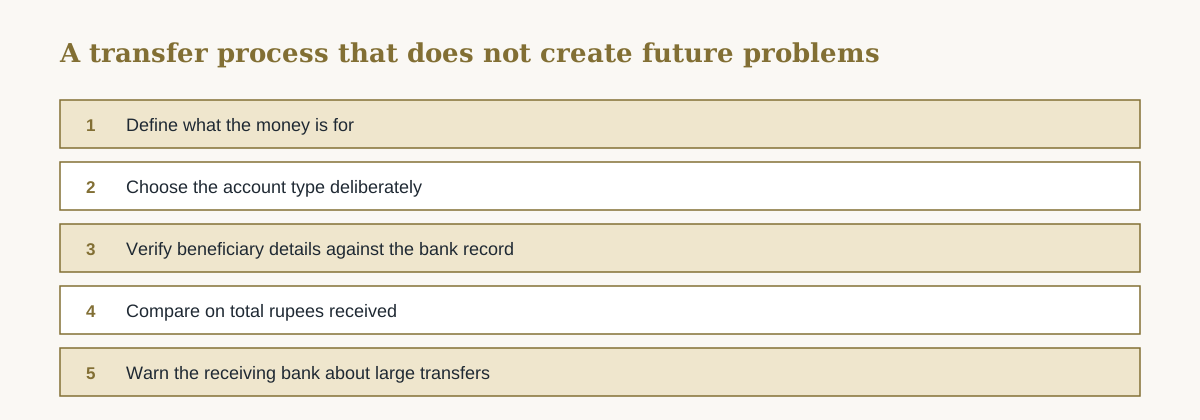
A transfer process that does not create future problems
Seven steps. Steps two and seven are the ones that matter years later.
Define what the money is for
Family support, an investment, a property payment, loan repayment or your own savings. The purpose determines the right account and the record you should keep.
Choose the account type deliberately
Foreign earnings intended to remain repatriable generally belong in an NRE account. Money intended for Indian expenses or mixing with Indian income can go to an NRO account. Decide before each transfer, not afterwards.
Verify beneficiary details against the bank record
Name exactly as the bank holds it, account number, branch identifier and any codes required. Copy from a statement rather than typing from memory.
Compare on total rupees received
Ask each service what will actually land in the Indian account for a given amount sent. That single number captures fee and spread together, which is what you are actually paying.
Warn the receiving bank about large transfers
A call or message before a first-time or unusually large transfer prevents a compliance hold. Banks are far quicker when the transfer is expected.
Confirm who bears intermediary charges
Correspondent banks in the route can deduct charges. Know whether you or the beneficiary bears them, so the arriving amount is not a surprise.
File the evidence immediately
Inward remittance advice, transfer confirmation, the rate applied and a one-line note on purpose. A simple folder and a spreadsheet is enough, and it is what answers questions years later.
Remittance hygiene checklist
Apply this to every transfer above a trivial amount.
- Purpose of the transfer written down before sending.
- Account type chosen deliberately based on that purpose.
- Beneficiary name copied character for character from a bank record.
- Account number and branch identifier verified against a statement.
- Total rupees receivable compared across at least two services.
- Who bears intermediary charges confirmed.
- Receiving bank warned in advance for first-time or large transfers.
- Inward remittance advice obtained and saved.
- Transfer confirmation and applied rate saved with it.
- A one-line ledger entry recording source, purpose and date.
- Records stored somewhere that does not depend on a single email account.
- An annual review confirming records exist for every material transfer.
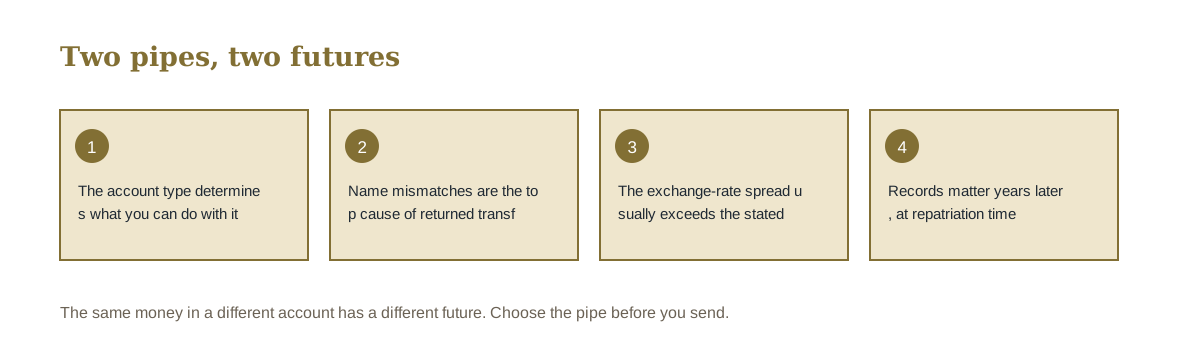
Two pipes, two futures
Need help with Banking?
Share your blocker in one line. Our experts will reply with practical next steps.
Community signal: name mismatches dominate failure reports
Unable to embed reddit content. View on reddit
"The most frequent transfer failure is a beneficiary name that differs slightly from the bank's record, which triggers a return and charges on both sides."
Read on reddit ->Community signal: the spread beats the fee
Unable to embed reddit content. View on reddit
"Comparisons focused on advertised fees consistently miss the exchange-rate margin, which on larger transfers is usually the bigger cost."
Read on reddit ->Remittance decision diagram
Need help with Banking?
Share your blocker in one line. Our experts will reply with practical next steps.
Indian income must not land in an NRE account
Crediting Indian-sourced income such as rent or dividends to an NRE account puts money in a pipe it does not belong in, and it can be questioned when you later try to repatriate. Route Indian income to an NRO account and keep the two streams cleanly separated.
The one-sentence answer
Most India remittance problems come from sending to the wrong account type, a beneficiary name that does not match exactly, and having no record of what the transfer was for — so decide the account by the money's purpose, copy details from a bank record, compare services on total rupees received, and file the remittance advice every single time.
Animated decision map

Need help with Banking?
Share your blocker in one line. Our experts will reply with practical next steps.
Interactive checkpoint
Turn this guide into a decision file
0 of 4 checked
Why did my transfer to India get returned?
Most commonly because the beneficiary name did not match the bank's record exactly. Copy the name character for character from a statement rather than typing it from memory, and verify the account number and branch identifier the same way.
Should I send money to an NRE or an NRO account?
Foreign earnings you may want to send back out later generally belong in an NRE account, which keeps them freely repatriable. Money intended for Indian expenses or that will mix with Indian income can go to an NRO account, where repatriation is capped and documented.
What is the cheapest way to send money to India?
Compare services on the total rupees that will actually reach the Indian account for a given amount sent. That single figure captures both the fee and the exchange-rate margin, and the margin is usually the larger cost on bigger transfers.
Why is my transfer taking longer than usual?
Large amounts, first-time beneficiaries and unclear purposes often trigger additional verification. Telling the receiving bank in advance about a first-time or unusually large transfer usually prevents the hold.
What are intermediary bank charges?
Correspondent banks in the transfer route can deduct their own charges, which is why the amount arriving is sometimes less than expected. Confirm with the sending service who bears these charges before you send.
What records should I keep for each transfer?
The inward remittance advice, the transfer confirmation, the exchange rate applied, and a one-line note recording the source and purpose. These are what answer questions at repatriation or during a tax review years later.
Do I pay Indian tax on money I send to my family?
Genuine gifts to specified close relatives are treated differently from other receipts under Indian tax law, and the treatment depends on the relationship and the amount. Keep a clear record of the purpose and relationship, and take advice for large transfers.
Can I send money to my parents' resident account?
Transfers to a resident relative's account are commonplace, but the money then belongs to them and is not repatriable by you. If you intend to retain the funds and repatriate them later, send them to your own NRE account instead.
How much can I send to India?
Inward remittance into your own Indian accounts is not subject to the same kind of ceiling as outward remittance. What is constrained is taking money back out of India, particularly from an NRO account, which is where good records earn their value.
Your NRE account redesignation has a deadline.
Banks don't remind you. You need the right account stack before salary, rent, and EMIs start moving. Get the exact sequence.