NRO USD 1M Cap 2026: Counts, Proof, 15CA Order
What counts toward the NRO USD 1M FY cap, source-of-funds banks demand, Form 15CA/15CB order, and the rejections that kill remittances.
The 60-second version
If your search starts with what an NRO account is, the short answer matters before the transfer rule. This guide defines the account, then separates eligibility, tax documentation, and bank execution so your file can clear in one pass.
What is an NRO account in India?
An NRO (Non-Resident Ordinary) account is a rupee bank account for NRIs and OCIs to hold India-sourced money — rent, dividends, pension, interest, or sale proceeds.
I use one line to remember it: NRE is for foreign earnings you send to India; NRO is for Indian income already here. NRO interest is taxable in India. Moving money out needs source proof, tax paperwork, bank review, and the USD 1 million per financial year cap.
Quick answers for common NRO searches
Use this first if you are comparing NRO meaning, NRO vs NRE treatment, and the repatriation limit.
| Search question | Short answer | Next check |
|---|---|---|
| What is an NRO account in India? | A rupee account for NRIs/OCIs to manage India-sourced income such as rent, dividends, pension, interest, and sale proceeds. | Confirm whether the money is Indian income or foreign income. |
| What is the NRO account repatriation limit? | NRO balances and eligible assets are generally remittable up to USD 1 million per financial year, subject to RBI/FEMA conditions and taxes. | Track the total across all NRO accounts and eligible assets for April-March. |
| Is NRO repatriation automatic? | No. Banks review source of funds, tax compliance, Form 15CA/15CB where applicable, and beneficiary or purpose details. | Build the CA and bank document pack before booking the transfer. |
| What is the difference between NRO and NRE repatriation? | NRE funds are foreign earnings and are normally freely repatriable; NRO funds are India-sourced and documentation-heavy. | Do not mix NRE, NRO, and resident-account funds in one unclear file. |
What the USD 1 million limit actually means (and what it does not mean)
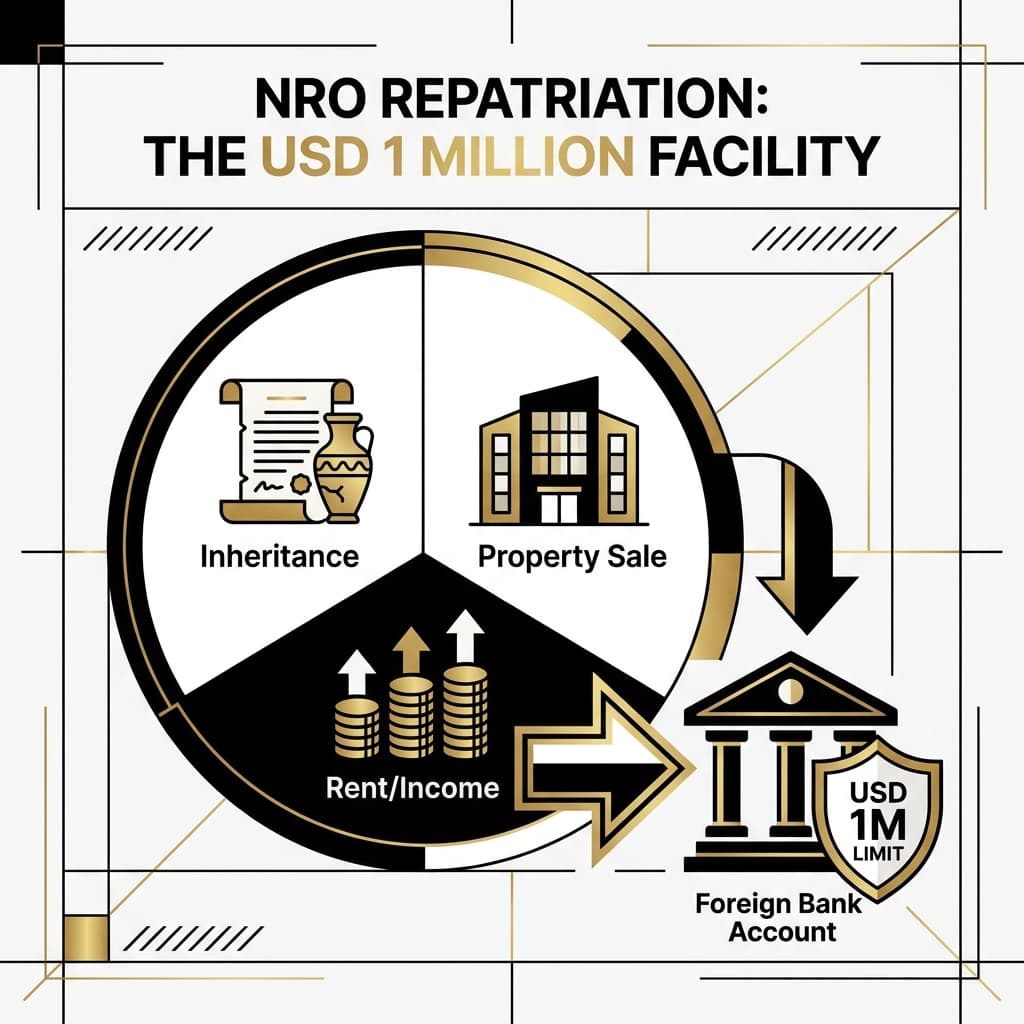
The high-intent search phrase is correct in spirit, but often misunderstood in execution. The USD 1 million figure is generally treated as an annual facility for eligible remittance of assets from NRO balances under the prescribed framework and documentation conditions. It is not a universal one-click transfer promise for every transaction shape.
In practice, banks evaluate source trail, tax compliance, and your current status before they evaluate speed. So the most useful framing is not 'what is the limit?' but 'which lane is this transfer in, and does my file prove that lane cleanly?'
Use this lane check before filing transfer requests
| Question | If answer is yes | Why it matters |
|---|---|---|
| Is the money currently in an NRO account or clearly attributable to an NRO-eligible source? | Proceed in NRO remittance lane with tax and source documents. | Classification errors are the top cause of rejection loops. |
| Is this just foreign savings held abroad being sent into India? | Do not treat it as NRO repatriation. | Inward remittance and NRO remittance are different workflows. |
| Are you moving funds abroad from India-side balances? | Prepare bank and tax compliance pack first, then execution. | Documentation sequence matters more than provider marketing claims. |
| Are you combining multiple sources in one transfer request? | Split requests by source when needed. | Mixed-origin files trigger deeper scrutiny and delays. |
Execution sequence that reduces back-and-forth
Treat this as a file-building workflow, not an app workflow.
Create a source-of-funds memo for yourself first
List each component amount, origin, and holding period. If you cannot explain the source cleanly in one page, your bank reviewer will also struggle.
Align tax-compliance paperwork before transfer booking
Where applicable, complete Form 15CA flow and CA certification path in the correct order as required by your bank and transaction type.
Submit a complete bank pack in one shot
Include KYC, account proofs, purpose notes, source proofs, and tax docs. Partial submissions create avoidable review cycles.
Lock beneficiary details and receiving-lane logic
Confirm the destination account ownership and receiving-country requirements before release to avoid returns or amendments.
Need help with Banking?
Share your blocker in one line. Our experts will reply with practical next steps.
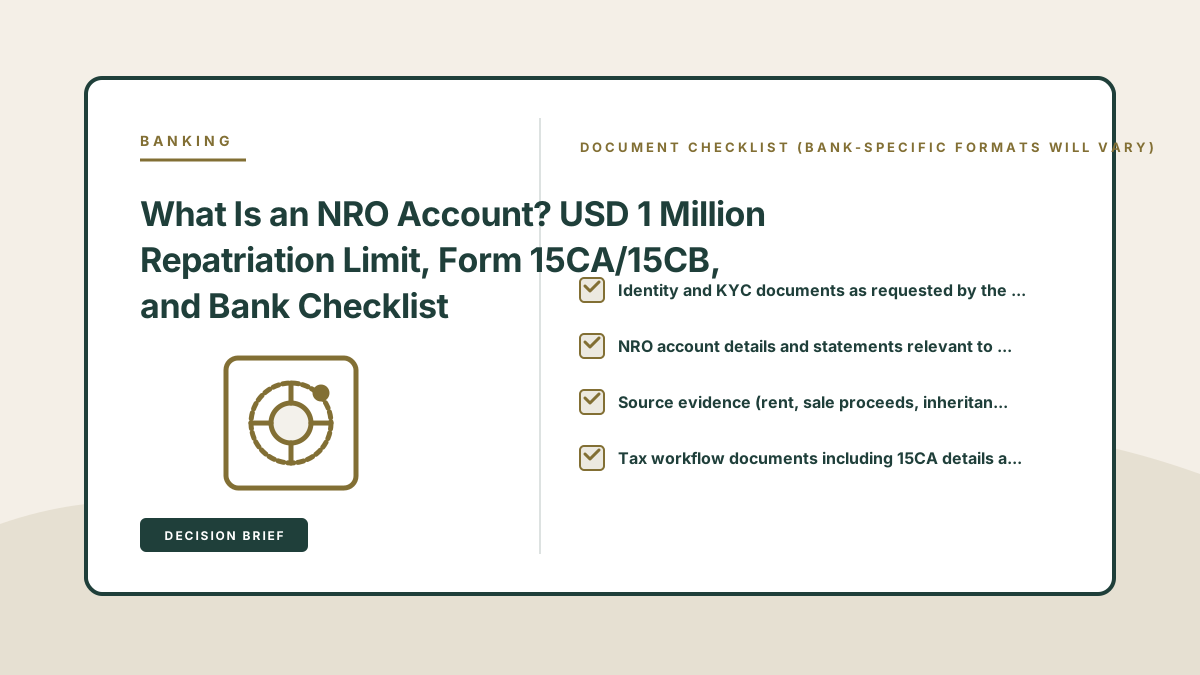
Document checklist (bank-specific formats will vary)
- Identity and KYC documents as requested by the remitting bank.
- NRO account details and statements relevant to source tracing.
- Source evidence (rent, sale proceeds, inheritance, or other qualifying trail).
- Tax workflow documents including 15CA details and, where required, 15CB support.
- Beneficiary account proof and transfer purpose statement.
- A self-audit note that total amount requested remains within your annual facility context.
One phrase to remember
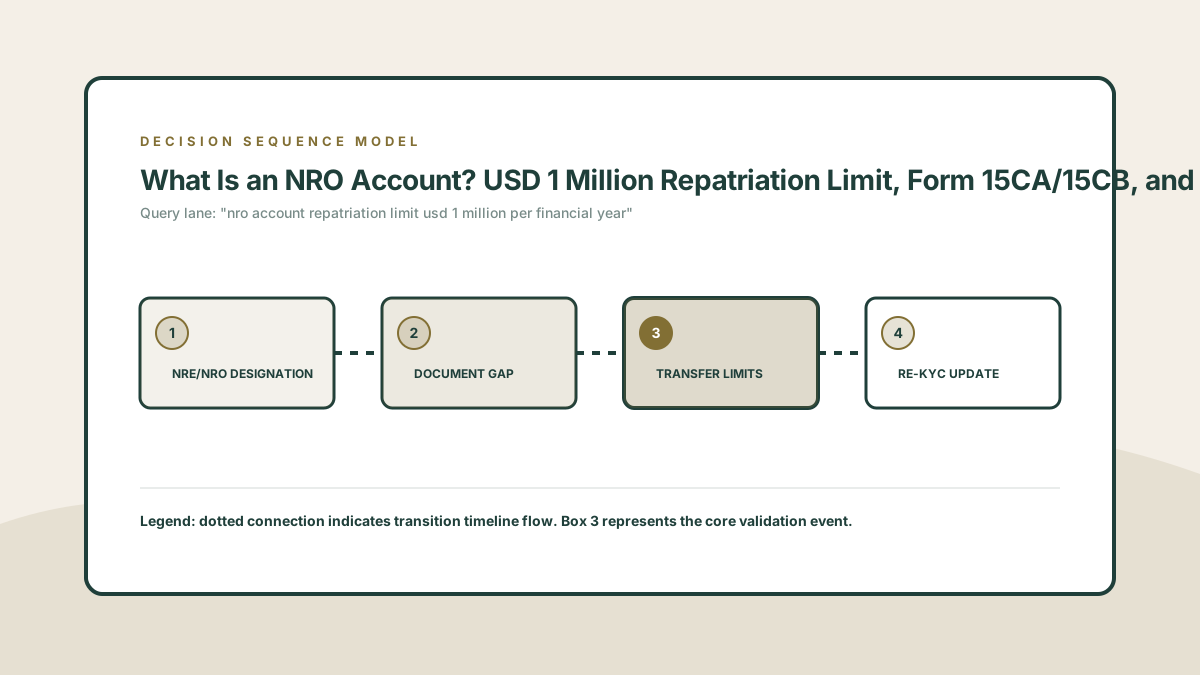
The limit number gets attention, but sequence gets approvals. Classification -> tax workflow -> bank pack -> transfer release.
USD 1 Million Repatriation Route
Need help with Banking?
Share your blocker in one line. Our experts will reply with practical next steps.
NRO repatriation workflow under the $1M cap
Animated decision map

Need help with Banking?
Share your blocker in one line. Our experts will reply with practical next steps.
Interactive check
NRO repatriation cap checker (USD 1M / year)
I use this to sanity-check whether a transfer fits inside RBI's USD 1 million LRS ceiling for the financial year. This is not tax or legal advice. Your bank applies the live FX rate and source-of-funds rules.
This transfer (USD equiv.)
—
FY total (USD)
—
Headroom left (USD)
$1,000,000
Within USD 1M cap at this rate.
Next: Form 15CA/15CB order → CA certificate → AD-1 bank submission.
Interactive checkpoint
Turn this guide into a decision file
0 of 4 checked
What is an NRO account in India?
An NRO account is a rupee-denominated Indian bank account for NRIs, OCIs, and eligible non-residents to manage India-sourced income such as rent, dividends, pension, interest, and sale proceeds. It is different from an NRE account, which is mainly used for foreign earnings sent to India.
What is the NRO account repatriation limit?
NRO balances and eligible assets are generally remittable up to USD 1 million per financial year, subject to RBI/FEMA conditions, tax compliance, bank review, and source documentation. Current income may have a different treatment, so classify the source before filing.
Can NRO funds be transferred to an NRE or overseas account?
Yes, but it is not automatic. The bank will usually check source of funds, taxes, Form 15CA/15CB applicability, beneficiary details, and whether the transfer fits the permitted NRO repatriation lane.
Is the USD 1 million facility a guaranteed automatic transfer entitlement?
No. It is a regulatory facility subject to conditions and documentation. Banks still review source, tax workflow, and execution details before release.
Do Form 15CA and 15CB always apply the same way?
No. Applicability depends on transaction nature and tax context. Your remitting bank and tax advisor should confirm the exact path for your case.
Can I combine all balances into one transfer request to save time?
Only if the source trail is clear and the bank accepts the combined file. Mixed-origin requests often move faster when split with separate documentation trails.
Is this article legal or tax advice?
No. This is an execution framework to reduce process errors. Final decisions should be validated with your authorised dealer bank and qualified tax professional.
Your NRE account redesignation has a deadline.
Banks don't remind you. You need the right account stack before salary, rent, and EMIs start moving. Get the exact sequence.