Reverse Brain Drain: Why NRIs Are Actually Moving Back
The push and pull factors behind the return trend — immigration uncertainty, ageing parents, cost of living, career ceilings, the Indian job market and identity —...
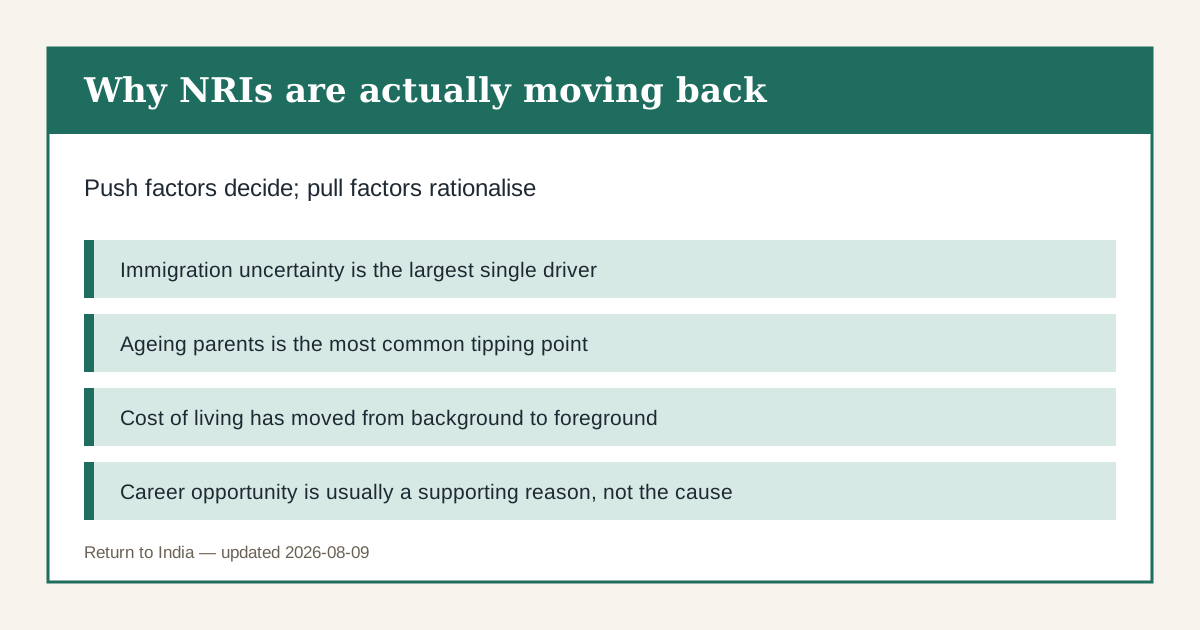
The 60-second version
Reverse migration to India is driven far more by immigration uncertainty and ageing parents than by opportunity narratives. Understanding which factor is actually driving your decision changes what you should plan for, and what you should not.
Fast answer: most people move for a push, then explain it with a pull
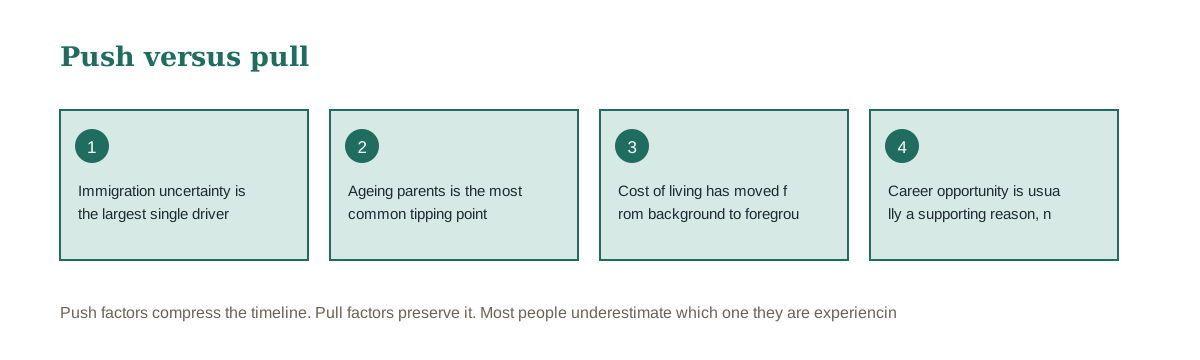
When you read enough return stories, a pattern emerges. The stated reason is usually a pull — India's growth, the startup ecosystem, better roles, being closer to culture. The actual trigger is almost always a push — a visa denial, a layoff, a parent's diagnosis, an immigration timeline that stopped being credible, or a cost-of-living calculation that stopped working.
This is not a criticism. Pull narratives are more comfortable to tell and often contain real truth. But the distinction matters practically, because push-driven and pull-driven moves need different plans. A pull-driven move can be sequenced patiently, tested with a trial period, and reversed if the opportunity does not materialise. A push-driven move often has a deadline attached and less room to preserve optionality.
It also matters for expectations. If you are moving because an immigration path closed, the thing that will determine whether the move succeeds is not India's growth rate — it is whether you have solved for income, housing, schooling, healthcare and a support system within your actual timeline. Being honest about which factor is driving you is the first genuinely useful planning step.
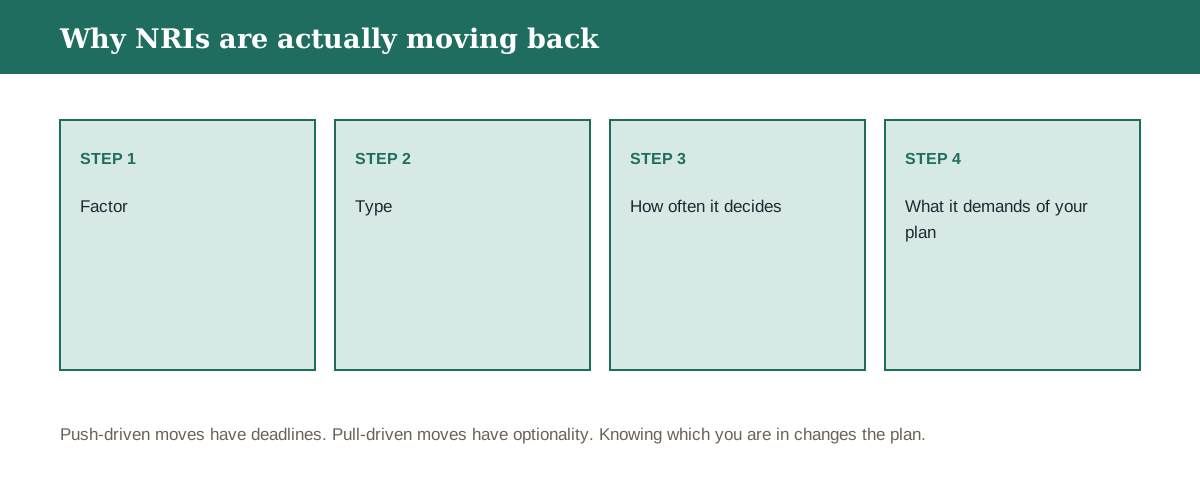
The factors, ranked by how often they actually decide it
Rank your own situation against this. The factor you would still move for if the others disappeared is your real driver.
| Factor | Type | How often it decides | What it demands of your plan |
|---|---|---|---|
| Immigration uncertainty | Push | Very often — the single largest driver for US-based professionals | A hard timeline, income secured before landing, status decisions made deliberately |
| Ageing or unwell parents | Push | Very often — usually the tipping point rather than the origin | Housing near care, a healthcare plan for the parent, honest caregiving conversations |
| Cost of living and housing abroad | Push | Increasingly often, particularly from Canada and the UK | A real Indian budget, because Indian metro costs are not what people remember |
| Job market conditions abroad | Push | Often, especially after a layoff | An Indian offer in hand or a runway measured in months, not weeks |
| Career opportunity in India | Pull | Sometimes decisive, more often supporting | Verified compensation and role, not a general belief about growth |
| Children's upbringing and identity | Mixed | Sometimes decisive for families with young children | School admission timelines, curriculum choice, and a plan for the transition year |
| Belonging and quality of life | Pull | Rarely the sole driver, frequently the deciding tiebreaker | A trial period, because this factor is the hardest to predict from abroad |
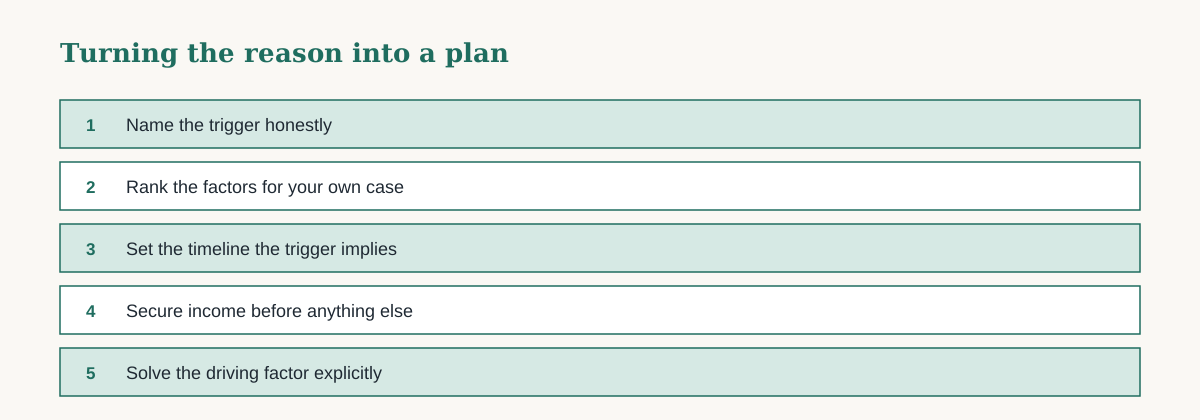
Turning the reason into a plan
The first two steps are uncomfortable and the most valuable. Do them before looking at flights or schools.
Name the trigger honestly
What specifically changed that made this a live question? A visa outcome, a diagnosis, a layoff, a rent increase, a birthday. The trigger tells you what your timeline actually is.
Rank the factors for your own case
Order them. Then ask which one you would still move for if the rest disappeared. That is your real driver, and it should get the most planning attention.
Set the timeline the trigger implies
A visa expiry sets a hard date. A parent's health sets a soft but urgent one. A career opportunity sets a flexible one. Do not plan a hard-deadline move with a flexible-deadline process.
Secure income before anything else
Whether that is an Indian offer, a remote arrangement, a consulting pipeline or a defined runway. Every other part of the plan depends on this being real rather than hoped for.
Solve the driving factor explicitly
If it is parents, the housing and healthcare plan is the centre of the move. If it is immigration, the status and tax decisions are. If it is cost, the budget is. Build the plan around the driver.
Preserve optionality where the trigger allows
Delay irreversible decisions — selling the foreign home, surrendering hard-won status, closing every foreign account — until the move has been tested. A push-driven timeline reduces this room but rarely eliminates it.
Define what success looks like at twelve months
Written criteria, agreed with your partner. Without them, the twelve-month review becomes a mood rather than an assessment.
Decision-clarity checklist
If you can complete these, you have a decision rather than a drift.
- The specific trigger event named and dated.
- All seven factors ranked for your own situation.
- The single factor you would still move for identified.
- Timeline classified as hard, urgent-but-soft, or flexible.
- Income secured, or a runway defined in months with a written figure.
- The driving factor addressed with a specific, dated plan.
- Housing decision made against the driving factor, not against nostalgia.
- Healthcare plan in place for whoever in the family needs it most.
- Irreversible decisions listed and deliberately deferred where possible.
- Partner and family aligned on the reason, not only on the logistics.
- Written twelve-month success criteria agreed.
- A reversal plan documented, including cost and what must be preserved.
Push versus pull
Need help with Move Planning?
Share your blocker in one line. Our experts will reply with practical next steps.
Community signal: the stated reason and the real reason differ
Unable to embed reddit content. View on reddit
"Return stories consistently open with a pull narrative and reveal a push trigger three paragraphs in. Recognising this in your own case improves the plan."
Read on reddit ->Community signal: parents are the most common tipping point
Unable to embed reddit content. View on reddit
"Ageing parents rarely start the conversation but very often end it, which is why the housing and healthcare plan deserves disproportionate attention."
Read on reddit ->Return-driver diagram
Need help with Move Planning?
Share your blocker in one line. Our experts will reply with practical next steps.
A pull narrative can hide an unplanned push
Telling yourself the move is about opportunity when it is actually about a closing immigration path leads to a plan built for the wrong problem. The cost of that mismatch is usually discovered in month four, when the opportunity has not materialised and the deadline has already passed.
The one-sentence answer
Reverse migration to India is driven mainly by push factors — immigration uncertainty, ageing parents, cost of living and job-market conditions — so identify the one factor you would still move for, set the timeline your trigger implies, and build the plan around that driver rather than around a comfortable pull narrative.
Animated decision map
Need help with Move Planning?
Share your blocker in one line. Our experts will reply with practical next steps.
Interactive checkpoint
Turn this guide into a decision file
0 of 4 checked
What is reverse brain drain?
It describes skilled professionals returning to their country of origin after building careers abroad, reversing the historical flow. In the Indian context it refers to NRIs in countries such as the US, UK and Canada moving back with accumulated skills and capital.
What is the biggest reason NRIs return to India?
For US-based professionals, immigration uncertainty is the largest single driver. Across all corridors, ageing parents is the most common tipping point that converts a long-running consideration into a decision.
Is career opportunity in India a good enough reason on its own?
It can be, but it usually functions as a supporting reason. If opportunity is your primary driver, the plan should be built on a verified role and compensation rather than on a general belief about growth.
How do I know whether my move is push-driven or pull-driven?
Name the specific event that made this a live question. If you can point to a visa outcome, a diagnosis, a layoff or a cost calculation, it is push-driven and comes with a deadline. If nothing specific changed, it is pull-driven and you have more room.
Does the reason for returning change what I should plan for?
Substantially. An immigration-driven move needs status and tax decisions at the centre. A parent-driven move needs housing near care and a healthcare plan. A cost-driven move needs a realistic Indian budget. The driver should shape the plan.
How long should I give the move before deciding it worked?
Twelve months is a common review point, with criteria written down in advance. Anything shorter is dominated by transition friction; anything longer risks drifting past the point where reversal is still practical.
What should I avoid doing in the first year?
The irreversible decisions — selling the foreign home, surrendering an immigration status that took years to obtain, and closing every foreign account. Preserve optionality until the move has actually been tested.
Are more Indians really returning now?
Return movement is a visible and much-discussed trend, but reliable numbers require official migration and statistical data rather than social media commentary. Treat anecdote as signal, not as measurement.
What is the most common planning mistake?
Building the plan around the comfortable pull narrative rather than the actual push trigger. The mismatch usually surfaces a few months in, when the deadline has already passed and the expected opportunity has not materialised.
The plan is only as good as the sequence.
Tax, banking, schools, shipping — they all have dependencies. A wrong order costs months and lakhs. Get it right.