H-1B Stress and the Decision to Return: A Framework
Visa dependence, green card queues, layoff grace periods and the mental load of a decade of uncertainty. A structured way to separate the immigration facts from the...
The 60-second version
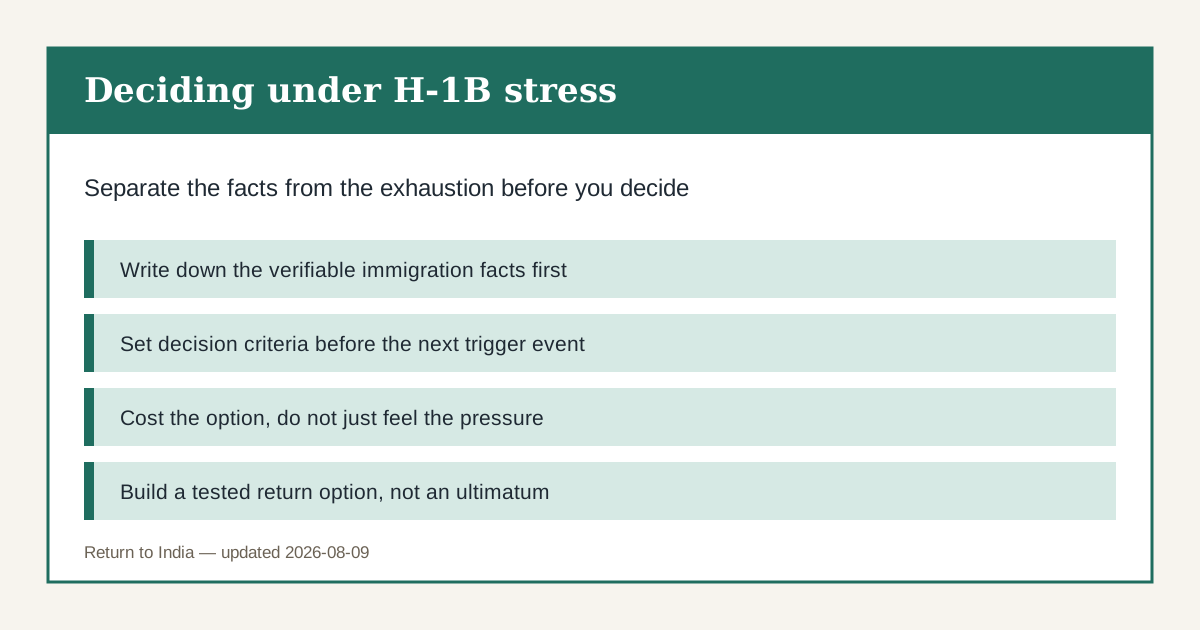
H-1B stress is a real and documented driver of return decisions, but exhaustion is a poor decision-making state. Separate the verifiable immigration facts from the emotional load, set decision criteria before the next trigger event, and give yourself a tested option rather than an ultimatum.
Fast answer: exhaustion is a real input, but it is a terrible decision rule
A decade of visa dependence produces a specific kind of tiredness. Every job change is a legal event. Every layoff is a countdown. Travel involves stamping risk. A spouse's ability to work depends on a document. A child's status changes at a birthday. None of that is imagined, and it accumulates in a way that people outside the system consistently underestimate.
The problem is that this exhaustion tends to produce decisions at the worst moments — the week after a denial, the day after a layoff, the evening after another year passes with no movement in the queue. Decisions made in those windows are usually directionally reasonable and operationally terrible: right instinct, no plan, no runway, no offer, and irreversible steps taken in a fortnight.
The alternative is not to suppress the feeling. It is to do the work in advance, while you are calm, so that when the next trigger arrives you are executing a plan rather than reacting. That means three things: writing down the verifiable immigration facts as they actually are, setting decision criteria before the trigger, and building a return option that has been tested rather than imagined.
Separating facts from load
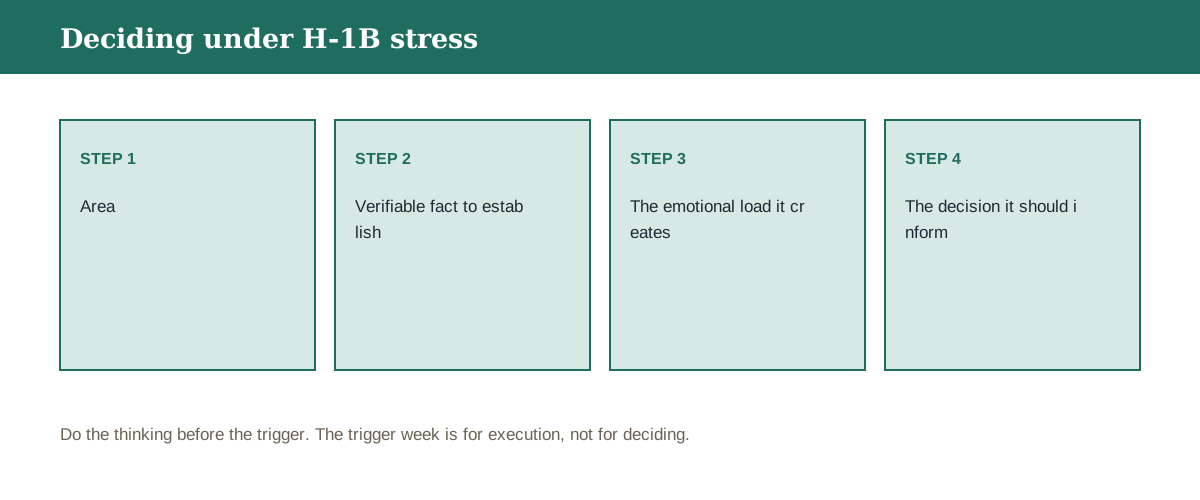
Fill the first column from official sources. Fill the second honestly. Most people conflate them, and that is where poor decisions come from.
| Area | Verifiable fact to establish | The emotional load it creates | The decision it should inform |
|---|---|---|---|
| Current status validity | Exact expiry, extension eligibility, and how many years remain available | Constant background awareness of a countdown | How much runway you actually have to plan a move properly |
| Green card queue position | Priority date, category, and current bulletin movement | A number that has stopped feeling real | Whether waiting is a strategy or a habit |
| Layoff exposure | Grace period length, portability rules, and the practical job-search window | Job insecurity that never fully resolves | What cash runway you need to hold at all times |
| Spouse's work authorisation | Current eligibility and what it depends on | A second career held hostage to your status | Whether household income is genuinely two-sided |
| Children's status | What changes at each age threshold and the timelines involved | A deadline attached to a child's birthday | Whether the family timeline is shorter than yours |
| Financial position | Liquid runway in months, and the cost of relocation | A sense of being unable to move even if you wanted to | Whether the option is currently affordable, and what would make it so |
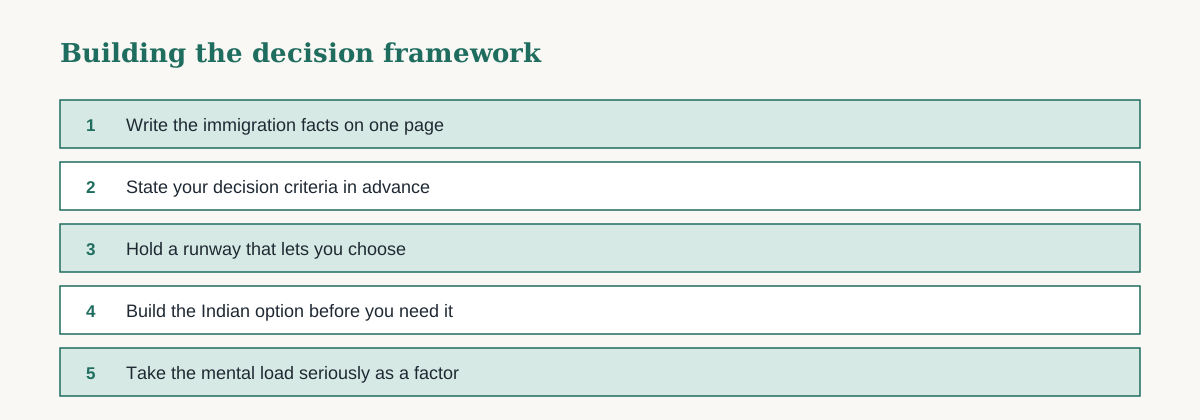
Building the decision framework
Do this on an ordinary week, not in the aftermath of a trigger event.
Write the immigration facts on one page
Status, expiry, extension eligibility, priority date and category, spouse authorisation, children's timelines. From official sources only. Date the page and refresh it every six months.
State your decision criteria in advance
Write the conditions under which you would decide to return, in a form specific enough to be tested. Vague criteria get reinterpreted under stress; specific ones do not.
Hold a runway that lets you choose
The main thing that converts an option into an ultimatum is having no cash. A defined liquid runway means the next trigger event gives you weeks to think rather than days to react.
Build the Indian option before you need it
Warm the network, understand the market for your role, know the realistic compensation band, and understand the cost of the city you would land in. An untested option is not an option.
Take the mental load seriously as a factor
It belongs in the decision explicitly, alongside money and career. Treating it as weakness to be overcome tends to produce a decision made at the worst possible moment instead.
Separate reversible from irreversible steps
Returning is reversible for many people, at a cost. Abandoning a pending immigration process, selling a home in a rush or surrendering status may not be. Sequence the reversible steps first.
Set a review date and keep it
Every six or twelve months, re-establish the facts and re-test the criteria. Circumstances change, and a framework that is never revisited becomes another form of drift.
Decision-readiness checklist
The purpose is to make the next trigger event a moment of execution rather than a moment of panic.
- A one-page immigration facts sheet, dated and sourced officially.
- Priority date and category confirmed against the current bulletin.
- Extension eligibility and remaining years established.
- Grace period and portability rules understood before they are needed.
- Spouse's work authorisation position documented.
- Children's status timelines mapped against their birthdays.
- A liquid runway target set and currently met.
- Estimated relocation cost written down.
- Indian market research done for your role, with a realistic compensation band.
- Two or three warm professional contacts in India maintained.
- Written decision criteria that a third party could evaluate.
- Reversible and irreversible steps listed separately.
- A six-month review date in the calendar.
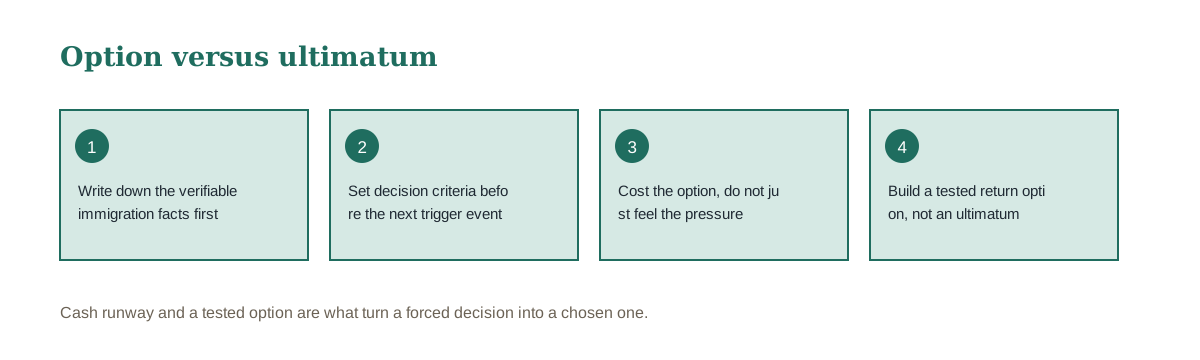
Option versus ultimatum
Need help with Move Planning?
Share your blocker in one line. Our experts will reply with practical next steps.
Community signal: decisions made in the week after a trigger
Unable to embed reddit content. View on reddit
"The recurring pattern is a decision taken within days of a denial or layoff, with no offer, no runway and no plan — right instinct, wrong execution window."
Read on reddit ->Community signal: the load is cumulative, not event-driven
Unable to embed reddit content. View on reddit
"What people describe is not a single crisis but a decade of low-grade uncertainty, which is precisely why the framework has to be built in advance."
Read on reddit ->Decision framework diagram
Need help with Move Planning?
Share your blocker in one line. Our experts will reply with practical next steps.
Do not abandon a pending process in a bad week
Withdrawing from an immigration process, surrendering a status or selling property in the two weeks after a trigger event is the category of decision most people later describe as their biggest regret. Take the reversible steps first and let the irreversible ones wait for the review date.
The one-sentence answer
H-1B stress is a legitimate input into a return decision but a poor decision rule, so build a dated immigration facts page, write testable decision criteria, hold a cash runway, and develop a tested Indian option in advance — then use the trigger week to execute rather than to decide.
Animated decision map

Need help with Move Planning?
Share your blocker in one line. Our experts will reply with practical next steps.
Interactive checkpoint
Turn this guide into a decision file
0 of 4 checked
Is visa stress a valid reason to move back to India?
Yes. The cumulative effect of long-term status dependence on career choices, a spouse's work, travel and family planning is a legitimate factor and belongs in the decision explicitly, alongside financial and career considerations.
How do I decide without making an emotional decision?
Do the work in a calm week: establish the immigration facts from official sources, write decision criteria specific enough that a third party could evaluate them, and build the Indian option. Then use the trigger week to execute rather than to decide.
What immigration facts should I establish first?
Current status expiry, extension eligibility and remaining years, priority date and category with current bulletin movement, grace period and portability rules, spouse's work authorisation, and the timelines attached to children's status.
How much cash runway should I hold?
Enough that a layoff gives you weeks to think rather than days to react, plus the estimated relocation cost. The exact figure depends on your household, but the principle is that a runway converts an ultimatum back into a choice.
Can I return to India and keep a pending immigration process alive?
It depends entirely on the process, the stage it has reached and your status. This is a question for a qualified immigration attorney using your actual case facts, not one to resolve from general guidance or forum posts.
Is returning reversible?
Often partially, at a cost. What is rarely reversible is abandoning a pending process, surrendering a status that took years to obtain, or selling property in a rush. Sequence reversible steps first and defer the rest.
What should I prepare before the next trigger event?
A dated facts page, written decision criteria, a met runway target, market research for your role in India with a realistic compensation band, and two or three warm professional contacts you have actually spoken to.
How do I talk to my spouse about this?
Separate the factual position from the emotional load and discuss both explicitly. Agree the decision criteria together in advance, because criteria agreed in a calm week hold up far better than a conversation held during a crisis.
How often should I revisit the framework?
Every six months, and immediately after any material change in status, family circumstances or the immigration landscape. A framework that is never refreshed becomes another form of drift.
The plan is only as good as the sequence.
Tax, banking, schools, shipping — they all have dependencies. A wrong order costs months and lakhs. Get it right.