The 60-second version
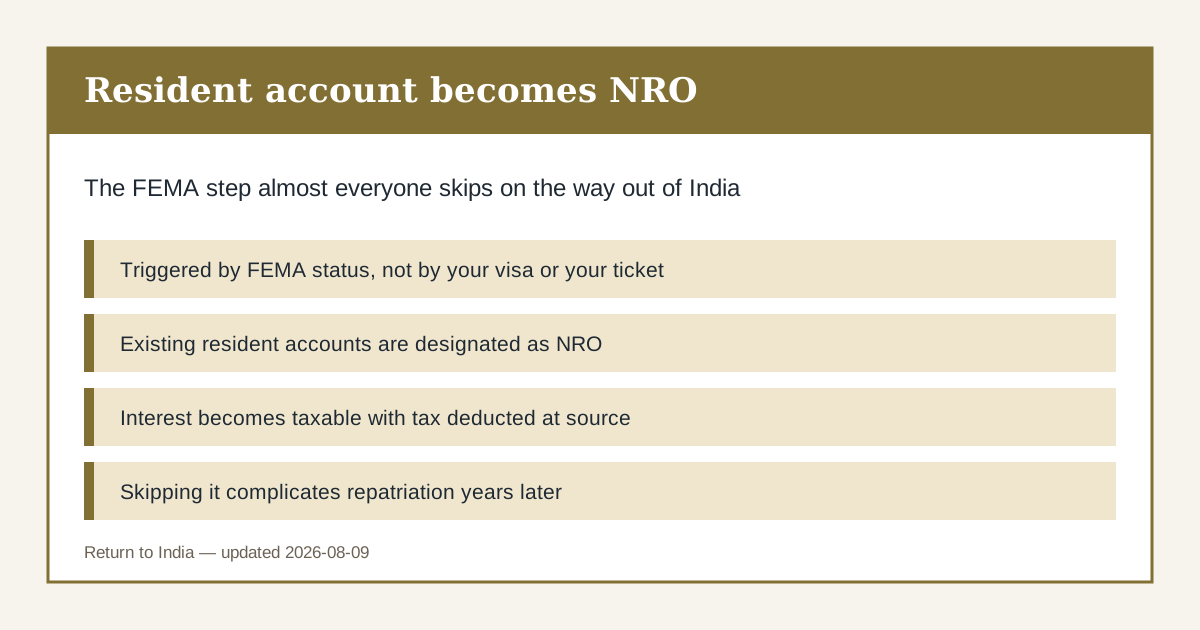
The rule almost nobody applies on the way out: once you become a person resident outside India, your existing resident savings accounts are to be designated as NRO accounts. Leaving them running as resident accounts is a compliance breach that surfaces years later at repatriation.
Fast answer: the account does not stay resident just because you did not tell the bank
Almost every piece of writing about NRI banking covers the inbound journey — what to do when you come back to India. The outbound step gets skipped, and it is the one that creates most of the mess people discover a decade later. When you leave India for employment, business or vocation for an uncertain period, you become a person resident outside India under FEMA. At that point your existing resident savings accounts are to be designated as NRO accounts.
This is not optional housekeeping and it is not triggered by your visa type or the length of your flight. It follows the FEMA definition of residence, which turns on the purpose and expected duration of your stay abroad rather than on a day count. Someone who leaves on a two-year assignment with no fixed return date has generally crossed the line, even though their passport, PAN and Aadhaar are unchanged.
The consequence of ignoring it is rarely immediate. What happens instead is that years of Indian income accumulate in an account whose status does not match your own, tax deducted at source is applied on the wrong basis, and then — when you eventually want to repatriate funds or redesignate on your return — the bank asks for a history that does not reconcile. Fixing it retrospectively is far more work than doing it at the time.
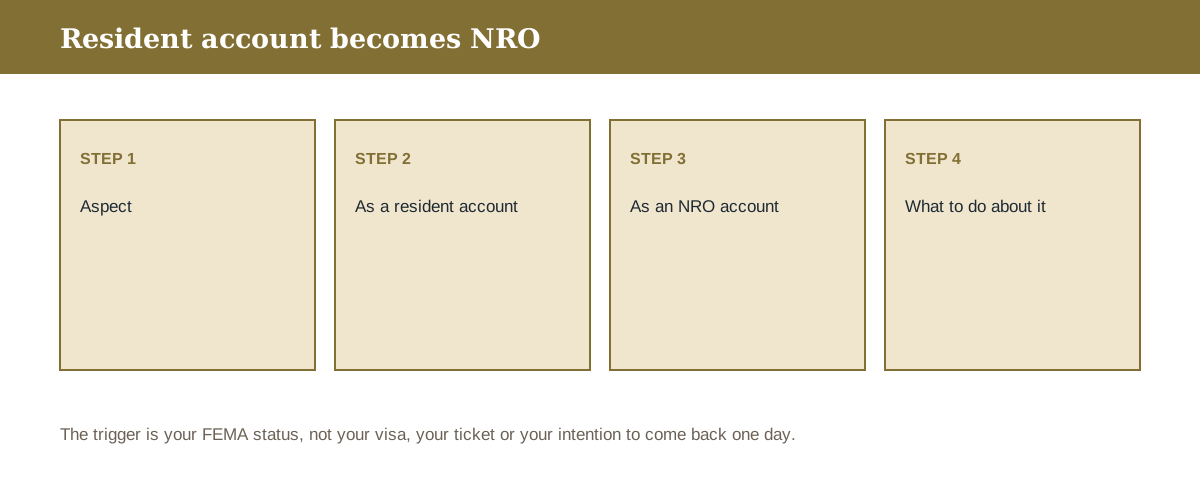
What changes when the account becomes NRO
Read this before you leave, not after. Every row has a downstream consequence that is cheaper to handle now.
| Aspect | As a resident account | As an NRO account | What to do about it |
|---|---|---|---|
| Who may hold it | A person resident in India | A person resident outside India | Notify the bank of the status change and complete the designation |
| Interest taxation | Taxable, with deduction at source above the threshold | Taxable, with deduction at the applicable non-resident rate | Check whether treaty relief applies and what documentation it requires |
| Form 15G and 15H | Available to eligible residents | Generally not available to non-residents | Stop relying on them; plan for deduction at source instead |
| Repatriation | Not applicable | Permitted within the USD 1 million per financial year route | Understand the documentation before you need it |
| Joint holding | As per the resident mandate | Joint holding rules for NRO accounts apply | Review who is on the account and on what basis |
| Linked investments | Resident folios, demat, insurance mandates | Status flags on those need updating too | Update mutual fund, demat and insurance records in the same window |
| Credits allowed | Anything | Income arising in India | Route foreign earnings to an NRE account instead, not to the NRO |
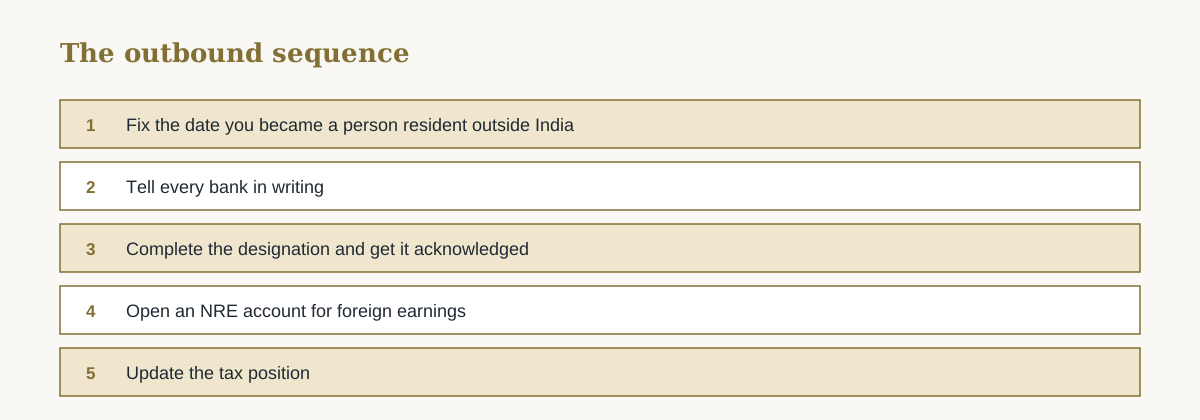
The outbound sequence
Do this in the weeks around departure, while you still have easy access to Indian branches and documents.
Fix the date you became a person resident outside India
Under FEMA this generally follows leaving India for employment, business or vocation for an uncertain period. Record the date; every instruction below is dated from it.
Tell every bank in writing
List every resident savings and deposit account you hold, and notify each bank of the status change. A verbal mention to one branch does not update the others.
Complete the designation and get it acknowledged
Ask for written confirmation that the account has been designated as NRO, with the effective date. Save it — this is the document that reconciles the history later.
Open an NRE account for foreign earnings
Money you earn abroad should not go into the NRO account. Open an NRE account so foreign-sourced funds stay cleanly repatriable.
Update the tax position
Deduction at source moves to the non-resident basis. Check whether treaty relief is available to you and what documentation the bank needs to apply a reduced rate.
Propagate the status everywhere else
Mutual fund folios, demat account, insurance policies, standing instructions and any registered nominee details. Records that disagree are what cause blocked transactions.
Keep the evidence pack
The designation acknowledgement, the closing resident statement, the opening NRO statement and the date you recorded. This is what you will hand over when you eventually redesignate on return.
Leaving-India banking checklist
Work through this in the month before and the month after departure.
- Date of becoming a person resident outside India recorded.
- A complete list of every Indian bank account and deposit you hold.
- Written notification of the status change sent to every bank.
- Written acknowledgement of NRO designation received and saved.
- An NRE account opened for foreign earnings.
- Existing standing instructions reviewed against the redesignated account.
- Tax deduction basis confirmed, along with any treaty relief documentation.
- Form 15G or 15H reliance stopped.
- Mutual fund and demat records updated to the changed status.
- Insurance premium mandates confirmed as still working.
- Nominations reviewed on every account and folio.
- An overseas address and a contactable phone number registered with each bank.
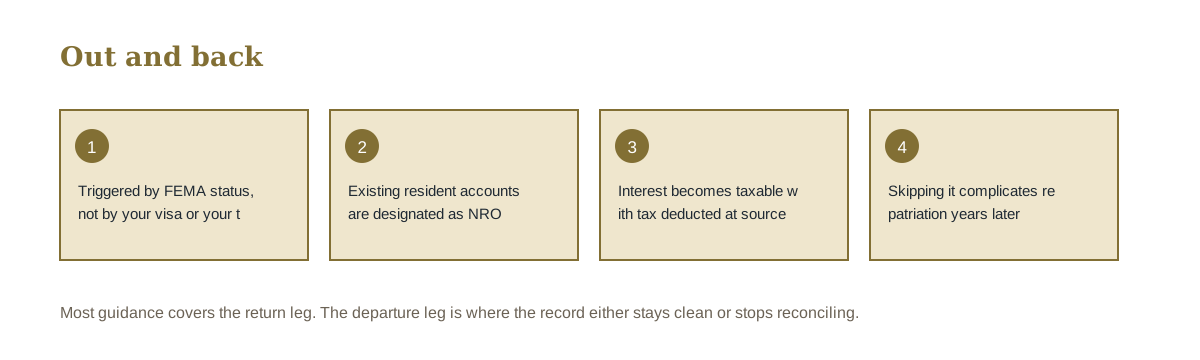
Out and back
Need help with Banking?
Share your blocker in one line. Our experts will reply with practical next steps.
Community signal: people discover this years later
Unable to embed reddit content. View on reddit
"The recurring thread is someone finding that a resident account has been running for eight years while they lived abroad, and now the bank wants an explanation."
Read on reddit ->Reference signal: the rule sits in the non-resident accounts FAQ
"Public answers point back to the same RBI source on designating existing resident accounts as NRO once the holder becomes a person resident outside India."
Read on quora ->Outbound designation diagram
Need help with Banking?
Share your blocker in one line. Our experts will reply with practical next steps.
Retrospective fixes are the expensive version
Correcting years of resident-account operation after the fact means reconstructing which credits were Indian income, which were foreign, and what the tax position was in each year. Doing the designation at departure takes one branch visit; doing it retrospectively can take months.
The one-sentence answer
When you leave India for an uncertain period you become a person resident outside India under FEMA, at which point your existing resident accounts are to be designated as NRO — so record the date, notify every bank in writing, get the acknowledgement, open an NRE account for foreign earnings, and propagate the status to every folio and mandate.
Animated decision map

Need help with Banking?
Share your blocker in one line. Our experts will reply with practical next steps.
Interactive checkpoint
Turn this guide into a decision file
0 of 4 checked
Do I have to convert my resident account when I move abroad?
Under the RBI framework, once you become a person resident outside India your existing resident accounts are to be designated as NRO accounts. It is a designation change rather than necessarily a closure, and it should be done at the time rather than retrospectively.
What triggers the change — my visa or my days abroad?
Neither directly. FEMA residence turns on whether you have left India for employment, business or vocation, or for any other purpose indicating an uncertain period of stay abroad. It is a purpose-and-duration test, not a day count.
Is this the same as my income tax residential status?
No. Income tax residency under Section 6 is decided by days of presence in India. FEMA residence is decided by purpose and expected duration. They can disagree in the same year and both be correct.
What happens if I just leave the account as a resident account?
It is a compliance breach, and practically it creates a record that does not reconcile. Problems typically surface later, when you want to repatriate funds or redesignate on return and the bank asks for a history that does not match your stated status.
Can I keep using the same account number?
Often yes — designation frequently preserves the account while changing its character and rules. Confirm with your bank, and get written acknowledgement of the designation and its effective date either way.
Should I also open an NRE account?
If you will be earning abroad, yes. Foreign earnings belong in an NRE account so they retain their foreign-sourced character and stay freely repatriable. Routing foreign salary into an NRO account creates a repatriation problem later.
Can I still use Form 15G or 15H?
Generally no. Those declarations are designed for resident taxpayers below the taxable threshold and are not ordinarily available to non-residents. Plan for deduction at source at the applicable non-resident rate instead.
What else needs updating besides the bank account?
Mutual fund folios, demat account status, insurance policy records, standing instructions, nominations, and the address and phone number on file. Records that disagree with each other are the leading cause of blocked transactions.
What should I keep for when I return to India?
The designation acknowledgement with its effective date, the closing resident statement, the opening NRO statement, and a note of the date you became a person resident outside India. That pack is what makes the return-leg redesignation straightforward.
Your NRE account redesignation has a deadline.
Banks don't remind you. You need the right account stack before salary, rent, and EMIs start moving. Get the exact sequence.