What Returnees Actually Like About Living in India
The other half of the return conversation: what people who moved back consistently say works — proximity to family, cost structure, healthcare access, care...
The 60-second version
Return coverage is dominated by what goes wrong. This is the counterweight: the things returnees consistently report as better, with the conditions each one depends on, so the positives can be planned for rather than hoped for.
Fast answer: the positives are real, and every one of them has a condition attached
Search results about returning to India skew heavily negative, partly because people write when something goes wrong and rarely when things simply work. That imbalance is misleading, and it makes the decision harder rather than easier, because the actual choice is between two imperfect options rather than between a problem and a solution.
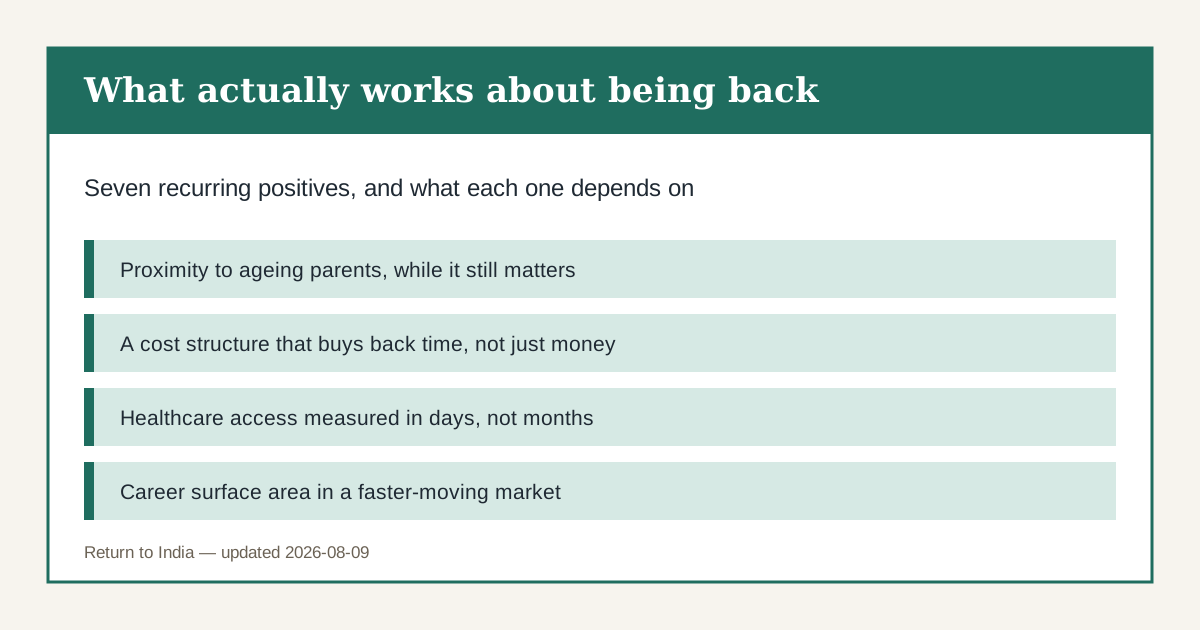
What people who moved back and stayed consistently report is a fairly consistent list: being present for ageing parents while presence still counts for something, a cost structure that buys back hours rather than only rupees, medical access measured in days rather than months, availability of help that changes what a working household can sustain, a market where a mid-career person can reach interesting problems faster, and children growing up with a family context rather than a video call.
Each of those is conditional. Proximity to parents only helps if you live within reach of them. The cost structure only converts into time if you actually use it that way. Healthcare access depends entirely on the city and on having chosen a hospital before you needed one. The purpose of listing them is not to sell the move — it is to make the positives plannable, because a positive you have planned for is far more likely to materialise than one you assumed.
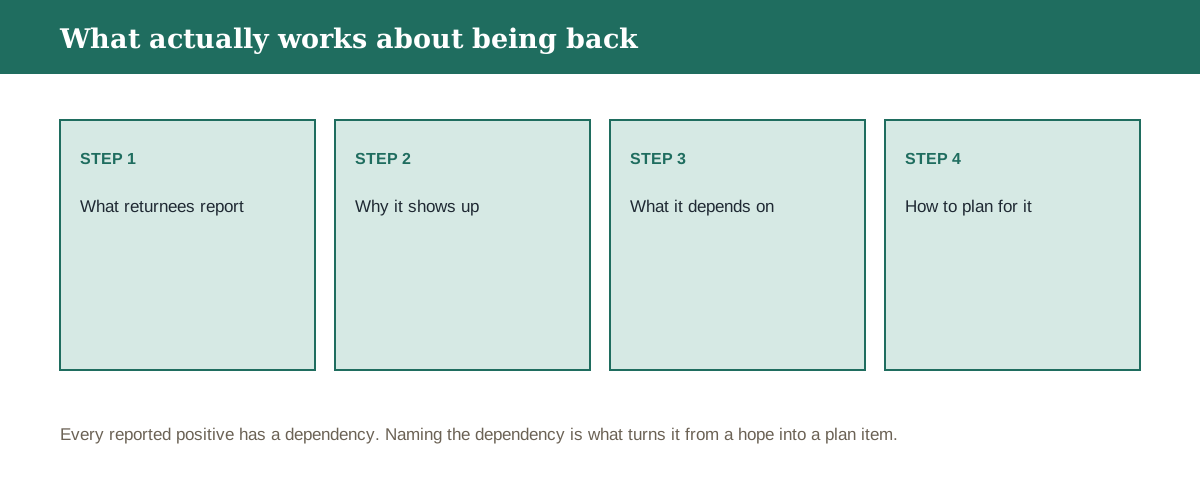
The recurring positives, and what each depends on
Read the dependency column as hard as the positive column. That is where these either become real or stay theoretical.
| What returnees report | Why it shows up | What it depends on | How to plan for it |
|---|---|---|---|
| Being present for ageing parents | Proximity changes what you can actually do in a health event | Living within reach — an hour, not a flight | Choose the city around the people, not around the job title |
| A cost structure that buys back time | Household help, transport and services cost a fraction of high-income countries | Actually converting the saving into time rather than into consumption | Decide in advance what the recovered hours are for |
| Fast medical access | Appointment and procedure waiting times are often dramatically shorter | City choice, and having a named hospital and physician before you need one | Fix the healthcare stack before landing, not at the first emergency |
| Career surface area | A faster-moving market where a mid-career person can reach bigger problems sooner | A verified role, not a general belief about growth | Land the offer before the move where possible |
| Children with a family context | Grandparents, cousins and extended family as everyday presence | Family actually being nearby and relationships being maintained | Have the explicit conversation about expectations both ways |
| Lower everyday friction for some things | Digital payments, deliveries and service density in metros | Being in a city where that infrastructure is mature | Weigh this against air quality and commute in city selection |
| A sense of not being a permanent outsider | Ordinary belonging that people underestimate until they lose it | Getting through the first-year adjustment rather than judging it early | Give it twelve months against written criteria |
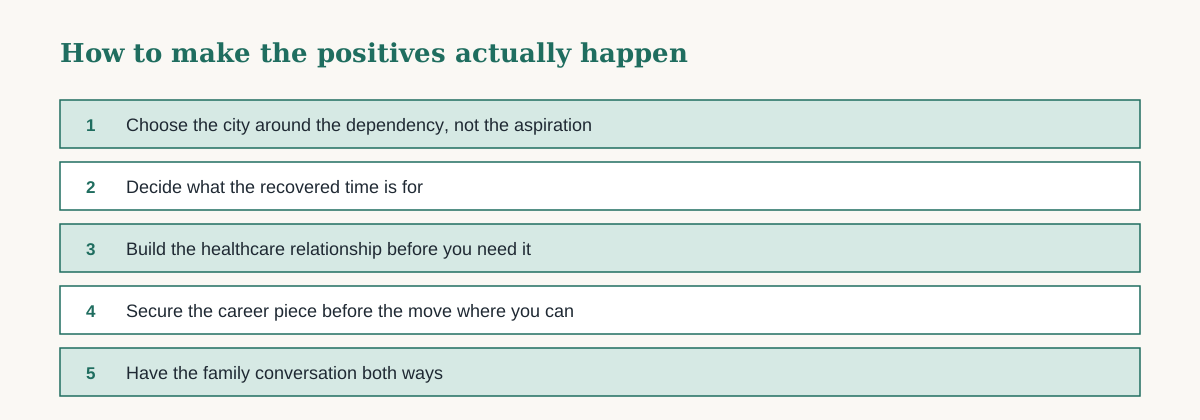
How to make the positives actually happen
The difference between returnees who report the list above and those who do not is mostly sequencing.
Choose the city around the dependency, not the aspiration
If proximity to parents is the point, live within reach of them. If healthcare is the point, choose on hospital access in traffic. The most common mismatch is a city chosen for one reason and a plan built around another.
Decide what the recovered time is for
The cost structure only converts into quality of life if the hours it frees are allocated deliberately. Households that do not decide this in advance tend to absorb the time into work.
Build the healthcare relationship before you need it
A named physician, a named hospital, insurance actually issued, and a written emergency protocol. Fast access is only fast if you already know where you are going.
Secure the career piece before the move where you can
A verified role and compensation converts the career positive from a bet into a fact, and it removes the single biggest source of first-year stress.
Have the family conversation both ways
Expectations about money, caregiving, living arrangements and boundaries. The family positive depends on the relationship being sustainable, which depends on it being explicit.
Run a trial period in the worst season
Three months in the actual city during the hardest weather. Positives that survive that are real; positives that only exist in December are not.
Review at twelve months, not at four
Months three to six are the hardest stretch for most families. Written criteria and a twelve-month review point stop a difficult month being mistaken for a verdict.
Making the upside plannable
If most of these are true, the positives above are far more likely to materialise.
- City chosen around the specific dependency that matters most to your household.
- Distance to parents measured in travel time, not kilometres.
- A written decision about what the recovered time is actually for.
- Named physician and hospital identified before landing.
- Health insurance confirmed as issued for every family member.
- Career position verified — role, compensation, start date.
- Trailing partner's professional plan written with a target and a start date.
- Explicit family conversation held about money, caregiving and boundaries.
- Air quality and commute weighed against service density in city selection.
- A three-month trial period completed in the worst season.
- Written twelve-month success criteria agreed.
- A reversal plan documented, so the decision stays testable.
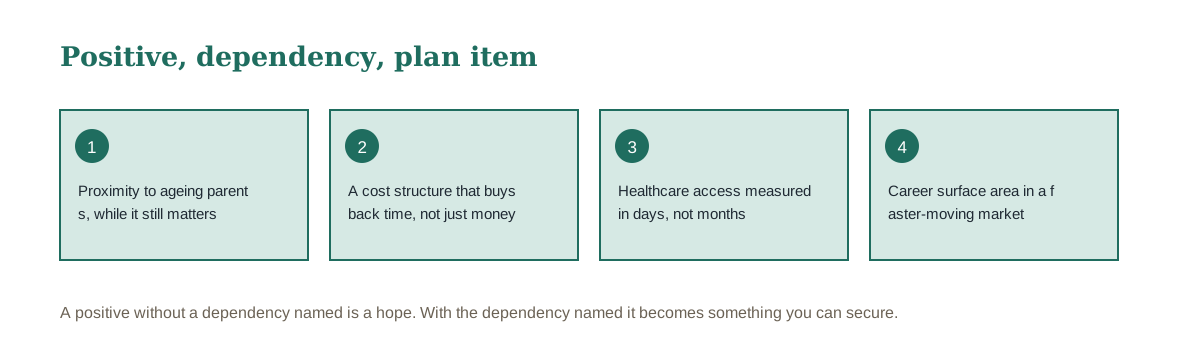
Positive, dependency, plan item
Need help with Move Planning?
Share your blocker in one line. Our experts will reply with practical next steps.
Community signal: the people who stayed write less
Unable to embed reddit content. View on reddit
"Return forums skew negative because difficulty generates posts and contentment does not. Read the positive threads deliberately to correct for it."
Read on reddit ->Community signal: proximity to parents is the most cited upside
Unable to embed reddit content. View on reddit
"Across accounts, being present for ageing parents is both the most common reason for returning and the most consistently reported positive afterwards."
Read on reddit ->Upside planning diagram
Need help with Move Planning?
Share your blocker in one line. Our experts will reply with practical next steps.
Do not plan on the positives without the conditions
Every item on this list has a dependency, and the dependencies are what people skip. Proximity to parents does not help if you settle three hours away; fast healthcare does not help if you have not chosen a hospital; a career upside does not help without a verified role. Plan the condition, not the outcome.
The one-sentence answer
Returnees consistently report the same upsides — presence for ageing parents, a cost structure that buys back time, fast medical access, career surface area and family context for children — but every one of them depends on a specific condition, so choose the city around the dependency that matters most to your household and plan the condition rather than the outcome.
Animated decision map
Need help with Move Planning?
Share your blocker in one line. Our experts will reply with practical next steps.
Interactive checkpoint
Turn this guide into a decision file
0 of 4 checked
What do people actually like about moving back to India?
The recurring themes are proximity to ageing parents, a cost structure that frees time, faster medical access, availability of household help, career surface area in a fast-moving market, and children growing up with extended family nearby.
Why does most return content sound negative?
Difficulty generates posts and contentment generally does not. People write when something goes wrong, so public discussion over-represents problems relative to how common they are.
Is the cost of living really lower?
Everyday costs, transport, services and household help are generally far lower than in high-income countries, while quality housing in metros, private healthcare and international schooling can be expensive. The saving is real but concentrated in specific categories.
Is healthcare access genuinely faster?
Appointment and procedure waiting times are often dramatically shorter than in systems with long queues. The benefit depends heavily on the city and on having established a hospital and physician relationship before you need one.
Do children adjust well?
Many do, particularly where curriculum continuity is preserved and the transition year is given explicit slack. The most reported positive for children is everyday access to grandparents and extended family.
What surprises returnees most positively?
Two things come up repeatedly: how much the recovered time changes daily life once household logistics get cheaper, and the ordinary sense of belonging that people did not realise they had been missing.
How long before the positives show up?
Usually after the first-year adjustment. Months three to six are the hardest stretch for most families, and the upsides tend to become visible once setup fatigue has passed and new routines have formed.
Should I decide based on these positives?
Use them as hypotheses to test rather than as a reason to move. A three-month trial in the worst season tells you which of them are real for your household, your city and your circumstances.
What single decision most affects whether the positives materialise?
City choice. Almost every reported upside depends on being in the right city for your particular dependency — near parents, near a hospital you trust, or near the market your career needs.
The plan is only as good as the sequence.
Tax, banking, schools, shipping — they all have dependencies. A wrong order costs months and lakhs. Get it right.