Is Retiring to India Almost Impossible? Six Claims, Tested
The claim that retiring to India has become impossible rests on six specific arguments — cost, healthcare, air quality, bureaucracy, family expectations and money...
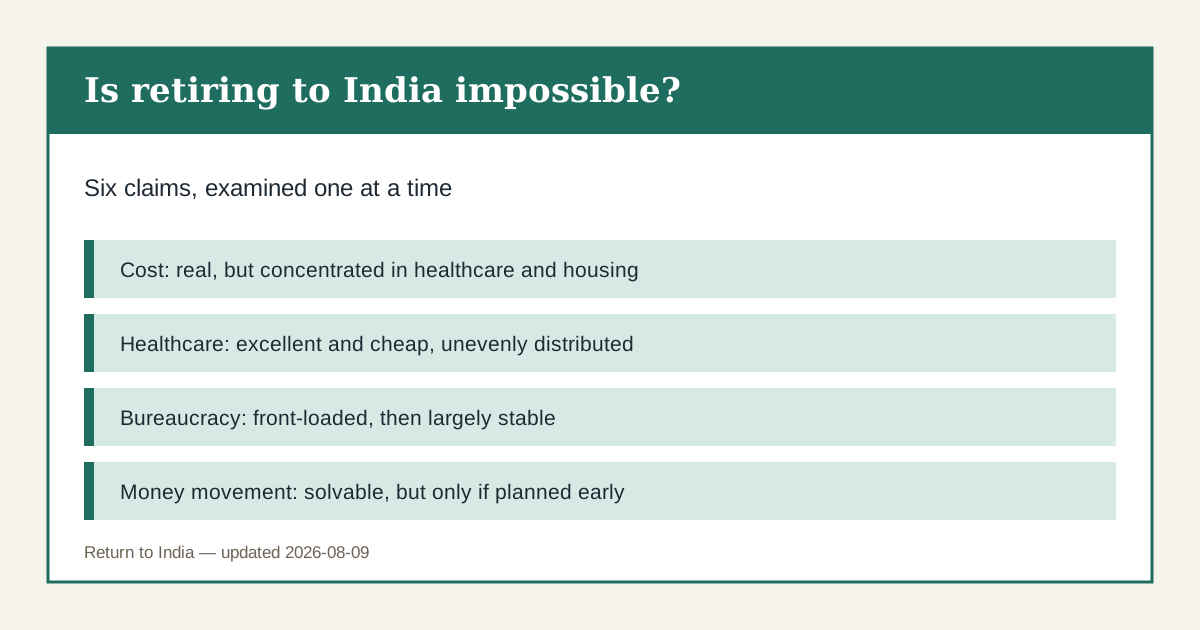
The 60-second version
Retiring to India is not impossible; it is unforgiving of vague planning. The six objections people raise are each real in part and overstated in part, and every one of them has a decision attached that either resolves it or does not.
Fast answer: not impossible, but genuinely unforgiving of hand-waving
'Retiring to India is almost impossible' is a sentence people write after a specific thing went wrong — a health scare with no local support system, a foreign pension that arrived late for six months, a family expectation nobody had discussed, or a cost estimate that was out by a factor of two. The generalisation is usually wrong. The underlying experience usually is not.
What is true is that India is unforgiving of vague retirement planning in a way that a high-income country with a strong safety net is not. If your plan for medical care is 'hospitals are cheap here', if your plan for money is 'I'll transfer as needed', and if your plan for family is 'we'll figure it out', India will find the gaps faster than most places.
The productive response is to take the six standard objections seriously, one at a time, and convert each into a decision with a date attached. Below, each objection gets a verdict — where it is right, where it is exaggerated, and the specific decision that resolves it or does not.
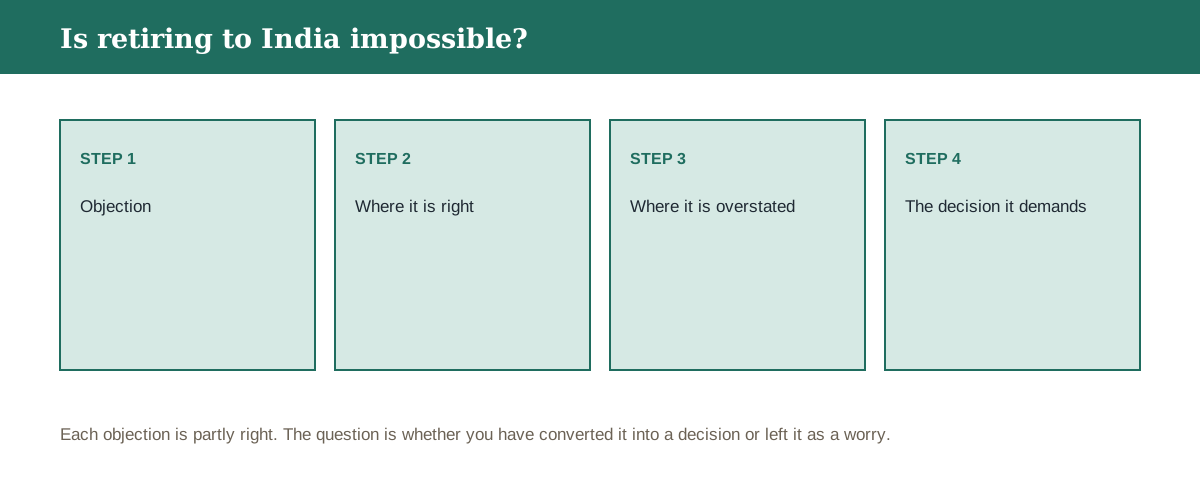
The six objections, tested
Read the verdict column, then the decision column. If you cannot make the decision, that objection is a genuine blocker for you.
| Objection | Where it is right | Where it is overstated | The decision it demands |
|---|---|---|---|
| It is more expensive than people think | Healthcare, quality housing, school fees and household help have risen sharply in metros | Everyday costs, transport and services remain far below high-income countries | Build a real twelve-month budget from actual quotes, not from memory or averages |
| Healthcare is a gamble | Quality is unevenly distributed and insurance for older returnees is restrictive | Top-tier Indian care is genuinely excellent and dramatically cheaper | Fix the hospital, the insurance and the emergency protocol before landing, not after |
| Air quality makes it unlivable | Seasonal air quality in parts of north India is a serious health issue | It is highly location-dependent; coastal and southern cities differ markedly | Choose the city on air quality data, not on nostalgia or family default |
| Bureaucracy will grind you down | The first six months of paperwork are genuinely heavy | Most of it is one-time, and digitisation has removed a large part of it | Front-load the paperwork into a defined ninety-day sprint with a checklist |
| Family expectations become unmanageable | Proximity changes the nature of obligations, often faster than expected | It is a communication problem, not an inevitability | Have the explicit conversation about money, caregiving and living arrangements before the move |
| Moving money is a nightmare | Repatriation rules and documentation are unforgiving of sloppy records | The routes are well defined and work reliably when the paperwork is clean | Set up the account structure, records and repatriation route before the first transfer |
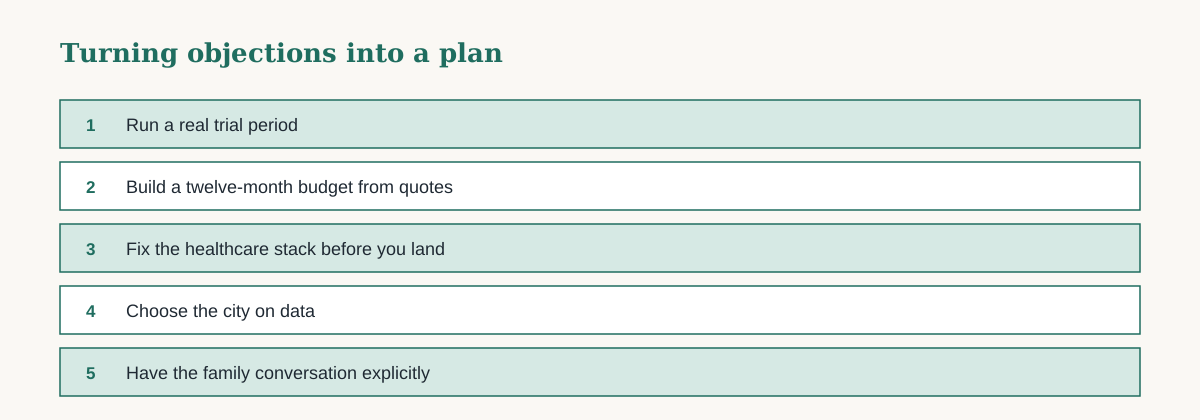
Turning objections into a plan
This is the sequence that converts a list of worries into something you can actually test.
Run a real trial period
Not a holiday. Three months in the actual city, in the kind of housing you would rent, during the worst season. Most objections resolve or harden during that period.
Build a twelve-month budget from quotes
Rent, deposit, healthcare cover, household help, transport, utilities, one medical event and one travel event. Use actual quotes from the actual city, not national averages.
Fix the healthcare stack before you land
A named hospital, a named physician, an insurance policy that will actually accept you at your age with your history, and a written emergency protocol including who has authority.
Choose the city on data
Air quality across seasons, hospital access in traffic, water reliability, distance from the people you actually need, and climate tolerance. Rank cities on those, then apply sentiment.
Have the family conversation explicitly
Money, caregiving responsibilities, living arrangements and boundaries. Doing this before the move is uncomfortable. Doing it after is worse.
Set the money architecture first
Account structure, which pensions arrive where, how repatriation works if you ever reverse the decision, and what records you must keep from day one.
Write the reversal plan
What would have to be true for you to move back, what it would cost, and what you must not give up in order to keep that option. Having a reversal plan is what makes the decision safe.
Retirement-readiness checklist
If you can tick all of these, the 'almost impossible' framing does not apply to your situation.
- A three-month trial period completed in the target city, in the worst season.
- A twelve-month budget built from actual quotes for that city.
- Health insurance confirmed as available to you at your age and with your history.
- A named hospital, a named physician and a tested route in real traffic.
- A written emergency protocol naming who can consent to treatment.
- City selected using air quality, water reliability and hospital access data.
- Explicit family conversation held on money, caregiving and living arrangements.
- Account structure set up, with pensions mapped to the correct receiving accounts.
- Repatriation route understood and the required records identified.
- Residential status and RNOR years computed and diarised.
- A written reversal plan, including what it would cost and what must be preserved.
- A twelve-month review date set, with agreed criteria for what 'working' means.
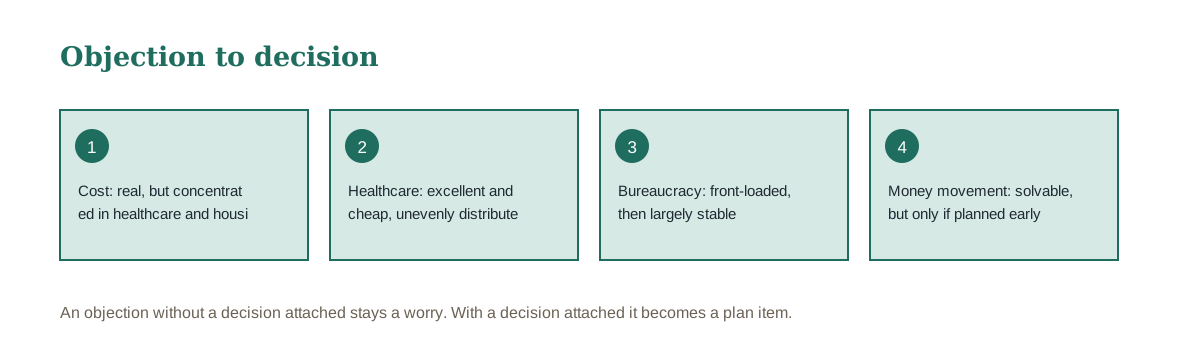
Objection to decision
Need help with Move Planning?
Share your blocker in one line. Our experts will reply with practical next steps.
Community signal: the regret posts share a pattern
Unable to embed reddit content. View on reddit
"The recurring pattern in regret posts is not that India was worse than expected — it is that a specific decision was never made before landing."
Read on reddit ->Community signal: trial periods change minds in both directions
Unable to embed reddit content. View on reddit
"People who run a genuine three-month trial before committing report far fewer surprises, whichever way the decision goes."
Read on reddit ->Objection resolution diagram
Need help with Move Planning?
Share your blocker in one line. Our experts will reply with practical next steps.
Do not give up the option to reverse
The decisions that make a return hardest to unwind are usually taken in the first three months — selling the foreign home, closing every foreign account, surrendering a status that took years to obtain. Slow those specific decisions down until the trial period has actually been tested.
The one-sentence answer
Retiring to India is not impossible, but it punishes vague planning — so convert each of the six standard objections into a dated decision, run a genuine three-month trial in the worst season, and keep a written reversal plan.
Animated decision map
Need help with Move Planning?
Share your blocker in one line. Our experts will reply with practical next steps.
Interactive checkpoint
Turn this guide into a decision file
0 of 4 checked
Is retiring in India actually harder than people expect?
It is less forgiving of vague planning. Healthcare, insurance availability at older ages, city choice and money movement all require decisions made before landing. Where those decisions are made, most returnees report the transition working.
What is the single biggest financial surprise?
Healthcare and quality housing in metros. Everyday costs are far lower than in high-income countries, but medical cover for older returnees and rent or purchase prices in desirable areas often exceed people's estimates substantially.
Can I get health insurance in India as an older returnee?
Availability narrows with age and pre-existing conditions, and waiting periods apply. Confirm that a specific insurer will actually issue a policy to you before you rely on it, and check the waiting periods against your expected needs.
How much does air quality actually matter?
It is highly location-dependent and seasonal. For anyone with a respiratory or cardiac condition it is a primary city-selection criterion, not a secondary one. Look at seasonal data for specific cities rather than at national commentary.
How long does the bureaucracy take?
Most of the paperwork is one-time and concentrated in the first few months — bank redesignation, KYC, PAN and Aadhaar linkage, address updates and utility connections. Treating it as a defined ninety-day sprint works better than handling it piecemeal.
What do families most often fail to discuss beforehand?
Money contributions, caregiving responsibilities and living arrangements. Proximity changes expectations quickly, and the conversation is far easier before the move than during the first family crisis after it.
Should I run a trial period before deciding?
Strongly recommended. Three months in the actual city, in the kind of housing you would rent, during the worst season, tells you more than any amount of research. Avoid making it a holiday.
What should I not do in the first three months?
Avoid the irreversible decisions — selling the foreign home, closing every foreign account, or surrendering an immigration status that took years to obtain. Preserve optionality until the trial has actually been tested.
How do I know whether the move is working?
Set the criteria in advance and review at twelve months. Health access, financial position against the budget, social connection, family relationships and whether the reversal plan is still available are the practical measures.
The plan is only as good as the sequence.
Tax, banking, schools, shipping — they all have dependencies. A wrong order costs months and lakhs. Get it right.