NRI Returning to India Struggles: A Practical Reset Plan
Struggling after returning to India? Separate family, work, banking and emotional problems, then build a practical reset plan without rushing another move.
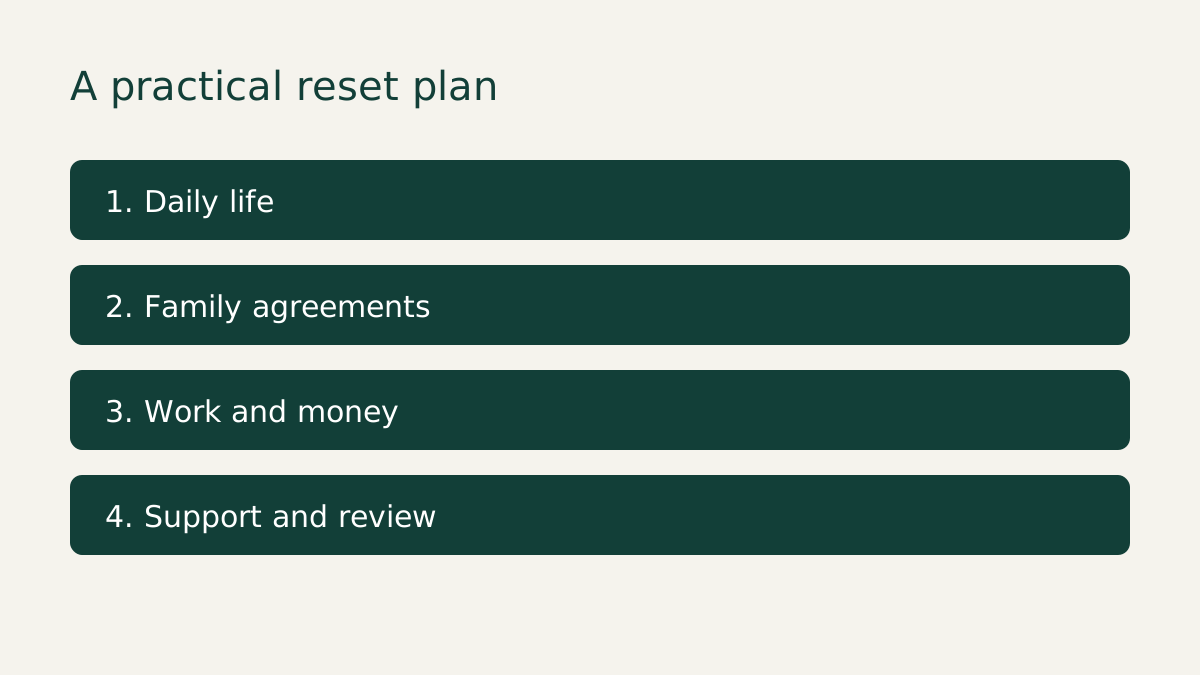
The 60-second version
The struggles of returning to India are not one problem: unfamiliar routines, changed relationships, job expectations and paperwork can arrive together. Separate what needs an operational fix from what needs a family agreement or professional support before deciding that the entire move has failed.
First separate the problems instead of judging the whole move
An NRI returning to India can struggle even when the reasons for returning remain valid. A difficult commute, a disappointing job search, loneliness and an unresolved bank login need different responses. Write down the specific friction, its effect on your household and the next change you can test. This is a planning framework, not a diagnosis or a promise that adjustment ends after a fixed number of days.
Do not compare an ordinary working week in India with the best weeks of your previous life abroad. Equally, do not dismiss a genuinely unsafe home, inaccessible treatment or unaffordable arrangement as something you must learn to tolerate. The useful question is which conditions can change, which cannot, and what evidence would justify changing your housing, job or country again.
Start with the return-to-India planning hub for operational dependencies. Use the reverse-culture-shock guide for the adjustment side. This page focuses on turning a broad feeling of struggle into specific decisions.
A problem-to-action map
| What is difficult | A reversible next step | Evidence to keep |
|---|---|---|
| Unpredictable commute and daily logistics | Test the actual work-hour route and a closer temporary base before signing a long lease | Door-to-door time, transport reliability and household costs |
| Family visits interrupt work or privacy | Agree on visiting windows, private space and who handles invitations | A shared household agreement, not assumptions about what relatives understand |
| Friends are unavailable and weekends feel empty | Choose one repeatable activity and make specific invitations outside family obligations | Whether the routine is sustainable; do not score people by immediate closeness |
| Job offers do not match expectations | Separate role fit, take-home pay, working hours and location; revise the search around constraints | Written offer terms and a budget using actual quotes |
| Bank, phone or document problems consume days | Make one dependency list and assign a contact and next action to each item | Ticket references, written answers and completed KYC acknowledgements |
| Persistent distress affects ordinary functioning | Seek an assessment from a qualified mental-health professional | Symptoms and changes in sleep, functioning or safety to discuss privately |
Make family boundaries practical, not accusatory
A boundary is easier to follow when it describes an arrangement. Replace a vague request for more space with a work-hour rule, a way to arrange visits and a distinction between shared rooms and private rooms. Discuss the rule with your partner before announcing it to relatives; contradictory messages create a second problem.
For example, a household might reserve one room for calls, plan visits rather than assuming daily availability, and decide which family commitments each adult can accept independently. These are suggestions, not quotations from real returnees. Adapt them to childcare, disability, elder care and the physical space available.
If you depend on relatives for housing or care, include that reality in the discussion. Gratitude does not require agreement to every invitation, but agreements must reflect the support you actually need. Try an arrangement that can be reviewed rather than turning a stressful first conversation into a permanent verdict on the relationship.
Build a reviewable reset plan
Protect essentials first
Confirm safe housing, access to medicines, school continuity where relevant, money access and a working communication channel. Deal with urgent safety or health concerns before optimizing lifestyle.
Write a short friction log
Describe specific events without generalizing about the whole country or household. Record what failed and whether you can alter the route, timing, provider or expectation.
Choose changes you can reverse
Test a commute, a routine, a job-search filter or a visiting arrangement. Avoid another shipment, property purchase or irreversible financial withdrawal simply to relieve immediate frustration.
Separate financial status from feelings
Ask the bank about residency and account redesignation; check tax residency separately. Neither feeling settled nor holding an OCI card determines the answer.
Agree on a review date
Review the actual costs, functioning and unresolved constraints together. The date is a household planning choice, not a medical recovery deadline.
Keep alternatives honest
If you consider returning abroad, include visa eligibility, employment, school disruption and the cost of another move. Compare two workable plans rather than an idealized alternative with today's worst day.
Do not let adjustment delay banking and tax work
RNOR is an income-tax classification, not permission to keep an NRE account indefinitely. Banks apply the relevant foreign-exchange residency rules and product terms; tax residency uses its own tests. A holiday, a permanent return and a change in citizenship are not interchangeable events. Consult the bank with the actual purpose and date of your return, and retain its written response.
Use the bank-account guide and the RNOR guide as separate workstreams. Do not infer a fixed NRI grace period or a universal four-year tax holiday from social posts. This reset plan deliberately does not prescribe a tax status without your travel history and applicable law.
Questions for the household review
- Are the non-negotiable health, safety and education needs being met?
- Which difficulties have improved after a concrete change, and which have not?
- Is the budget based on paid bills or written quotes rather than memories?
- Are both partners getting private time and a say in social commitments?
- Have banking and document tasks been assigned, instead of repeatedly postponed?
- Does staying or moving again solve the specific unresolved problem?
Need help with Move Planning?
Share your blocker in one line. Our experts will reply with practical next steps.
Adjustment advice is not a substitute for care
WHO distinguishes depression from ordinary mood fluctuations. Persistent low mood or loss of interest, especially with impaired functioning, warrants professional assessment. If someone is at immediate risk of self-harm, seek urgent local emergency care and do not rely on a blog checklist.
The decision sequence
Planning visual

Animated decision map

Community signal
What to watch in real discussions
Treat repeated complaints as risk signals rather than official advice. This page does not link to community search results.
Interactive checkpoint
Turn this guide into a decision file
0 of 4 checked
What are the challenges faced by NRIs returning to India?
Common planning areas include changed routines and relationships, job fit, school transitions, housing, banking access and tax administration. Their importance varies by household; separate them instead of assuming one solution will fix all of them.
Is loneliness after returning to India proof that the move was wrong?
No. It is a reason to examine support and routines, not automatic proof either way. Look at your functioning and constraints, and seek professional help for persistent distress rather than forcing yourself to wait for a supposed adjustment deadline.
How long can I hold NRI status after returning to India?
There is no single countdown covering banking, tax and immigration. The purpose of your stay and the relevant legal tests matter. Ask the bank about foreign-exchange residency, calculate tax residency separately and check immigration permission if you hold a foreign passport.
Can RNOR maintain an NRE account?
RNOR alone does not establish eligibility. RNOR is a tax status; NRE eligibility and redesignation are governed by foreign-exchange residency rules. Give the bank your actual return circumstances and obtain written instructions.
Should I move abroad again if settling in is difficult?
Compare workable alternatives using health, employment, housing, education, visa eligibility and costs. Address urgent safety concerns immediately; for other problems, test reversible improvements before making another costly move.
The plan is only as good as the sequence.
Tax, banking, schools, shipping — they all have dependencies. A wrong order costs months and lakhs. Get it right.