Moving from Singapore to India: CPF, Tax, Checklist
Plan CPF, Singapore tax residency, banking closure, schooling, and first-landing steps before moving back to India.
The 60-second version
Singapore-to-India moves look simple on paper but break when CPF, tax-year timing, and account access are solved in the wrong order. This guide gives a clean sequence.
Why Singapore-to-India needs its own plan
Most return plans fail because people merge three different jobs into one: tax closeout, CPF decisions, and India landing operations. Each has different deadlines and evidence requirements.
The cleaner model is to close Singapore obligations in a documented order, then design India day-one banking and residency workflow around what still remains active abroad.
Decision map before you book your final exit date
| Question | If yes | If no |
|---|---|---|
| Do you still have active Singapore income in the move year? | Lock tax-treatment and filing sequence before departure. | Focus on closure evidence and final filings. |
| Will any CPF-linked decision happen near move date? | Document eligibility, timeline, and payout assumptions early. | Keep CPF records archived for future reference and proof. |
| Do you need foreign-account continuity after landing? | Plan OTP/access continuity and beneficiary paths before travel. | Simplify accounts and close low-value rails before move. |
Execution order that prevents rework
Step 1: Lock your move-year tax story first
Define the probable filing and residency position for the relevant periods before booking irreversible transactions.
Step 2: Build a CPF decision memo
Document what is eligible now, what is deferred, and what evidence you need so assumptions do not drive cashflow decisions.
Step 3: Stabilize India operating rails
Set up resident/NRO/RFC pathways based on actual incoming and outgoing flows, not generic templates.
Step 4: Preserve cross-border access continuity
Test OTP, login recovery, statement access, and beneficiary verification before leaving Singapore.
Community pattern: practical move confusion
"If you renounce PR to withdraw CPF, make sure you plan the taxation around it. Also, keep your local bank account active for a few months for final tax clearance."
Read on reddit ->Advisor perspective in professional threads
"IRAS tax clearance (IR21) is critical before your final exit. Ensure your employer files it and your final salary is cleared before departing Singapore."
Read on linkedin ->Need help with Country Guides?
Share your blocker in one line. Our experts will reply with practical next steps.
Q&A trend for CPF and return planning
"Yes, you can withdraw your CPF in full if you are leaving Singapore and West Malaysia permanently with no intention of returning for employment."
Read on quora ->Document pack to finish before departure
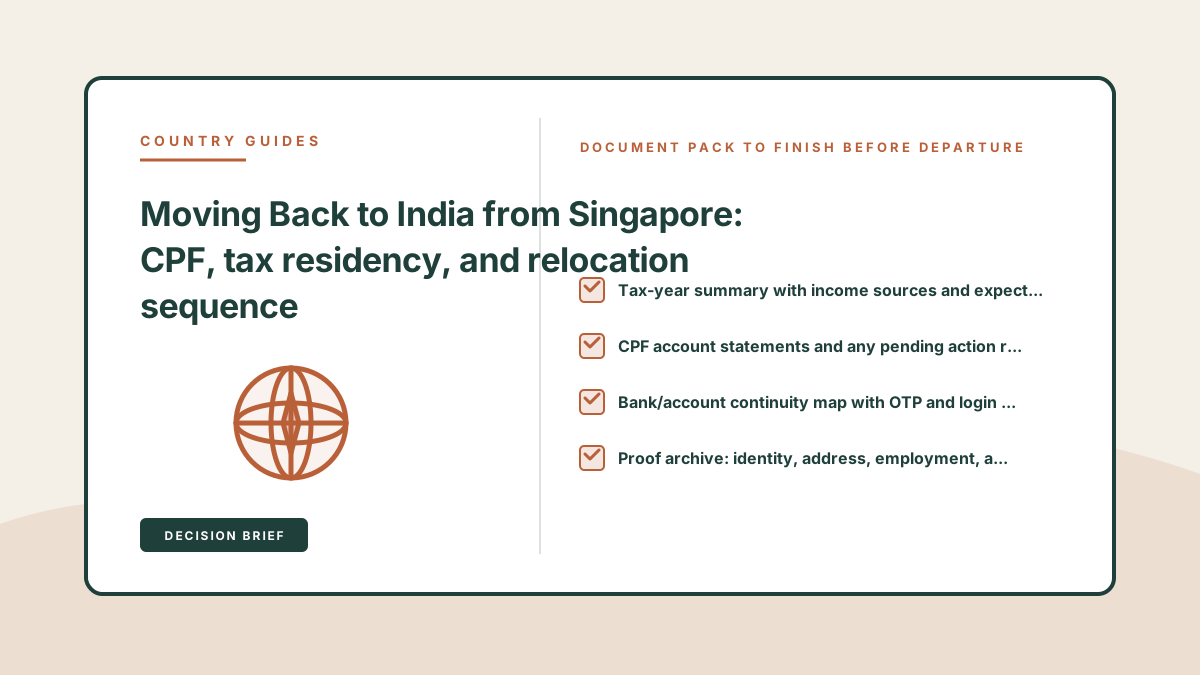
- Tax-year summary with income sources and expected filing actions.
- CPF account statements and any pending action records.
- Bank/account continuity map with OTP and login recovery checks.
- Proof archive: identity, address, employment, and closure confirmations.
- India landing memo: account lanes, first-90-day payments, and high-risk deadlines.
The expensive mistake
Treating the move as a travel task instead of a systems transition. Travel can be one date; tax, CPF, and banking cannot.
Need help with Country Guides?
Share your blocker in one line. Our experts will reply with practical next steps.
Singapore-to-India move sequence
Planning visual
Animated decision map

Need help with Country Guides?
Share your blocker in one line. Our experts will reply with practical next steps.
Interactive checkpoint
Turn this guide into a decision file
0 of 4 checked
Is moving from Singapore to India mostly a tax problem?
It is a sequencing problem across tax, CPF, and banking operations. Tax is only one part of the execution stack.
Should I decide CPF and India account design together?
You should coordinate them, but not collapse them. First define tax-year and eligibility facts, then map cashflow and account lanes.
Can I postpone access and OTP checks until after landing?
That is risky. Account recovery and cross-border verification are much easier before departure.
Is this legal, tax, or investment advice?
No. This is an execution framework. Validate your specific case with qualified advisors and current official guidance.
Your country's rules are the starting point, not the finish line.
Tax exits, pension continuity, banking notifications — the India side has its own rules too. Get both sides clear.