Transfer of Residence 2026: Customs Ops Before Ship
TR customs for returnees: classify used vs new, photo evidence, broker script, ship/suitcase/rebuy matrix — before the container seals.
The 60-second version
Transfer of Residence is not a free pass to ship everything duty-free. It is a documentation pathway. Families that invent packing lists after the container sails pay in delays, inspections, and duty surprises. This page is the pre-dispatch customs operating system: classify, prove, declare consistently, and leave high-friction items out.
Why TR fails when treated as last-mile paperwork
Sea cargo is slow. Customs questions are fast. If your inventory says “misc household,” your insurance value is inventively high, and your boxes contain brand-new sealed electronics, the Transfer of Residence story collapses under inspection.
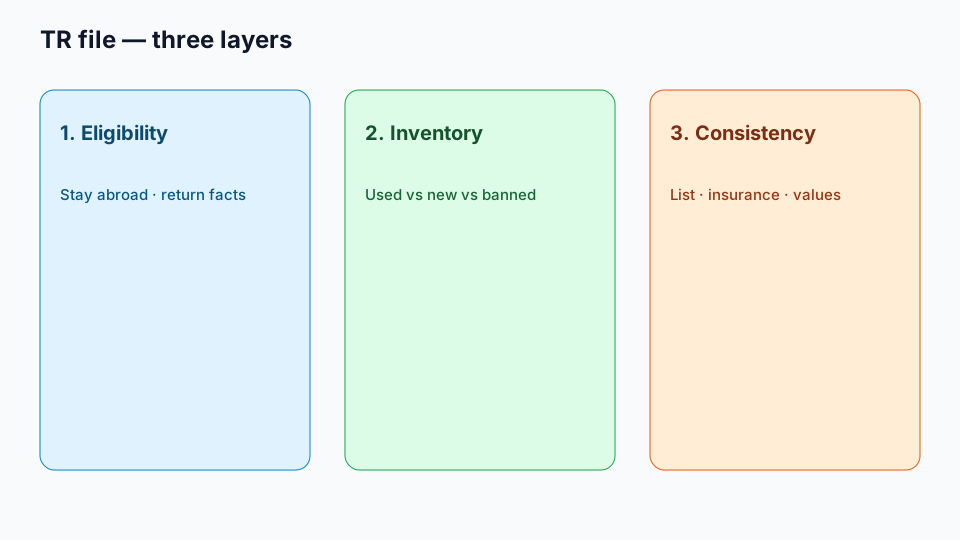
Build the TR file before pickup: eligibility facts (period abroad, return), inventory classes (used household vs new vs restricted), and consistency across packing list, insurance, and declarations. The broker can only clear the story you documented — not the story you meant.
Eligibility fact sheet (ask broker to map to current rule path)
Exact thresholds and forms change. Capture facts; let the broker map them to the current official pathway.
| Fact | What to capture | Why it matters |
|---|---|---|
| Period abroad | Passports, visas, employment letters, address history | Supports transfer-of-residence narrative |
| Return intent / residency | Return tickets, India address plan, OCI if any | Links goods to a genuine change of residence |
| Accompanied vs unaccompanied | What travels with you vs sea/air cargo | Different handling and risk profiles |
| Ownership and use | Photos of goods in use; age estimates | Used household story vs commercial import story |
| New purchases near move | Invoices, purchase dates | New boxed goods are duty-sensitive and declaration-sensitive |
Ship / suitcase / rebuy matrix
| Category | Default bias | Customs friction | Action |
|---|---|---|---|
| Used clothing, books, kitchen basics | Ship if volume justifies | Low if itemized cleanly | Group by box; honest quantities |
| Large furniture | Only if replacement cost + fit wins | Value + damage + access | Measure doors; photo condition |
| Flat-panel TVs / large electronics | Often rebuy or carry carefully | High | Read electronics-specific guide; do not hide in misc |
| Brand-new sealed goods | Do not call “used household” | High | Separate declaration path or leave behind |
| Jewelry, critical docs, meds, one laptop | Personal carriage where allowed | N/A if not in cargo | Never bury in sea boxes |
| Liquids, aerosols, restricted chemicals | Usually exclude | High / prohibited risk | Confirm with forwarder list |
Eleven-step pre-dispatch TR sequence
Write the one-page move story
Where you lived, for how long, when you return, what is used household vs new. Brokers need a coherent narrative.
Inventory every box before packing day
Room-by-room list with approximate age and condition. Spreadsheet beats napkin lists.
Photograph high-value used items in situ
Furniture, appliances, electronics with serials where visible. Timestamped photos help ownership/use claims.
Split new vs used ruthlessly
Sealed retail boxes are not “used household goods.” Mislabeling is how inspections get ugly.
Pull the electronics shortlist
TVs, large appliances, drones, etc. Decide ship, rebuy, or personal baggage with duty eyes open.
Align insurance values with customs values
Wildly different numbers create questions. Document how values were estimated.
Label boxes to match the inventory language
If the list says “kitchen — used utensils,” the box should not open to a gaming PC.
Hold a broker pre-clear call
Ask which TR / baggage pathway they will use, what documents they need from you, and what items they refuse.
Export a digital search pack
PDF inventory, photos, passport scans, packing list, insurance, broker contacts — offline USB + cloud.
Plan destination charges separately
Port fees, THC, delivery, storage demurrage. TR does not delete destination invoices.
Do not travel without clearance contingency cash
Duty, storage, and re-delivery surprises happen. Budget a buffer before you need it urgently.
Broker interview script
| Ask | Why |
|---|---|
| Which exact claim path are we using for this shipment? | Stops vague “TR will cover it” answers |
| What documents must match passport travel history? | Eligibility file completeness |
| How do you treat TVs / large electronics in this lane? | High-friction items |
| What happens if inspection finds new boxed goods? | Duty and delay risk |
| Who attends examination if required? | Operating plan for arrival week |
| What is the destination charges estimate range? | Cash buffer |
TR customs kit
- One-page residence/return story.
- Full box inventory spreadsheet.
- Photos of high-value used items.
- New vs used split list.
- Electronics decision list (ship/rebuy/carry).
- Insurance certificate aligned to inventory.
- Passport / visa / travel history pack.
- Broker email with pathway confirmation.
- Digital pack on USB + cloud.
- Destination charges cash buffer.
- Do-not-ship restricted list signed by family.
Need help with Shipping & Customs?
Share your blocker in one line. Our experts will reply with practical next steps.
Decision flow
Not legal advice; rules change
Indian baggage and customs rules are amended over time and depend on facts, ports, and declaration mode. This page is an operating checklist. Confirm the current official pathway and duty treatment with CBIC sources and a licensed customs broker before you ship.
Myth: “Everything used is automatically duty-free under TR”
Used condition helps the household-goods story; it does not erase classification, restricted items, or inconsistencies. New purchases packed as “used household” create the exact inspection risk TR planning tries to avoid.
Animated decision map

Community signal
What to watch in real discussions
Treat repeated complaints as risk signals rather than official advice. This page does not link to community search results.
Interactive checkpoint
Turn this guide into a decision file
0 of 4 checked
What is Transfer of Residence for customs purposes?
It is a rule-based pathway for personal/household effects when someone changes residence to India. It is not an unlimited free import entitlement. Exact conditions depend on current baggage/customs rules and your facts.
Can I ship brand-new furniture and call it TR?
New sealed commercial goods are generally treated differently from used household goods. Keep invoices and do not misrepresent new goods as long-used household effects.
Should TVs go in the sea shipment?
Often high-friction. Check electronics-specific duty and damage risk, and compare rebuy in India. If shipped, declare honestly — do not hide under “misc.”
When should I prepare the packing list?
Before packing day ends — ideally before the forwarder picks up. Post-hoc lists written from memory create inconsistencies.
Do I need a customs broker?
Most unaccompanied sea shipments use a broker/forwarder clearance chain. Interview them early with the script in this guide.
Does TR remove destination port charges?
No. Destination charges, delivery, and storage are separate commercial costs. Budget them explicitly.
What if my inventory and insurance values conflict?
Expect questions. Align estimates and document the method. Large unexplained gaps slow clearance.
Transfer of Residence relief doesn't happen automatically.
Wrong paperwork, wrong timing — and you're paying full customs duty. Get the shipping plan right the first time.