Ship Household to India: Cost vs Rebuy Math
Ship vs rebuy household: container reality, TR customs, electronics risk, air/sea split — book forwarder only after inventory.

The 60-second version
The question is not whether shipping is possible. It is whether shipping is economically and operationally better than travelling light and rebuying in India. Customs relief, item category, timing, and housing certainty all affect the answer.
The shipping decision is really a housing decision
People often ask shipping questions before they have answered the housing question. That reverses the logic. If you do not yet know the city, flat size, or probable furnishing style, your shipping decision becomes emotional rather than economic.
The better question is: which items are expensive or annoying to replace, which items genuinely improve life in the first six months, and which items only feel valuable because they are already yours?
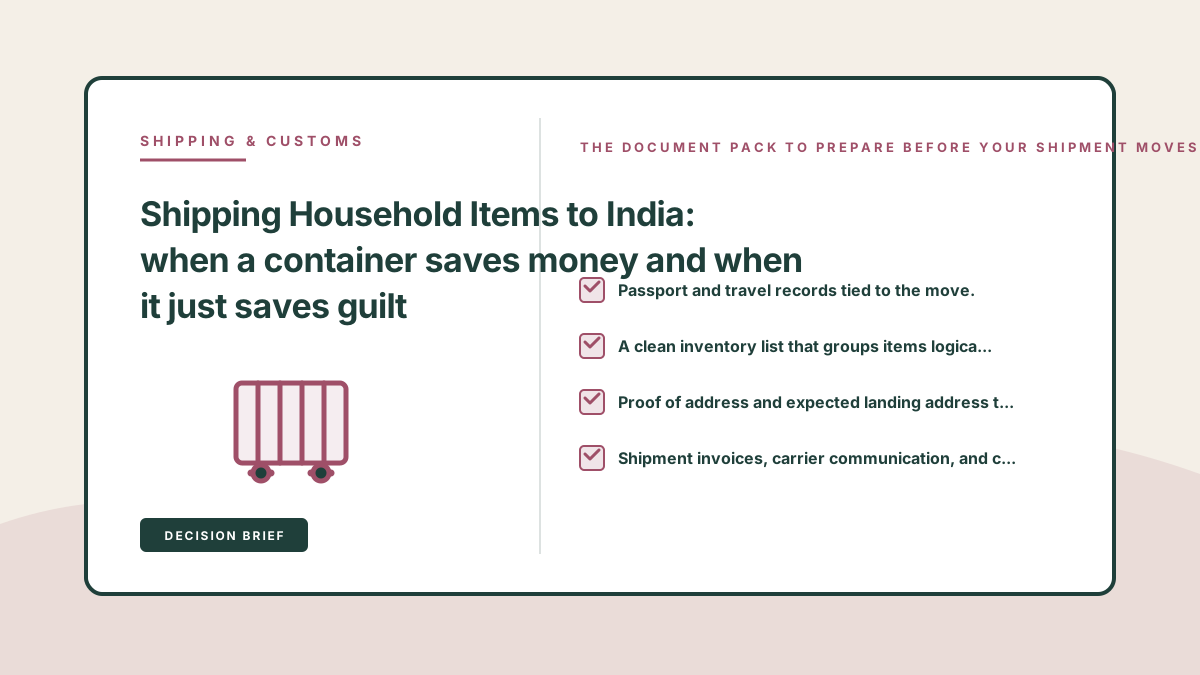
International Relocation Logistics

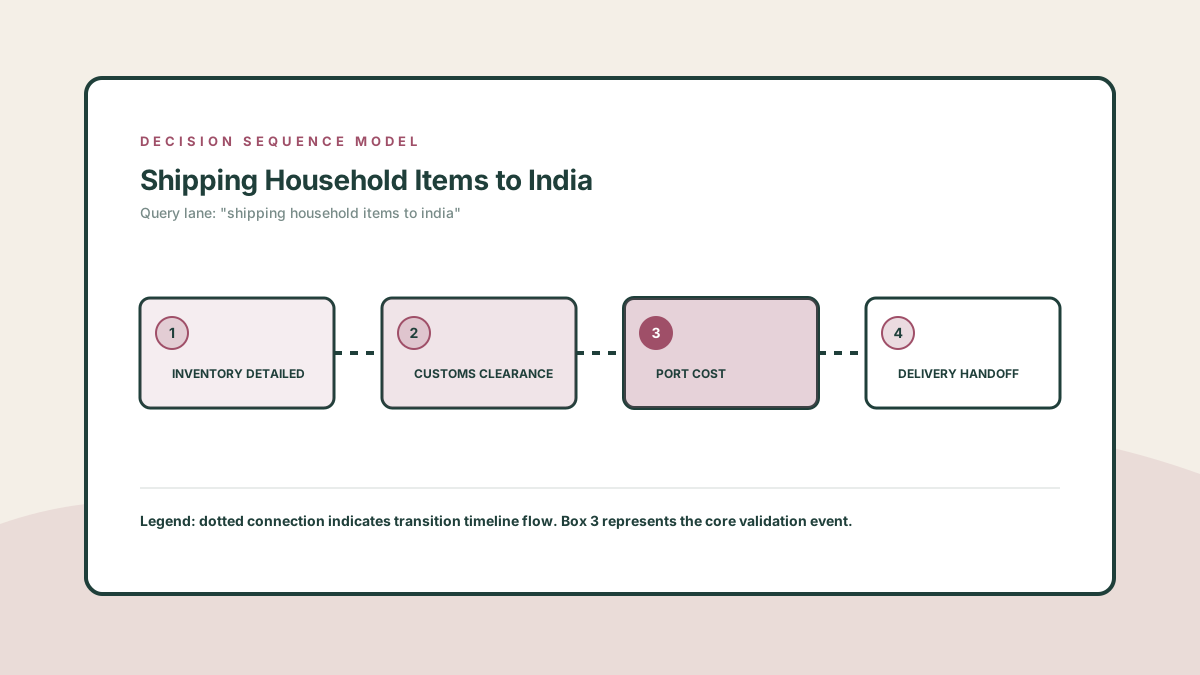
Shipping & Customs Timeline
Ship, delay, or rebuy: a cleaner way to sort the inventory
| Item type | Usually ship | Usually rebuy | Why |
|---|---|---|---|
| Essential personal records and special equipment | Yes | No | These are hard to replace and often time-sensitive. |
| Sentimental but compact items | Often | No | The space cost is low and the emotional value is real. |
| Bulky furniture without a confirmed home layout | Rarely first | Often | A housing mismatch turns shipping into storage plus regret. |
| Appliances that depend on voltage, warranties, or fittings | Depends | Often | The compatibility and servicing risk can erase any savings. |
What transfer-of-residence guidance changes
It makes the shipment rules conditional, not automatic
The official CBIC guide is a reminder that concessions are linked to conditions, timing, and item categories, not to a general assumption that all household goods come in freely.
It rewards documentation discipline
Shipment dates, proof of stay abroad, and packing logic matter much more when you want customs interactions to stay predictable.
It pushes you to pack around customs reality
The strongest shipping plans start from the official rule frame and only then move into vendor quotes and packing lists.
The document pack to prepare before your shipment moves
- Passport and travel records tied to the move.
- A clean inventory list that groups items logically.
- Proof of address and expected landing address trail.
- Shipment invoices, carrier communication, and customs support paperwork where relevant.
- A clear note of what you are not shipping so the move does not quietly grow after quotes arrive.
Need help with Shipping & Customs?
Share your blocker in one line. Our experts will reply with practical next steps.
The expensive mistake
Shipping feels safer than making hard choices. But sending a container into an unconfirmed housing setup can cost more than disciplined rebuying, especially if you pay for storage, second-mile handling, or end up replacing items anyway.
Animated decision map

Interactive checkpoint
Turn this guide into a decision file
0 of 4 checked
Should I ship everything when moving back to India?
Usually no. The move is smoother when you ship only what is hard to replace, hard to travel with, or clearly worth the freight and customs effort.
Do transfer-of-residence rules mean all household goods become easy to import?
No. The official CBIC guidance is conditional and item-specific, which is why the documentation and packing strategy matters.
What is the biggest shipping planning mistake?
Finalising a shipment before the housing plan is stable. That is how useful freight turns into expensive storage.
When does rebuying in India beat shipping?
Rebuying often wins when items are bulky, replaceable, incompatible, or tied to a home layout you have not actually locked yet.
Transfer of Residence relief doesn't happen automatically.
Wrong paperwork, wrong timing — and you're paying full customs duty. Get the shipping plan right the first time.