TR Customs India: Used Goods Duty + Evidence File
Transfer of Residence for used household goods: eligibility facts, packing evidence, duty-sensitive items, and docs before cargo leaves origin.
The 60-second version
Transfer of Residence is not a magic exemption. It is a rule-based customs pathway that works best when your inventory, stay-abroad history, packing evidence, and declarations line up cleanly.
The fast answer
Used household goods can qualify for transfer-of-residence treatment only when the facts support it. The cleaner file shows period abroad, return intent, inventory, ownership, used condition, and whether the goods are accompanied or unaccompanied baggage.
Many families treat customs as a final delivery problem. It is actually a pre-dispatch documentation problem. If the packing list is vague, values are inconsistent, or restricted and high-duty items are mixed into the shipment without explanation, the landing gets slower and costlier.
Decision table
Use this table to decide whether an item belongs in the shipment, the suitcase, or the rebuy list.
| Situation | Better default | What to verify |
|---|---|---|
| Used clothes, books, kitchen basics | Ship if volume is reasonable | Itemize broadly but consistently with box labels. |
| Large furniture | Ship only if value or fit justifies cost | Check destination access, customs value, and damage risk. |
| Flat-panel TV | Usually high-friction | Review baggage guidance and duty treatment before packing. |
| New boxed goods | Treat as duty-sensitive | Keep invoices and do not represent new goods as used household goods. |
| Documents, jewelry, critical electronics | Carry personally where allowed | Do not bury critical items in sea cargo. |
Execution sequence
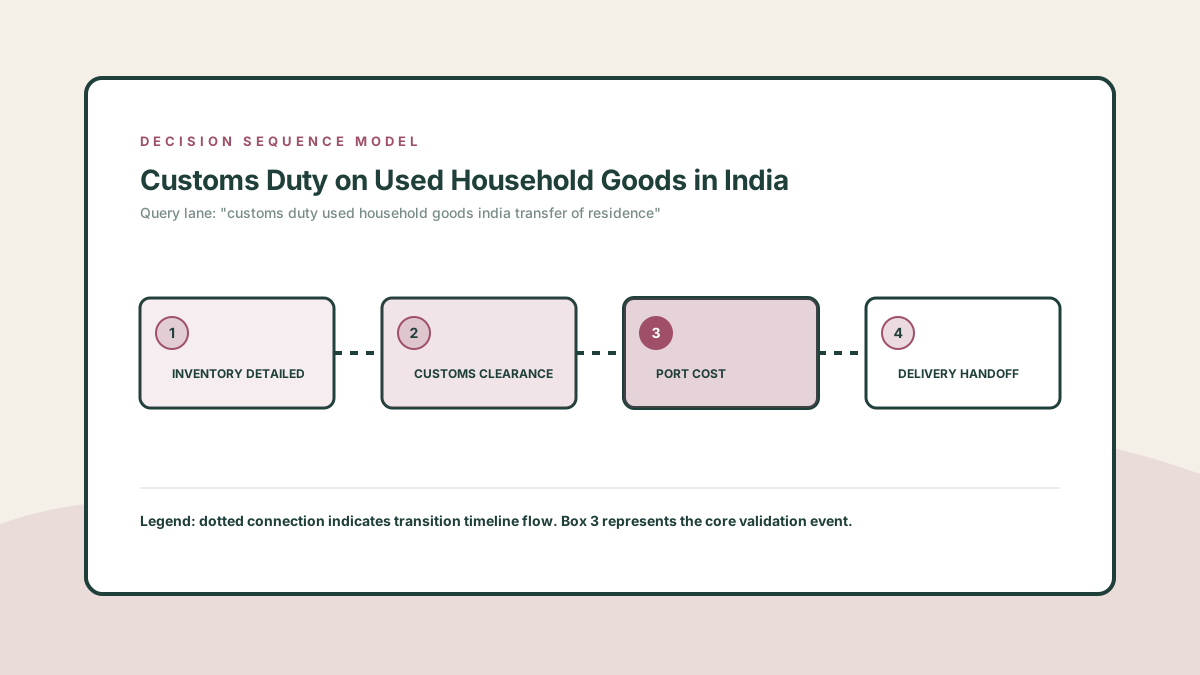
Build the customs file before cargo leaves origin.
Classify the inventory
Separate used household goods, new purchases, restricted items, valuables, and personal carry items.
Map each item to evidence
For high-value items, retain photos, serial numbers, approximate age, and purchase evidence if available.
Confirm transfer-of-residence assumptions
Review the official rule set and ask the customs broker to identify the exact claim path being used.
Keep declarations consistent
Packing list, insurance value, customs declaration, and vendor invoice should not tell conflicting stories.
Prepare for inspection
Label boxes clearly and keep a digital copy of the inventory that can be searched during clearance.
Before you commit
A customs-ready shipment has these controls before pickup.
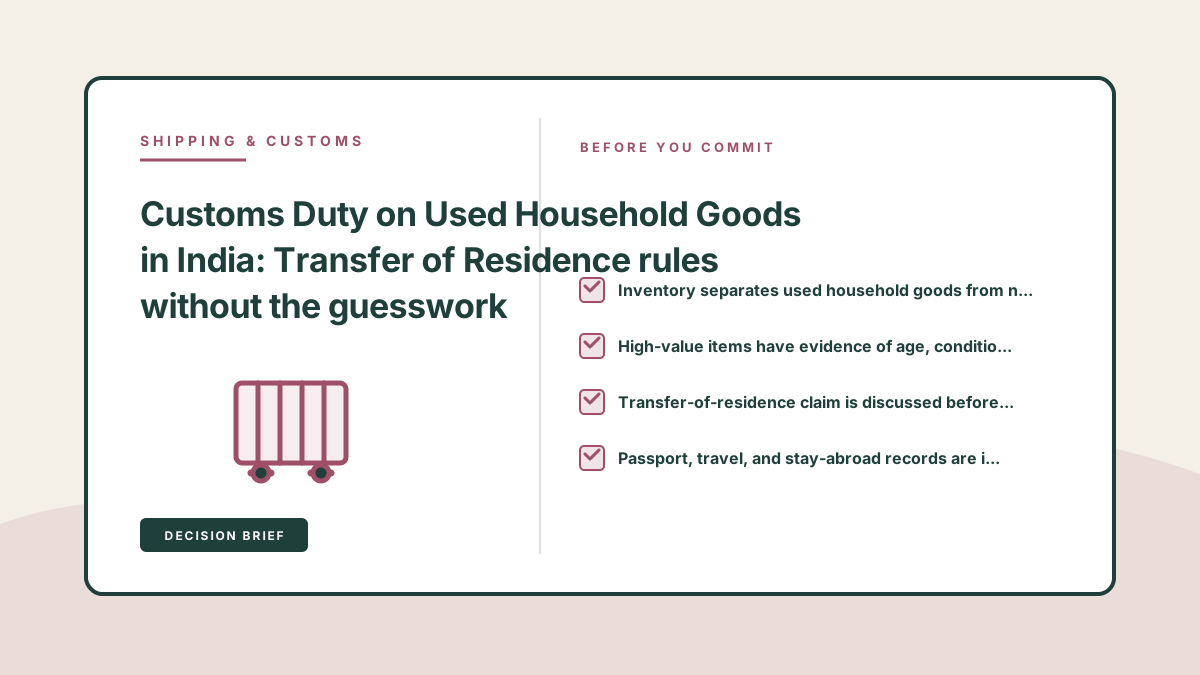
- Inventory separates used household goods from new or duty-sensitive goods.
- High-value items have evidence of age, condition, and ownership where practical.
- Transfer-of-residence claim is discussed before dispatch, not after arrival.
- Passport, travel, and stay-abroad records are in the customs folder.
- Box labels match the inventory categories.
- The broker has confirmed how unaccompanied baggage will be handled.
Animated customs evidence stack
Need help with Shipping & Customs?
Share your blocker in one line. Our experts will reply with practical next steps.
Customs evidence map
Do not make customs guess
A vague declaration asks the officer, broker, and vendor to interpret your shipment under pressure. The better file makes the intended treatment obvious.
Animated decision map

Community signal
What to watch in real discussions
Treat repeated complaints as risk signals rather than official advice. This page does not link to community search results.
Interactive checkpoint
Turn this guide into a decision file
0 of 4 checked
Are used household goods duty free in India?
Not automatically. Treatment depends on the applicable baggage and transfer-of-residence rules, item type, eligibility facts, and how the shipment is declared.
Can I include new appliances in transfer-of-residence cargo?
You should treat new goods as duty-sensitive and keep purchase evidence. Do not describe new goods as used household goods.
Who should prepare the customs list?
The family should own the inventory, while the mover or broker can format it for customs. Do not outsource factual accuracy.
What causes customs delays?
Common triggers are vague item descriptions, inconsistent values, restricted goods, missing ID or travel records, and unclear transfer-of-residence assumptions.
Transfer of Residence relief doesn't happen automatically.
Wrong paperwork, wrong timing — and you're paying full customs duty. Get the shipping plan right the first time.