Schedule FA Nudge: Foreign Assets Fix Workflow
Got a Schedule FA nudge? Check NRI/RNOR/ROR status, ITR form, foreign assets, FSI/TR, Form 67, AIS, and revision need.
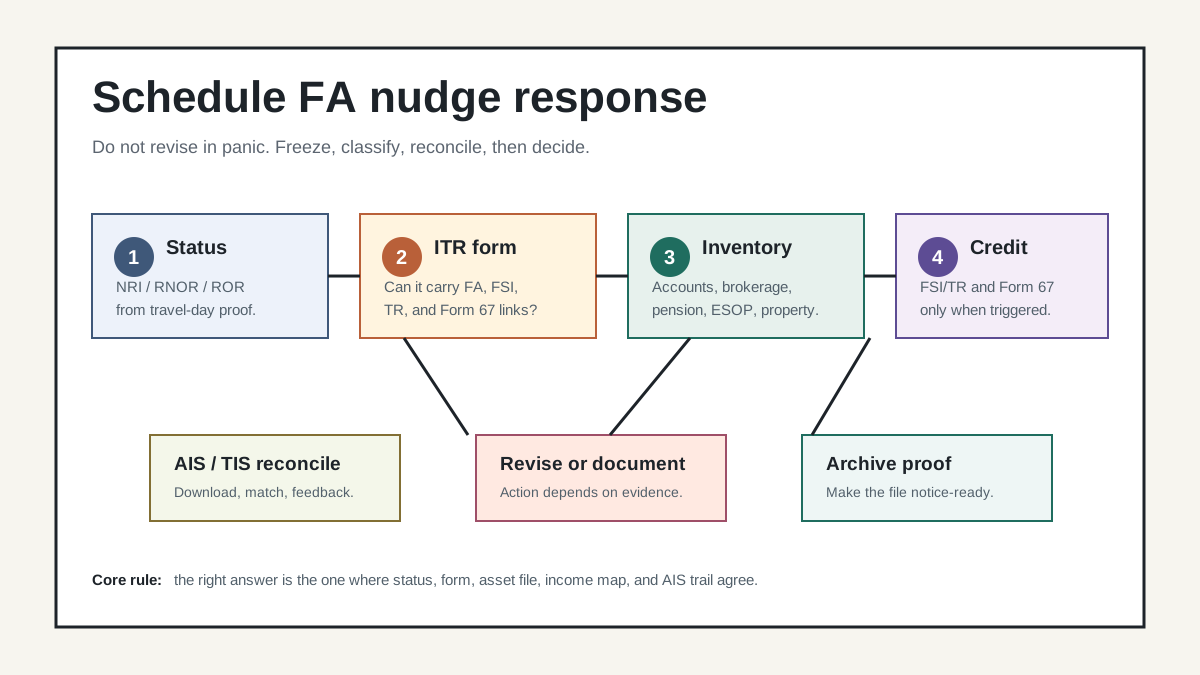
The 60-second version
The Schedule FA nudge is not one problem. It can mean wrong residential status, wrong return form, missing foreign-asset inventory, missing foreign-income mapping, or an unclaimed foreign tax credit file. This guide turns the nudge into a decision board before anyone edits an ITR in panic.
A Schedule FA nudge is a triage signal, not a verdict
The worst response to a Schedule FA nudge is to edit the return immediately without checking the underlying reason. A nudge can arrive because the system has CRS/FATCA or AIS signals, because the taxpayer used a return form that cannot carry foreign schedules, because foreign income was reported without matching FSI/TR/Form 67 records, or because the filing status does not match the travel-day facts.
For returning NRIs, the first split is residential status. A non-resident, RNOR, and resident-and-ordinarily-resident filer can have different foreign-asset disclosure outcomes. The official Schedule FA guide says the schedule is for resident assessees with foreign assets or foreign-source income, while the step-by-step FA/FSI guide also cautions that Schedule FA need not be completed if the taxpayer is classified as not ordinarily resident or non-resident. That means the nudge must be checked against the final legal status, not against fear.
The second split is form selection. If the final ITR position requires Schedule FA, FSI, TR, or related foreign schedules, ITR-1 and ITR-4 will not carry that disclosure stack. The official nudge page and guide both point taxpayers away from those forms when foreign asset or income schedules are needed. In practice, the form question should come after status and inventory, not before.
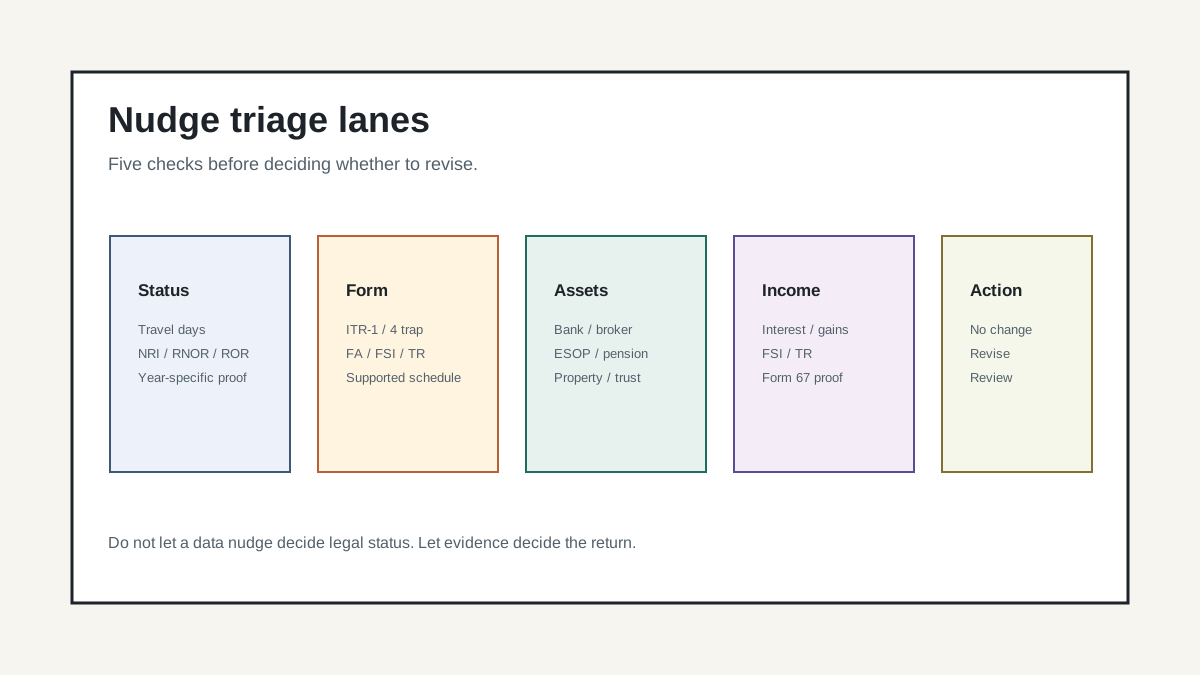
Nudge-to-action matrix: what to check before revising
Use this matrix before touching the return. The same nudge can lead to different next steps depending on status, form, and evidence.
| What triggered the concern | First check | Likely action | Evidence to archive |
|---|---|---|---|
| You filed ITR-1 or ITR-4 and have foreign assets or foreign income | Does the final filing require FA/FSI/TR schedules? | Move to a form that supports the required schedules, usually after adviser review if assets are complex. | Filed ITR acknowledgement, foreign asset inventory, income map, official form instructions, revised-return reason note. |
| You are NRI or RNOR but received a generic foreign-asset nudge | Confirm day-count status, RNOR test, and whether the nudge is data-driven but not status-aware. | Do not blindly add Schedule FA. Document status and respond or revise only if the actual filing position needs it. | Travel calendar, passport entry/exit proof, residency computation, adviser note, nudge screenshot. |
| You are ROR and still hold foreign bank, brokerage, pension, ESOP, RSU, or property assets | Whether every relevant asset category is captured in Schedule FA and income is mapped to the ITR. | Build the foreign asset file and revise if the current return missed a mandatory schedule or income line. | Statements, peak/closing balances, country codes, institution address, acquisition records, income proofs. |
| You have foreign dividends, interest, salary residue, pension, capital gains, or tax withheld abroad | Whether income appears in head-wise computation, Schedule FSI, Schedule TR, and Form 67 where credit is claimed. | Map income separately from assets; file Form 67 only when eligible foreign tax credit is being claimed. | Foreign tax certificate, broker tax forms, dividend statements, exchange-rate working, Form 67 acknowledgement. |
| AIS/TIS shows foreign remittance, SFT, TDS, or data that does not match your facts | Whether the AIS item is correct, duplicate, belongs to another person, or needs feedback. | Use AIS feedback and preserve the trail before final filing or revision. | AIS/TIS download, feedback acknowledgement, bank confirmation, explanation file. |
| Old NRE/NRO/FCNR/RFC accounts changed use after return | Whether bank redesignation and tax status have been updated consistently with the return year. | Do account cleanup in parallel with the ITR file; do not leave bank KYC saying one thing and return status saying another. | Bank redesignation request, account statements, RFC decision, NRO interest/TDS certificates. |
Nine-step Schedule FA nudge fix workflow
This is the practical workflow for returnees who need to convert a scary nudge into a clean file.
Save the nudge and freeze the current filing state
Download the email/SMS/portal nudge, filed ITR acknowledgement, XML/JSON if available, computation, Form 26AS, AIS, TIS, and any Form 67 acknowledgement. Work from copies so you know exactly what changed.
Recalculate residential status from travel dates
Use passport entries, visa records, and travel history to separate NRI, RNOR, and resident-and-ordinarily-resident status for the financial year. Do not rely on the previous year's status or bank KYC label.
Inventory foreign assets by category, not by memory
List foreign bank accounts, custodial accounts, brokerage, ESOP/RSU, retirement accounts, pension wrappers, insurance/annuity contracts, immovable property, signing authority, trusts, and other foreign-source income. Dormant and joint accounts should be reviewed instead of ignored.
Map income separately from assets
Schedule FA is not a substitute for income reporting. Interest, dividends, capital gains, salary residue, pension, rent, and other income need their own tax computation and schedule mapping.
Check whether FSI/TR and Form 67 are actually triggered
Schedule FSI/TR becomes relevant when foreign-source income and tax relief are in play. Form 67 is for claiming eligible foreign tax credit, and the official manual requires proof of foreign tax payment or deduction as an attachment.
Choose the ITR form only after the inventory
If the inventory requires foreign schedules, ITR-1 and ITR-4 are usually the wrong place to be. Pick the form that supports the required schedules and the taxpayer's income heads.
Reconcile AIS/TIS and give feedback where the data is wrong
AIS is useful, but it can show duplicate, third-party, or incomplete information. Download the AIS/TIS, compare source-by-source, and use the portal feedback option where the official data does not match your records.
Decide between no action, revised return, belated path, or professional representation
A generic nudge with clean NRI/RNOR status may need a documented no-change file. A wrong form, missing income, or missing resident foreign-asset schedule may need revision or adviser-led correction within the relevant window.
Archive the evidence as if a later notice will ask for it
Keep the final return, old return, nudge, status working, statements, exchange-rate notes, Form 67 proof, AIS feedback, and adviser memo together. The real goal is not just filing; it is being able to explain the filing later.

Evidence file to build before you respond or revise
Create this file before any return correction. It prevents panic edits and helps the adviser or family owner review the same facts.
- Nudge proof: email, SMS, portal message, date received, assessment year, and any reference number.
- Filing proof: filed ITR acknowledgement, selected ITR form, computation, schedules already filed, and tax payment challans.
- Residential-status proof: passport stamps, travel spreadsheet, work start/end dates, India landing date, and RNOR/ROR computation.
- Foreign account proof: bank and brokerage statements, institution address, account numbers, peak and closing balances, ownership or signing authority status.
- Foreign investment proof: ESOP/RSU grant and vesting statements, broker trade reports, pension/retirement account statements, insurance or annuity contract summaries.
- Foreign income proof: dividends, interest, salary residue, rent, pension, capital gains, sale proceeds, and tax-withheld certificates.
- Form 67 proof where FTC is claimed: foreign tax certificate, proof of deduction/payment, country/TIN, income mapping, and Form 67 acknowledgement.
- AIS/TIS proof: downloaded AIS/TIS, source-wise reconciliation, and feedback acknowledgement for incorrect or duplicate items.
- Bank status proof: NRE/NRO/FCNR/RFC redesignation requests, NRO interest/TDS certificates, and bank KYC status.
- Decision memo: why no action, revision, form change, adviser escalation, or corrected filing path was chosen.
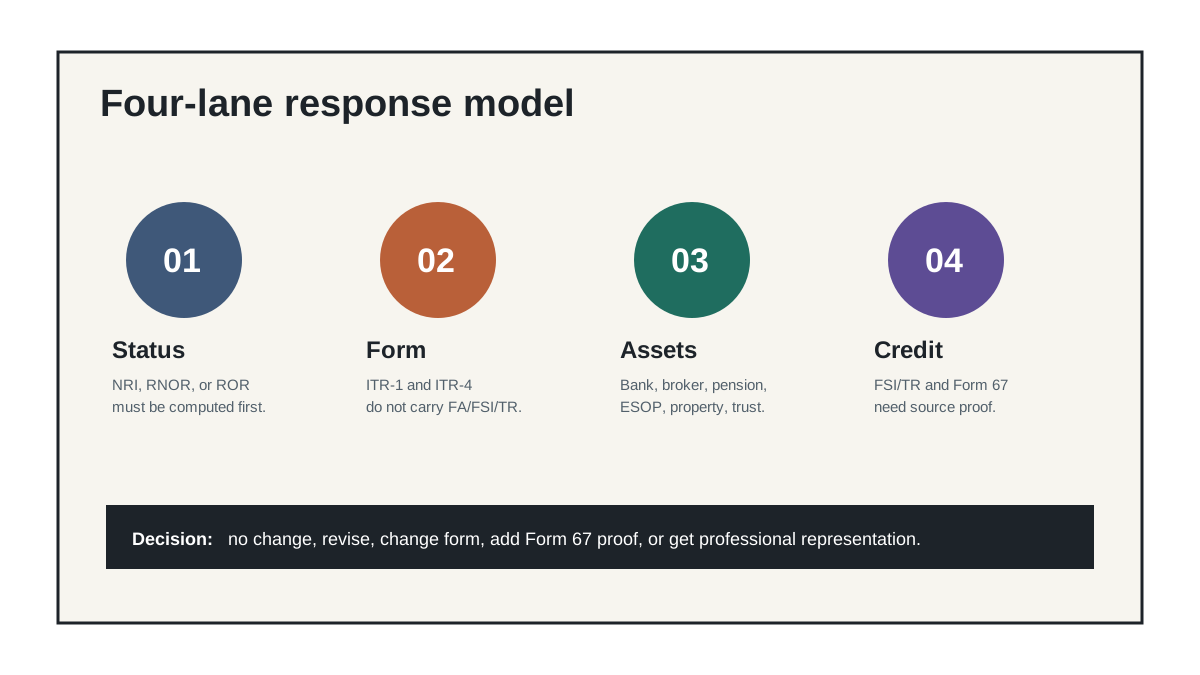
Infographic: the Schedule FA nudge decision board
Need help with Tax & Residency?
Share your blocker in one line. Our experts will reply with practical next steps.
Decision flow: from nudge to clean filing file
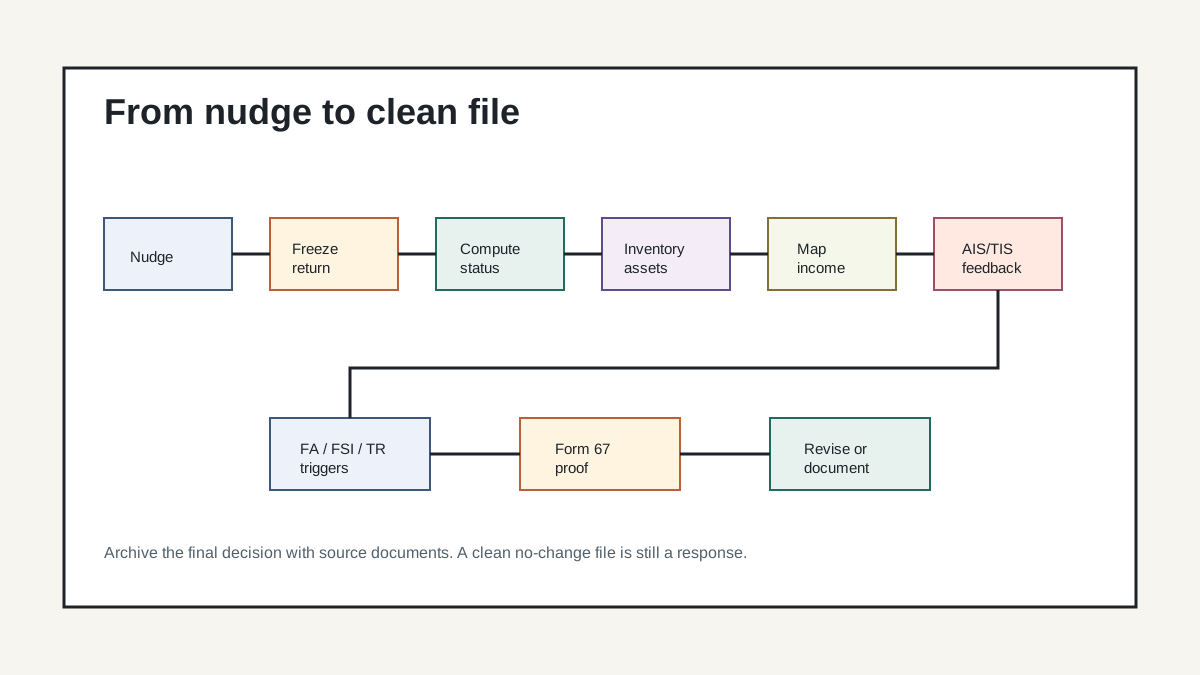
Operating map
Do not blindly revise just because the word foreign appears
Foreign asset compliance is high-stakes, but panic revisions can also create bad records. If you are NRI or RNOR, first document why Schedule FA may not apply. If you are ROR or the form is wrong, build the full evidence pack before revising. For large assets, old omissions, conflicting status, trusts, overseas property, pension accounts, or foreign tax credit claims, get professional review before filing.
Community signal
What to watch in real discussions
Treat repeated complaints as risk signals rather than official advice. This page does not link to community search results.
Interactive checkpoint
Turn this guide into a decision file
0 of 4 checked
What should I do first after receiving a Schedule FA nudge?
Save the nudge, filed return, AIS/TIS, Form 26AS, and computation before editing anything. Then recalculate residential status and check whether your ITR form can carry the required foreign schedules. Do not start by filling Schedule FA from memory.
Does every returning NRI need to file Schedule FA?
No. The answer depends on the relevant year's residential status, form instructions, foreign assets, foreign income, and ownership or beneficial-interest facts. The official FA/FSI guide says Schedule FA need not be completed if the taxpayer is non-resident or not ordinarily resident, but the final position should be checked against current instructions and facts.
What if I filed ITR-1 or ITR-4 but have foreign assets?
If your final filing position requires Schedule FA, FSI, TR, or related foreign schedules, ITR-1 and ITR-4 are generally not the right forms because those schedules are not available there. Build the inventory first, then move to a supported form if revision is required.
Is Schedule FA the same as Form 67?
No. Schedule FA reports specified foreign assets and foreign-source income details where applicable. Form 67 supports a foreign tax credit claim for eligible foreign tax paid on income that is also taxable in India. You may need one, both, or neither depending on facts.
Can I ignore the nudge if I was RNOR?
Do not ignore it, but do not blindly revise either. Save the nudge, document the travel-day and RNOR computation, check the form instructions, and keep a no-change memo if the evidence shows Schedule FA was not required. If the return used the wrong status, that is a separate issue.
What documents are most important for a Schedule FA correction?
The core documents are travel-status proof, filed return, AIS/TIS, foreign bank and broker statements, peak and closing balances, ownership evidence, foreign income statements, foreign tax proof, Form 67 acknowledgement where applicable, and a written decision note explaining the correction.
Does AIS/TIS decide what I must report?
No. AIS/TIS is an information and reconciliation tool. The official AIS FAQ says taxpayers can give feedback and are expected to report complete and accurate information in the return, including information that may not appear in AIS. Use AIS to reconcile, not to replace the underlying tax analysis.
Should I get professional help for a Schedule FA nudge?
Yes if the amount is material, old years are involved, the status is unclear, foreign tax credit is being claimed, the asset is a pension/retirement wrapper, ESOP/RSU, trust, overseas property, or the return form/status may be wrong. The cost of a careful review is usually lower than creating a bad revision trail.
Your tax year is already running.
RNOR status, exit timing, and DTAA benefits all depend on decisions you make before you land. Don't guess.