Schedule FA After Return: What to Report in ITR (2026)
Which foreign bank, brokerage, and property lines go in Schedule FA, ITR-2 vs ITR-3, FSI/TR order, and Form 67 before you file.
The 60-second version
The high-risk gap is not knowing that a foreign asset exists. It is not knowing which financial year, residency status, ITR form, country, account, and income line controls disclosure.
Fast answer
Schedule FA is the foreign-assets and foreign-income schedule inside the Indian income tax return. After returning to India, first decide whether the year is NRI, RNOR, or ROR, then list every foreign bank, brokerage, pension, retirement wrapper, signing authority, and income source before choosing the ITR form.
Most results explain what Schedule FA is. This guide is built for the returning-family problem: you may still have foreign accounts, dormant pensions, employer stock, overseas tax slips, and India residency changing in the same filing year.
Decision table
The useful answer changes by residency status, documentation, institution rules, timing, and what remains reversible.
| Situation | Best next move | Proof before you act |
|---|---|---|
| You returned during the financial year | Calculate residential status before touching the ITR form | Travel dates, residency working, and prior-year India stay count. |
| You still hold foreign bank or brokerage accounts | Make an account-by-account inventory | Country, institution, account number tail, peak balance, opening date, income, and ownership. |
| You have foreign tax paid | Reconcile Schedule FA with FSI/TR and Form 67 | Foreign tax certificate, income line, exchange-rate note, and Form 67 acknowledgement. |
Execution order
The order matters. Most failed return plans do the right tasks in a sequence that creates avoidable friction.
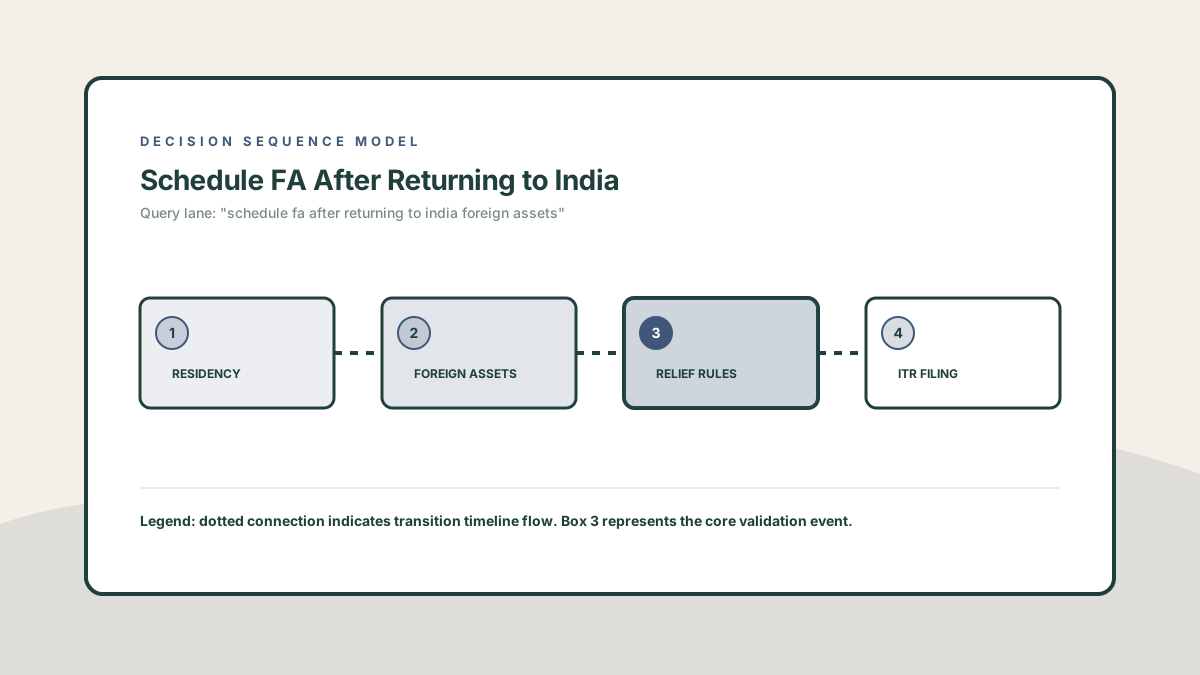
Freeze the foreign inventory
Export statements for bank, brokerage, retirement, pension, employer stock, and any account where you have signing authority.
Calculate Indian residential status
Do not assume the first year is safe. The reporting scope follows the tax status and the relevant ITR instructions.
Map income separately from assets
Interest, dividends, gains, pensions, and salary need income treatment even when the asset itself is already listed.
Choose the ITR form last
Avoid ITR-1 or ITR-4 assumptions if foreign asset or foreign income schedules are triggered.
Pre-commit checklist
Do not mark this topic complete until each line has an owner, a document, and a calendar deadline.
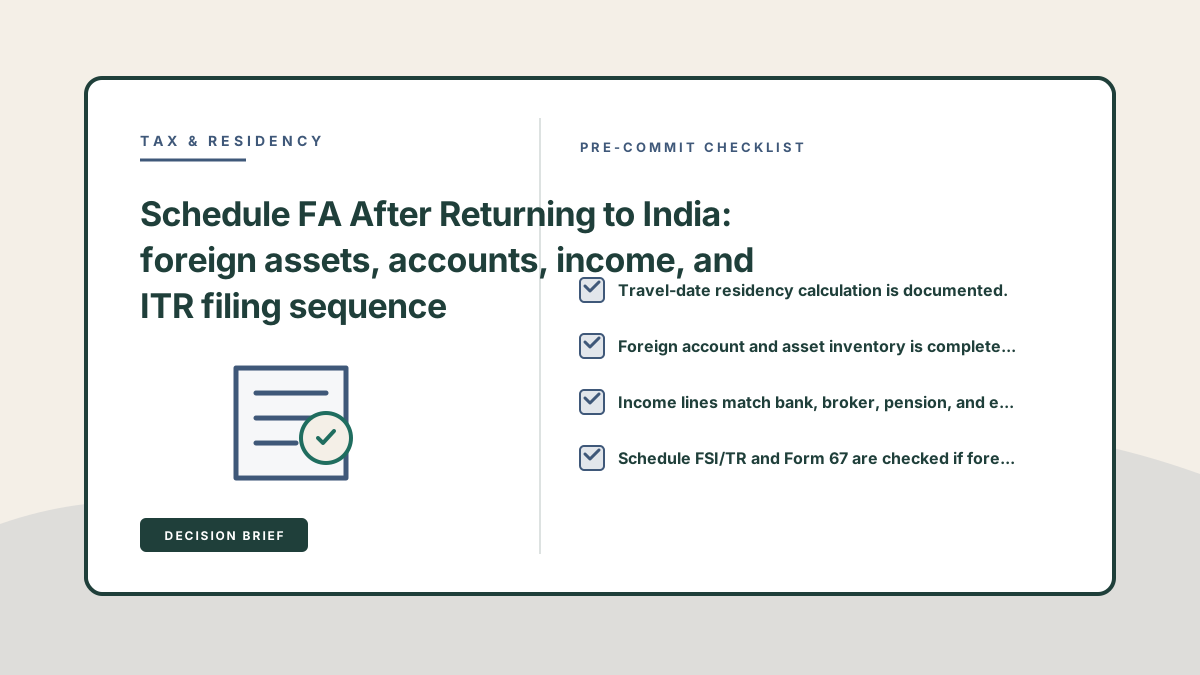
- Travel-date residency calculation is documented.
- Foreign account and asset inventory is complete by country.
- Income lines match bank, broker, pension, and employer documents.
- Schedule FSI/TR and Form 67 are checked if foreign tax credit is claimed.
- Acknowledgements and PDFs are archived with source documents.
Animated decision map
Need help with Tax & Residency?
Share your blocker in one line. Our experts will reply with practical next steps.
Workflow map
What this guide adds beyond generic results
The page turns Schedule FA from a compliance label into a file-building workflow for people whose foreign life has not fully closed on landing day.
Animated decision map

Community signal
What to watch in real discussions
Treat repeated complaints as risk signals rather than official advice. This page does not link to community search results.
Interactive checkpoint
Turn this guide into a decision file
0 of 4 checked
Does every returning NRI file Schedule FA?
No. The need depends on residential status, ITR form, foreign assets, foreign income, and the year being filed.
Is Schedule FA the same as Form 67?
No. Schedule FA reports specified foreign assets and foreign income. Form 67 supports a foreign tax credit claim.
Should dormant foreign accounts be checked?
Yes. Dormant or low-balance accounts can still matter if they are reportable for the relevant year.
Your tax year is already running.
RNOR status, exit timing, and DTAA benefits all depend on decisions you make before you land. Don't guess.