RSU/ESOP Tax After Moving to India (2026): Vest + FA
Foreign RSU or ESOP after return? Map vesting, exercise, sale, sell-to-cover, Schedule FA, Form 67, and India/US tax timing.
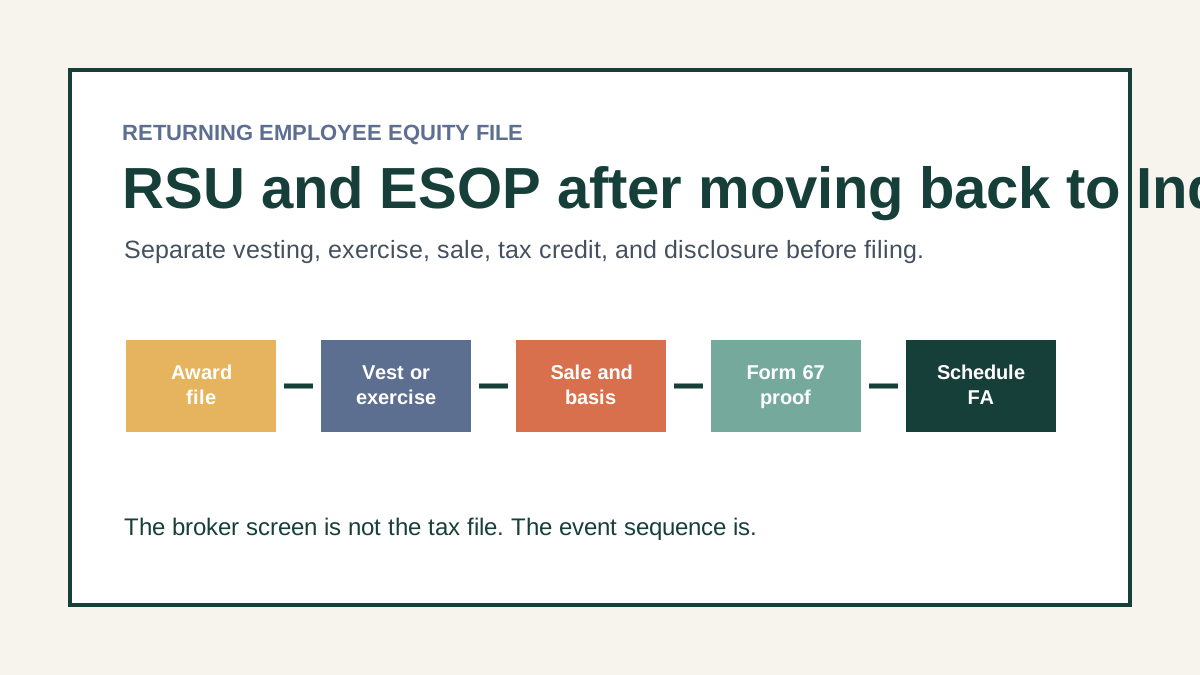
The 60-second version
RSUs and ESOPs are not just 'US stocks'. A returning employee has four separate events to reconcile: grant, vest or exercise, sale, and disclosure. The clean file connects payroll, broker, tax residency, foreign tax credit, and Schedule FA before the first post-return ITR is filed.
Why this is not just another US stock page
A returning employee usually searches this topic after something very specific happens: a US or foreign employer vests RSUs after the family has moved to India, an ESOP exercise window is closing, a sell-to-cover entry appears on the broker statement, or the first India ITR asks for foreign assets. Treating that as a generic capital-gains problem creates bad records.
The useful split is event based. A grant may create no immediate tax file but it starts the evidence trail. A vesting or exercise event can create salary or perquisite income. A sale creates a capital-gains event using a cost basis that should connect to the vest or exercise value. Holding the shares after becoming resident may create Schedule FA disclosure. Foreign withholding may create a Form 67 question only if the same income is taxable in India and eligible foreign tax proof exists.
This guide is built around that sequence. It does not tell every returnee to sell, hold, or exercise. It tells you how to build a file that lets the tax return, broker account, payroll slip, foreign tax credit, and foreign-asset disclosure explain the same facts.
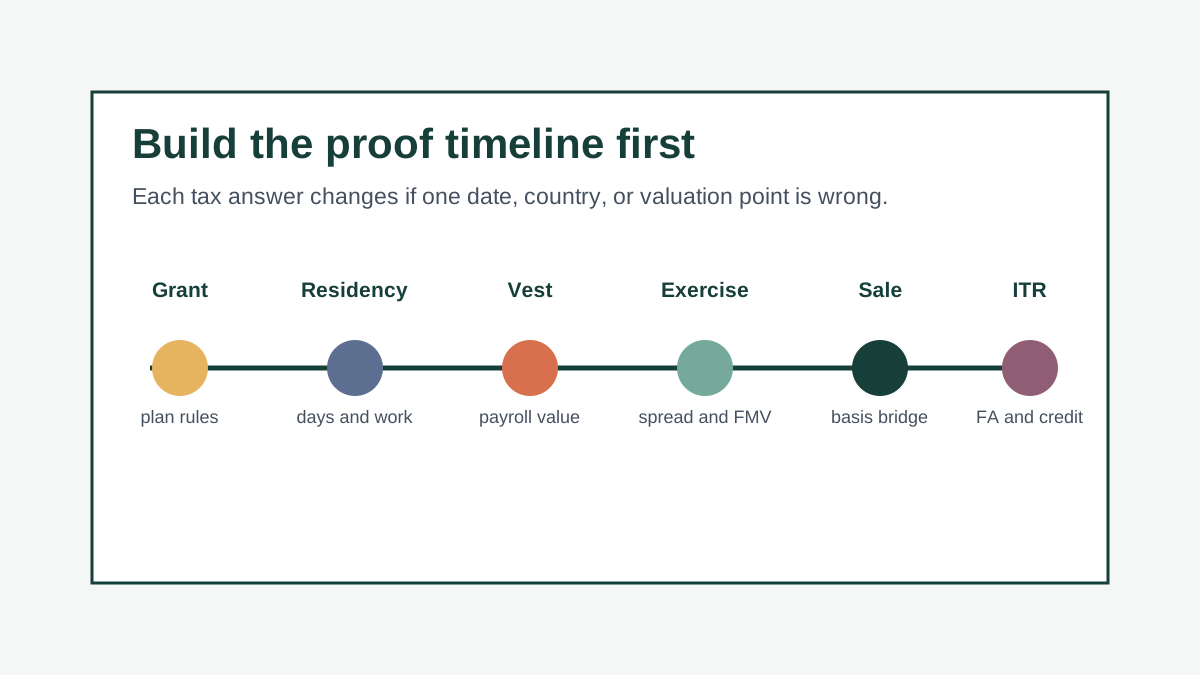
RSU and ESOP event matrix for the move year
Use this before filing the ITR or clicking exercise/sell. The event decides which evidence matters.
| Event | Tax question | India returnee file | Common mistake |
|---|---|---|---|
| Grant | Is there taxable income now, or only a future right subject to vesting or exercise? | Grant letter, award agreement, vesting schedule, employer entity, broker account opening proof. | Ignoring the grant file until the vesting date and then guessing dates from the broker screen. |
| RSU vesting or share delivery | Was compensation recognized, where were services performed during the vesting period, and was foreign tax withheld? | Vest statement, FMV on vest date, payroll slip, W-2/foreign payslip/Form 16 or employer tax statement, sell-to-cover note. | Calling the whole event capital gains even though part of it is compensation income. |
| ESOP or NSO exercise | What is the spread between FMV and exercise price, and is it salary/perquisite income under the relevant country and India rules? | Exercise notice, strike price, FMV support, Rule 3/merchant-banker valuation if applicable, payroll/TDS record. | Using sale price as the only number and losing the exercise-date perquisite basis. |
| Sale after vesting or exercise | What is the capital gain after using the correct cost basis and holding period? | Trade confirmation, cost basis from vest/exercise value, FX conversion note, brokerage fee, tax withheld on sale if any. | Paying tax twice on the same value because the compensation basis is not carried into the capital-gains calculation. |
| Unsold foreign shares after return | Does Schedule FA apply for the year, and where is the foreign custodial account or equity interest reported? | Year-end statement, account country, institution address, ownership nature, income derived, ITR schedule mapping. | Reporting dividend or sale income while forgetting the asset disclosure layer. |
| Foreign tax credit claim | Is the same income taxable in India, and is foreign tax proof strong enough for Form 67 and Schedule FSI/TR? | Foreign tax certificate or payroll withholding record, income line mapping, Form 67 acknowledgement, FSI/TR working. | Assuming sell-to-cover is automatically foreign tax credit without matching the income and proof. |
| US-person overlay | Is the employee still a US citizen, green-card holder, or US tax resident after returning? | US status memo, Form 8938 threshold file, FBAR account review, US return records, India Schedule FA bridge. | Solving the India ITR and missing continuing US-person reporting. |
Nine-step RSU and ESOP file before filing or selling
This sequence is for employees who worked abroad, returned to India, and still hold foreign employer stock or options.
Export the full award file
Download grant notices, award agreements, vesting schedules, exercise windows, broker statements, plan tax documents, and employer payroll records. Do not work from screenshots alone.
Split the timeline by work location and tax residency
Mark where you worked during grant-to-vest or grant-to-exercise periods, then calculate India NRI, RNOR, or ROR status for the relevant financial year. The tax answer can change when services were performed across countries.
Classify the instrument before computing tax
RSUs, non-qualified stock options, statutory stock options, ESPP, phantom stock, and Indian ESOPs do not have identical mechanics. Identify the plan type from the employer document before applying a rule.
Compute compensation income separately from capital gains
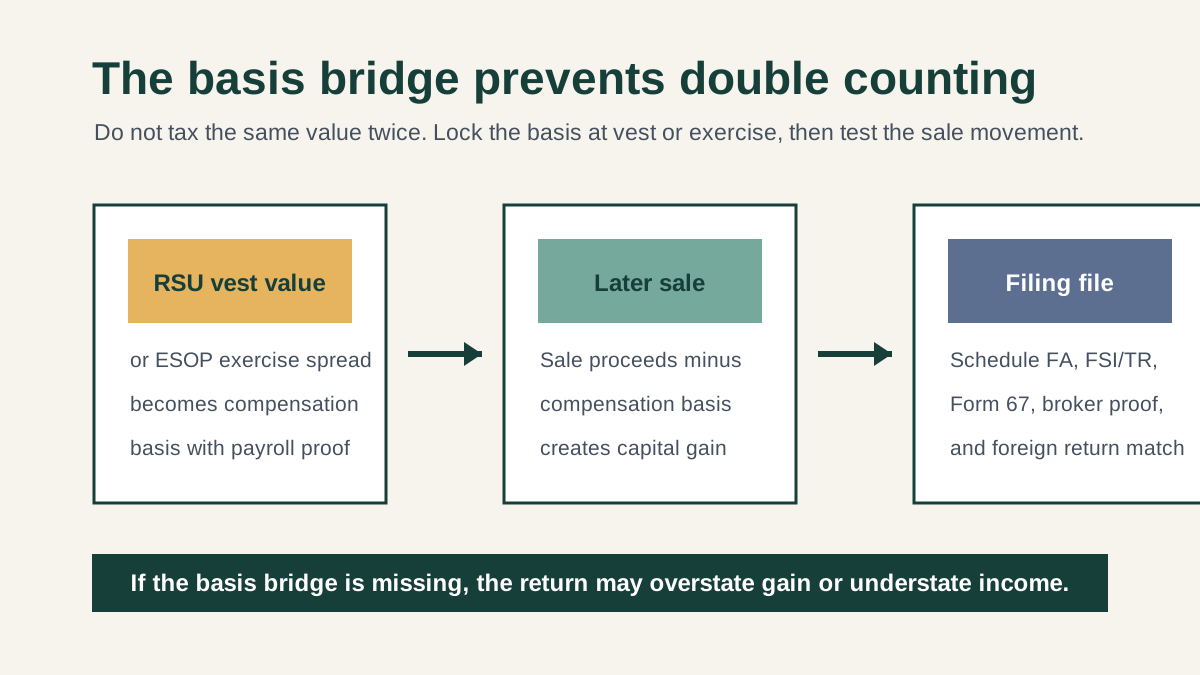
For RSUs, the vest or transfer value often becomes compensation basis. For options, the exercise spread can be salary or perquisite income. A later sale can create capital gains only on the movement after that basis point.
Check sell-to-cover and foreign withholding
Sell-to-cover is usually a tax funding mechanism, not a complete tax analysis. Keep the shares sold, price, tax withheld, country, payroll entry, and broker cash movement in one schedule.
Map the India ITR schedules
If India taxes the compensation or sale, map it to the correct income head, capital-gains schedule, Schedule FSI/TR if foreign-source income and relief are involved, and Schedule FA if resident foreign-asset disclosure applies.
File Form 67 only with matching proof
Form 67 should connect a specific foreign tax payment or withholding record to income that is also offered to tax in India. Keep the proof attachment and acknowledgement with the ITR file.
Review broker access, beneficiary, and estate risk
Before changing address or citizenship/residency status with the broker, export statements and check login, transfer, beneficiary, and death-claim consequences. Equity compensation can become a family-access issue, not just a tax line.
Write a one-page position memo
Summarize status, event, valuation, income head, capital-gain basis, foreign tax credit claim, Schedule FA position, and open risks. This becomes the document you reuse for advisers, notices, and next year's return.

Document checklist for an RSU, ESOP, or stock-option review
Collect this before your India ITR, US return, or cross-border adviser review.
- Award file: grant letter, plan rules, vesting schedule, exercise window, employer entity, and broker account details.
- Residency file: India travel calendar, passport entries, work-location calendar, US or foreign tax-residency status, and RNOR/ROR computation.
- Payroll file: payslips, Form 16, W-2, 1042-S if any, employer tax statement, sell-to-cover record, and foreign withholding certificate.
- Valuation file: FMV on vest date, FMV on exercise date, strike price, merchant-banker or employer valuation support where relevant, and exchange-rate working.
- Broker file: vest confirmation, exercise confirmation, trade confirmations, dividend statements, year-end statement, cost-basis report, and account-country details.
- India tax file: income-head mapping, capital-gains working, Schedule FA position, Schedule FSI/TR working, Form 67 acknowledgement, and AIS/TIS reconciliation.
- US-person file if applicable: US filing status, Form 8938 threshold file, FBAR account review, prior US return records, and treaty/adviser notes.
- Decision file: hold, sell, exercise, let expire, transfer, or diversify rationale, including tax cash needed before the deadline.
Infographic: the basis bridge that prevents double counting
Need help with Tax & Residency?
Share your blocker in one line. Our experts will reply with practical next steps.
Decision flow: hold, sell, exercise, or let expire
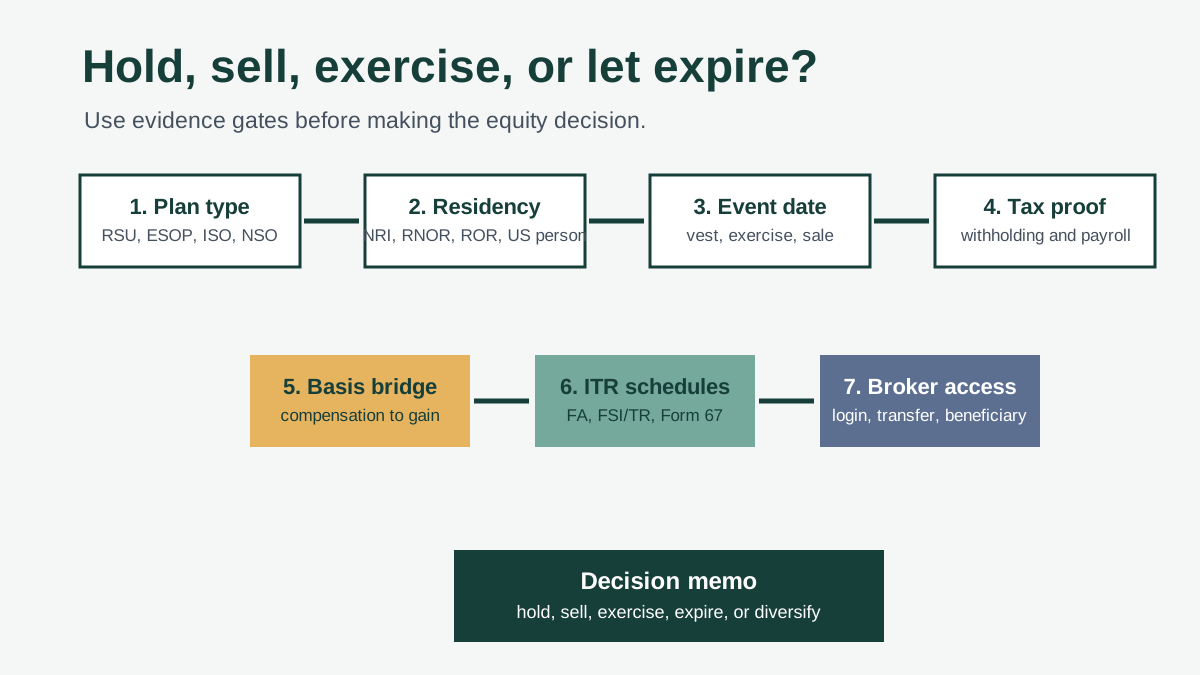
Operating map
Do not file from the broker screen alone
A broker screen can show shares, sale proceeds, and withholding, but it rarely explains Indian residency, service-period allocation, payroll reporting, foreign tax credit eligibility, or Schedule FA categories. For meaningful holdings, late disclosures, US-person status, startup options, or conflicting payroll records, get cross-border tax advice before filing or revising.
Community signal
What to watch in real discussions
Treat repeated complaints as risk signals rather than official advice. This page does not link to community search results.
Interactive checkpoint
Turn this guide into a decision file
0 of 4 checked
Are RSUs taxable in India after moving back?
They can be. The answer depends on residential status, vesting or transfer date, where services were performed, employer reporting, and whether the shares are sold or held. A returning employee should separate compensation income at vesting from later capital gains on sale.
How are ESOPs taxed in India for a returning employee?
The Income Tax Department explains ESOP taxation in two stages: perquisite value at exercise/allotment based on FMV minus price paid, and capital gains when the securities are later transferred. Returning employees must also check residency, foreign employer records, and foreign asset reporting.
Does sell-to-cover mean my RSU tax is finished?
No. Sell-to-cover usually funds withholding. It does not by itself decide India tax, Form 67 foreign tax credit eligibility, capital-gains basis, Schedule FA disclosure, or US-person reporting.
Do foreign RSUs or ESOPs go in Schedule FA?
If you are a resident assessee for the year and hold, own, or have beneficial interest in foreign assets or foreign-source income, Schedule FA must be reviewed. The exact category depends on whether you hold shares, a custodial account, equity interest, signing authority, or other foreign income.
Can I claim Form 67 for tax withheld on RSUs?
Only if the foreign tax credit conditions are met: the same income is taxable in India, eligible foreign tax was paid or withheld, proof is available, and the income is mapped through the return schedules. Form 67 should not be treated as automatic for every broker withholding entry.
What is the cost basis for selling vested RSU shares in India?
In many practical files, the vesting or transfer-date value that was taxed as compensation becomes the basis used to avoid taxing that same value again on sale. Confirm the exact basis with the plan documents, payroll records, and adviser before filing.
What if I am still a US citizen or green-card holder after returning to India?
Then the US-person lane remains separate from the India lane. You may need US return reporting, Form 8938 review, FBAR review for foreign accounts, and India ITR/Schedule FA mapping at the same time.
Should I sell RSUs before moving back to India?
Do not decide only from fear of Indian tax. Model the grant and vesting history, current unrealized gain, broker access after address change, US-person status, India RNOR/ROR timing, foreign tax credit proof, estate access, and concentration risk before choosing the sale window.
Your tax year is already running.
RNOR status, exit timing, and DTAA benefits all depend on decisions you make before you land. Don't guess.