
The 60-second version
Most people open RFC accounts too early or for the wrong reason. This guide shows when RFC actually improves your setup and when NRO/resident routing is cleaner.
Why RFC gets misunderstood
People usually ask about RFC after hearing one line: 'keep foreign currency in India.' That is directionally true, but not enough to decide account structure. The better question is whether you have a real foreign-currency operating need after return.
If your cashflow is mostly INR expenses and domestic banking, RFC may not need to be your first move. If you receive foreign pension, liquidation proceeds, or other eligible foreign-currency flows, RFC can reduce unnecessary conversions and simplify continuity.
Quick decision table: RFC vs other lanes
| Situation | RFC usually helps | Usually choose another lane first |
|---|---|---|
| You receive eligible foreign-currency flows after returning | Yes, RFC can preserve currency without forced immediate conversion. | No only when flows are one-time and conversion is planned immediately. |
| All spending is domestic INR and no foreign-currency obligations | Not usually the first priority. | Resident/NRO operating setup is often enough initially. |
| You are still unsure of tax-year sequencing and residency paperwork | Wait until classification is stable. | Finish residency and compliance sequencing first. |
RFC setup flow
First 30-day RFC action plan
Stabilize your INR operating account first
Keep salary, rent, school, bills, and domestic transfers independent from RFC decisions so day-one operations never stall.
Map every foreign-currency source to eligibility
Create a one-page source map with origin, expected timing, and whether the bank treats it as eligible for your RFC lane.
Align documents before first credit
Get exact branch checklist and submit one coherent packet instead of piecemeal attachments after rejection.
Set a conversion policy in advance
Decide what stays in foreign currency, what converts to INR, and what trigger thresholds you use for conversions.
Community pattern: practical RFC confusion
"If you don't need to retain foreign currency for future offshore expenses, opening an RFC is overkill. Just remit to an NRE and convert to NRO upon return."
Read on reddit ->Need help with Banking?
Share your blocker in one line. Our experts will reply with practical next steps.
Professional context from advisors
"RFC accounts offer full repatriability, but be aware that interest earned becomes taxable once you lose your RNOR status. Plan your maturity dates accordingly."
Read on linkedin ->Short-form discussion signals
"Only NRIs returning for good (or those who lived abroad for at least 1 continuous year) can open an RFC. You cannot open it while you are still working abroad."
Read on twitter ->Explainer-format discussion
"Top 3 reasons NOT to open an RFC account when you move back to India. (And what to do instead). #nriindia"
Read on instagram ->Need help with Banking?
Share your blocker in one line. Our experts will reply with practical next steps.
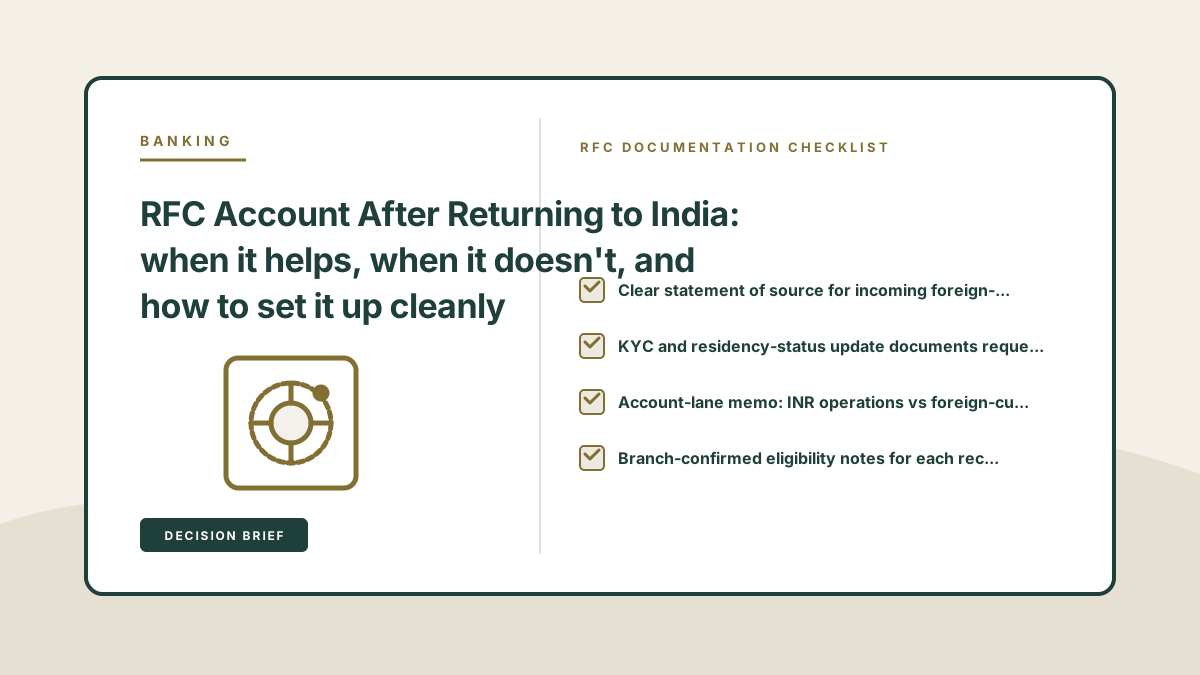
RFC documentation checklist
- Clear statement of source for incoming foreign-currency funds.
- KYC and residency-status update documents requested by your bank.
- Account-lane memo: INR operations vs foreign-currency operations.
- Branch-confirmed eligibility notes for each recurring inflow type.
- Quarterly review sheet for conversions and unused balances.
Avoid this mistake
Do not open RFC only because it sounds advanced. Open it when your real post-return cashflows justify a foreign-currency lane.
Planning visual
Need help with Banking?
Share your blocker in one line. Our experts will reply with practical next steps.
Animated decision map

Interactive checkpoint
Turn this guide into a decision file
0 of 4 checked
Can I keep dollars in India after returning?
In specific permitted lanes, yes. The correct structure depends on source, eligibility, and bank compliance treatment.
Is RFC always better than NRE/NRO after returning?
No. RFC solves a different problem. Your core operating setup may still be resident/NRO first, with RFC for eligible foreign-currency continuity.
Should I open RFC before fixing tax and residency sequencing?
Usually no. Lock classification and operating account basics first, then add RFC where it materially improves your setup.
Is this legal or tax advice?
No. This is a process-quality framework. Validate your exact case with your bank and advisor.
Your NRE account redesignation has a deadline.
Banks don't remind you. You need the right account stack before salary, rent, and EMIs start moving. Get the exact sequence.