Retirement Homes in Kerala: What the Monthly Cost Covers
How Kerala retirement community pricing is structured — entry payment, monthly maintenance, care charges and the extras nobody quotes — plus the contract, RERA,...
The 60-second version
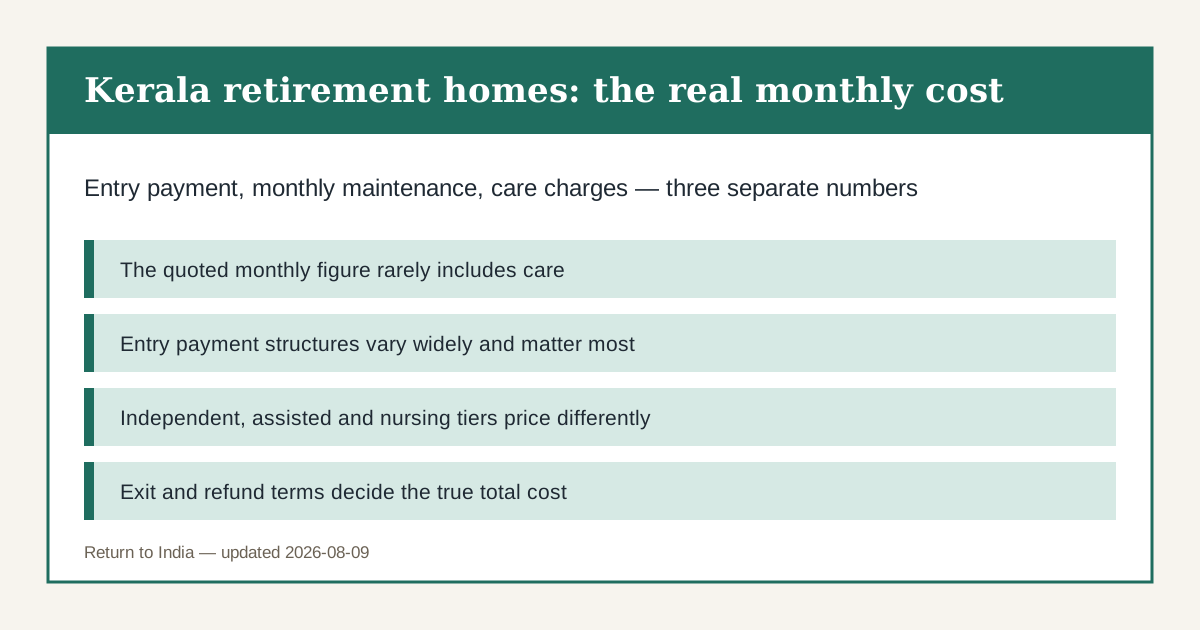
A Kerala retirement home quote usually has three layers: a one-time entry payment, a recurring monthly maintenance charge, and care charges that only appear when needs change. The monthly number families are quoted is almost always only the middle layer.
Fast answer: the monthly number you were quoted is one of three numbers
Kerala has one of India's most developed senior living markets, which is both good and confusing. Good, because the range runs from modest not-for-profit homes to serviced communities with full continuum-of-care arrangements. Confusing, because the pricing structures differ so much between them that a single 'cost per month' comparison is close to meaningless.
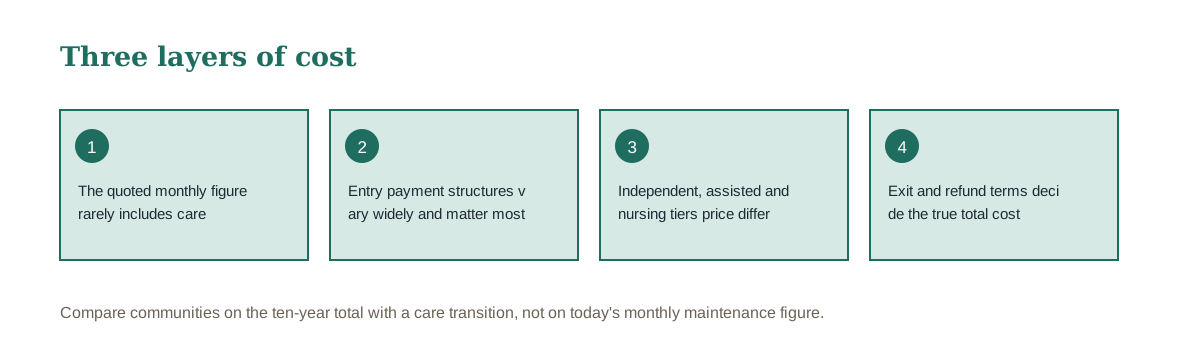
Almost every community prices in three layers. There is an entry payment — sometimes a refundable deposit, sometimes a partly refundable amount, sometimes an outright purchase of a unit. There is a recurring monthly maintenance charge covering the apartment, common facilities, security, housekeeping and often meals. And there is a care layer, which is charged separately and scales with need: from occasional assistance to daily assisted living to nursing-level support.
When a family compares two communities on 'monthly cost', they are usually comparing the middle layer only. The community with the lower monthly figure may have a much larger entry payment, a stiffer non-refundable component, a higher annual escalation clause, or care charges that begin at a lower threshold of need. The comparison that matters is the total cost across a realistic ten-year horizon with a care-need transition somewhere in the middle.
The four care tiers and how each is priced
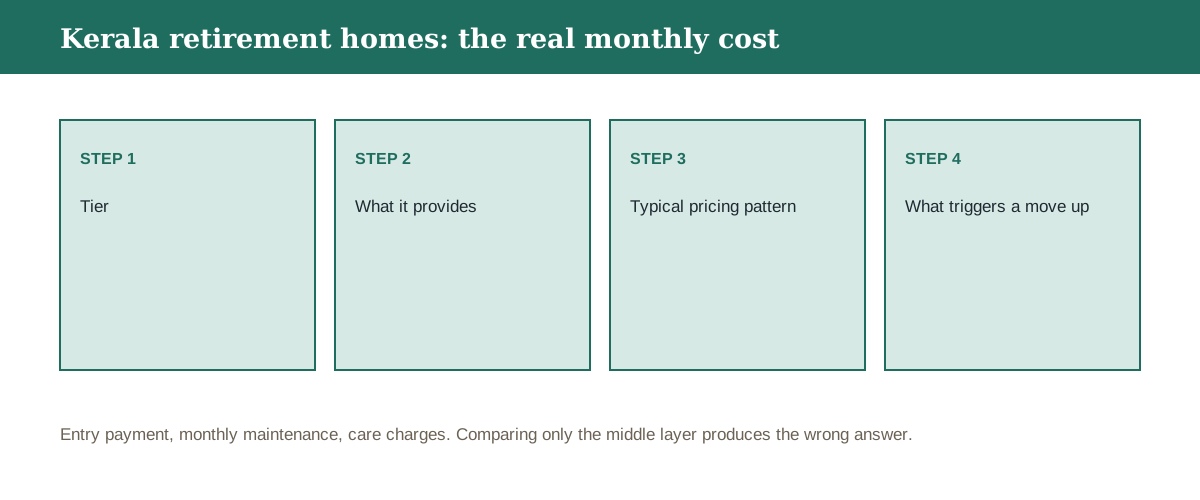
Assess the actual current need first, then the likely need in five years. Communities price these tiers very differently.
| Tier | What it provides | Typical pricing pattern | What triggers a move up | Question to ask |
|---|---|---|---|---|
| Independent living | Own apartment, community facilities, meals, housekeeping, emergency response | Entry payment plus monthly maintenance | A fall, a hospitalisation, or declining mobility | What exactly happens on the day independence ends? |
| Assisted living | Help with daily activities, medication management, closer supervision | Monthly maintenance plus a care charge, often tiered by hours | Assessment by the community's clinical team | Who assesses, on what criteria, and can we appeal? |
| Memory or dementia care | Secure environment, specialist staffing, structured routine | Significantly higher monthly charge, sometimes a separate unit | Diagnosis and behavioural assessment | Is there a dedicated unit or is it managed within assisted living? |
| Nursing or palliative care | Clinical care, often with a tie-up to a nearby hospital | Highest charge; sometimes provided off-site by a partner facility | Medical need beyond the community's licence | If care moves off-site, what happens to our apartment and payments? |
How to evaluate a Kerala community properly
This sequence works whether the parent is moving in next month or in five years. Do not start with the brochure.
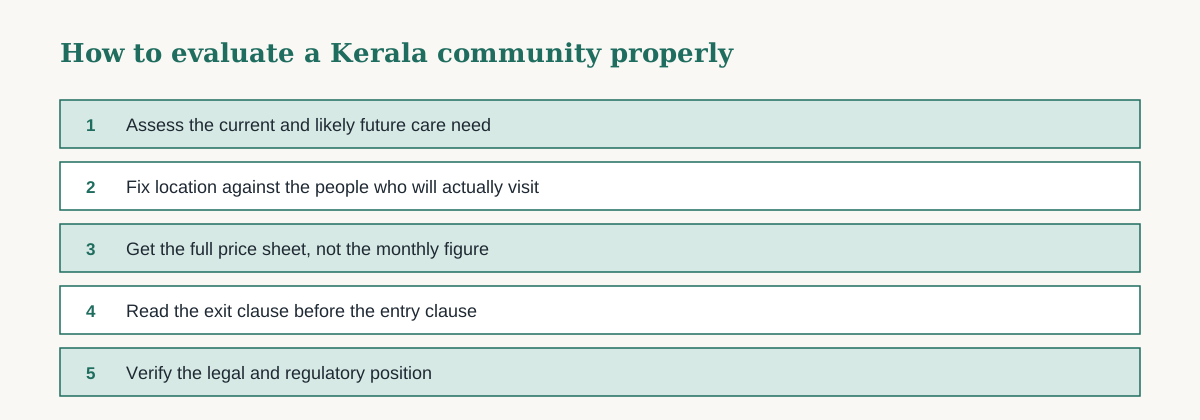
Assess the current and likely future care need
Be honest about mobility, medication complexity, cognition and how much informal family support genuinely exists nearby. The tier decides the shortlist, not the other way round.
Fix location against the people who will actually visit
Distance from a relative who can reach within an hour matters more than distance from an airport. Also check the nearest hospital with a full emergency department, in traffic, not in kilometres.
Get the full price sheet, not the monthly figure
Ask in writing for the entry payment and its refund terms, the monthly maintenance charge and what it includes, the care charges at each tier, and the annual escalation clause.
Read the exit clause before the entry clause
What happens on death, on a permanent move to hospital, or on the family withdrawing the resident? How much of the entry payment is returned, on what timeline, and to whom?
Verify the legal and regulatory position
Who owns the land and the building, whether the project is registered where registration applies, what the operator's track record is, and whether the entity contracting with you is the same entity that operates the facility.
Test the medical arrangement, not the brochure
Ask what happens at two in the morning. Who is on site, what is the escalation protocol, which hospital, whose ambulance, and who authorises treatment when the family is abroad.
Model the ten-year cost with a care transition
Build a simple model: five years independent, then five years assisted, with the stated annual escalation applied. Compare communities on that number rather than on today's monthly quote.
Questions to get answered in writing
Verbal answers from a sales visit are not a basis for a decision that involves a parent's living arrangements and a large deposit.
- Entry payment amount, refundable portion, and the exact refund timeline.
- Monthly maintenance charge and a written list of what it includes.
- Care charges at each tier, with the assessment criteria that trigger each tier.
- Annual escalation clause, expressed as a percentage or formula.
- What happens to the apartment and the payments during a long hospital stay.
- Exit terms on death, on withdrawal, and on transfer to another facility.
- Who legally owns the land and building, and who operates the facility.
- Registration status of the project where registration applies.
- Night-time medical protocol, on-site staffing and the escalation path.
- Named hospital tie-ups and the actual travel time in traffic.
- Who can authorise medical treatment when the family is abroad.
- Whether the operator has changed hands, and what happened to residents' terms if so.
Three layers of cost
Need help with Move Planning?
Share your blocker in one line. Our experts will reply with practical next steps.
Community signal: families compare the wrong number
Unable to embed reddit content. View on reddit
"Discussion threads consistently show families comparing monthly quotes without accounting for entry payment structures and care-tier pricing."
Read on reddit ->Search signal: NRI families ask about refunds first
"For NRI families the recurring anxiety is the refundable portion of the entry payment and who receives it, since the family is not physically present to negotiate later."
Read on quora ->Retirement community evaluation diagram
Need help with Move Planning?
Share your blocker in one line. Our experts will reply with practical next steps.
The entry payment is the risk, not the monthly charge
A large entry payment with vague refund terms is the single biggest financial exposure in a senior living contract, particularly for families abroad who cannot easily pursue a refund in person. Have the refund clause reviewed by an Indian lawyer before any money moves.
The one-sentence answer
Kerala retirement homes price in three layers — entry payment, monthly maintenance and care charges — so compare communities on a ten-year model that includes a care-tier transition and a reviewed refund clause, not on the monthly figure in the brochure.
Animated decision map

Need help with Move Planning?
Share your blocker in one line. Our experts will reply with practical next steps.
Interactive checkpoint
Turn this guide into a decision file
0 of 4 checked
How much does a retirement home in Kerala cost per month?
The monthly maintenance charge varies enormously between not-for-profit homes and serviced communities, and it usually excludes care charges. Ask each community for the monthly figure, the care charges at each tier, and the entry payment separately, then compare the ten-year total.
What does the monthly charge normally include?
Typically the apartment, common facilities, security, housekeeping and often meals. Care assistance, nursing, medication management and medical transport are usually charged separately. Get the inclusion list in writing.
Is the entry payment refundable?
It depends entirely on the community. Some entry payments are largely refundable, some are partly refundable on a sliding scale, and some are effectively a purchase. Read the refund clause, including the timeline and who the refund is paid to.
What is the difference between independent and assisted living?
Independent living provides a home within a supportive community. Assisted living adds help with daily activities, medication management and closer supervision, and is charged as an additional layer, usually after a clinical assessment.
Who decides when my parent moves to a higher care tier?
Usually the community's clinical team, using its own assessment criteria. Ask who assesses, what the criteria are, whether the family is consulted, and whether there is an appeal route before you sign.
What happens if my parent is hospitalised for a long period?
Communities differ on whether the apartment is held, whether charges continue, and at what rate. This is one of the most important clauses for NRI families and it is rarely covered in a sales conversation.
Can NRI children pay the charges from abroad?
Payments are generally made through Indian banking channels, so most families route them through an Indian account. Confirm the community's accepted payment methods and keep the payment trail for tax and record purposes.
Are these charges tax deductible in India?
General accommodation charges are not a medical deduction. Specific medical expenditure for a dependent senior may qualify under the relevant provisions of the Income Tax Act with proper certification. Keep the medical component separately invoiced.
What legal protections exist for senior residents in India?
The Maintenance and Welfare of Parents and Senior Citizens Act 2007 provides a framework for maintenance and welfare, and state rules can add requirements for institutions. Separately, your protection comes from the contract, so have it reviewed before signing.
The plan is only as good as the sequence.
Tax, banking, schools, shipping — they all have dependencies. A wrong order costs months and lakhs. Get it right.