Home Nursing Care for NRI Parents in India: 2026 Guide
Choose attendant, nurse, or care manager support for parents in India with cost signals, verification, proof loops, PMJAY limits, and emergency rules.
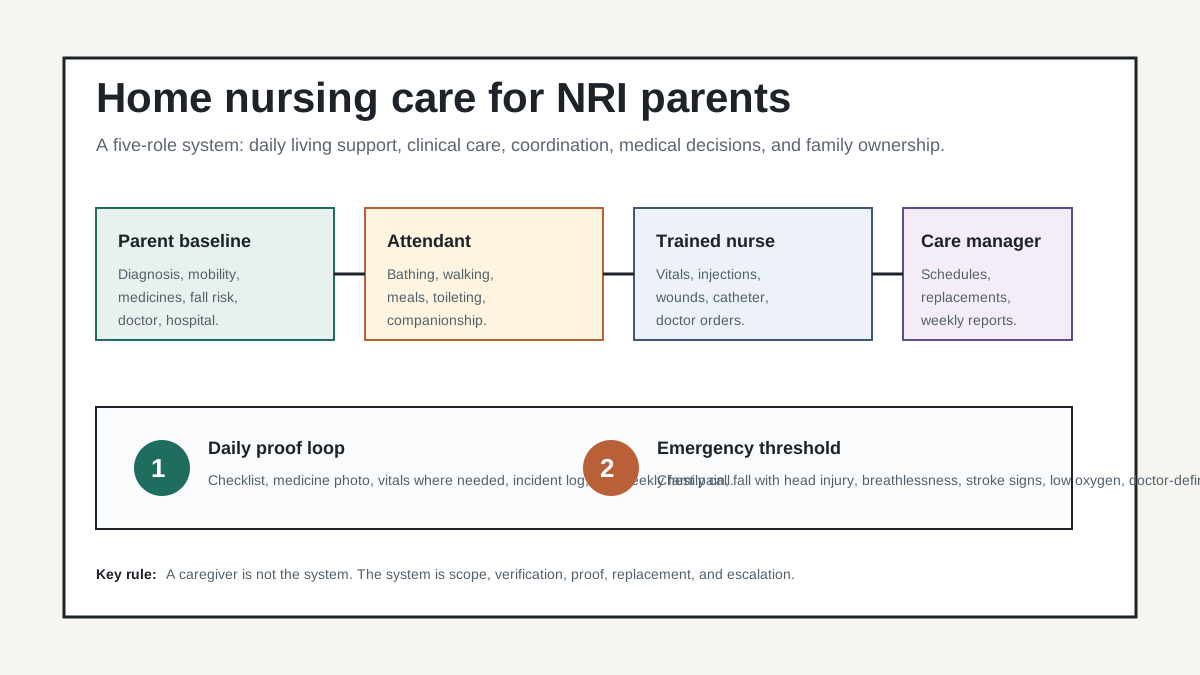
The 60-second version
Home care for NRI parents fails when one person is expected to be maid, nurse, companion, physiotherapist, emergency responder, and family proxy. The safer model separates five roles: attendant for daily living, trained nurse for clinical tasks, care manager for coordination, doctor or physiotherapist for treatment decisions, and family owner for payments and escalation.
Why home care breaks for NRI parents
The dangerous assumption is that a single caregiver can solve the parent-care problem. In practice, one person cannot safely cover cooking, bathing support, medication reminders, blood-pressure logs, insulin reminders, hospital visits, physiotherapy follow-up, night falls, emergency calls, and family reporting. When the NRI child lives abroad or has just moved back to India, this ambiguity becomes the risk.
Use a five-role model instead. An attendant handles daily living support such as bathing assistance, meal help, walking support, toileting help, and companionship. A trained nurse handles clinical tasks such as injections, wound dressing, catheter care, vitals, post-operative recovery, and doctor-ordered medication support. A care manager coordinates schedules, replacement staff, doctor visits, family reporting, and emergency response. The doctor or physiotherapist makes treatment decisions. One family owner approves money, escalation, and monthly review.
The National Programme for the Health Care of the Elderly recognises that elderly care includes preventive, curative, rehabilitative, and home based care where needed. That does not mean a private home-care vendor replaces a hospital, a physician, or family governance. The right question is not who can send a caregiver tomorrow. The right question is what level of care the parent needs, who is medically accountable, and what proof reaches the family every day.
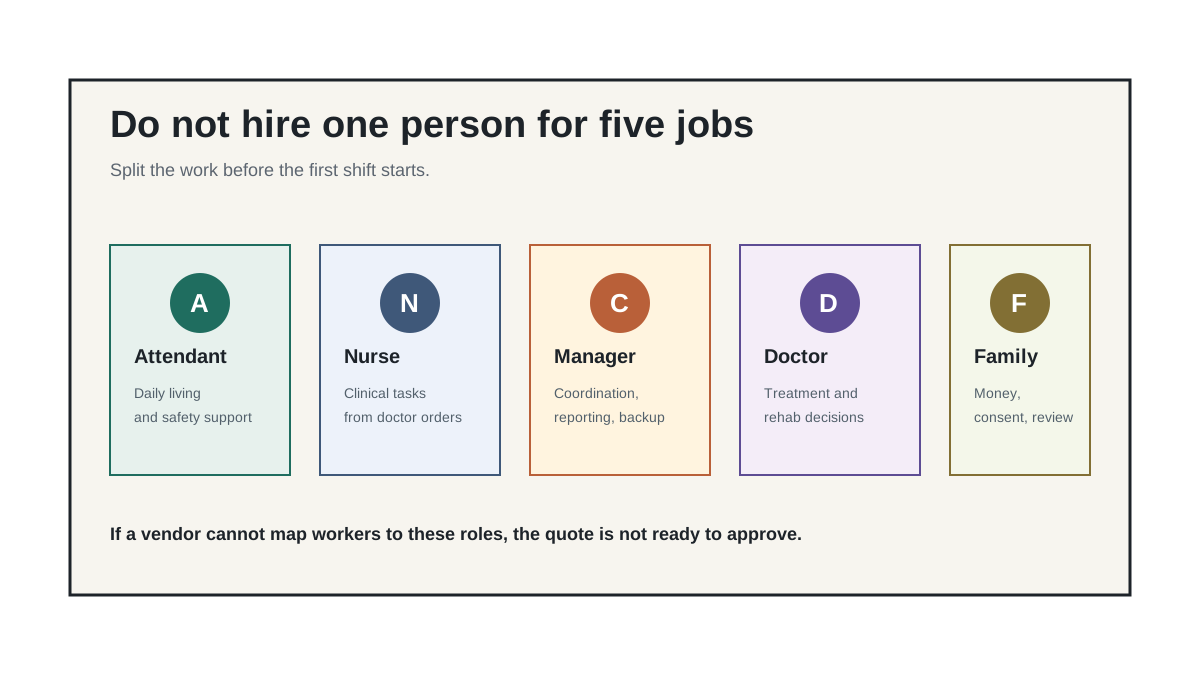
Attendant vs nurse vs care manager: choose by task, not by label
Start with the task list. If the task is clinical, hire a nurse. If the task is daily living support, hire an attendant. If the family is remote, add a care manager or local owner.
| Care layer | Use it for | Do not use it for | Proof to demand | Typical 2026 cost signal |
|---|---|---|---|---|
| Part-time attendant | Meal support, walking help, bathing assistance, toileting help, companionship, errands, light daily routine | Injections, wound dressing, catheter care, insulin dose decisions, medical judgement, emergency triage | Daily check-in photo or log, task checklist, leave record, replacement rule, family call schedule | Often quoted as daily or monthly support. Ask city-specific rates and whether agency replacement is included. |
| Live-in or 24-hour attendant | Parent should not be alone, fall risk, night assistance, dementia wandering risk, post-discharge non-clinical supervision | ICU-level observation, ventilator support, complex medication changes, catheter or wound care unless trained and supervised | Shift handover log, sleep/rest rule, backup staff, police verification, ID proof, daily vitals if assigned | Samarth's Delhi 2026 benchmark places live-in attendants around Rs 18,000 to Rs 28,000 per month via agencies, with lower independent-hire quotes but weaker replacement control. |
| Trained nurse | Injections, IV support, wound dressing, catheter care, vitals, post-surgery recovery, doctor-directed medication support | Household work, unsupervised diagnosis, changing prescriptions, acting as hospital substitute when symptoms are unstable | Nursing qualification, registration or training proof, prescription-based task plan, vitals log, escalation threshold | Samarth cites 24x7 nurse-led care around Rs 70,000 to Rs 1,20,000 per month depending on complexity; other city quotes vary widely. |
| Physiotherapist or rehab visit | Fall recovery, mobility training, stroke rehab, post-surgery exercise, balance work, assistive-device training | Daily custodial care, medication control, emergency response, night support | Therapy plan, visit notes, progress videos, exercise restrictions, next-review date | Usually visit-based. Ask for package price, visit duration, progress reporting, and cancellation rules. |
| Remote care manager | Vendor coordination, staff replacement, doctor appointment booking, medicine refill, hospital file, monthly family report | Hands-on nursing, legal decision-making, replacing family consent, financial power without written authority | Weekly report, incident log, medicine stock photo, appointment calendar, escalation call record | Typically monthly retainer or bundled inside elder-care service. Pay for reliability and reporting, not just calls. |
| Assisted living or care home | When home staff is unstable, parent needs 24x7 managed environment, dementia supervision, social rhythm, or facility medical protocol | A cheap replacement for hospital care, or a forced move without parent consent and contract review | NABH or equivalent care-home quality signals, contract, medical protocol, resident-family communication, exit terms | Use the senior living article for the full cost matrix. Home care becomes expensive when nurse-led 24x7 care crosses facility-level pricing. |
The 10-step operating sequence for remote home care
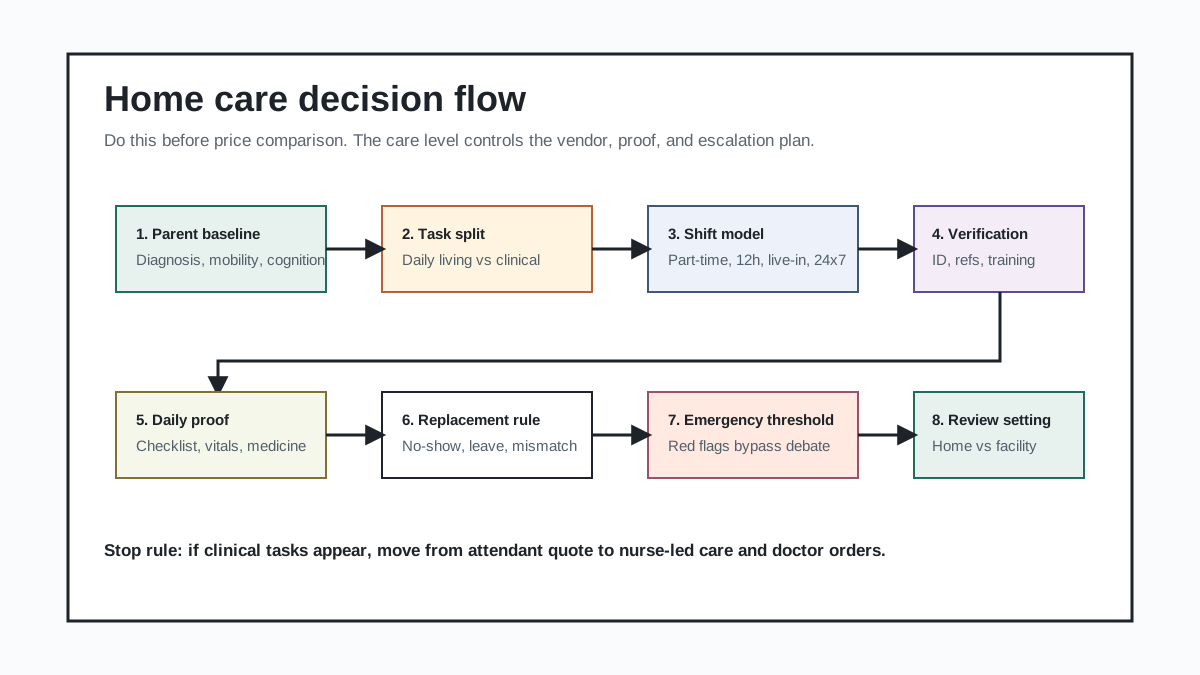
This is the order that prevents the most common failures: wrong worker, no replacement, no proof, no hospital escalation, and no family owner.
Write the parent baseline before calling vendors
Document diagnosis, medicines, allergies, mobility, fall history, continence, cognition, sleep pattern, food restrictions, nearest hospital, treating doctor, and whether the parent can be left alone for two hours. This one-page baseline decides whether you need an attendant, nurse, care manager, or facility.
Separate clinical tasks from daily living tasks
Mark every task as clinical or non-clinical. Wound dressing, injections, catheter care, vitals interpretation, and post-surgery monitoring need trained nursing and doctor orders. Bathing support, meal reminders, walking support, and companionship can be attendant work.
Pick the shift model
Choose part-time, 12-hour, live-in, or rotating 24x7 shifts. Do not choose 24x7 because it sounds safer. Choose it because the parent has night falls, dementia wandering, post-discharge dependency, or cannot safely call for help.
Demand verification before the first shift
Collect worker ID, address proof, agency employment proof, police verification where available, qualification proof for nurses, reference check, vaccination or health declarations if relevant, and the replacement policy in writing. Independent hires can be cheaper but need stronger family-side verification.
Create a written care plan
The care plan should list tasks, timings, no-go actions, medicine handling, doctor orders, meal support, mobility restrictions, hygiene rules, visitor rules, emergency numbers, and the exact situation that triggers a call to family or hospital.
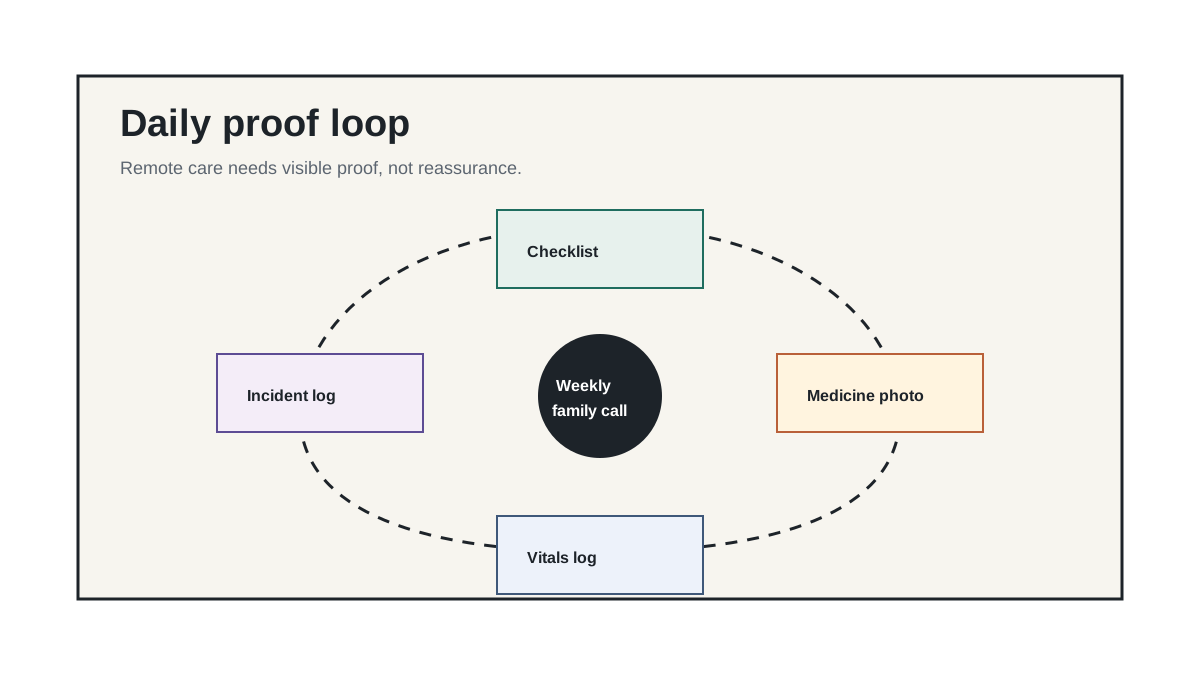
Build a daily proof loop
Remote families should receive proof, not reassurance. Use a daily checklist, medicine stock photo twice a week, vitals log if medically required, food and hydration notes, fall/incident log, appointment calendar, and a weekly family call with the care manager or local owner.
Make replacement non-negotiable
Every plan needs a same-day replacement rule for leave, illness, no-show, family discomfort, or performance issues. If the vendor cannot replace staff quickly, the family must maintain a backup worker or move to a managed care model.
Set hospital escalation thresholds
Write the red flags that bypass family debate: chest pain, fall with head injury, breathlessness, sudden confusion, high fever, low oxygen, repeated vomiting, uncontrolled sugar, stroke symptoms, or any doctor-defined threshold. The first action is hospital or emergency line, not a WhatsApp poll.
Attach the insurance and PMJAY boundary
AB PM-JAY and Ayushman Vay Vandana are hospitalisation covers, not daily home-attendant funding. They matter when the parent needs secondary or tertiary hospital care. Keep the card, private insurance details, cashless hospital list, and reimbursement rules in the emergency file.
Review whether home is still the right setting
Every month, score staff reliability, parent safety, medical stability, family burden, total cost, and emergency response. If home care needs two attendants plus a nurse plus heavy family coordination, assisted living or a care home may be safer than forcing home care to do facility work.
Hiring checklist before the first caregiver enters the house
Do not start a shift because a vendor says the worker is trained. Make the proof visible, repeatable, and stored in the family folder.
- Parent baseline is written: diagnosis, medicines, allergies, mobility, cognition, fall risk, doctor, hospital, emergency contacts.
- The task list separates clinical work from daily living support.
- The worker's ID proof, address proof, phone number, agency record, and reference check are stored.
- Police verification is requested or documented where local process allows it.
- Nurse qualification or training proof is stored if the role includes clinical tasks.
- The care plan says exactly what the worker may do, may not do, and must escalate.
- Medicine handling is written: who buys, who stores, who administers, who records, who changes dose only after doctor order.
- Replacement rule is written: no-show, leave, illness, behaviour issue, mismatch, or parent discomfort.
- Emergency file is visible at home: hospital list, insurance card, PMJAY card if applicable, prescriptions, allergies, blood group, doctor numbers.
- A daily proof loop is active: checklist, vitals if required, medicine photo, incident log, and weekly family call.
- Payment route is documented: salary, agency invoice, replacement charges, holiday rates, night duty charges, consumables, and refund policy.
- A monthly review date is set to decide whether to continue home care, increase support, or shift to assisted living.
Home care decision flow
Animated proof loop: what the family should see every day
Need help with Move Planning?
Share your blocker in one line. Our experts will reply with practical next steps.
The home-care stack for NRI parents
PMJAY is not a home-attendant budget
AB PM-JAY and Ayushman Vay Vandana matter for hospitalisation, not daily caregiver salary. Do not tell yourself the parent is covered because they may have a PMJAY card. Keep the card ready for eligible hospital care, but budget separately for attendants, nurses, physiotherapy, medicine, diagnostics, ambulance, and a local care manager.
Cost and proof map
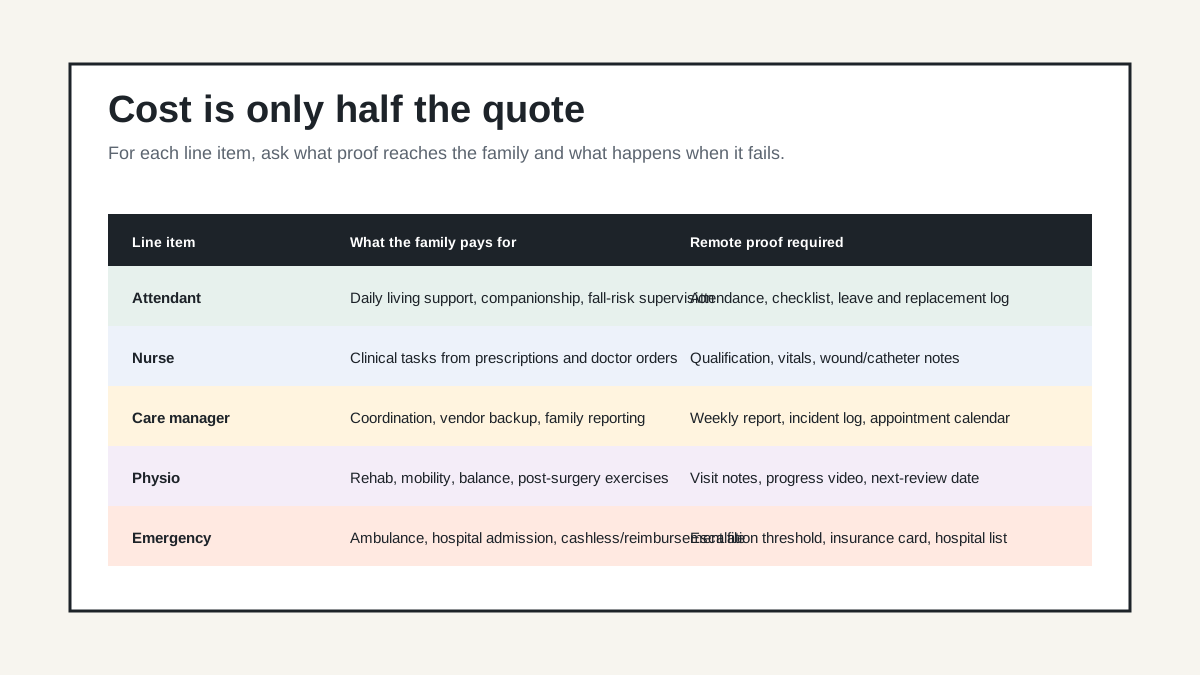
Animated decision map

Community signal
What to watch in real discussions
Treat repeated complaints as risk signals rather than official advice. This page does not link to community search results.
Interactive checkpoint
Turn this guide into a decision file
0 of 4 checked
Should an NRI hire a home attendant or a trained nurse for parents in India?
Hire by task. A home attendant is appropriate for daily living support such as bathing help, walking support, meal reminders, toileting support, companionship, and household routine. A trained nurse is required for clinical tasks such as injections, wound dressing, catheter care, post-operative recovery, vitals monitoring, and doctor-directed medication support. If the parent needs both, split the roles instead of asking one worker to do everything.
How much does 24-hour home care for elderly parents cost in India in 2026?
There is no single India-wide price. City, worker type, shift model, agency replacement, and medical complexity change the quote. Samarth's Delhi 2026 benchmark places live-in attendants around Rs 18,000 to Rs 28,000 per month through agencies, while nurse-led 24x7 care can move toward Rs 70,000 to Rs 1,20,000 per month depending on complexity. Treat these as benchmarks, not guaranteed rates, and ask for written city-specific quotes.
Can Ayushman Bharat or PMJAY pay for home nursing care?
AB PM-JAY and Ayushman Vay Vandana are hospitalisation-oriented covers for eligible secondary and tertiary care at empanelled hospitals. They are not a daily home-attendant salary budget. Keep the PMJAY card ready for eligible hospital care, especially for senior citizens aged 70 and above, but budget separately for attendants, nurses, physiotherapy, diagnostics, ambulance, medicines, and care manager fees.
What proof should an NRI demand from an elder-care agency?
Demand worker ID, address proof, employment record, references, police verification where available, qualification proof for nurses, written replacement rule, written care plan, daily checklist, medicine log, incident log, and weekly family report. For remote families, proof matters more than assurances. Store the documents in a shared family folder before the first shift begins.
When should home care be upgraded to assisted living or a care home?
Review the setting when home care needs multiple workers, frequent replacements, night support, dementia supervision, repeated falls, heavy family coordination, or nurse-led 24x7 care. If the total home-care system is becoming a private facility without facility-level quality controls, assisted living, memory care, or a NABH-aligned care-home setting may be safer and more predictable.
What is the biggest home-care mistake for NRI parents?
The biggest mistake is hiring before scoping. Families ask which provider is best before writing the parent's baseline, task list, clinical needs, shift model, replacement rule, reporting format, and hospital escalation threshold. The safer sequence is baseline first, role split second, vendor third, proof fourth, monthly review fifth.
The plan is only as good as the sequence.
Tax, banking, schools, shipping — they all have dependencies. A wrong order costs months and lakhs. Get it right.