Long-Term Care Facilities in India: What to Look For
A structured evaluation framework for Indian long-term care and nursing facilities — staffing ratios, night-time protocols, infection control, medication management,...
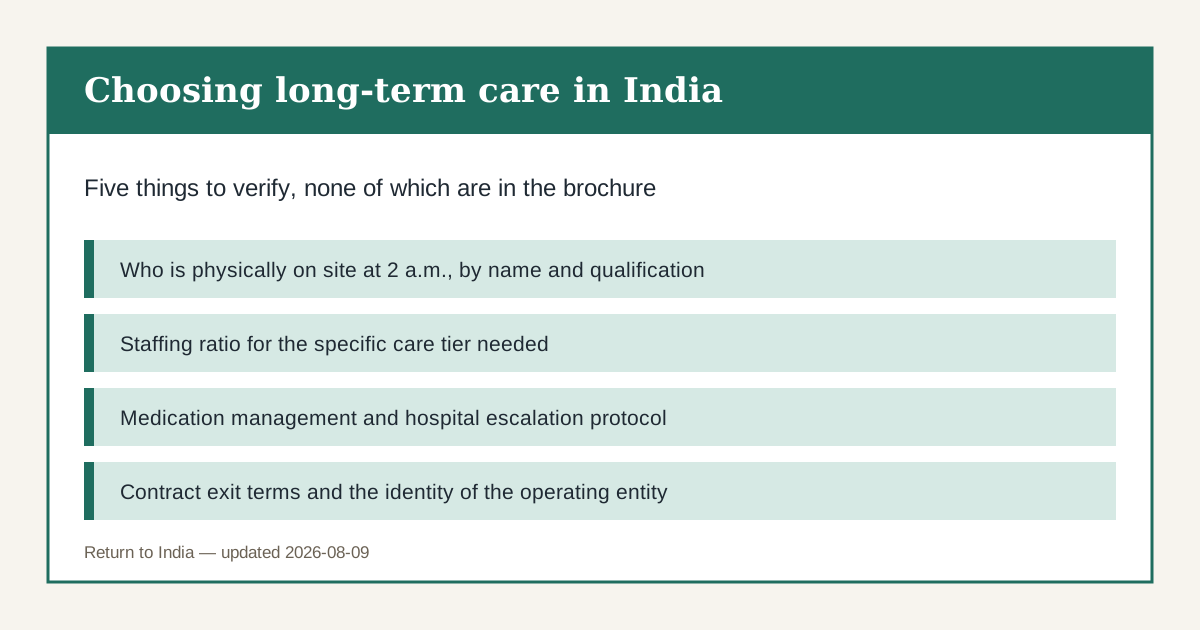
The 60-second version
Choosing a long-term care facility in India comes down to five verifiable things: who is physically present at night, the staffing ratio for the care tier your parent needs, the medication and escalation protocol, the contract's exit terms, and whether the operator is the same entity as the contracting party.
Fast answer: evaluate the night shift, not the lobby
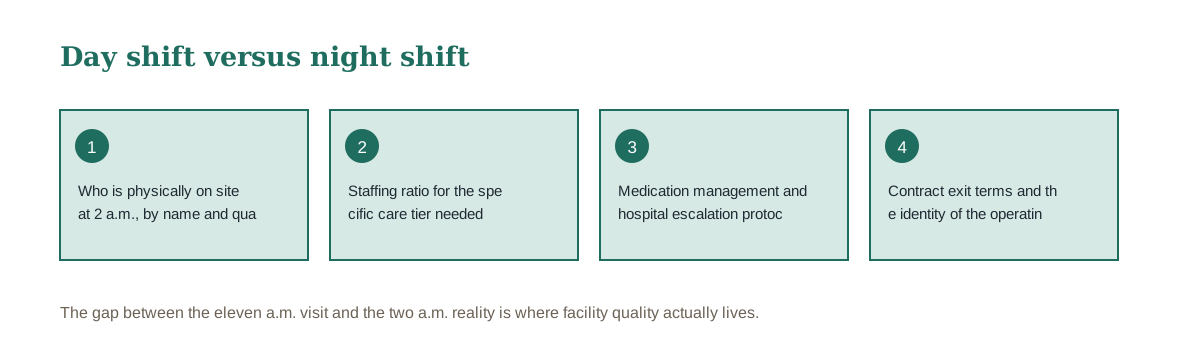
Every long-term care facility looks competent at eleven in the morning on a scheduled visit. The staff are at full strength, the corridors are clean, the marketing lead is articulate, and the residents you are shown are the ones doing well. None of that predicts what happens at two in the morning when a resident falls, or on a Sunday when the regular nurse is off.
So the evaluation has to target the things that are hard to stage. Who is physically present overnight, with what qualification, and how many residents are they responsible for. What the medication round actually looks like and who signs for it. What happens between a resident deteriorating and an ambulance arriving. Whether the facility can lawfully provide the level of care it is describing, or whether it escalates to a partner hospital — and if so, what that means for your parent's bed and your family's bill.
For NRI families there is an additional dimension: you will not be there. That makes two things disproportionately important — a named local person with authority to consent to treatment, and a contract whose exit and refund terms you would be comfortable enforcing from another country.
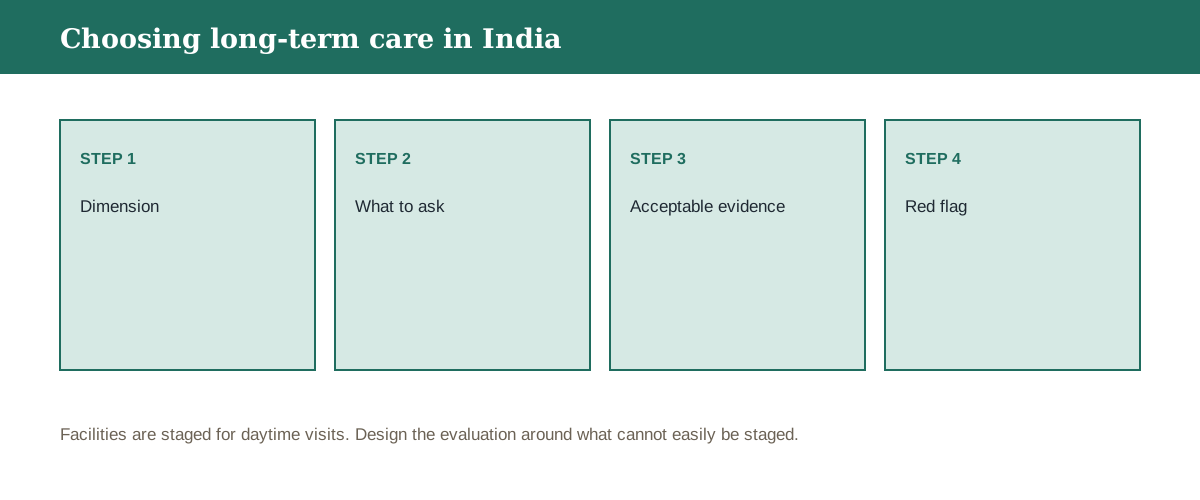
The five dimensions and the evidence that satisfies each
Score each shortlisted facility on all five. A strong score on four and a blank on the fifth is not a pass.
| Dimension | What to ask | Acceptable evidence | Red flag |
|---|---|---|---|
| Night-time presence | Who is on site between 10 p.m. and 6 a.m., with what qualification? | A written roster, plus permission to visit unannounced in the evening | Vague answers, or a doctor described as 'on call' with no defined response time |
| Staffing ratio by tier | How many care staff per resident at the tier my parent needs? | Numbers stated in writing, differentiated by shift and by care tier | A single overall ratio that averages independent and high-dependency residents |
| Medication management | Who prepares, administers and records medication, and how are errors handled? | A written protocol, a signed medication chart, and a named clinical supervisor | Family members expected to manage medication for a resident in full-time care |
| Escalation to hospital | What is the protocol from deterioration to admission? | Named hospital, transport arrangement, tested travel time, documented consent chain | 'We call the family' as the entire protocol, with no interim clinical action |
| Contract and operator identity | Who am I contracting with, and do they operate the facility? | The same legal entity on the contract, the licence and the building | A contracting company distinct from the operator, with no clear recourse |
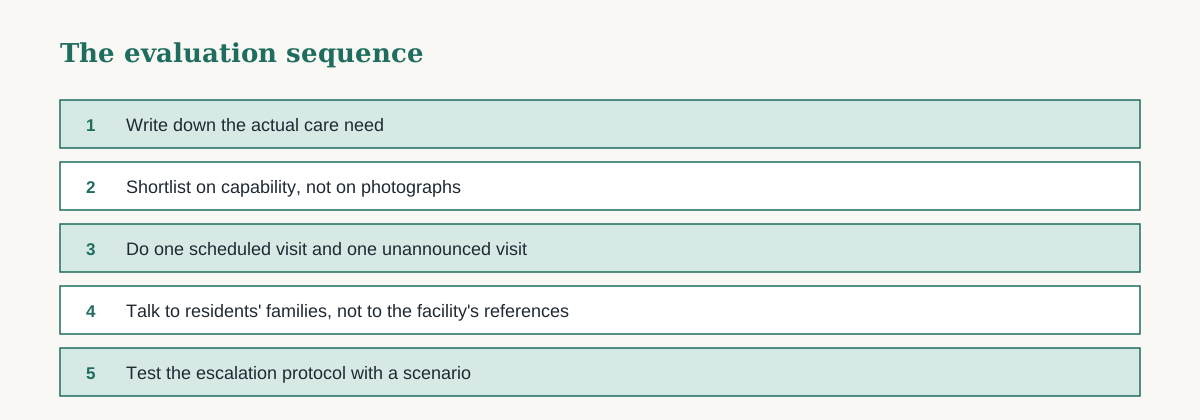
The evaluation sequence
Budget three to four weeks. Rushing this is how families end up moving a parent twice.
Write down the actual care need
Mobility, continence, cognition, medication complexity, feeding, and behaviour. Be specific and honest. Facilities cannot match a need they have not been told about.
Shortlist on capability, not on photographs
Filter first on whether the facility can lawfully and practically provide the tier of care required, including dementia care if relevant. Aesthetics come later.
Do one scheduled visit and one unannounced visit
The scheduled visit gives you the pitch. The unannounced one — ideally in the evening or at a weekend — gives you the operating reality. If unannounced visits are refused, that is your answer.
Talk to residents' families, not to the facility's references
Ask to speak with two families the facility has not selected. If that is impossible, look for independent contact through local networks instead.
Test the escalation protocol with a scenario
Describe a specific event — a fall at 2 a.m. with a suspected fracture — and ask them to walk you through the next four hours, minute by minute, including who calls whom.
Have the contract reviewed locally
Exit terms, refund of any deposit, notice periods, charge escalation, liability, and what happens if the resident's needs exceed the facility's capability. Review it before, not after, a deposit.
Set up remote oversight before the move
A named local person with authority, an agreed reporting rhythm, a route for raising concerns, and a scheduled review at thirty and ninety days.
Facility evaluation checklist
Take this on the visit. Fill it in on site, not from memory afterwards.
- Written care-need assessment completed before the first visit.
- Overnight staffing roster seen, with qualifications listed.
- Staffing ratio stated in writing, differentiated by shift and care tier.
- Medication protocol seen, including who signs the medication chart.
- Named hospital tie-up confirmed and travel time tested in real traffic.
- Written escalation protocol covering deterioration outside working hours.
- Consent chain documented for when the family is not contactable.
- One unannounced visit completed, ideally in the evening.
- Two independent family references spoken to.
- Contract reviewed by an Indian lawyer before any payment.
- Deposit refund terms, notice period and escalation clause understood.
- A named local representative appointed with agreed authority.
- Thirty-day and ninety-day review dates scheduled in advance.
Day shift versus night shift
Need help with Move Planning?
Share your blocker in one line. Our experts will reply with practical next steps.
Community signal: NRI families struggle with remote oversight
Unable to embed reddit content. View on reddit
"The recurring difficulty is not choosing a facility but monitoring it from abroad, which is why a named local representative matters as much as the facility itself."
Read on reddit ->Search signal: 'top rated' is not a usable filter
"There is no consistent national rating system for Indian long-term care, so 'top rated' lists are usually marketing. Structured evaluation is the only reliable substitute."
Read on quora ->Long-term care evaluation diagram
Need help with Move Planning?
Share your blocker in one line. Our experts will reply with practical next steps.
Verify who you are actually contracting with
In some arrangements the entity signing the contract is not the entity operating the facility or owning the building. If care fails, that distinction decides whether you have any practical recourse. Confirm the entity names match before any deposit is paid.
The one-sentence answer
Choose an Indian long-term care facility on five verifiable things — overnight staffing, ratio at the required care tier, medication and escalation protocols, contract exit terms, and whether the contracting entity actually operates the facility — and test all five with an unannounced visit and a specific 2 a.m. scenario.
Animated decision map

Need help with Move Planning?
Share your blocker in one line. Our experts will reply with practical next steps.
Interactive checkpoint
Turn this guide into a decision file
0 of 4 checked
How do I choose a long-term care facility in India?
Start with a written assessment of the actual care need, filter facilities on whether they can provide that tier, then verify overnight staffing, staffing ratios, medication protocol, hospital escalation and contract terms — including with an unannounced evening visit.
Is there an official rating system for Indian care facilities?
There is no single consistent national rating system for long-term elder care in India. Lists described as 'top rated' are generally marketing. Structured on-site verification is the practical substitute.
What is the difference between assisted living and a nursing facility?
Assisted living provides help with daily activities, supervision and medication support within a residential setting. A nursing facility provides clinical care at a higher intensity. The distinction matters because it determines what the facility may lawfully provide.
What should I ask about night-time care?
Who is physically present between 10 p.m. and 6 a.m., their qualification, how many residents they cover, what the escalation protocol is, and whether you may visit unannounced in the evening to see it for yourself.
Who consents to medical treatment when the family is abroad?
This must be arranged explicitly before the move. Appoint a named local representative with clearly documented authority, and confirm that the facility and the tie-up hospital both accept that arrangement in writing.
What contract terms matter most for NRI families?
Exit terms, refund of any deposit and its timeline, notice periods, charge escalation, what happens if care needs exceed the facility's capability, and the identity of the contracting entity. These are the clauses you would have to enforce from abroad.
How do I monitor quality from another country?
Appoint a named local representative, agree a written reporting rhythm, schedule reviews at thirty and ninety days, and establish a defined route for raising concerns. Ad hoc phone calls are not an oversight system.
Are long-term care costs deductible in India?
Accommodation charges generally are not. Specific medical expenditure for a dependent senior may qualify under the relevant provisions of the Income Tax Act with proper certification, so ask for the medical component to be invoiced separately.
What legal framework protects senior citizens in India?
The Maintenance and Welfare of Parents and Senior Citizens Act 2007 sets out obligations relating to maintenance and welfare, and state rules can impose further requirements on institutions. Day-to-day protection, however, comes from the contract you sign.
The plan is only as good as the sequence.
Tax, banking, schools, shipping — they all have dependencies. A wrong order costs months and lakhs. Get it right.