Choosing a Retirement Adviser as a Returning NRI
How to select cross-border retirement advice when you are moving to India — registration checks, fee models, the cross-border competence test, conflict disclosure,...
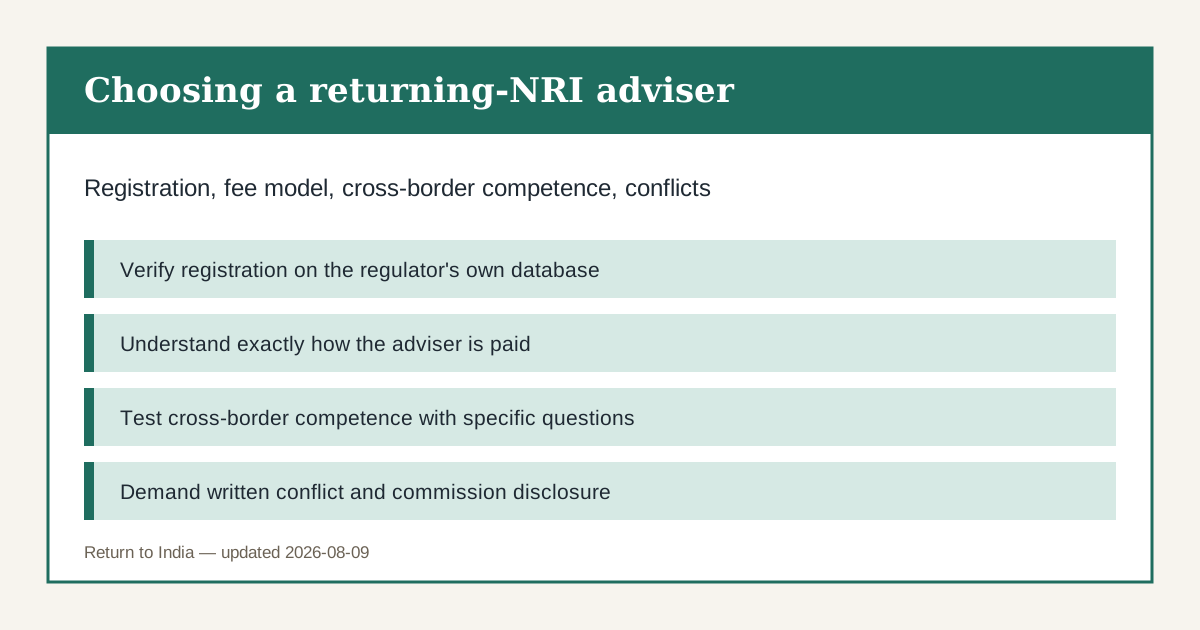
The 60-second version
A returning NRI needs an adviser who understands two tax systems, a residency transition and a repatriation framework. Most people are sold products instead. Verify registration, insist on a fee model you understand, and test cross-border competence with three specific questions.
Fast answer: most 'advisers' approaching returning NRIs are distributors
There is a structural reason returning NRIs attract a lot of financial attention. They typically arrive with a concentrated pool of investable assets, an unfamiliar regulatory environment, a time-pressured transition and no established local relationships. That combination is extremely attractive to product distributors, and much of what presents itself as retirement advice is distribution wearing advisory language.
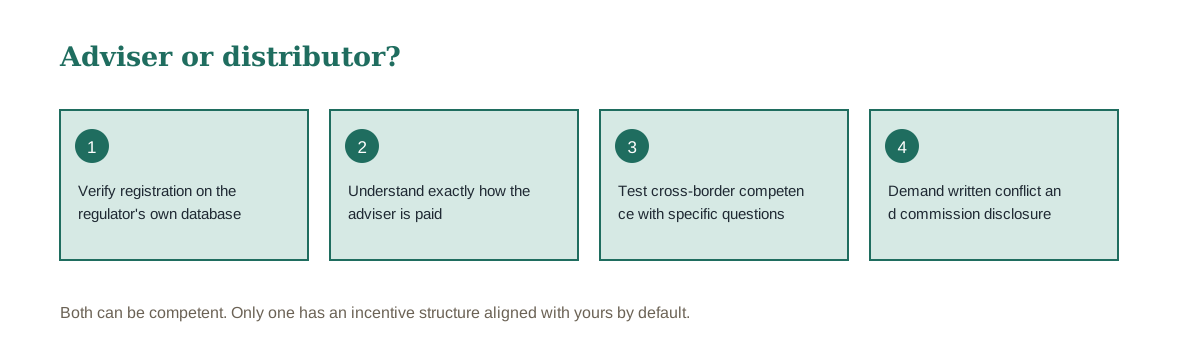
The distinction is not moralistic — it is about incentives. An adviser paid by you has an incentive to give advice that is right for you. A distributor paid by a manufacturer has an incentive to place that manufacturer's product. Both can be competent and honest; only one of them has an incentive structure aligned with yours by default. You are entitled to know which you are dealing with, in writing.
The second filter is cross-border competence, and it is where most otherwise-good Indian advisers fail returning NRIs. Handling this transition properly requires understanding residency transition and the RNOR window, the tax treatment of foreign retirement accounts once you become Resident and Ordinarily Resident, foreign asset disclosure obligations, treaty relief mechanics, and repatriation rules. An adviser strong on Indian mutual funds but blank on those five subjects is the wrong adviser for this specific job.
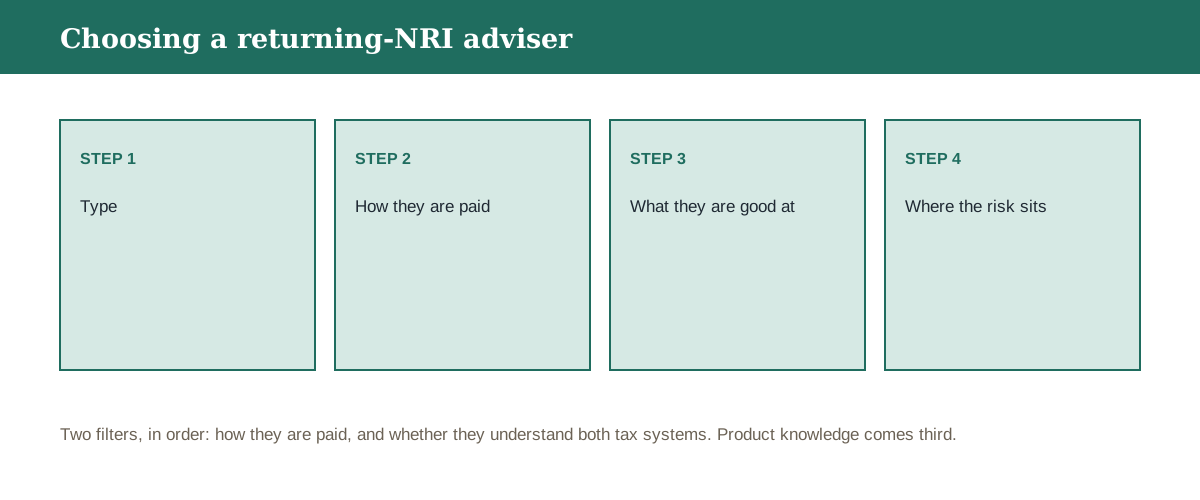
Who you might be talking to
All of these exist and all of them approach returning NRIs. Identify which one is in front of you before the first meeting ends.
| Type | How they are paid | What they are good at | Where the risk sits |
|---|---|---|---|
| Registered investment adviser, fee-only | A fee you pay directly | Planning, allocation and advice without product bias | Cross-border competence is not guaranteed by registration alone |
| Mutual fund distributor | Commission from the manufacturer | Execution, paperwork, product access | Advice and distribution are not separated by incentive |
| Bank relationship manager | Salary plus internal sales targets | Access to banking products and quick execution | Product shelf is limited to what the bank sells; targets drive recommendations |
| Insurance agent presenting as a planner | Commission, often front-loaded | Insurance products | Investment-linked insurance sold as a retirement plan is a persistent problem |
| Cross-border tax specialist | Professional fee | Residency transition, treaty relief, disclosure obligations | Usually does not advise on investment allocation |
| Offshore adviser targeting expatriates | Often opaque, sometimes multi-layered | Familiarity with expatriate situations | Regulatory recourse can be unclear; verify the jurisdiction of registration |
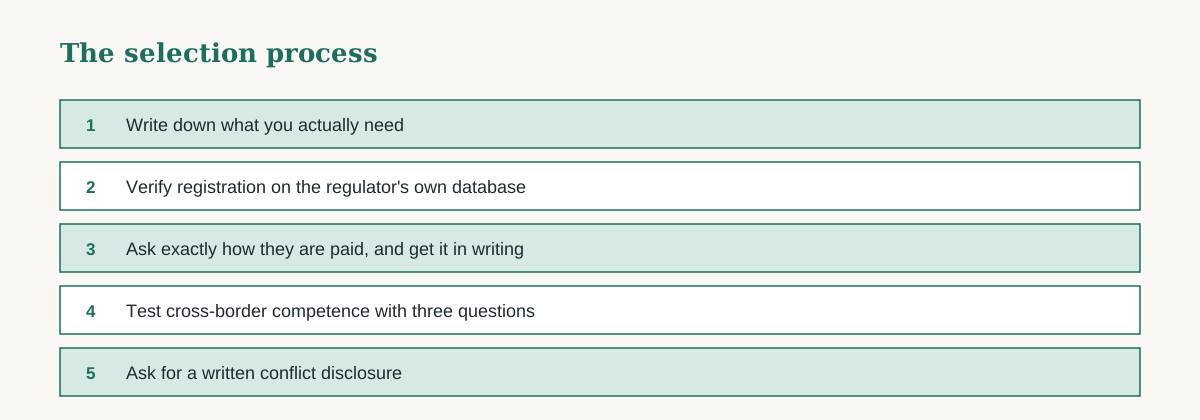
The selection process
Six steps, and none of them should be skipped because someone came recommended by a relative.
Write down what you actually need
Residency transition planning, foreign account handling, Indian allocation, insurance review, estate planning, or ongoing management. Different needs point to different professionals.
Verify registration on the regulator's own database
Do not accept a registration number on a business card or website. Look it up on the regulator's public search. Confirm the name, the entity and that the registration is current.
Ask exactly how they are paid, and get it in writing
A fee you pay, commission from manufacturers, or both. If the answer is 'the fund house pays us, it costs you nothing', you are talking to a distributor. That may be fine, but you should know it.
Test cross-border competence with three questions
How would you sequence a foreign retirement account withdrawal against my RNOR window? What foreign asset disclosure will I have once I become Resident and Ordinarily Resident? What documentation does treaty relief require? Vague answers to all three are disqualifying.
Ask for a written conflict disclosure
Any commission, referral arrangement, related-party product or revenue share. A professional will provide this without friction. Reluctance is itself the answer.
Start with a paid, scoped piece of work
Commission a specific deliverable — a residency transition plan, or a portfolio review — before handing over ongoing management. It is the cheapest possible test of quality.
Adviser due diligence checklist
Complete this before any assets move or any mandate is signed.
- Written statement of what you need the adviser to do.
- Registration verified on the regulator's public database, not on the adviser's website.
- Entity name on the registration matched to the entity you would contract with.
- Fee model stated in writing, with all amounts and their basis.
- Any commission, referral or revenue-share arrangement disclosed in writing.
- The three cross-border competence questions asked and the answers noted.
- References from two clients in a comparable situation, obtained independently where possible.
- Clarity on who holds custody of assets — the adviser should not.
- Confirmation that recommendations will be provided in writing with reasons.
- A small, scoped, paid engagement completed before any ongoing mandate.
- Termination terms and data-return arrangements understood.
- An annual review date and agreed review criteria.
Adviser or distributor?
Need help with Move Planning?
Share your blocker in one line. Our experts will reply with practical next steps.
Community signal: insurance sold as retirement planning
Unable to embed reddit content. View on reddit
"The most consistent complaint from returning NRIs is an investment-linked insurance product sold as a retirement solution, discovered years later when surrender values are examined."
Read on reddit ->Community signal: cross-border competence is rare
Unable to embed reddit content. View on reddit
"Returnees repeatedly report that advisers strong on Indian products could not answer questions about foreign retirement accounts, disclosure obligations or treaty relief."
Read on reddit ->Adviser selection diagram
Need help with Move Planning?
Share your blocker in one line. Our experts will reply with practical next steps.
Never let an adviser hold custody of your assets
Advice and custody should be separate. Assets should sit with a regulated custodian, bank or fund house in your own name, with the adviser holding only an advisory or limited execution mandate. Arrangements where money is transferred to an adviser's own account are a serious risk regardless of how the relationship began.
The one-sentence answer
Choose a returning-NRI adviser through four filters in order — verified registration, a fee model you pay and understand, demonstrated cross-border competence on the RNOR window, foreign asset disclosure and treaty relief, and written conflict disclosure — then test them with one small paid engagement before any ongoing mandate.
Animated decision map
Need help with Move Planning?
Share your blocker in one line. Our experts will reply with practical next steps.
Interactive checkpoint
Turn this guide into a decision file
0 of 4 checked
How do I find a good retirement adviser as a returning NRI?
Define your need first, verify registration on the regulator's own public database, establish exactly how the adviser is paid, test their cross-border competence with specific questions, and commission one small paid piece of work before handing over ongoing management.
What is the difference between an adviser and a distributor?
An adviser is paid by you and advises. A distributor is typically paid a commission by the product manufacturer and places products. Both can be competent, but only the first has incentives aligned with yours by default.
How do I verify that someone is genuinely registered?
Look them up on the regulator's own public search facility rather than trusting a number on a website or business card. Confirm the entity name matches the entity you would be contracting with and that the registration is current.
What should I ask to test cross-border competence?
Three questions: how would you sequence foreign retirement account withdrawals against my RNOR window, what foreign asset disclosure applies once I become Resident and Ordinarily Resident, and what documentation does treaty relief require. Vague answers to all three are disqualifying.
Should I use one adviser or two?
Many returning NRIs need two: a cross-border tax specialist for the residency transition and disclosure obligations, and a fee-based investment adviser for allocation and planning. Few individuals cover both areas well.
What fee model should I look for?
One you pay directly and can state in a single sentence — a flat fee, an hourly rate, or a percentage of assets under advice. If you cannot explain how the adviser earns, the arrangement is not transparent enough.
Is it a problem if an adviser also sells insurance?
Not automatically, but it must be disclosed in writing along with the commission involved. Investment-linked insurance sold as a retirement plan is one of the most frequent sources of returning-NRI complaints.
Should the adviser hold my money?
No. Assets should be held with a regulated custodian, bank or fund house in your own name. The adviser should have an advisory or limited execution mandate only, never custody of your funds.
How do I test an adviser cheaply?
Commission one scoped, paid deliverable — a residency transition plan or a portfolio review with written reasoning. It costs little relative to the assets involved and reveals quality far better than an introductory meeting.
The plan is only as good as the sequence.
Tax, banking, schools, shipping — they all have dependencies. A wrong order costs months and lakhs. Get it right.