Digital Wealth Platforms for Returning NRIs: What to Check
Evaluating Indian digital wealth and investment platforms as a returning NRI — KYC and residency handling, tax reporting quality, foreign asset support, custody,...
The 60-second version
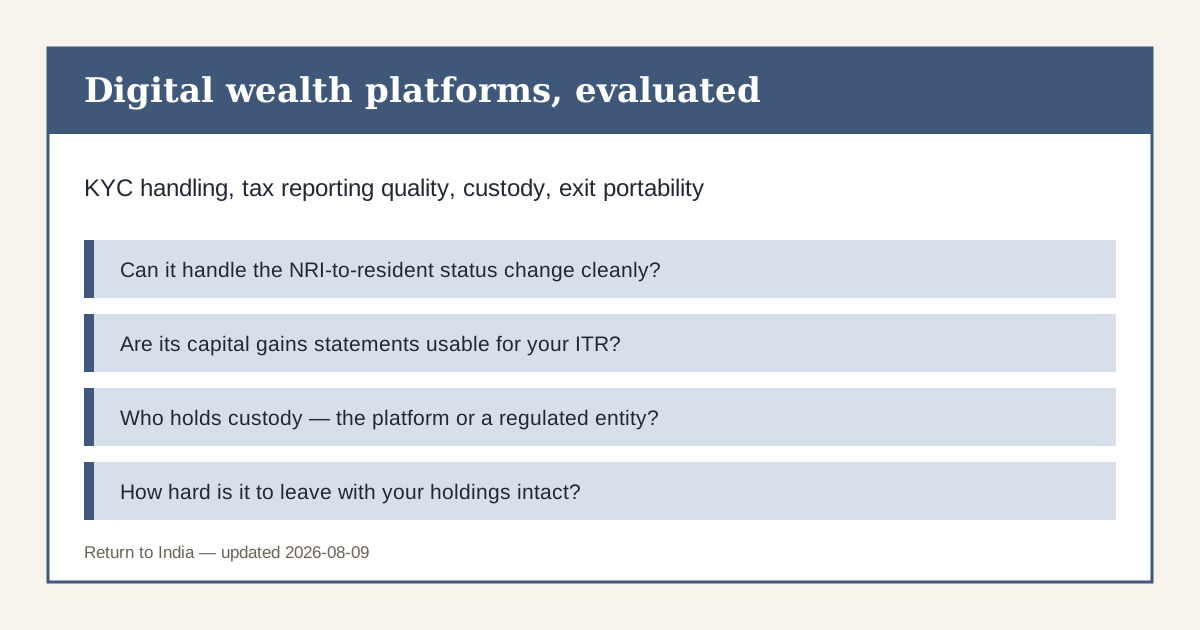
Digital wealth platforms handle Indian investing well and cross-border tax reporting poorly. Before moving a portfolio onto one, check how it handles the residency change, whether its capital gains statements are usable for your ITR, and how easily you can leave.
Fast answer: platforms are built for residents, and the seams show at filing time
Indian digital wealth platforms have made investing genuinely easy — onboarding, ordering, rebalancing and consolidated views are all far better than they were a decade ago. What almost none of them are built for is the situation a returning NRI is actually in: a mid-year change of residential status, holdings acquired while non-resident, foreign assets sitting outside the platform entirely, and a tax return that has to reconcile all of it.
The consequences do not appear during onboarding. They appear at filing time, when you discover that the platform's capital gains statement does not distinguish periods correctly across your status change, or that the residency flag on your account was never updated so tax was deducted at the wrong rate, or that the statement format does not map to the ITR schedule your status requires.
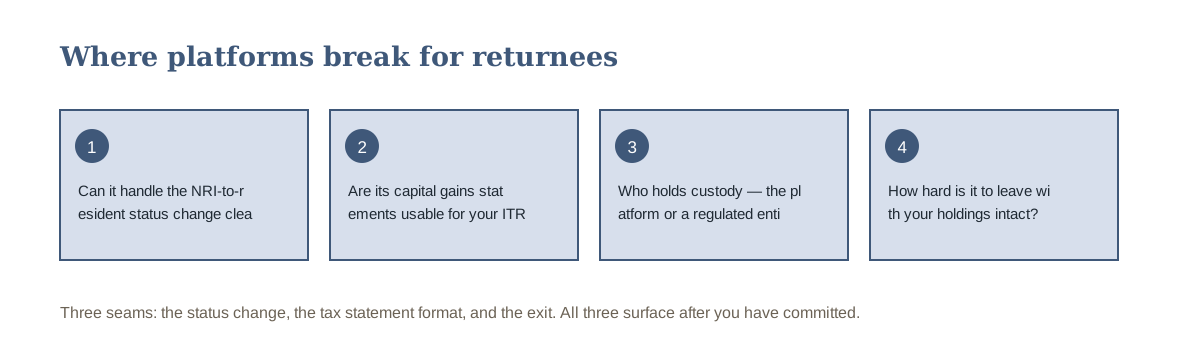
So the evaluation should focus on four unglamorous things: how the platform handles the NRI-to-resident transition, whether its tax statements are actually usable for your return, who holds custody of the assets, and how easily you can leave with your holdings intact. Interface quality is real but secondary.
What to test before moving a portfolio
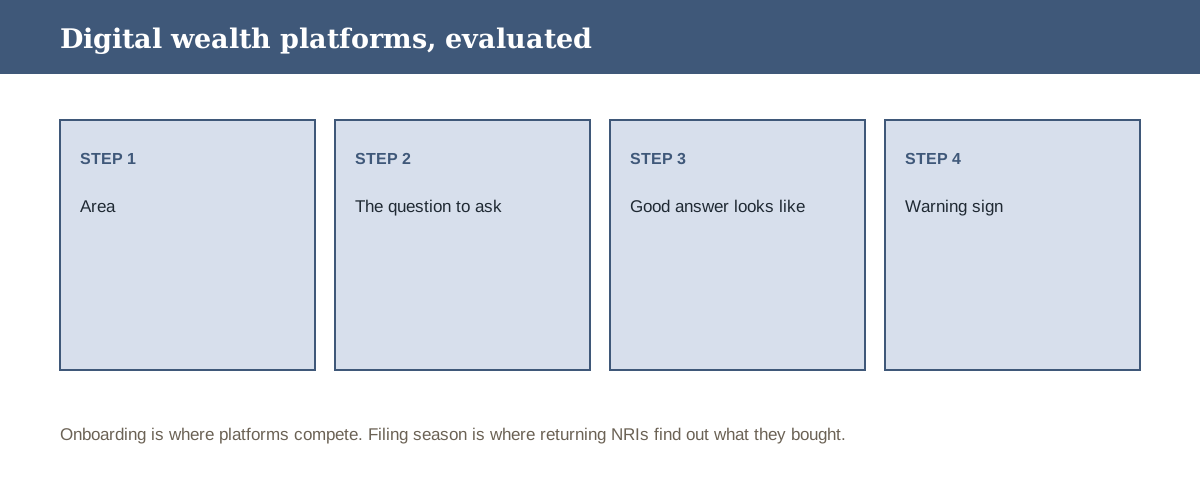
Ask support these questions in writing before you transfer anything. Save the replies.
| Area | The question to ask | Good answer looks like | Warning sign |
|---|---|---|---|
| Residency status change | How do I change my status from non-resident to resident, and what happens to existing holdings? | A defined process, a named form, and clarity on how holdings and tax flags are updated | 'Just open a new account' with no plan for existing holdings |
| Tax deduction at source | Which rate is applied to my transactions, and how is it updated on status change? | A clear statement of the rate applied and when the change takes effect | Uncertainty about which rate is currently applied to your account |
| Capital gains statements | Can you provide a statement that maps to the ITR schedules for my residential status? | A downloadable statement with acquisition dates, costs and gain classification | A statement that only shows current value and total returns |
| Foreign asset support | Does the platform report anything relevant to foreign asset disclosure? | An honest 'no, that is outside our scope' with clarity on what they do cover | Vague implication that the platform handles all your tax reporting |
| Custody | Who legally holds the assets, and are they in my name? | Holdings in your name with a regulated depository or fund house | Pooled arrangements where your legal position is unclear |
| Exit portability | If I leave, can I transfer holdings in specie without selling? | A defined transfer process with stated timelines and charges | Exit only by redeeming everything, which forces a taxable event |
| Data and records | Can I export my full transaction history at any time? | Self-service export of complete history in a usable format | History available only for a limited period or on request |
Evaluating and migrating safely
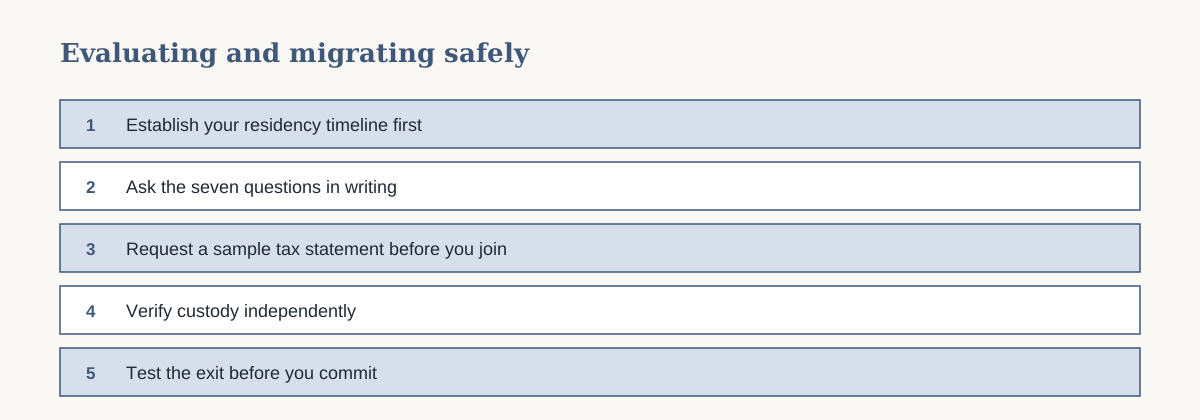
The order matters — testing the exit before you commit is the most valuable step and the one most people skip.
Establish your residency timeline first
Know the date your status changes and which financial years are RNOR. Everything the platform does with tax flags should be checked against that timeline.
Ask the seven questions in writing
Use the table above. Send them to support as a single email and keep the reply. Verbal assurances from a relationship manager are not usable later.
Request a sample tax statement before you join
Ask to see the actual capital gains statement format the platform produces. Compare it against the ITR schedule you will need to fill. This single step prevents most filing-season problems.
Verify custody independently
Confirm that holdings sit with a regulated depository or fund house in your own name, and that you can view them through the depository's own statement rather than only through the platform's app.
Test the exit before you commit
Ask specifically how an in-specie transfer out works, what it costs and how long it takes. A platform you cannot leave without a forced sale creates a tax liability at a time not of your choosing.
Migrate in one tranche, not several
Partial migrations spread across financial years fragment the cost-basis record. If you are moving, move once and keep the complete history from both sides.
Reconcile at the first filing
Check the platform's statement against the annual information statement and your own records at the first tax filing after migration. Errors found in year one are fixable; errors found in year four are not.
Platform due diligence checklist
Every item should be satisfied before a portfolio moves.
- Your residency change date and RNOR years documented.
- Seven evaluation questions sent to the platform in writing, with replies saved.
- A sample capital gains statement reviewed against the ITR schedule you will use.
- Confirmation of which tax deduction rate is applied to your account today.
- The status-change process documented, including what happens to existing holdings.
- Custody confirmed with a regulated depository or fund house, in your own name.
- Independent visibility of holdings through the depository's own statement.
- In-specie transfer-out process, cost and timeline confirmed in writing.
- Full transaction history export tested before migration.
- Migration planned as a single tranche within one financial year.
- Records retained from the previous platform, including cost basis.
- First-year reconciliation against the annual information statement scheduled.
Where platforms break for returnees
Need help with Tax & Residency?
Share your blocker in one line. Our experts will reply with practical next steps.
Community signal: statements that do not match the ITR
Unable to embed reddit content. View on reddit
"The recurring filing-season complaint is a platform statement that shows returns but not the acquisition-date and cost detail the return actually requires."
Read on reddit ->Community signal: status change handled poorly
Unable to embed reddit content. View on reddit
"Returnees repeatedly report being told to open a fresh account rather than being given a process for updating status on existing holdings."
Read on reddit ->Platform evaluation diagram
Need help with Tax & Residency?
Share your blocker in one line. Our experts will reply with practical next steps.
No Indian platform handles your foreign asset disclosure
Foreign accounts, foreign retirement plans and foreign holdings sit entirely outside an Indian investment platform's scope. Any impression that the platform covers your full tax reporting is wrong, and the disclosure obligation remains yours regardless of what the app displays.
The one-sentence answer
Evaluate a digital wealth platform on how it handles the NRI-to-resident status change, whether its capital gains statements map to the ITR schedules you will actually use, who holds custody, and how you would leave — and get all four answers in writing before transferring anything.
Animated decision map
Need help with Tax & Residency?
Share your blocker in one line. Our experts will reply with practical next steps.
Interactive checkpoint
Turn this guide into a decision file
0 of 4 checked
Which digital wealth platform is best for a returning NRI?
There is no single best platform. Evaluate on residency-change handling, capital gains statement quality, custody arrangements and exit portability. Interface quality matters far less than whether the tax statements are usable at filing time.
Can I keep my NRI investment account after becoming a resident?
Your residency status on the account must be updated. Depending on the platform and the underlying accounts, this may mean redesignation, a change of linked bank account, or a new account with holdings transferred. Ask for the specific process in writing.
Will the platform's capital gains statement be enough for my ITR?
Sometimes, but not always for a returning NRI. Ask for a sample statement before you commit and compare it against the ITR schedule your residential status requires. Statements that show only current value and total returns are not sufficient.
Do these platforms handle foreign asset disclosure?
No. Foreign accounts, foreign retirement plans and foreign holdings are outside an Indian platform's scope entirely. The disclosure obligation for those remains yours and must be handled separately.
Who holds my assets on a digital platform?
For listed securities, holdings generally sit with a depository in your own name, and for mutual funds with the fund house against your folio. Confirm this and check that you can see holdings through the depository's own statement, not just the app.
Can I transfer holdings between platforms without selling?
In many cases yes, through an in-specie transfer. Confirm the process, cost and timeline before you join, because a platform you can only exit by redeeming everything forces a taxable event at a time not of your choosing.
What tax rate will the platform deduct?
It depends on your status on the account and the instrument. Ask which rate is currently applied and when it changes after a status update, because deduction at the non-resident rate after you have become resident creates reconciliation work.
Should I move everything to one platform?
Consolidation reduces admin and improves record quality, which matters for a returnee. Do it in a single tranche within one financial year, and keep complete records from the previous provider including cost basis.
What should I check at the first tax filing after migrating?
Reconcile the platform's statement against the annual information statement and your own records. Errors found in the first year are correctable; errors that compound across several years are far harder to unwind.
Your tax year is already running.
RNOR status, exit timing, and DTAA benefits all depend on decisions you make before you land. Don't guess.