The 60-second version
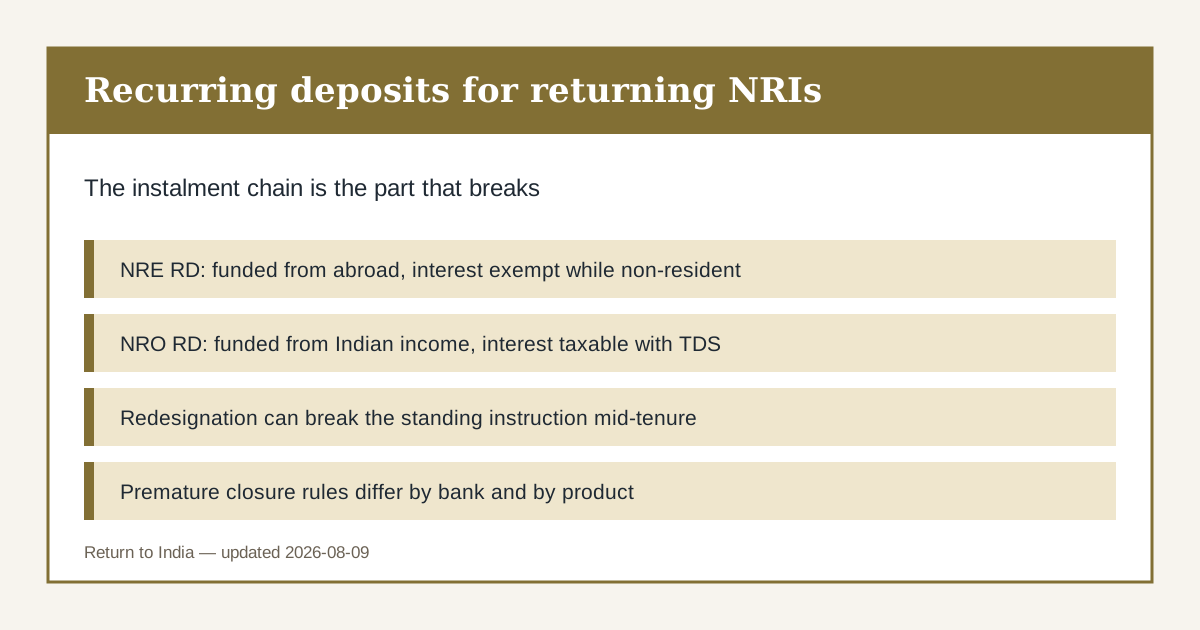
An NRI can hold an NRE recurring deposit funded from abroad with tax-free interest, or an NRO recurring deposit funded from Indian income with taxable interest. The risk is the standing instruction: redesignation on return often breaks the auto-debit mid-tenure.
Fast answer: the deposit is easy, the standing instruction is not
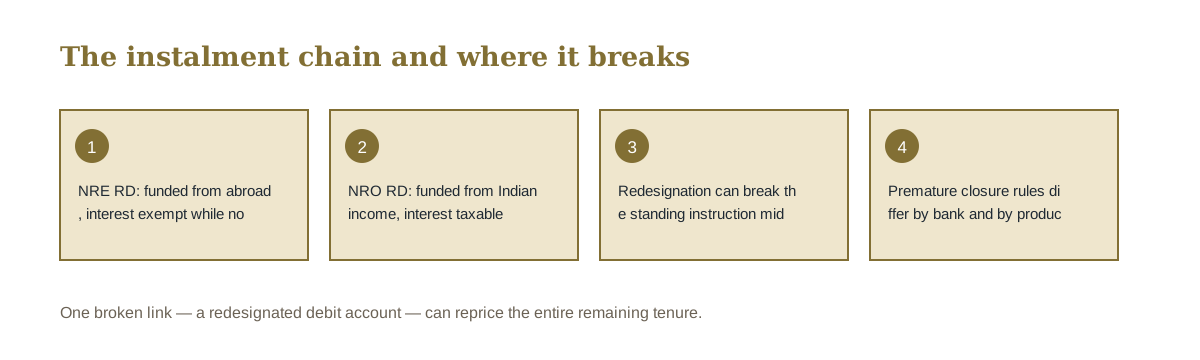
Recurring deposits are available to non-residents in both NRE and NRO flavours. The product logic mirrors the underlying accounts exactly: an NRE recurring deposit is funded from money remitted from abroad, its interest is exempt from Indian income tax while you hold non-resident status, and the maturity proceeds are freely repatriable. An NRO recurring deposit is funded from Indian income, its interest is taxable with tax deducted at source, and repatriation runs through the capped NRO route.
What makes recurring deposits different from fixed deposits for a returning NRI is that they depend on a repeating instruction. A fixed deposit is a single event. A recurring deposit is twelve, twenty-four or sixty scheduled debits from a linked account. When that linked account is redesignated on your return, the mandate that drives the debits often does not survive the conversion cleanly.
The result is a familiar and avoidable mess: a missed instalment penalty, a deposit that quietly stops earning at the contracted rate, and sometimes a forced premature closure with an interest-rate haircut. The fix is to decide the fate of every recurring deposit before you fix your return date, not after your first bounced instalment.
NRE RD versus NRO RD versus resident RD
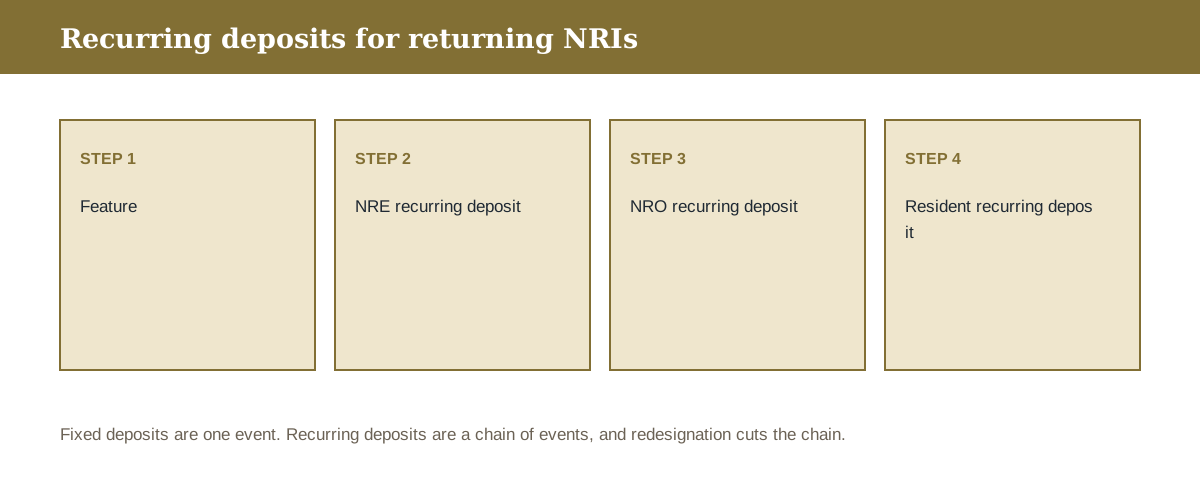
Three products, and most returnees will touch all three within eighteen months of landing.
| Feature | NRE recurring deposit | NRO recurring deposit | Resident recurring deposit |
|---|---|---|---|
| Who can hold it | Non-resident, funded from foreign earnings | Non-resident, funded from Indian income | Person resident in India |
| Interest taxability in India | Exempt while non-resident status is held | Taxable, with tax deducted at source | Taxable, with tax deducted at source above the threshold |
| Repatriation of maturity proceeds | Freely repatriable | Within the USD 1 million per financial year NRO route | Not applicable — resident funds |
| Effect of your permanent return | Redesignated; the NRE character and its exemption end | Redesignated as a resident deposit | Continues normally |
| Instalment mandate risk | High — the debit account is redesignated mid-tenure | High — same redesignation issue | Low once KYC and the linked account are stable |
| Form 15G or 15H relevance | Not applicable while exempt | Non-residents generally cannot use Form 15G or 15H | Available to eligible residents to avoid deduction where income is below the threshold |
Handling recurring deposits across the move
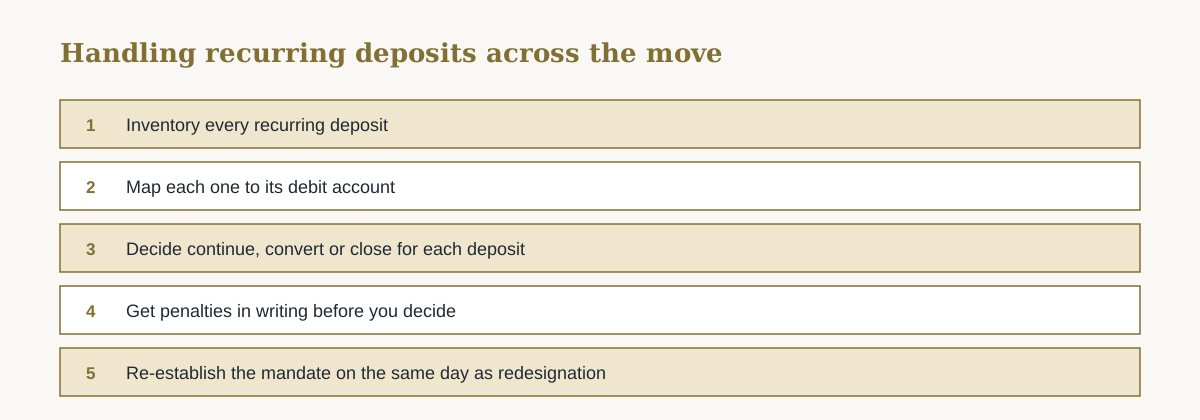
Six moves, starting about ninety days before your planned return date.
Inventory every recurring deposit
List the deposit number, type, instalment amount, debit date, linked account, contracted rate, tenure and maturity date. Most people discover one they had forgotten.
Map each one to its debit account
The instalment is driven by a standing instruction on a specific account. Note which of those accounts will be redesignated when you return.
Decide continue, convert or close for each deposit
Continuing means re-establishing the mandate after redesignation. Converting means letting the deposit run as a resident deposit. Closing means accepting a premature-closure penalty in exchange for certainty.
Get penalties in writing before you decide
Ask the bank in writing for the premature-closure penalty, the reduced rate applied, and whether the penalty differs for redesignation-driven closure. Verbal branch answers vary.
Re-establish the mandate on the same day as redesignation
Do not leave a gap. A single missed instalment can trigger a penalty and, in some products, a rate reset for the remaining tenure.
Recheck the tax position after redesignation
An NRE deposit's interest exemption does not continue once your status changes. Reassess deduction at source and whether you need to declare the interest for the year of transition.
Recurring deposit transition checklist
Print it, fill it per deposit, and keep it with the redesignation paperwork.
- Deposit number, type and contracted interest rate recorded for every recurring deposit.
- Instalment amount and debit date recorded, along with the account being debited.
- Maturity date compared against the planned return date.
- Written confirmation of the premature-closure penalty and reduced rate.
- Decision recorded for each deposit — continue, convert or close.
- New standing instruction prepared for the redesignated account.
- Any missed-instalment penalty clause read and understood.
- Tax position on interest reassessed for the transition year.
- Nominee details refreshed on each deposit.
- Maturity instructions set so nothing auto-renews into an unwanted product.
The instalment chain and where it breaks
Need help with Banking?
Share your blocker in one line. Our experts will reply with practical next steps.
Community signal: bounced instalments after redesignation
Unable to embed reddit content. View on reddit
"The recurring complaint is a missed instalment discovered weeks later, after the bank has already applied the penalty and reset the rate."
Read on reddit ->Search signal: the question is really about auto-debit continuity
"People searching for NRI recurring deposit rules are usually trying to work out whether their monthly debit keeps working after the move."
Read on quora ->Recurring deposit decision diagram
Need help with Banking?
Share your blocker in one line. Our experts will reply with practical next steps.
Auto-renewal is the silent default
Many deposits auto-renew at maturity into a fresh deposit under whatever product terms apply on that date. If you are mid-move, that can lock funds you needed for the relocation. Set explicit maturity instructions on every deposit before you travel.
The one-sentence answer
An NRI can hold NRE or NRO recurring deposits with the same tax and repatriation logic as the underlying accounts, but the real risk on returning is the standing instruction breaking at redesignation — so inventory every deposit, price the penalties in writing, and re-establish the mandate the same day the account converts.
Animated decision map

Need help with Banking?
Share your blocker in one line. Our experts will reply with practical next steps.
Interactive checkpoint
Turn this guide into a decision file
0 of 4 checked
Can an NRI open a recurring deposit in India?
Yes. Recurring deposits are available in both NRE and NRO forms. The NRE version is funded from foreign remittances, and the NRO version from income arising in India.
Is NRE recurring deposit interest tax free?
Interest on NRE deposits is exempt from Indian income tax while you hold non-resident status. The exemption is tied to status, so it ends when you become a resident.
Is TDS deducted on an NRO recurring deposit?
Yes. Interest on NRO deposits is taxable in India and tax is deducted at source at the applicable non-resident rate. Treaty relief may reduce the rate where the relevant documentation is in place.
Can I use Form 15G or 15H on an NRO recurring deposit?
Generally no. Those declarations are designed for resident taxpayers whose income is below the taxable threshold, and they are not ordinarily available to non-residents.
What happens to my recurring deposit when I return to India?
The linked account is redesignated and the deposit's non-resident character ends. Depending on the bank, the deposit may be converted or repriced, and the standing instruction driving the instalments usually needs to be re-established.
Will my monthly instalment keep debiting after redesignation?
Not reliably. The standing instruction sits on the old account and often does not carry over. Re-create the mandate on the redesignated account on the same day to avoid a missed instalment penalty.
What is the penalty for missing an instalment?
It varies by bank and product. Some charge a flat penalty per missed instalment, others reduce the applicable interest rate for the remaining tenure. Get the specific terms in writing before you plan around them.
Are recurring deposit maturity proceeds repatriable?
NRE recurring deposit proceeds are freely repatriable. NRO recurring deposit proceeds fall within the USD 1 million per financial year route with its associated documentation.
Should I close recurring deposits before moving back?
Not by default. Price the premature-closure penalty first. In many cases letting the deposit run and re-establishing the mandate after redesignation is cheaper than closing early.
Your NRE account redesignation has a deadline.
Banks don't remind you. You need the right account stack before salary, rent, and EMIs start moving. Get the exact sequence.