P85 or SA109? Telling HMRC You Are Leaving the UK for India
Choose the right HMRC departure route: P85 for many non-filers, Self Assessment with SA109 for existing filers, and the UK-employer exception to check.
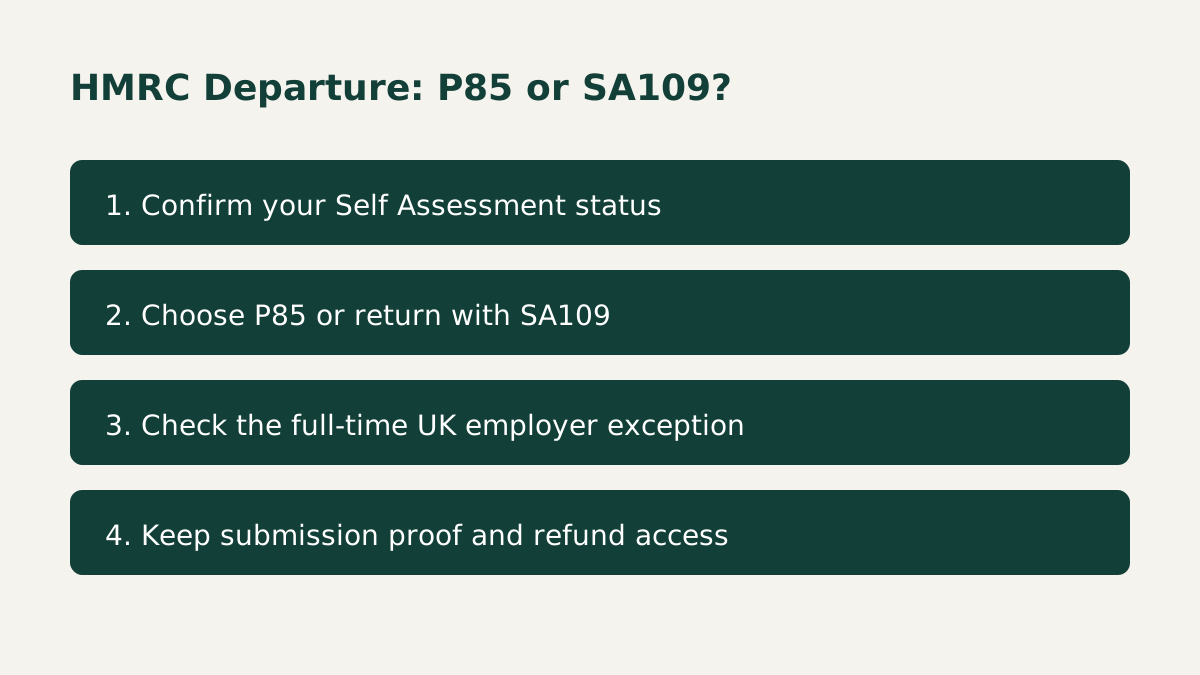
The 60-second version
If you do not normally file Self Assessment, HMRC directs departing workers to P85. Existing filers generally report departure through Self Assessment and SA109. Working full-time abroad for a UK employer has a specific exception. Filing does not itself establish non-residence or guarantee a refund.
Fast answer: your filing position decides the departure form
For a permanent move from the UK to India, tell HMRC you are leaving. If you do not normally complete Self Assessment, HMRC directs you to P85. If you normally file a return, report departure through Self Assessment and the residence pages, SA109. Do not assume everyone needs both. HMRC separately says that someone working full-time abroad for a UK-based employer for at least one full tax year should complete P85 as well as Self Assessment and SA109.
That exception matters for a returnee who keeps a UK employer while working from India. A general instruction not to use P85 when filing Self Assessment is incomplete without it. Take the employment arrangement to an adviser rather than choosing a form solely because your salary still reaches a UK account.
The broad UK-to-India relocation guide covers pensions, ISAs and the move itself. This page answers a narrower decision: which HMRC departure channel to use, what information it needs and what must remain open until a refund is settled. It does not promise you qualify for split-year treatment.
P85 versus SA109: the route table
| Your position | HMRC route | Important qualification |
|---|---|---|
| You do not usually file Self Assessment | P85 | Include P45 details where available; explain if you do not have one |
| You usually file Self Assessment | Return plus SA109 residence pages | Ordinarily no separate P85 for that leaving year |
| Full-time abroad for a UK-based employer for at least one full tax year | Check HMRC's P85 plus return and SA109 instruction | Do not overlook the UK-employer exception |
| Holiday or ordinary business trip | Departure notice is not required just for that trip | Residence tests and a permanent move are different questions |
Before departure and after departure use different P85 channels
The P85 guidance says you can claim online after departure, but if you have not left the UK yet you must print and post the claim. The postal journey involves completing the form online, printing it and posting it; HMRC says you cannot save progress in that form. Gather the information first rather than starting it on your phone at the airport.
Keep your P45, National Insurance number, employment and leaving details together. HMRC also asks whether you retain a UK home, work full-time outside the UK, receive salary in the UK, and expect UK visits over the next three years. Answer the actual facts, including a home you keep available. A flight booking does not replace those answers.
If you are using Self Assessment, HMRC's ordinary online filing service cannot be used to tell it you are leaving through the residence pages. Its guidance directs you to a paper return with SA109 or suitable commercial software or professional help. For paper returns it highlights the 31 October deadline. Confirm the correct tax year before choosing a deadline: the UK tax year runs from 6 April to 5 April, unlike India's April-to-March year.
Complete the departure notice without duplicating a claim
Identify the leaving tax year
Record the actual departure date and the relevant 6 April–5 April UK year. Keep a separate day-count record for UK visits and workdays.
Confirm whether you are a Self Assessment filer
Check your actual filing obligation, not simply whether your last job used PAYE. Continuing UK rent or other circumstances may require advice about a return.
Check the UK-employer exception
If you will work full-time abroad for a UK-based employer for at least a full tax year, read HMRC's instruction covering P85 together with Self Assessment and SA109.
Choose the correct submission channel
For P85 before departure, print and post; after departure the online claim is available. For SA109, use the supported paper or compatible software route, not HMRC's ordinary online residence notification.
Keep the acknowledgement and refund route
Save the online reference or postal proof. Confirm the UK address and account for a repayment before closing banking or cancelling access to correspondence.
Keep a UK refund route—but check the bank's overseas-resident policy
HMRC says a repayment may be sent to you or a nominee as a payable order, to an address in the UK, and paid into an account in your or the nominee's name. Its P85 guidance suggests keeping a UK bank account until repayment arrives and says HMRC will not pay foreign-exchange or overseas-transfer fees. This is a practical reason not to close the last account on departure day.
It is not a right to keep an account contrary to the bank's terms. Tell the bank about your new residence and ask whether it can maintain the account. If it cannot, arrange a permitted nominee or repayment method with HMRC. A relative's postal address does not authorise falsely claiming UK residence to a bank.
Departure-file checklist
- Actual departure date and UK tax year
- P45 where available and National Insurance number
- Current Self Assessment filing position
- UK home, work and expected-visit details
- Compatible SA109 filing route if needed
- Submission reference and permitted UK repayment arrangements
Need help with Country Guides?
Share your blocker in one line. Our experts will reply with practical next steps.
Sending P85 does not grant non-resident status
UK residence and split-year treatment depend on the Statutory Residence Test and your circumstances. UK-source income can remain taxable after departure. Separately assess India's tax residence; neither country simply adopts the other's departure form.
Choose the reporting route
HMRC departure file
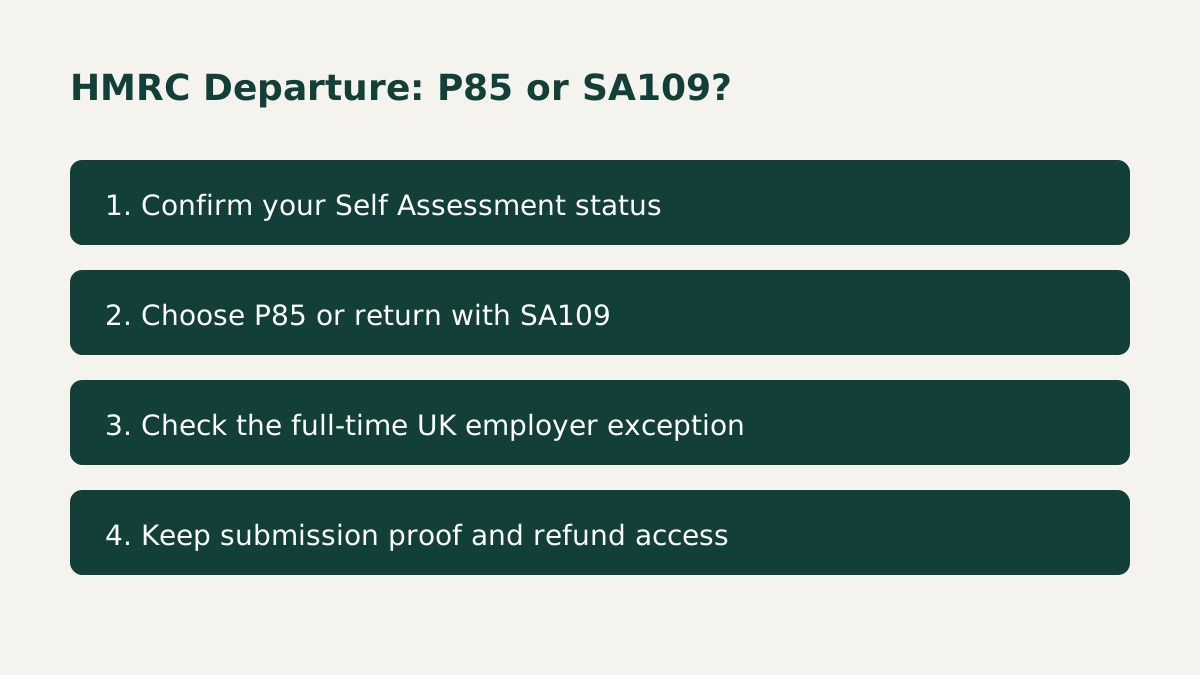
Animated decision map
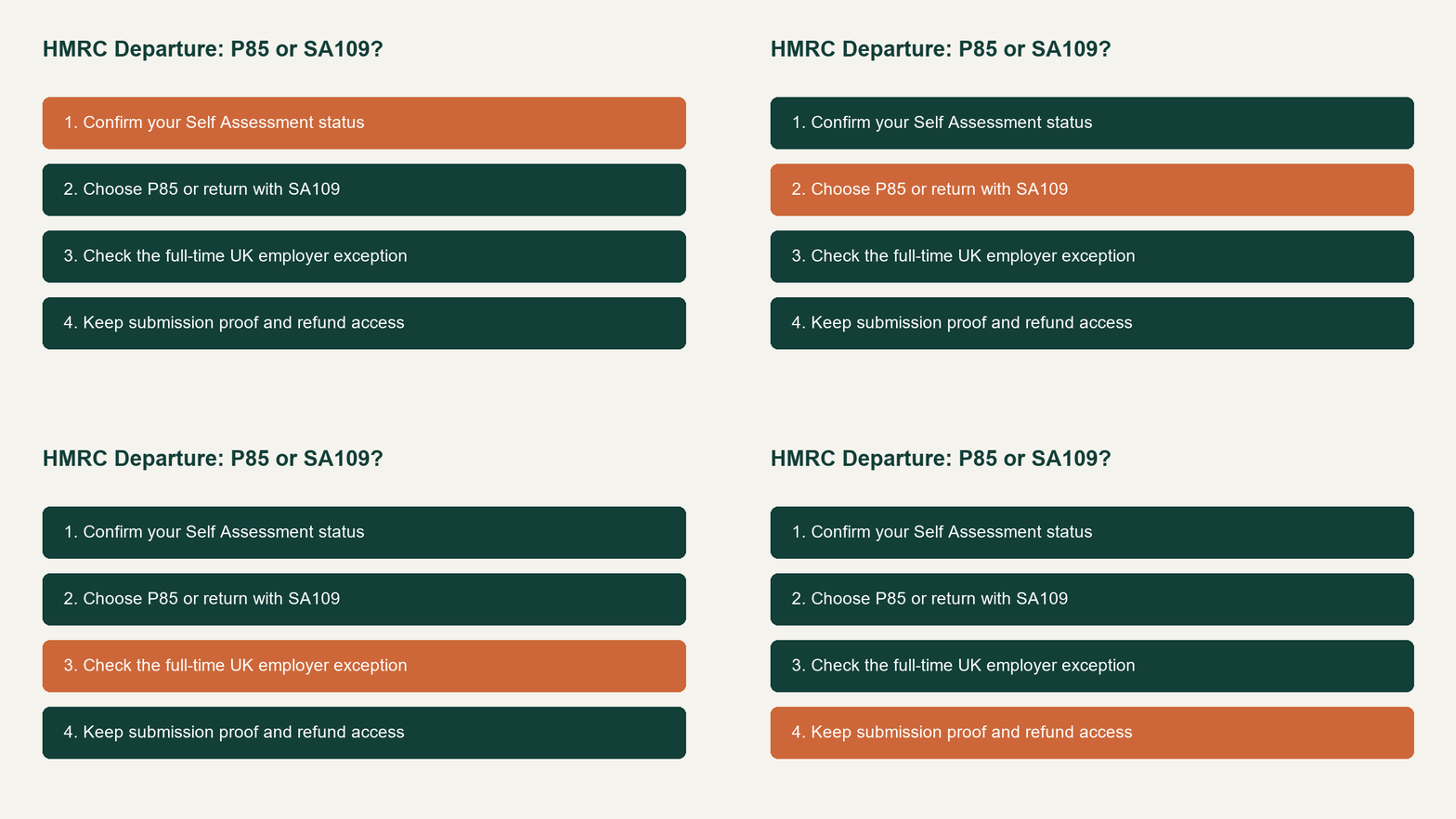
Community signal
What to watch in real discussions
Treat repeated complaints as risk signals rather than official advice. This page does not link to community search results.
Interactive checkpoint
Turn this guide into a decision file
0 of 4 checked
Do I need P85 if I already file Self Assessment?
Ordinarily HMRC says no separate P85 is needed when filing a return for the leaving year. Report departure with SA109. Its leaving-UK guidance separately says to complete P85 as well if working full-time abroad for a UK-based employer for at least one full tax year.
Can I submit P85 online before leaving?
HMRC's P85 guidance says that if you have not yet left, you must print and post the claim. Online claiming is available after departure.
Can I tell HMRC I am leaving using its normal online Self Assessment service?
Its leaving-UK guidance says the ordinary online service cannot be used for that departure notification through the residence section. Use paper SA109 with the return, compatible commercial software or professional help.
Does P85 guarantee a refund?
No. HMRC works out whether tax is repayable from your actual circumstances. Filing a form is not a promise of a refund or split-year treatment.
Should I close my last UK bank account immediately?
Consider repayment access first. HMRC suggests keeping an account until repayment arrives, but you must also comply with the bank's overseas-resident policy. A permitted nominee can be relevant.
Is this a complete UK relocation checklist?
No. It covers HMRC departure reporting. Use the general UK relocation guide for pensions, ISAs, property and other move decisions.
Your country's rules are the starting point, not the finish line.
Tax exits, pension continuity, banking notifications — the India side has its own rules too. Get both sides clear.