The 60-second version
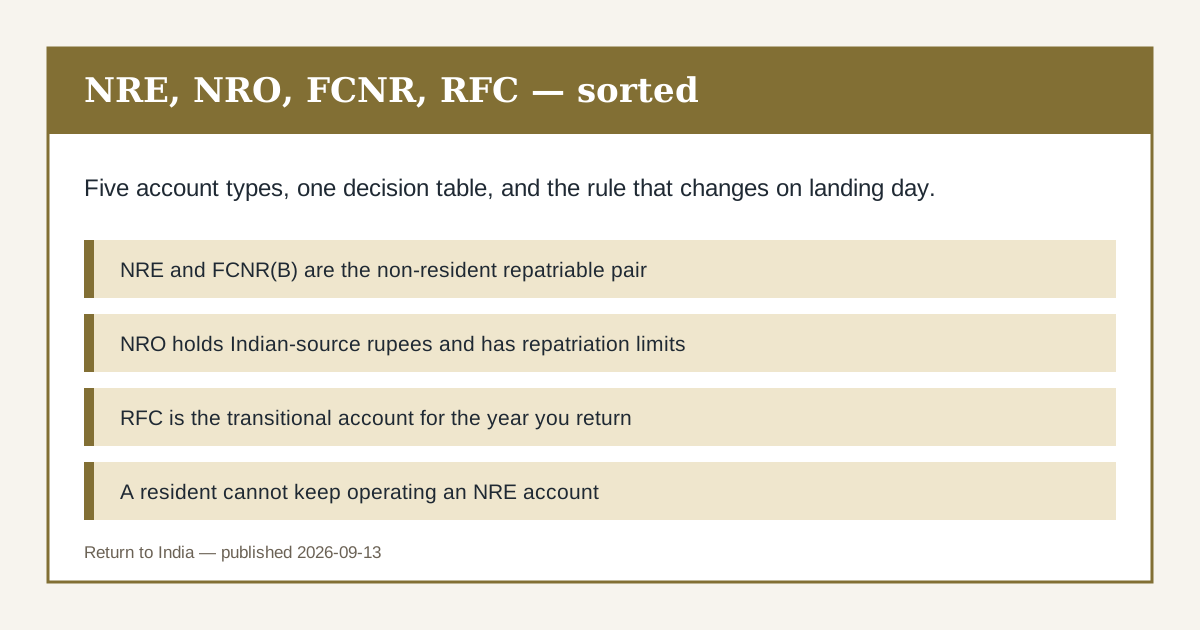
NRE and FCNR(B) are foreign-currency or repatriable rupee accounts for non-residents; NRO is the rupee account for Indian-source money; RFC is the transitional account a returning NRI may hold after status changes; EEFC is a trade account. On return, NRO converts to a resident account and NRE/FCFR either converts, matures or moves into RFC — you cannot keep operating an NRE account as a resident.
Four accounts do the work — the fifth is a trade account
Almost every NRI money question resolves into four account types. NRE is a rupee account funded from abroad, held by a non-resident, with interest that is not taxed in India and balances that are freely repatriable. NRO is a rupee account for money with an Indian source — rent, dividends, sale proceeds, pension — where interest is taxable and repatriation is capped and needs documentation. FCNR(B) is a foreign-currency term deposit, non-resident, tax-free and repatriable. RFC is the transitional rupee-or-foreign-currency account a returning person may hold after they become resident, so that foreign-currency earnings and balances can be parked and used for permitted purposes.
EEFC is not part of that family. It is a trade account for exporters holding foreign-currency earnings, and it has its own conditions, so it only appears in a return-to-India conversation if you run an export business.
The rule that decides everything else is this: NRE and FCNR(B) exist because the holder is a person resident outside India. The day you become a person resident in India under FEMA — which turns on intention and purpose, not on a 182-day counter — those accounts stop being accounts you may operate as they are. NRO, by contrast, survives the change but has to be redesignated as a resident account.
Sequence matters more than product choice. Doing the NRO conversion first and leaving NRE alone for a few months is how people end up with a frozen account in month four. Work the order in the steps below, then check the documents in the resident-account document checklist.
The five accounts on one grid
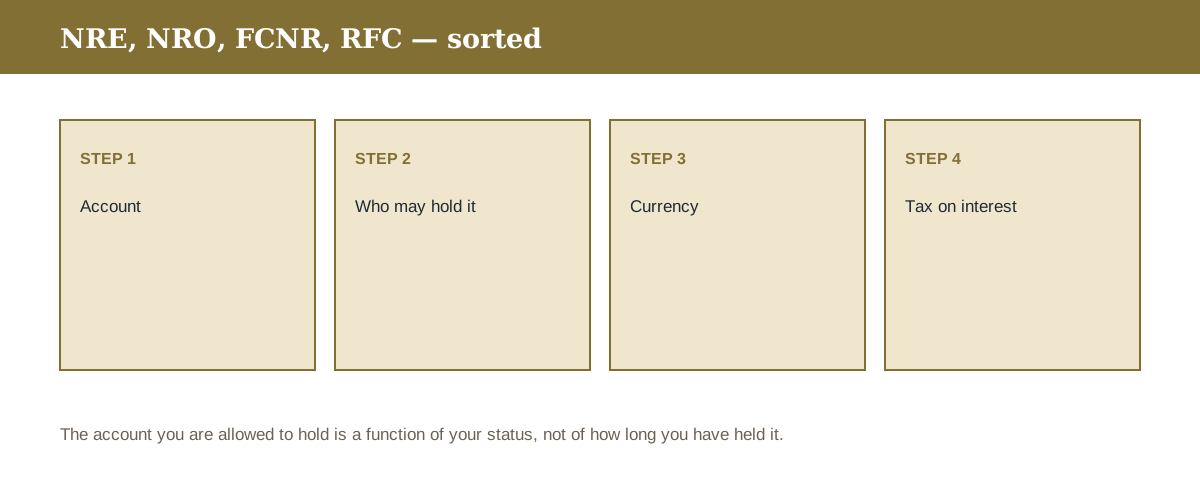
Read this as a permissions table, not a product pitch. The last column is the one people get wrong.
| Account | Who may hold it | Currency | Tax on interest | On becoming resident |
|---|---|---|---|---|
| NRE | Person resident outside India | Rupees, funded from abroad | Not taxable in India | Convert, or move funds to RFC — cannot keep operating it |
| NRO | Person resident outside India | Rupees, Indian-source funds | Taxable, TDS applies | Redesignate as an ordinary resident account |
| FCNR(B) | Person resident outside India | Foreign currency term deposit | Not taxable in India | Let it run to maturity or convert; RFC is the bridge |
| RFC | Resident who was previously non-resident | Rupees or foreign currency | Depends on the source | This is the account you move into, not out of |
| EEFC | Exporter holding foreign-currency earnings | Foreign currency | Business income rules apply | Only relevant if you run an export business |
Order of operations on landing day
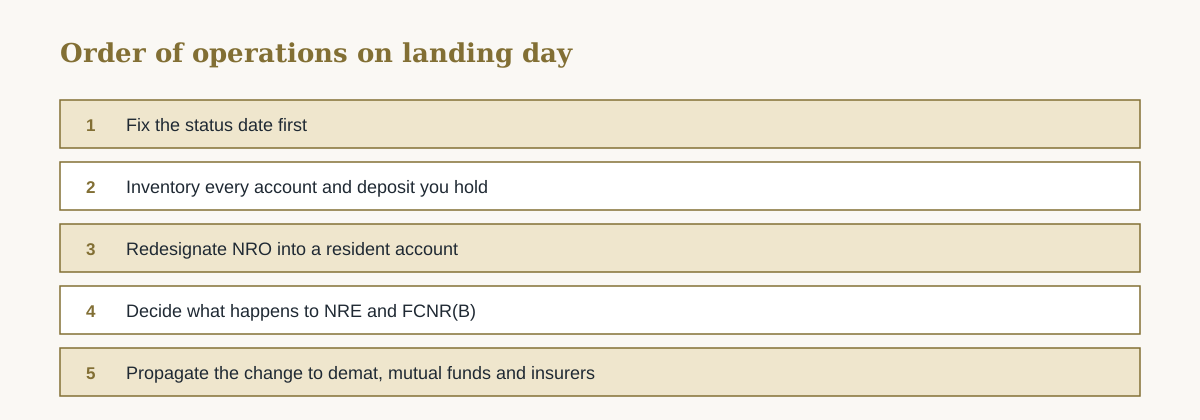
Banks handle these in the order you present them. This is the order that avoids a frozen account.
Fix the status date first
Establish the day you became a person resident in India. Under FEMA that turns on intention and purpose, so a return to take up employment or to stay indefinitely is different from a short project visit.
Inventory every account and deposit you hold
List NRE, NRO, FCNR(B), RFC, EEFC, demat and any folios at banks you had forgotten. Redesignation requests are per-account and per-institution.
Redesignate NRO into a resident account
This is the conversion with a form and a signature. Do it before the account attracts a freeze or a restriction on debits.
Decide what happens to NRE and FCNR(B)
Either convert, allow the deposit to run to maturity, or move the funds into RFC if you still need foreign-currency flexibility for permitted purposes.
Propagate the change to demat, mutual funds and insurers
Status is not a bank-only fact. The demat, the mutual fund folios and any insurance policy each carry their own record and their own update path.
Keep the paper trail
Retain the declaration you signed, the bank's acknowledgement, and the conversion advice. This is what you produce when a later remittance is questioned.
Account inventory before you visit the branch
Fill this in at home. Branch visits go faster when the list is already complete.
- Every bank where you hold NRE, NRO, FCNR(B), RFC or EEFC — including dormant ones
- Deposit maturity dates and the currency of each FCNR(B) deposit
- Demat accounts, mutual fund folios, insurance policies and PPF or NPS records
- Your residency status date and the fact pattern supporting it
- PAN, Aadhaar and current address proof in the new Indian address
- A signed declaration for each institution
- A single folder holding every acknowledgement you receive
Which account, when
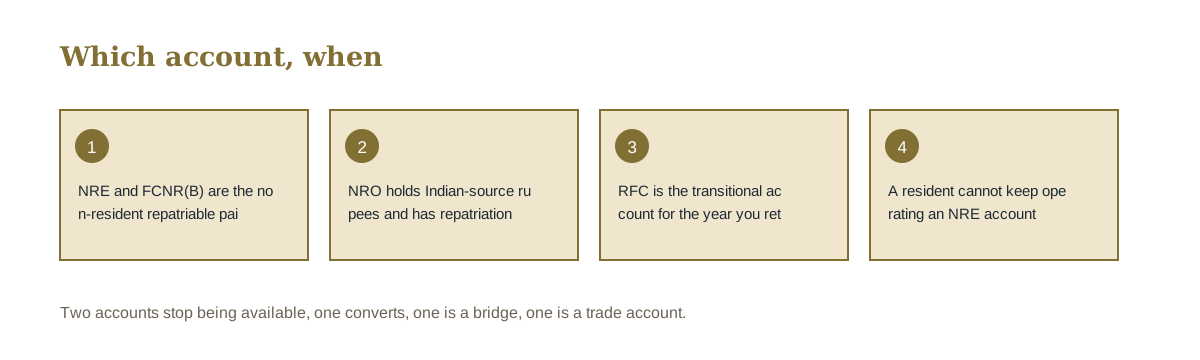
Status decides the account
Need help with Banking?
Share your blocker in one line. Our experts will reply with practical next steps.
Do not use the 182-day idea here
The 182-day count belongs to income-tax residency. FEMA status turns on intention and purpose, so it can change the day you land. Treating the tax clock as the FEMA clock is the single most expensive assumption in this whole area.
The one-sentence answer
NRE and FCNR(B) are non-resident accounts that stop being operable when you become resident, NRO converts into an ordinary resident account, RFC is the bridge, and the residency date is a FEMA question rather than a 182-day tax one.
Animated decision map
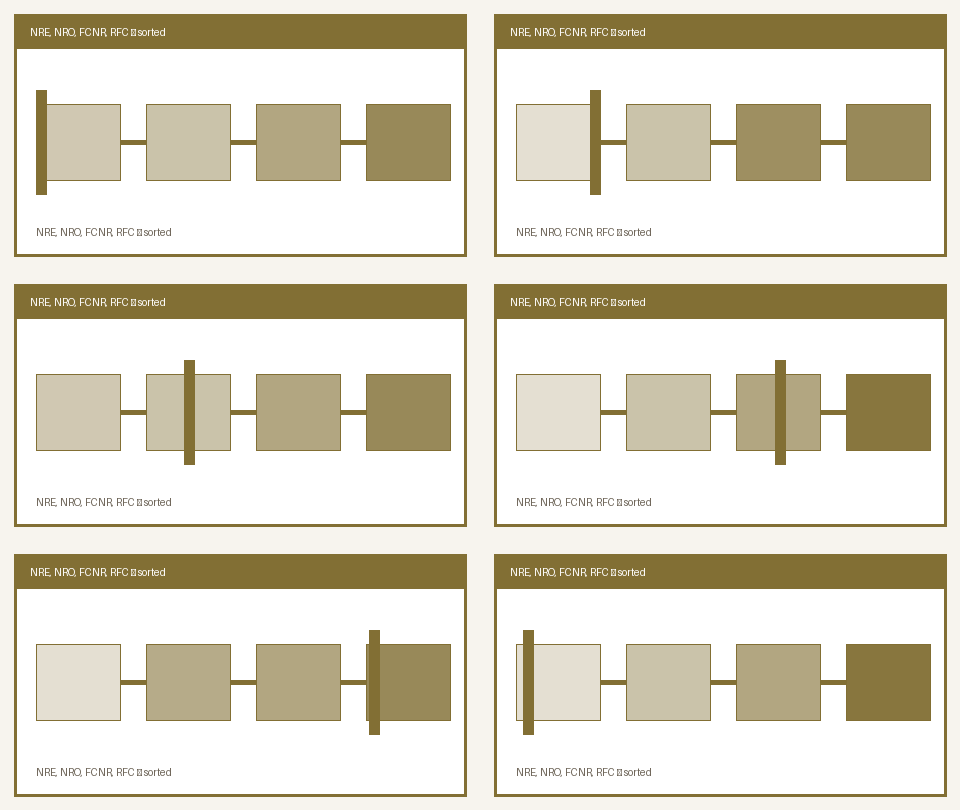
Which account change applies to you?
Four questions. You get the course of action, in order, for your situation.
Question 1 of 4
Community signal
What to watch in real discussions
Treat repeated complaints as risk signals rather than official advice. This page does not link to community search results.
Interactive checkpoint
Turn this guide into a decision file
0 of 4 checked
What is the difference between an NRE and an NRO account?
NRE is a rupee account funded from abroad for a non-resident, with interest not taxed in India and free repatriability. NRO is a rupee account for Indian-source income, with taxable interest and capped repatriation subject to documentation.
Can I keep my NRE account after returning to India permanently?
Not as an NRE account. Once you are a person resident in India under FEMA, the NRE designation no longer fits. The balance is typically moved into a resident account or into an RFC account where the conditions are met, or the deposit is allowed to run to maturity.
What is an RFC account for?
The Resident Foreign Currency account lets a person who has returned to India hold foreign-currency balances that were legitimately held or earned abroad, and use them for permitted purposes. It is a bridge account for the transition period, not a way to keep NRI privileges.
Is an NRO account mandatory for an NRI?
It is not mandatory in the abstract, but it becomes necessary the moment you have Indian-source money to receive or hold — rent, dividends, sale proceeds or pension. Most NRIs end up with one for that reason.
Is interest on an NRE account taxed in India?
Interest on a qualifying NRE account is not taxed in India. That exemption is tied to the account being a genuine NRE account held by a non-resident, which is why the designation matters.
What is FCNR(B)?
It is a foreign-currency term deposit held by a non-resident, denominated in a permitted foreign currency, with interest not taxed in India and principal repatriable. It is the natural place for foreign-currency savings you want to keep in foreign currency.
Do I need to close the NRO account or can I convert it?
Convert it. Redesignation preserves the account history, mandates and standing instructions. Closing and reopening a fresh resident account loses that continuity and is usually unnecessary.
What happens if I do nothing at all?
Banks eventually act on the mismatch between the recorded status and the KYC record. The failure mode is a restricted or frozen account at the moment you need it, and a compliance conversation that is far harder to win months later.
Does the change affect my demat and mutual funds too?
Yes. The bank redesignation does not carry across. Demat, mutual fund folios and insurance policies each need their own update, and some need a fresh KYC record rather than an edit.
Which account should I use for money I want to send abroad later?
Any balance that becomes resident money is subject to the normal remittance framework, including the annual scheme limits. Plan for that before you convert, because conversion narrows the free-repatriation treatment the NRE and FCNR(B) balances enjoyed.
Your NRE account redesignation has a deadline.
Banks don't remind you. You need the right account stack before salary, rent, and EMIs start moving. Get the exact sequence.