The 60-second version
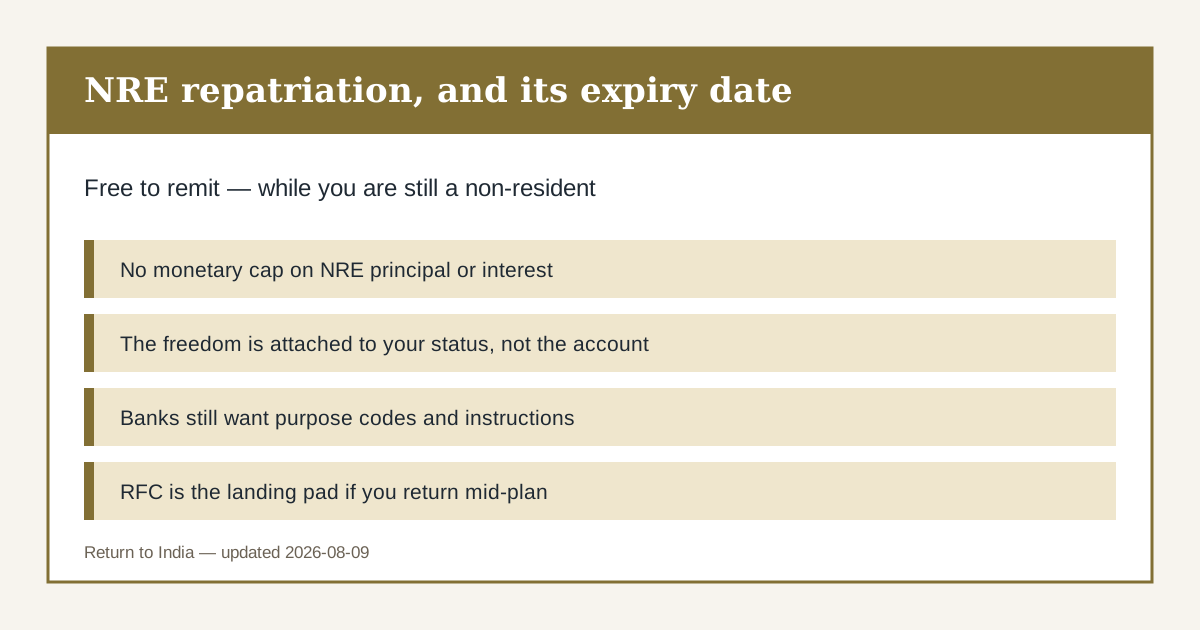
NRE repatriation is unrestricted in amount because the money originated abroad. The catch is timing: the freedom belongs to the non-resident status, not to the account, so a return that happens before the transfer changes the rules mid-flight.
Fast answer: free in amount, not free of process, and not free forever
NRE repatriation is described as free because there is no monetary ceiling on sending the balance abroad. Both principal and accrued interest can go. The reason is structural: an NRE account is only supposed to hold money that was earned outside India in the first place, so sending it back out is a return journey rather than an export of Indian wealth.
'Free' does not mean 'no paperwork'. Your bank will still want a signed remittance instruction, a purpose code, beneficiary details, and increasingly a confirmation that the credits into the account genuinely came from abroad. If Indian-sourced income was ever credited to the NRE account by mistake, expect that portion to be questioned, because it should have gone to an NRO account and would have carried tax.
The trap sits at the end. Free repatriation is a privilege of non-resident status, not a permanent attribute of the account number. Once you become a person resident in India under FEMA, the account stops being an NRE account — it is redesignated — and the framework that applied to the outward transfer changes with it. Plan any large outward remittance to settle before the status change, or plan it deliberately for the resident regime instead.
Repatriation routes compared
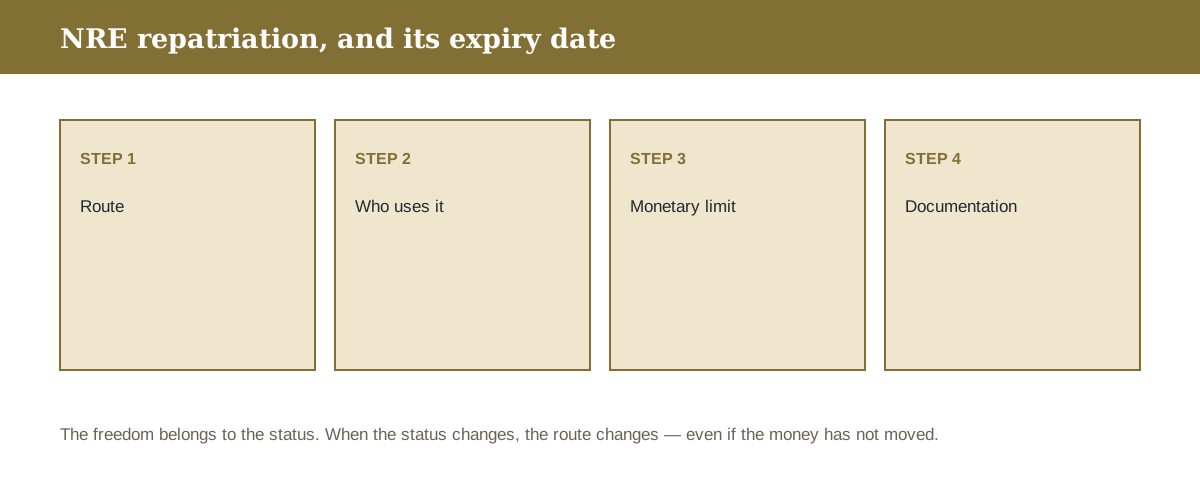
Four different pipes, four different rulebooks. Knowing which pipe you are in on the day of transfer is the whole game.
| Route | Who uses it | Monetary limit | Documentation | Common failure |
|---|---|---|---|---|
| NRE outward remittance | Non-resident, funds earned abroad | No specified ceiling on principal and interest | Remittance instruction, purpose code, beneficiary details | Indian income wrongly credited to the account and later questioned |
| NRO outward remittance | Non-resident, Indian-sourced income | Up to USD 1 million per financial year | Form 15CA and a chartered accountant's Form 15CB, tax evidence | Missing or inconsistent Form 15CB, or the cap already consumed |
| FCNR(B) maturity proceeds | Non-resident holding foreign-currency deposits | Repatriable as per the deposit terms | Maturity instructions given before the deposit rolls over | Auto-renewal into a deposit the returnee no longer wants |
| Liberalised Remittance Scheme | Resident individual, after the status change | USD 250,000 per financial year | Form A2 declaration and the bank's LRS process | Assuming NRE-style freedom continues after becoming resident |
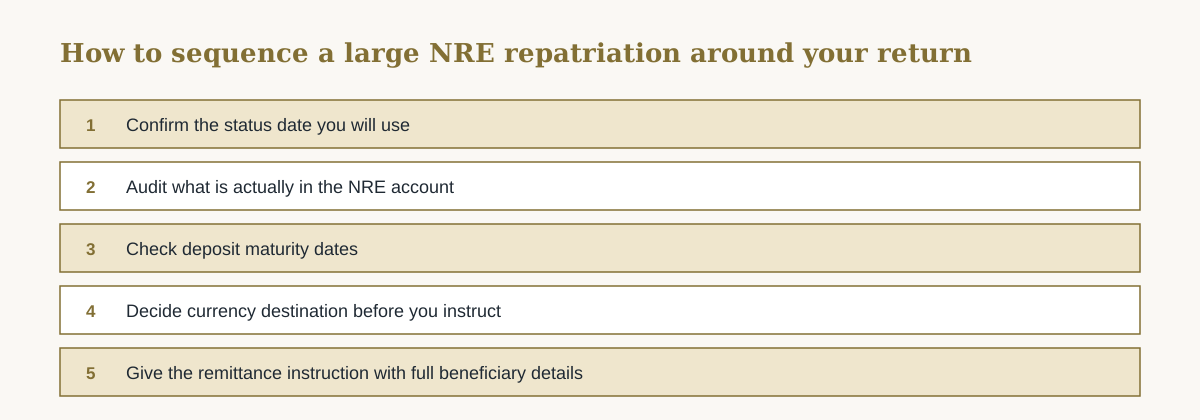
How to sequence a large NRE repatriation around your return
The order below assumes you have a known return date. If the date is uncertain, treat every step as though the date is earlier than planned.
Confirm the status date you will use
Fix the date you will treat as the start of your FEMA residency in India. All sequencing below is measured backwards from that date.
Audit what is actually in the NRE account
Pull two years of statements and confirm every credit came from abroad. Anything Indian-sourced should be identified now, not when the bank asks.
Check deposit maturity dates
NRE fixed deposits that mature after your return date will be caught by redesignation. Decide whether to break them, let them mature, or convert them.
Decide currency destination before you instruct
Repatriating converts rupees to foreign currency at that day's rate. If you intend to keep foreign currency but hold it in India, an RFC account after return may be the better route than an outward remittance now.
Give the remittance instruction with full beneficiary details
Beneficiary name exactly as on the foreign account, account number, routing or SWIFT identifiers, intermediary bank if relevant, and the purpose code. Mismatches cause returned wires and repeat charges.
Settle before the status change, or plan for after
Do not let a large transfer straddle your return date. Either it completes while you are still a non-resident, or you plan it under the resident framework from the start.
Keep the evidence pack
Foreign inward remittance advices for the original credits, the outward remittance advice, the rate applied, charges deducted, and the closing statement.
Before you press send on an NRE repatriation
Ten checks that prevent the most expensive category of error: a transfer that has to be reversed.
- Every credit into the NRE account over the relevant period is traceable to a foreign source.
- No Indian rent, dividend or sale proceeds have been credited to the NRE account.
- Fixed deposits linked to the account have been checked for maturity and break penalties.
- The beneficiary name matches the foreign account exactly, character for character.
- SWIFT or routing details have been confirmed with the receiving bank, not copied from an old email.
- The purpose code has been agreed with the bank.
- Exchange rate and charges have been quoted, not assumed.
- The transfer will settle before your FEMA status change date.
- You have decided whether an RFC account is the better home for residual foreign currency.
- The evidence pack is saved before the account is redesignated or closed.
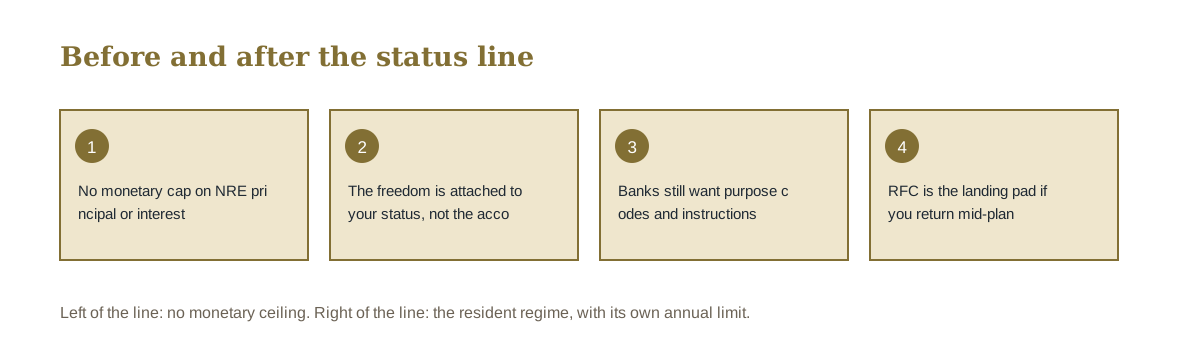
Before and after the status line
Need help with Banking?
Share your blocker in one line. Our experts will reply with practical next steps.
Community signal: the return-date straddle
Unable to embed reddit content. View on reddit
"The recurring problem is a large transfer initiated days before landing and completed days after, with the bank asking which framework applies."
Read on reddit ->Reference signal: the deposits Master Direction is the source
Unable to embed linkedin content. View on linkedin
"Professional commentary consistently traces the repatriation position to the RBI Master Direction on Deposits and Accounts rather than to individual bank policy."
Read on linkedin ->NRE repatriation sequencing diagram
Need help with Banking?
Share your blocker in one line. Our experts will reply with practical next steps.
Indian income in an NRE account is a repatriation landmine
If Indian rent, dividends or sale proceeds were ever credited to your NRE account, that portion did not belong there. Expect the bank to question it, and expect to have to evidence the tax position on it. Correct the routing as soon as you spot it rather than at the moment of transfer.
The one-sentence answer
NRE balances repatriate without a monetary ceiling because the money came from abroad, but that freedom belongs to your non-resident status — so audit the credits, check deposit maturities, and settle any large transfer before your FEMA status changes or plan it under the resident framework instead.
Animated decision map

Need help with Banking?
Share your blocker in one line. Our experts will reply with practical next steps.
Interactive checkpoint
Turn this guide into a decision file
0 of 4 checked
Is there a limit on repatriating from an NRE account?
There is no specified monetary ceiling on repatriating NRE principal and interest, because the funds are supposed to have originated outside India. The bank will still require a proper remittance instruction and purpose code.
Do I need Form 15CA and 15CB to repatriate from NRE?
The Form 15CA and Form 15CB pair is characteristically associated with NRO repatriation, where Indian tax on the income has to be evidenced. NRE repatriation is generally simpler, but your bank's documentation requirements should be confirmed before instructing.
Can I repatriate from an NRE account after I move back to India?
Not as an NRE repatriation. Once you become a person resident in India, the account is redesignated and outward remittances follow the resident framework, including the annual Liberalised Remittance Scheme limit.
What happens to my NRE fixed deposits when I return?
They are affected by redesignation. Depending on the bank and the deposit terms, they may be converted or repriced. Check maturity dates and premature-closure penalties well before your return date.
Can I keep foreign currency in India instead of repatriating?
A Resident Foreign Currency account is designed for returning residents who want to hold eligible foreign currency in India rather than convert to rupees. Open it before you need it.
What if Indian income was credited to my NRE account by mistake?
Identify and segregate it. That income belonged in an NRO account, would have attracted tax deduction at source, and repatriating it through the NRE route can be questioned. Raise it with the bank proactively.
How long does an NRE repatriation take?
For a straightforward instruction with correct beneficiary details, it typically settles within a few working days. Delays are almost always caused by name mismatches, wrong intermediary bank details or missing purpose codes.
Is NRE interest taxable in my country of residence?
Possibly. Exemption from Indian income tax says nothing about your home-country treatment. Many countries tax worldwide interest income, and the exemption in India may simply mean no foreign tax credit is available to offset it.
Should I empty my NRE account before landing in India?
Not automatically. Emptying it can force an unfavourable currency conversion and break deposits early. The better approach is to decide deliberately between repatriating, converting to resident rupee holdings, or moving foreign currency into an RFC account.
Your NRE account redesignation has a deadline.
Banks don't remind you. You need the right account stack before salary, rent, and EMIs start moving. Get the exact sequence.