NR73 When Leaving Canada for India: Residency Opinion or Departure Return?
Understand what CRA Form NR73 does, when a residency opinion helps, which Canadian ties matter, and why departure reporting remains a separate task.
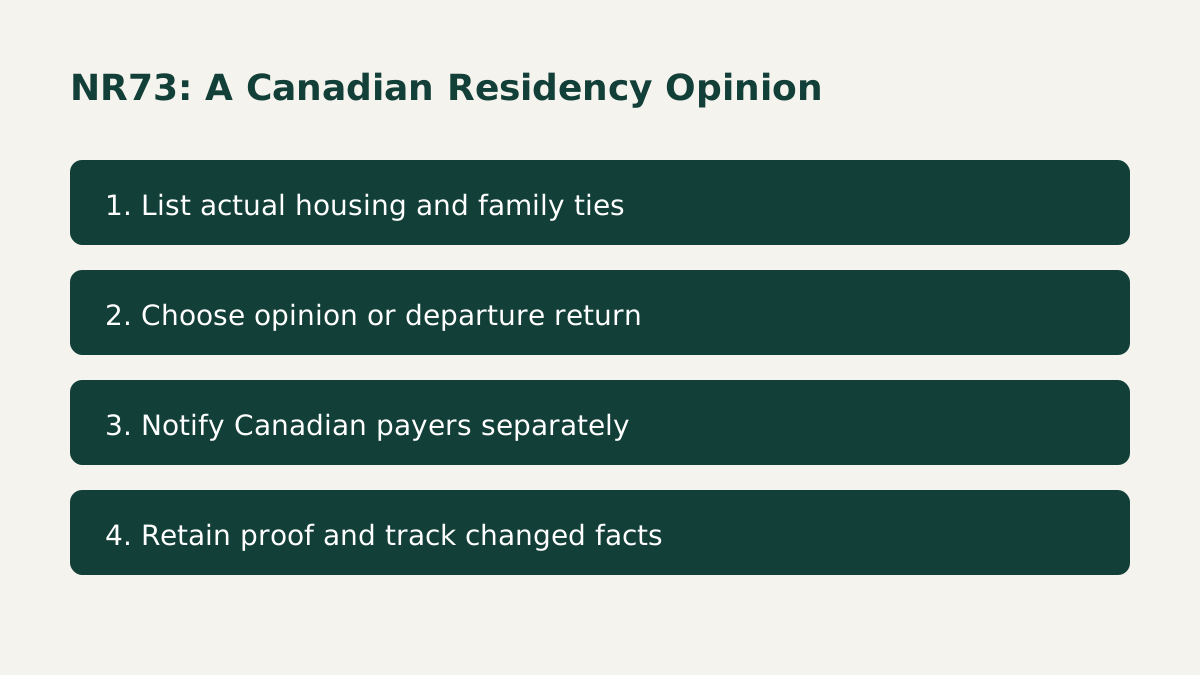
The 60-second version
NR73 asks the CRA for its view of your Canadian tax residence. It is not a departure tax return, a visa form or a guarantee of non-resident status. Start with your actual residential ties and departure facts.
Fast answer: NR73 requests an opinion; it does not replace your return
CRA Form NR73 is for someone who has left, or plans to leave, Canada temporarily or permanently and needs help determining Canadian income-tax residence. Returning to India does not turn it into an automatic departure clearance. The CRA presents it as a way to obtain its opinion on your circumstances; the departure-year tax return and notifying Canadian payers are separate tasks.
Begin with the facts rather than the form. Where will you live? Will a Canadian home remain available? Where will your spouse or partner and dependants live? What ongoing connections will you keep? The CRA says all relevant facts must be considered, including residential ties and the length, purpose, intent and continuity of the stay. A one-way ticket or an Indian address cannot answer those questions alone.
This page covers the residency-opinion decision, not a complete Canada relocation plan. The broad Canada guide remains the place for pensions, banking and school planning. If the facts are clear, follow the applicable departure reporting; if the facts are uncertain, an NR73 opinion may help. If the CRA specifically requests information, respond to that request rather than relying on a generic checklist.
Which task are you actually trying to complete?
| Task | Relevant route | What it does not establish |
|---|---|---|
| Understand uncertain Canadian residence | Review CRA residence guidance; consider NR73 | The form itself does not create non-residence |
| File for the year you leave | Departure-year return if required | NR73 is not a substitute tax return |
| Update Canadian bank or pension payer | Notify the institution of actual non-residence | Changing a mailing address alone is not a tax determination |
| Claim treaty withholding benefits | Payer evidence such as NR301 where applicable | This is not the NR73 opinion process |
Your departure date may not be the date you expected
The CRA emigrants guidance says that a person leaving to settle in another country usually becomes non-resident on the latest of the date they leave Canada, the date their spouse or partner and dependants leave, and the date they become resident in the destination country. That is a general rule in the guidance, not a reason to select whichever date produces the smallest tax bill.
The same guidance describes an important qualification: if you previously lived in another country and return to resettle there, you usually become non-resident on leaving Canada, even if your spouse or partner temporarily remains to dispose of the Canadian home. Explain that situation rather than omitting the family member who stays. Other retained ties and treaty circumstances still need assessment.
Keeping significant Canadian ties can mean factual residence continues. If you also become resident in a treaty country, treaty rules may affect the result. Do not simply add the labels Canadian non-resident and Indian RNOR to a spreadsheet and assume they are compatible. They arise under different rules, and a complicated overlap deserves individual advice.
Build an accurate opinion request
Make a dated timeline
Record departure, family travel, housing changes and the start of life in India. Explain temporary arrangements instead of treating planned dates as completed events.
List retained ties honestly
Describe the Canadian home and its availability, family location and ongoing connections. Give the facts supporting the intended duration and purpose of your move.
Read the current NR73 instructions
Download the current CRA form and use the submission instructions on it. The official page says to download fillable PDFs and open them in Acrobat Reader rather than completing them in a browser.
Review consistency before submission
Compare the form with your tax return, bank notifications and actual circumstances. An adviser should resolve contradictions, not rewrite inconvenient facts.
Keep the response and track changes
Save your submission and the CRA correspondence securely. If your family or housing arrangements change materially, review whether the previous analysis still fits.
Do not leave the other departure tasks waiting for NR73
The emigrants page says you must notify Canadian payers and financial institutions when you are no longer resident if Canadian accounts or payments continue. Ask the institution which effective date and supporting evidence it needs. NR73 correspondence is not permission to leave an incorrect resident classification in place indefinitely.
Check the departure-year filing requirement separately. CRA guidance identifies owing tax or wanting a refund as reasons to file and directs readers to the full filing rules. If you determine no return is required, it says to tell the CRA the departure date as soon as possible. There may also be property reporting or deemed-disposition consequences. An opinion request does not calculate that tax.
Benefits and credits need their own review. The CRA warns that non-residents are generally ineligible for specified resident benefits and tells recipients to contact it if payments continue after departure. Preserve online account access and a reliable correspondence address so that an adjustment is not missed. On arrival in India, separately update bank status under the applicable FEMA rules; Canadian tax paperwork does not control Indian account residence.
Keep one consistent departure file
- Actual departure and family-move dates
- Canadian home arrangements and supporting records
- Indian residence and work arrangements
- Copies of any NR73 request and CRA response
- Departure-year filing assessment and property records
- Notifications to banks, payers and benefits administrators
Need help with Country Guides?
Share your blocker in one line. Our experts will reply with practical next steps.
An opinion is not a promise that every Canadian obligation ends
Canadian-source income can remain taxable after departure. NR73 does not close your tax file, establish an Indian tax exemption, or guarantee a treaty result. Use the facts and the current rules for each separate obligation.
NR73 When Leaving Canada for India: Residency Opinion or Departure Return?
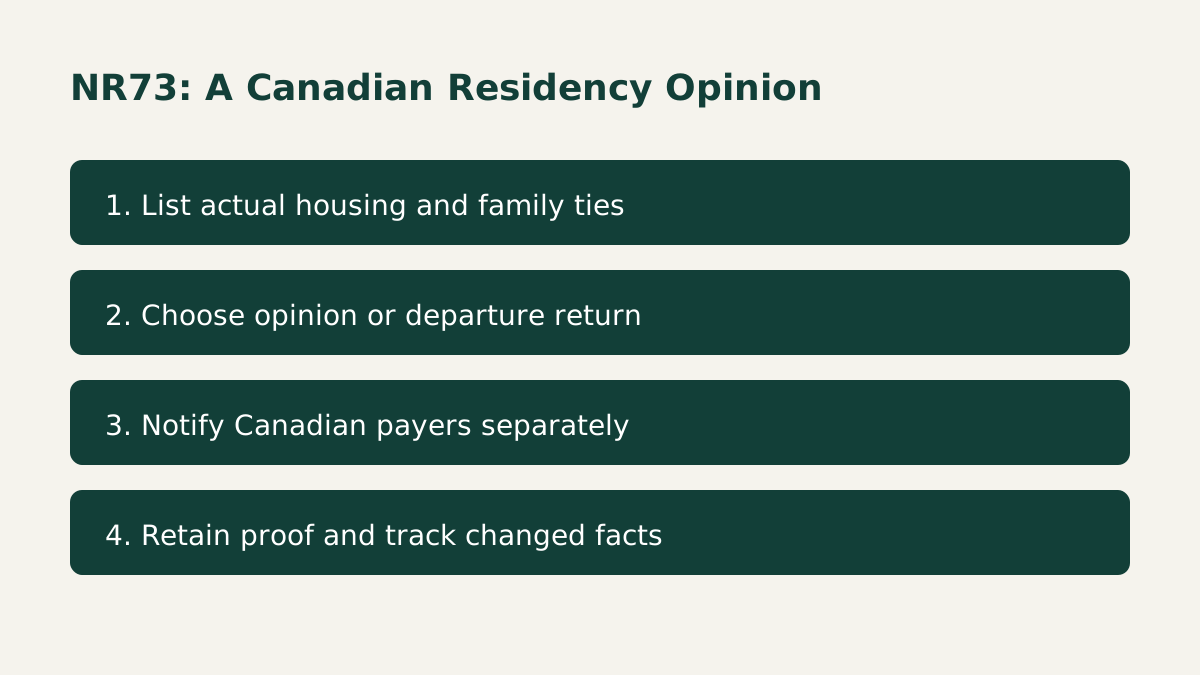
Animated preparation checklist
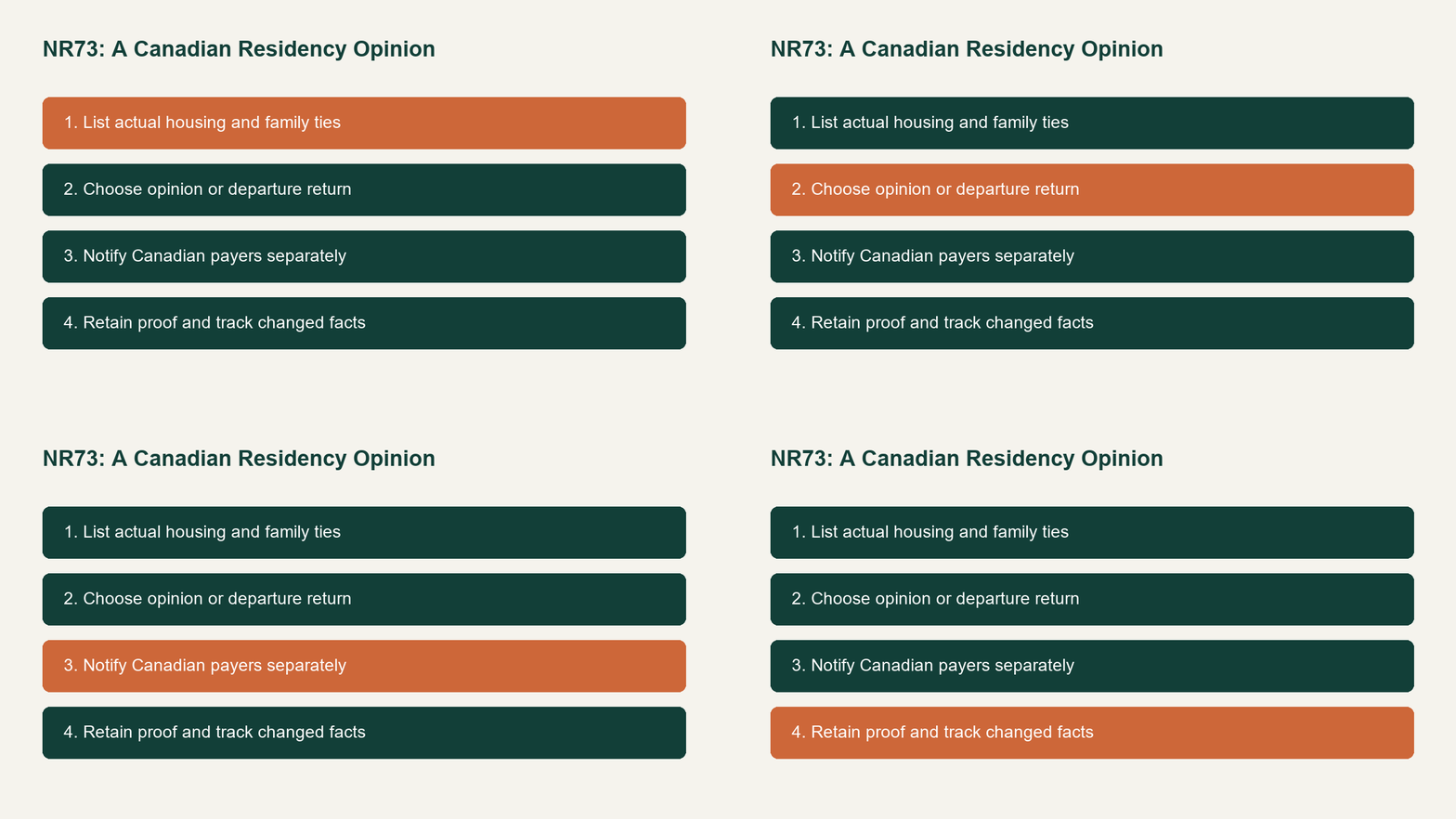
Decision before submission
Community signal
What to watch in real discussions
Treat repeated complaints as risk signals rather than official advice. This page does not link to community search results.
Interactive checkpoint
Turn this guide into a decision file
0 of 4 checked
Does every person moving from Canada to India have to submit NR73?
The CRA describes NR73 as a way to obtain help or an opinion on residency. Do not treat it as universal departure clearance. Assess your actual facts, filing obligations and any specific CRA request.
Does NR73 replace the departure-year tax return?
No. The opinion process and the return are different. Check whether a return, property reporting or other departure reporting applies.
Does the flight date always end Canadian residence?
No. The CRA describes a usual latest-date rule involving departure, family departure and destination residence, with an exception for resettling in a former country. Retained ties and treaty circumstances matter.
What if my spouse stays temporarily to sell the home?
Disclose it. CRA guidance specifically discusses returning to resettle in a country where you previously lived, even where a spouse or partner temporarily stays to dispose of the home. Get advice on the complete facts.
Should I wait for an NR73 response before updating my bank?
Do not use the request to justify inaccurate account information. Notify the bank of your actual circumstances and follow its evidence requirements.
Is NR73 the same as NR301?
No. NR73 concerns a residency opinion. NR301 provides treaty-benefit evidence for specified non-resident income and is commonly given to the requesting payer.
Your country's rules are the starting point, not the finish line.
Tax exits, pension continuity, banking notifications — the India side has its own rules too. Get both sides clear.