Form 15G/15H After Return: Stop FD & SCSS TDS
Stop excess TDS on FD, SCSS, and interest after return: redesignation gate, 15G vs 15H, bank rejection matrix, post office path, Section 277 warning.
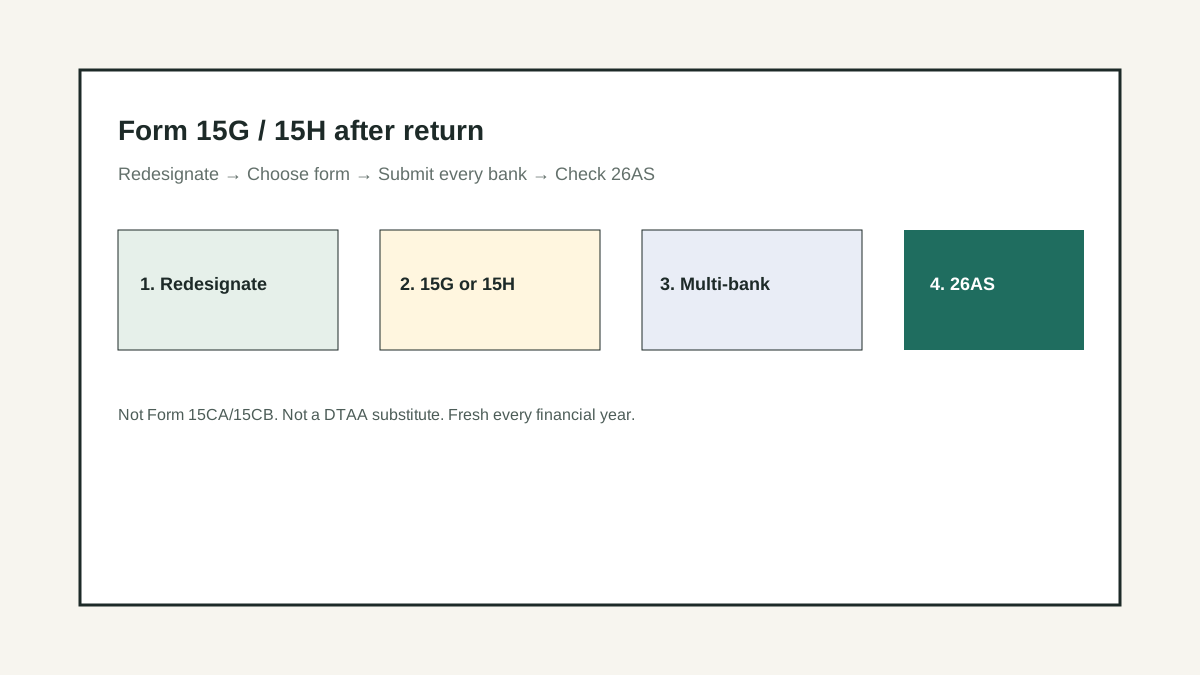
The 60-second version
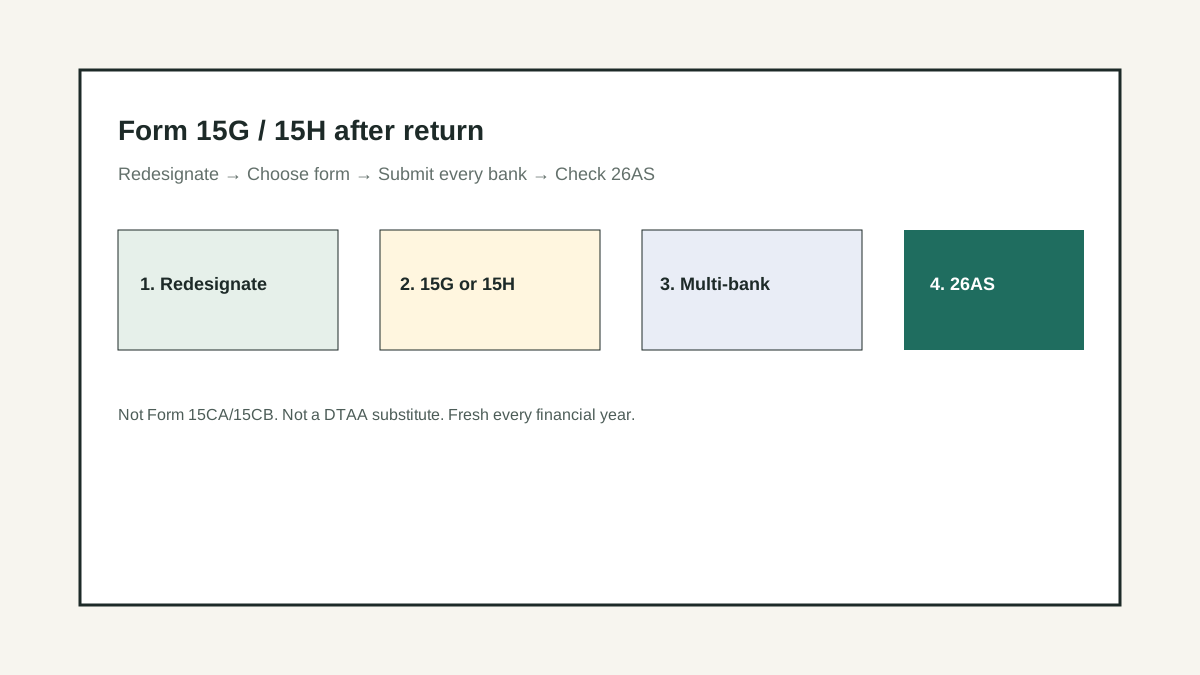
Most returnees bleed 10–30% TDS on interest for months because the bank still sees NRI status, PAN is unlinked, or 15G/15H was never filed for the new financial year. This page is the execution map: redesignation first, then form choice, then multi-bank submission, then 26AS proof.
What 15G/15H stops — and what it never replaces
Form 15G (generally under 60) and Form 15H (senior 60+) are declarations under the Income-tax Act framework (Section 197A family of provisions) that tell a payer — usually a bank or post office — not to deduct tax at source on interest when the conditions are met. They are prevention tools, not a refund machine and not an ITR substitute.
Returning families confuse three jobs: (1) bank residency redesignation so the account is no longer stuck in NRI/NRO high-TDS lanes, (2) 15G/15H for eligible resident interest streams each financial year, and (3) Form 67 / DTAA / Form 13 paths when the issue is treaty rate or lower certificate — not nil-tax declaration. This page owns job (2) and the gate into it.
Gate matrix before you download the form PDF
If a gate fails, 15G/15H will bounce or get ignored.
| Gate | Pass looks like | Fail looks like | Next action |
|---|---|---|---|
| Residential status at bank | Account redesignated resident; KYC shows resident/OCI with Indian address | Still NRE/NRO/FCNR customer flag; branch says 'NRI 15G not allowed' | Finish redesignation packet first |
| PAN health | PAN active and linked to Aadhaar when required | Inoperative PAN / Section 206AA higher TDS | Link PAN-Aadhaar; wait for status update |
| Eligibility for 15G | Under 60; estimated total tax for the year is nil | Salary + interest still creates tax liability | Do not file false 15G; use ITR credit or Form 13 path |
| Eligibility for 15H | Age 60+; senior declaration path accepted by bank | Age proof missing; bank demands 15G instead | Carry age proof + re-submit with senior form |
| Product scope | FD, savings interest, SCSS, POMIS where bank accepts | Products outside payer's 15G/15H module | Ask bank which products are covered; keep acknowledgement |
Bank rejection matrix (what families actually hit)
| Rejection message | Real cause | Fix |
|---|---|---|
| Form not applicable for NRI | Account still non-resident flagged | Redesignate; re-login netbanking as resident; re-submit |
| PAN invalid / higher TDS | Unlinked or inoperative PAN | Complete Aadhaar link; re-check Form 26AS next cycle |
| Already deducted for the quarter | Submitted mid-year after interest credit | Accept partial TDS; claim refund in ITR; file early next April |
| One form not covering all FDs | Multiple customer IDs or group banks | Submit per bank entity / customer ID |
| Post office not accepting netbanking PDF | SCSS/POMIS is a separate channel | Physical or India Post digital path per scheme rules |
| Signature mismatch | Passport signature vs bank mandate | Update signature / use biometric where offered |
Seven-step annual ritual (April-first for most banks)
Confirm redesignation is complete
Collect redesignation letter or netbanking status for every bank that holds interest-bearing balances. NRO interest may still exist after return — handle that stream with the NRO TDS guide if DTAA applies, not with a wishful 15G while status is wrong.
Build a one-page income estimate
List expected salary, interest, rent, capital gains, and deductions. 15G needs a honest nil-tax estimate. 15H is senior-specific — still do not invent numbers.
Choose 15G vs 15H vs neither
Under 60 with nil tax → 15G. Senior 60+ path → 15H. If tax is clearly payable, do not force 15G. Consider Form 13 / Section 197 certificate when you need a lower rate, not a nil declaration.
Submit at every bank entity that pays interest
One form per bank/customer ID is the usual pattern. Keep acknowledgement number or stamped copy. Repeat for spouse accounts if they own interest products.
Cover post-office products separately
SCSS and POMIS often need a dedicated 15H path at the post office. Do not assume your private-bank 15H covers India Post.
Watch the next interest credit and Form 26AS
If TDS still posts, escalate with acknowledgement + redesignation proof before the quarter closes. Document everything for ITR refund if prevention failed mid-year.
File ITR even when tax is nil
15G/15H stops deduction; it does not waive return filing when you have other reporting duties (foreign assets, carry-forward, etc.).
April submission kit
- PAN PDF + Aadhaar link confirmation screenshot.
- Age proof for 15H (passport / Aadhaar / senior ID).
- List of banks + customer IDs + product types (FD, SCSS, savings).
- Redesignation letters for ex-NRE/NRO accounts.
- Income estimate worksheet for the financial year.
- Signed 15G or 15H (or e-submit confirmation).
- Post-office acknowledgement if SCSS/POMIS applies.
- Calendar reminder: re-file every April (or bank-required date).
Execution flow
Need help with Tax & Residency?
Share your blocker in one line. Our experts will reply with practical next steps.
False declaration is not a clever loophole
Filing 15G when your total tax is not nil (or mis-stating facts on 15H) can attract false-statement exposure under the tax law framework commonly discussed with Section 277-type offences. If you are unsure, skip the form, let TDS run, and reconcile via ITR — or get a CA to file Form 13 for a lower certificate. Cheap interest savings are not worth a false declaration.
Quick visual

Animated decision map

Community signal
What to watch in real discussions
Treat repeated complaints as risk signals rather than official advice. This page does not link to community search results.
Interactive checkpoint
Turn this guide into a decision file
0 of 4 checked
Can I submit Form 15H on NRO interest right after landing?
Usually only after the bank treats you correctly for that product and residency rules. Many banks reject 15G/15H while the customer flag is still NRI. Complete redesignation, then submit. For pure NRO DTAA rate questions, use the NRO interest TDS guide and treaty documents rather than forcing 15G.
Do I need a new Form 15G/15H every year?
Yes in practice. Banks expect a fresh declaration each financial year — typically around April for ongoing FDs. Do not rely on last year’s PDF.
15G vs Form 13 — which one?
15G/15H is a nil (or senior) declaration path. Form 13 / Section 197 is a certificate for lower or nil deduction when you do not fit 15G/15H cleanly. Different tools.
Does 15H cover all FDs in every bank automatically?
No. Submit per bank entity / customer ID, and handle India Post products separately when required.
What if TDS already hit before I filed?
File for the rest of the year if still eligible, keep certificates, and claim credit/refund through ITR using Form 26AS / AIS reconciliation.
Is this the same as Form 15CA/15CB?
No. 15CA/15CB are for certain outward remittances (often NRO repatriation). 15G/15H are for stopping TDS on interest income. Different forms, different jobs.
Your tax year is already running.
RNOR status, exit timing, and DTAA benefits all depend on decisions you make before you land. Don't guess.