The 60-second version
Most delays happen when Form 15CA/15CB is treated like a formality instead of a sequence. This guide gives you the filing order and handoff pack that reduces avoidable rejection loops.
What this page solves (and what it does not)
This page solves the 15CA/15CB execution problem inside NRO repatriation. It does not restate the entire USD 1 million facility. If your first question is whether your transfer falls into the NRO remittance lane at all, start with the core NRO repatriation guide and then return here for filing sequence.
The practical goal is simple: classify correctly, file correctly, and hand off a complete bank pack in one pass.
Quick applicability grid before you file
| Question | Action | Why this check matters |
|---|---|---|
| Is this an outward remittance from NRO balances? | Proceed with NRO remittance workflow and bank-specific tax-doc checklist. | Wrong lane selection causes instant rejection or rework. |
| Is your source trail documented clearly (rent, sale proceeds, legacy balances, etc.)? | Prepare source evidence before form filing. | Form submission without source clarity often stalls at bank review. |
| Did your CA and bank confirm whether 15CB is required for your case? | Use confirmed path and retain written confirmation. | Applicability differences are a common reason for avoidable delays. |
| Are beneficiary details and purpose code final? | Lock transfer details before final upload/submission. | Post-filing changes can trigger fresh review cycles. |
Filing order that avoids backtracking
Use this order to keep tax filing and bank execution aligned.
Step 1: Prepare one-page transaction memo
Document amount, source, beneficiary, and timing. This memo keeps your CA, your bank, and your own filing consistent.
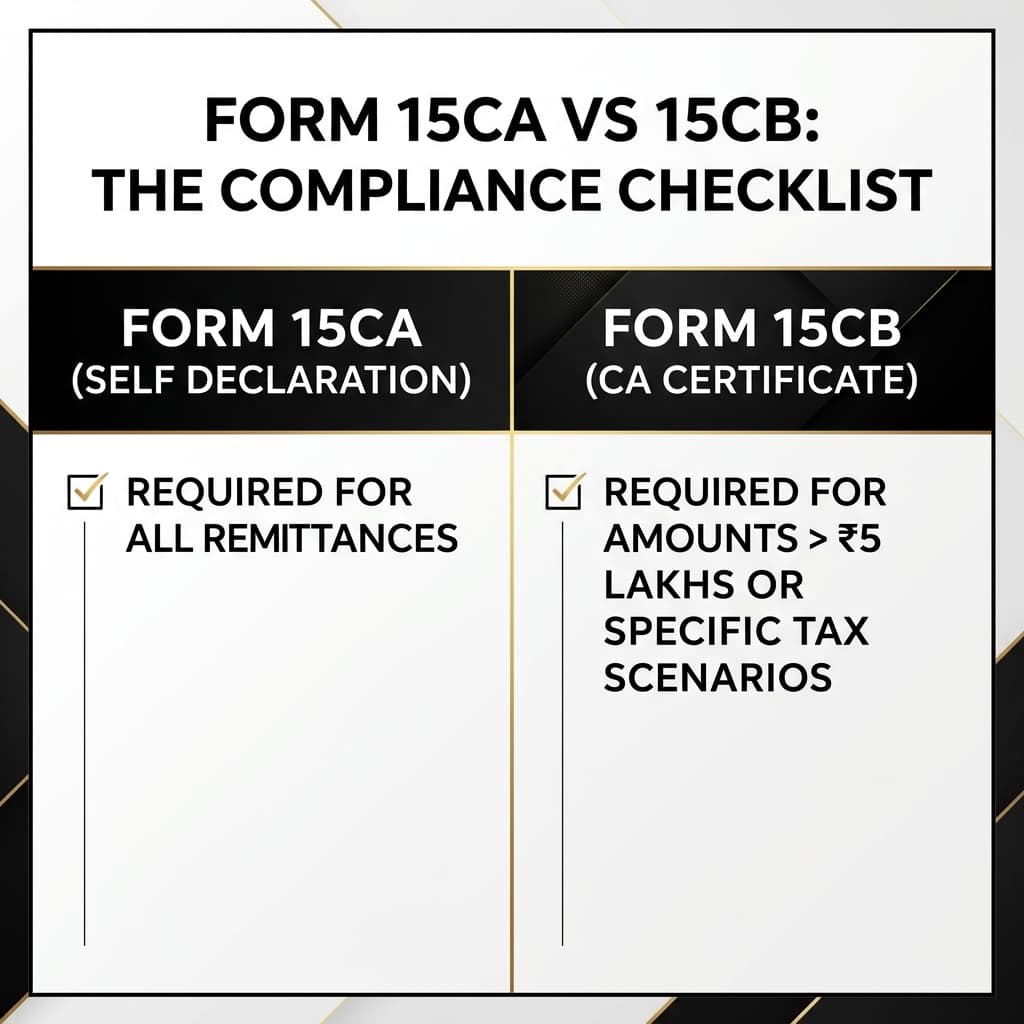
Step 2: Confirm 15CB requirement before uploading 15CA
For cases requiring CA certification, secure the 15CB details first so 15CA entries are aligned with the actual transaction file.
Step 3: Complete 15CA in the e-filing flow with final values
Avoid draft-value filing. Last-minute amount or beneficiary changes create amendment loops and bank-side confusion.
Step 4: Submit full bank pack together
Provide form acknowledgements, CA documentation where applicable, source proofs, purpose details, and KYC in one packet.
Step 5: Track handoff closure, not just submission
Ask for explicit confirmation that your file is complete for processing; this catches missing annexures early.
Bank handoff checklist (single-pass submission)
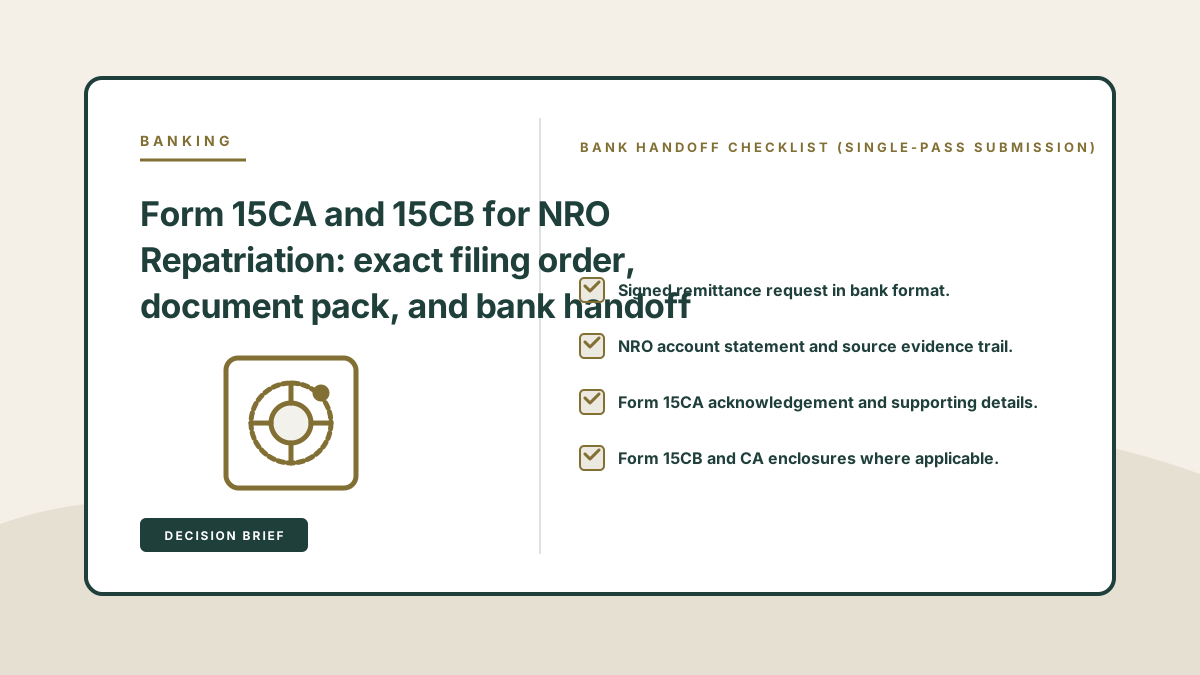
- Signed remittance request in bank format.
- NRO account statement and source evidence trail.
- Form 15CA acknowledgement and supporting details.
- Form 15CB and CA enclosures where applicable.
- Purpose code and beneficiary account proof.
- PAN/KYC documents requested by the authorised dealer bank.
- A simple amount summary that reconciles all submitted values.
Execution rule
Do not optimize for fastest filing click. Optimize for first-pass bank acceptance with a complete and internally consistent file.
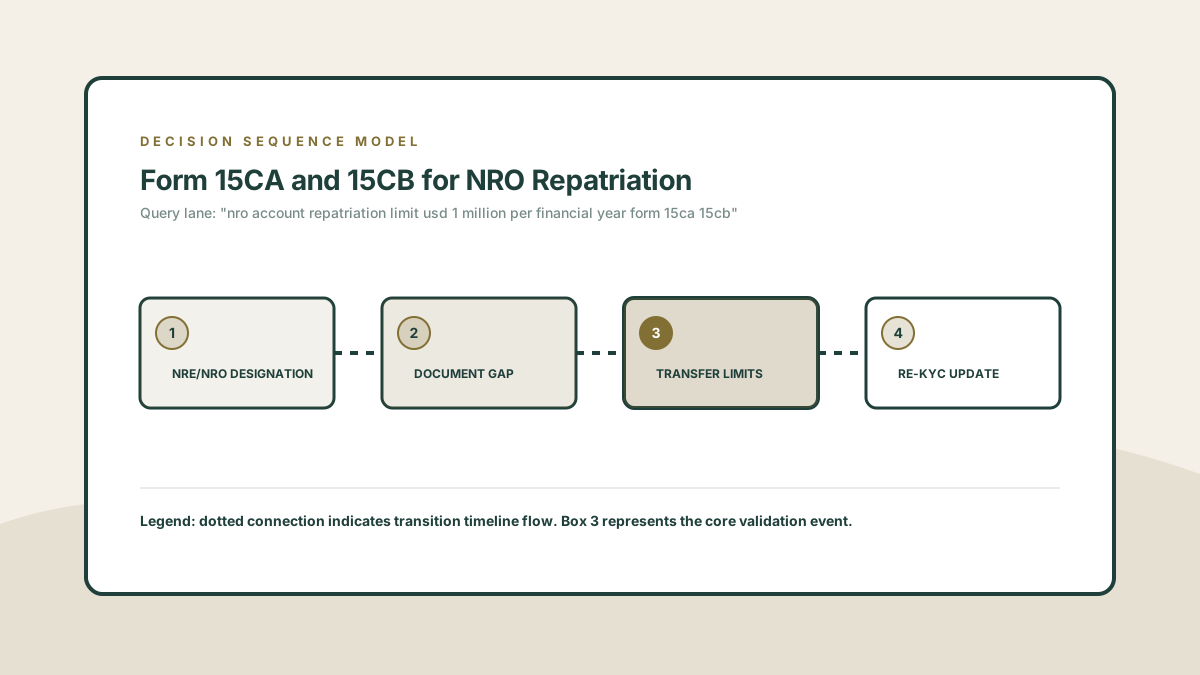
Form 15CA & 15CB Process Flow
Need help with Banking?
Share your blocker in one line. Our experts will reply with practical next steps.
Form 15CA / 15CB filing workflow
Animated decision map

Interactive checkpoint
Turn this guide into a decision file
0 of 4 checked
Do I always need Form 15CB when filing 15CA for NRO remittance?
Not in every situation. Applicability depends on transaction and tax context. Confirm exact requirements with your authorised dealer bank and qualified tax professional before submission.
Can I file 15CA first and arrange CA documents later?
That often creates mismatch risk. If your case needs CA certification, align values and documentation before final 15CA submission.
Why do banks still ask for more documents after form filing?
Form filing is one part of the process. Banks still validate source trail, purpose, beneficiary, and internal compliance requirements before releasing remittance.
Is this article legal or tax advice?
No. It is an execution checklist to reduce process errors. Always validate your case with your authorised dealer bank and tax advisor.
Your NRE account redesignation has a deadline.
Banks don't remind you. You need the right account stack before salary, rent, and EMIs start moving. Get the exact sequence.