FBAR and Form 8938 After Moving Back to India
US person in India? Check NRE/NRO, fixed deposits, demat, FATCA, FBAR $10k aggregate, Form 8938 thresholds, PFIC, and Schedule FA.
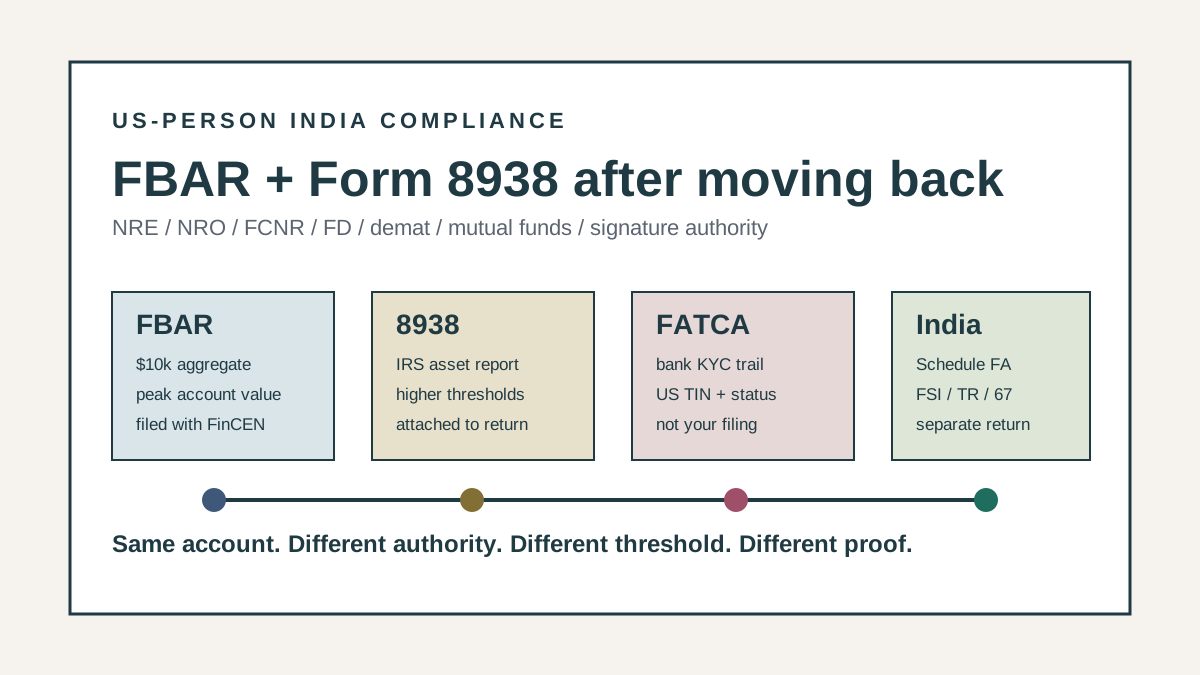
The 60-second version
The expensive mistake is treating FBAR, Form 8938, FATCA bank KYC, and India Schedule FA as one form. They are four different reporting lanes with different thresholds, filing systems, calendars, and evidence files. This guide gives US citizens, green-card holders, and other US persons a clean account-by-account workflow after landing in India.
The US-person India problem is four lanes, not one form
A US citizen, green-card holder, or other US person who moves back to India does not stop being in the US reporting system just because the family is physically in India. Indian bank accounts, fixed deposits, demat accounts, mutual funds, pension-like balances, business accounts, or accounts where the person only has signature authority can still create US-side reporting work.
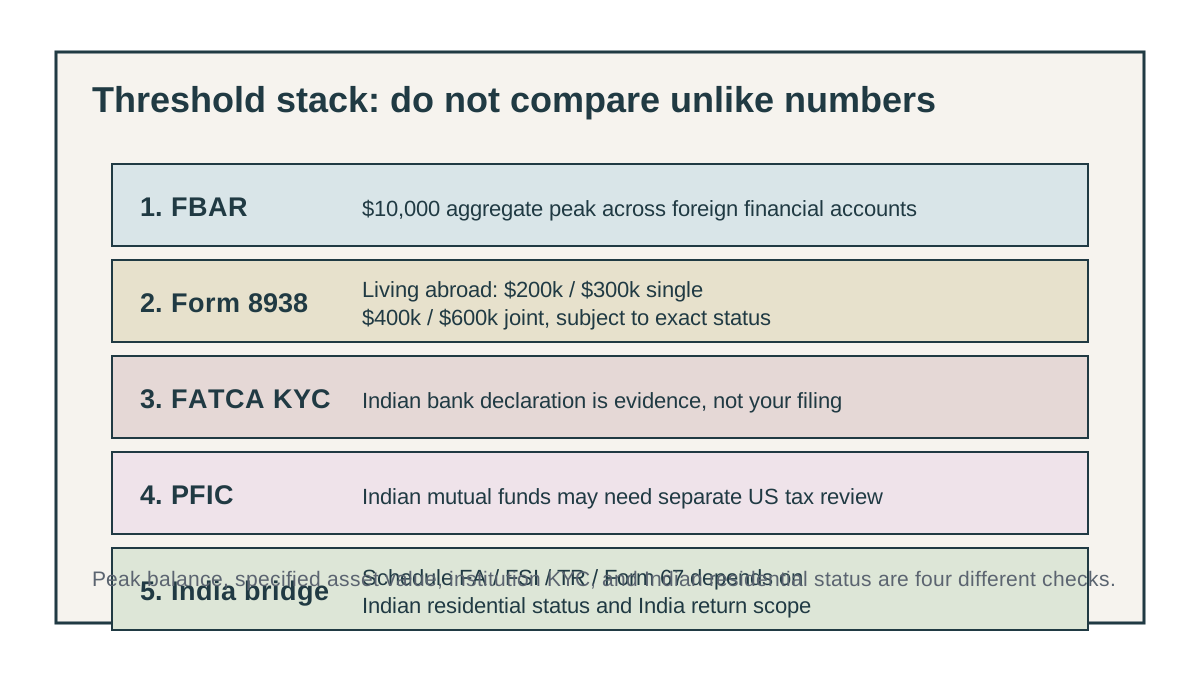
The first lane is FBAR, formally FinCEN Form 114. It is filed electronically with FinCEN, not as an IRS attachment, and the practical trigger is whether aggregate foreign financial accounts exceeded $10,000 at any time in the calendar year. The second lane is IRS Form 8938, attached to the US income tax return when specified foreign financial assets cross the relevant FATCA threshold. The third lane is bank-level FATCA/KYC reporting, where Indian institutions may ask for US person status, TIN, and tax residency details. The fourth lane is India Schedule FA and related FSI/TR/Form 67 work, which belongs to the Indian ITR and does not replace FBAR or Form 8938.
That separation is the whole point of this guide. If you collapse the lanes, you either over-file random forms without a clean record, or worse, miss the form that actually mattered because another form sounded similar. The clean approach is account-by-account: classify ownership, highest balance, calendar year, tax return threshold, income, institution, country, and whether India-side reporting also exists.
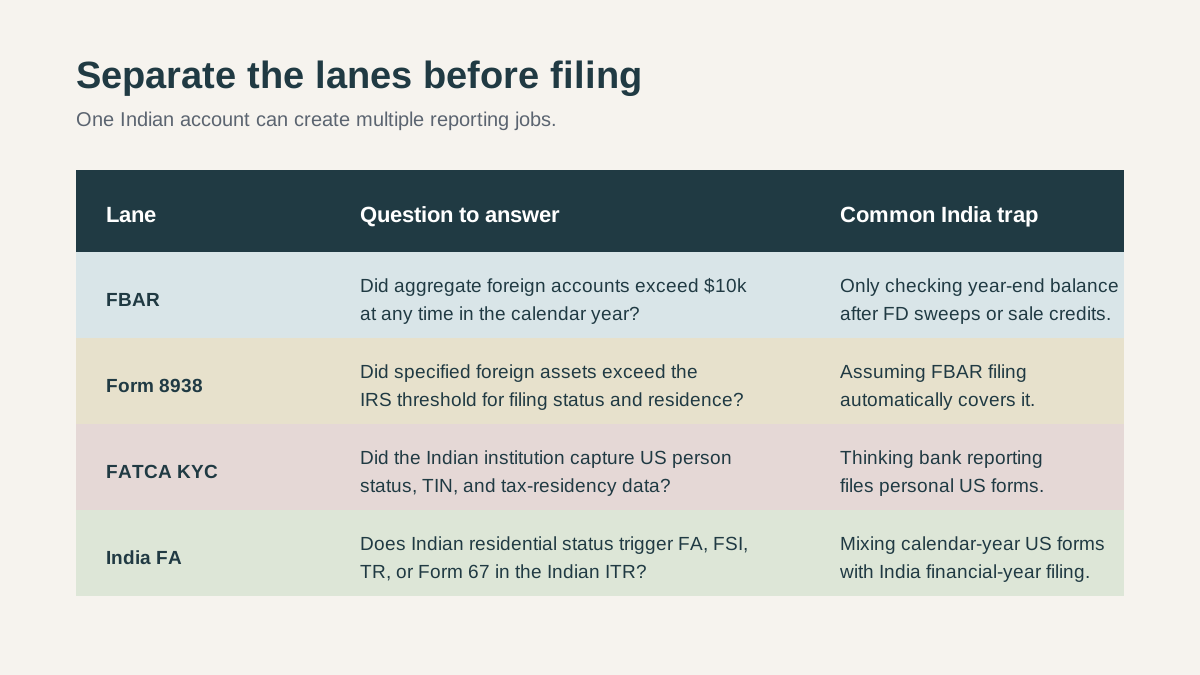
FBAR vs Form 8938 vs FATCA KYC vs India Schedule FA
Use this table before filing. The same NRE or NRO account can appear in more than one lane, but each lane answers a different authority.
| Lane | Where it goes | Trigger to check | India-return mistake |
|---|---|---|---|
| FBAR / FinCEN Form 114 | Filed through FinCEN BSA E-Filing, separate from the IRS income tax return. | US person with financial interest in, or signature authority over, foreign financial accounts whose aggregate value exceeded $10,000 at any time in the calendar year. | Looking only at year-end balance and missing a short-lived salary deposit, fixed deposit rollover, NRO sale proceeds credit, or joint-account peak. |
| IRS Form 8938 | Attached to the US income tax return when the specified foreign financial asset threshold is crossed. | Specified individual or entity with specified foreign financial assets above the applicable threshold; thresholds differ by filing status and whether the taxpayer lives abroad. | Assuming FBAR filing automatically satisfies Form 8938, or assuming a low FBAR threshold means Form 8938 is always required. |
| FATCA / bank KYC declaration | Collected by banks, brokers, mutual fund platforms, and other financial institutions. | US person status, TIN, tax residency declaration, and institution-level due diligence. | Telling an Indian bank one tax-residency story while the US return and India return tell a different story. |
| India Schedule FA / FSI / TR / Form 67 | Filed in the Indian ITR when the Indian residential status and facts require foreign asset or foreign income reporting. | Indian tax residential status, foreign asset category, foreign-source income, and foreign tax credit position. | Thinking Indian Schedule FA replaces US FBAR/Form 8938, or thinking FBAR replaces India Schedule FA. |
| PFIC / Form 8621 review | Separate US tax analysis for many non-US pooled investment funds. | Indian mutual funds, ETFs, ULIP-like wrappers, or pooled foreign investment products held by a US person may need specialist review. | Filing FBAR/Form 8938 and missing the income-tax form that describes the foreign fund itself. |
Ten-step account file for US persons moving back to India
Run this once for every calendar year that touches the move. It is built for NRE, NRO, FCNR, resident savings, demat, fixed deposits, mutual funds, employer stock, and signing authority.
Confirm whether US-person status still applies
Start with US citizenship, green-card status, substantial-presence facts, treaty positions, and filing obligation. Physical relocation to India is not the same as exiting US tax-person status.
List every foreign financial account from a US perspective
Include Indian bank accounts, NRE/NRO/FCNR accounts, fixed deposits, demat/brokerage, pension-like accounts, business accounts, joint accounts, and accounts where you only have signature authority.
Measure peak aggregate value, not just year-end value
FBAR asks whether the aggregate foreign account value crossed $10,000 at any time. A temporary NRO credit from property sale, salary accumulation, FD sweep, or brokerage transfer can matter even if the balance later fell.
Separate accounts from assets held inside accounts
FBAR is account-oriented. Form 8938 has a broader specified-asset lens. Indian mutual funds, company shares, partnership interests, or non-account assets can need review even when the bank-account question seems solved.
Classify the Form 8938 threshold
Use the correct filing status and living-abroad threshold. A single filer living abroad generally checks the $200,000 year-end and $300,000 anytime thresholds; joint filers abroad generally check $400,000 and $600,000.
Build the Indian institution FATCA/KYC trail
Keep W-9/W-8-style declarations where relevant, US TIN, tax-residency declarations, and bank acknowledgements. The institution's FATCA reporting does not file your US forms for you.
Map income separately from reporting forms
Interest, dividends, capital gains, rent, pension, RSU income, and fund distributions need income-tax treatment. An FBAR has no income line; Form 8938 is not a complete income computation.
Check Indian Schedule FA and Form 67 in parallel
If Indian resident status requires foreign asset or foreign income schedules, build the India file at the same time. Keep the calendar-year US file and Indian financial-year file reconciled but not merged.
Flag PFIC and fund issues before return season
Indian mutual funds can create a separate US PFIC issue. Do not assume FBAR plus Form 8938 is the full US answer when pooled funds or insurance wrappers are involved.
Archive a year file that can survive questions later
Keep account list, highest-balance working, FX source, filed FBAR confirmation, Form 8938 if filed, tax return, FATCA/KYC records, India ITR, Schedule FA, AIS, Form 67, and adviser notes together.

Document checklist before US and India filing
Create one folder per calendar year. Add an India financial-year bridge note if the same accounts also enter the Indian return.
- US-person status note: citizenship, green card, substantial presence, treaty position, expatriation or surrender status if relevant.
- Account inventory: NRE, NRO, FCNR, resident savings, fixed deposits, demat, brokerage, mutual funds, pension-like accounts, business accounts, joint accounts, and signature authority.
- Highest-balance proof: monthly statements, FD booking/closure receipts, sale proceeds credits, brokerage cash sweep records, and exchange-rate source used for USD conversion.
- FBAR filing proof: FinCEN BSA E-Filing confirmation, filed year, account count, and preparer/adviser note if used.
- Form 8938 proof: threshold computation, attached form if filed, return acknowledgement, and list of specified foreign financial assets excluded or included.
- FATCA/KYC proof: Indian institution declarations, US TIN, tax-residency declaration, W-9/W-8-style records where applicable, and bank acknowledgement.
- Income proof: Indian interest, dividends, capital gains, rent, pension, employer stock, fund distributions, and any foreign tax withheld.
- India-side bridge: residential status, Schedule FA file, FSI/TR, Form 67 where foreign tax credit is claimed, AIS/TIS reconciliation, and Indian ITR acknowledgement.
- Investment-wrapper review: Indian mutual funds, ETFs, ULIPs, PMS/AIF, foreign corporations, trusts, and any possible PFIC/Form 8621 issue.
- Late or missing filing note: years missed, reason, whether income was omitted, whether streamlined or delinquent procedure advice is needed, and professional review notes.
Infographic: threshold stack for accounts and assets
Need help with Tax & Residency?
Share your blocker in one line. Our experts will reply with practical next steps.
Decision flow: from India account list to US and India reporting
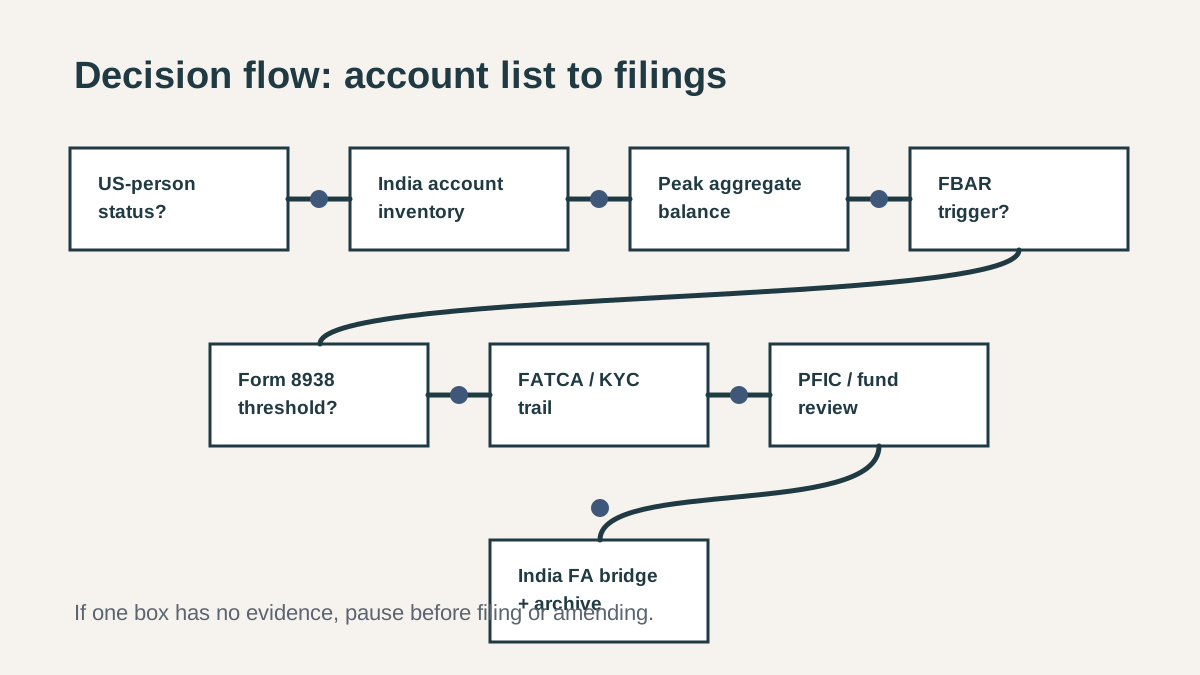
Operating map
Do not quietly backfill years without advice if income was also missed
A late FBAR-only problem, a late Form 8938 problem, and omitted income are not the same risk. If prior years are missing, if Indian interest or fund income was not reported, if PFIC forms may be involved, or if green-card/citizenship status is unclear, get US cross-border tax review before filing a stack of amended or late forms.
Community signal
What to watch in real discussions
Treat repeated complaints as risk signals rather than official advice. This page does not link to community search results.
Interactive checkpoint
Turn this guide into a decision file
0 of 4 checked
Do NRE and NRO accounts count for FBAR after moving back to India?
For a US person, Indian NRE and NRO accounts are foreign financial accounts from the US reporting perspective. You should test whether you had financial interest or signature authority and whether aggregate foreign account value exceeded the FBAR threshold at any time in the calendar year.
Is Form 8938 the same as FBAR?
No. FBAR is FinCEN Form 114 and is filed separately through BSA E-Filing. Form 8938 is attached to the US income tax return when specified foreign financial assets exceed the applicable threshold. The IRS comparison page says Form 8938 does not replace the FBAR obligation.
What is the FBAR threshold for Indian accounts?
The practical threshold is whether aggregate foreign financial accounts exceeded $10,000 at any time in the calendar year. Check all accounts together, not one account at a time, and use highest values instead of only year-end balances.
What Form 8938 threshold applies after moving to India?
It depends on filing status and whether you meet the living-abroad threshold rules. IRS guidance says taxpayers living abroad generally check $200,000/$300,000 thresholds if not filing jointly and $400,000/$600,000 if filing jointly, while US-based thresholds are lower.
Does Indian FATCA reporting by a bank file my US forms?
No. Indian institution FATCA/KYC reporting is institution-level due diligence. It does not file your FBAR, Form 8938, US tax return, India return, or Schedule FA for you.
Do Indian mutual funds create only FBAR/Form 8938 reporting?
Not necessarily. Indian mutual funds and other pooled foreign investment products can create separate US PFIC/Form 8621 questions. Treat FBAR and Form 8938 as the account/asset reporting layer, not the full investment-tax answer.
Does India Schedule FA replace FBAR or Form 8938?
No. Schedule FA is part of the Indian income tax return when Indian residential status and facts require foreign asset reporting. It does not replace US FBAR or Form 8938, and US forms do not replace Indian Schedule FA.
What if I missed FBAR after moving to India?
First separate the facts: whether forms were missed, whether income was missed, how many years are involved, and whether the failure was non-willful or more complex. Do not quietly file late or amended forms without review if income, PFIC, Form 8938, or green-card/citizenship status issues are also involved.
Your tax year is already running.
RNOR status, exit timing, and DTAA benefits all depend on decisions you make before you land. Don't guess.