Family Relocation From the UK to India: The Full Sequence
A UK-to-India family move covered end to end — the Statutory Residence Test and split-year treatment, what happens to workplace and state pensions, ISAs, healthcare,...
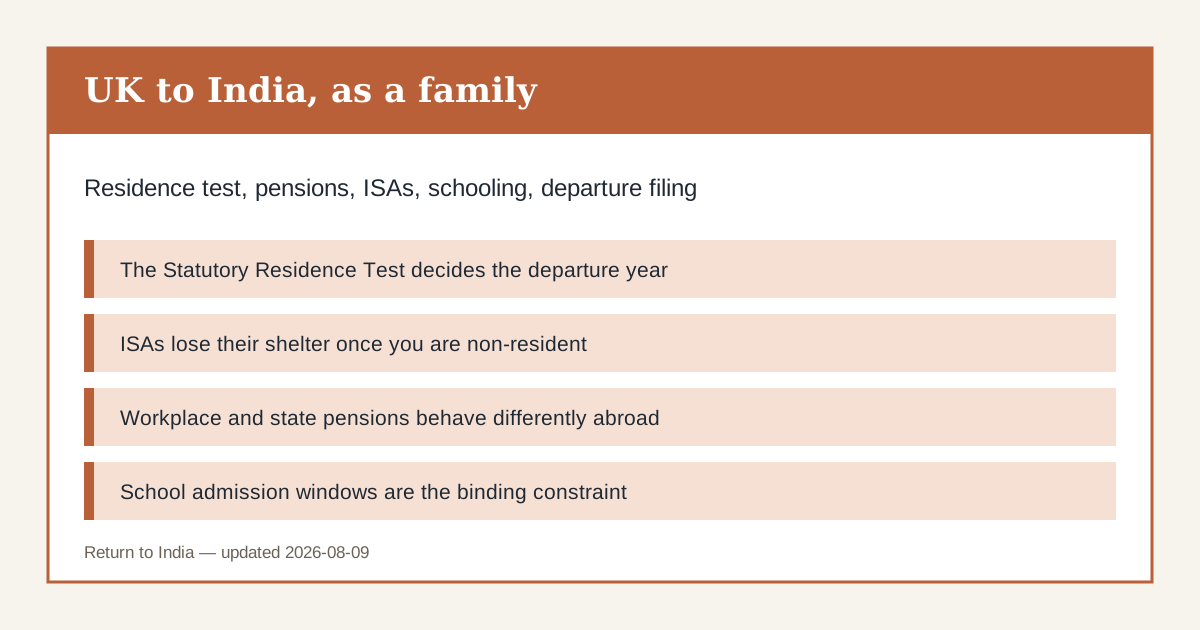
The 60-second version
A UK-to-India family move turns on the Statutory Residence Test and the departure-year filing, then on what happens to pensions and tax-sheltered accounts that lose their shelter once you are no longer UK-resident.
Fast answer: the residence test decides the year, and the year decides the money
A UK-to-India move is dominated by one determination: whether and when you cease to be UK-resident under the Statutory Residence Test. That test is day-count based with a set of tie-breakers, and it decides both what the UK can tax in your departure year and whether split-year treatment applies to divide the year between resident and non-resident parts.
That determination then drives everything financial. Individual Savings Accounts stop accepting new subscriptions once you are no longer UK-resident, and their tax shelter is generally not recognised in India, so holding one after the move can mean paying Indian tax on income that was tax-free where it sits. Workplace pensions can usually be retained, but the access, tax and payment-abroad questions need answering separately. The State Pension has its own rules on payment abroad and on annual increases.
For families, the binding practical constraint is usually schooling rather than tax. Indian school admission windows are fixed and unforgiving, and a family that gets the tax sequencing perfect but misses the admission window for a child's year group has created a much bigger problem than the tax saving is worth. Run both tracks in parallel from about six months out.
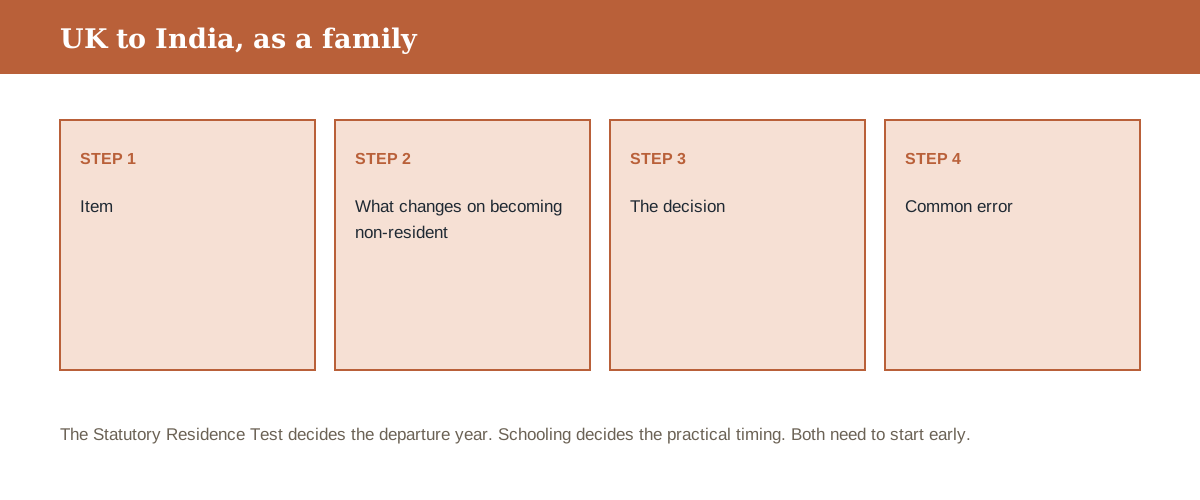
What happens to each UK item
One row per item, one decision each. The ISA and pension rows are where most families need professional input.
| Item | What changes on becoming non-resident | The decision | Common error |
|---|---|---|---|
| Tax residence | Determined by the Statutory Residence Test; split-year treatment may apply | Establish the departure date and whether split-year applies | Assuming residence ends on the day you fly |
| Individual Savings Accounts | No new subscriptions while non-resident; the shelter is not recognised in India | Retain without subscribing, or realise before departure | Continuing to subscribe after ceasing UK residence |
| Workplace pension | Generally retained; access, taxation and payment abroad need separate answers | Confirm scheme rules for overseas members before leaving | Losing contact with the scheme because the address was never updated |
| State Pension | Payable abroad, with specific rules on increases in some countries | Check your contribution record and any voluntary contribution options | Not checking the record until close to retirement age |
| UK property | Rental income and disposals have specific non-resident rules | Decide sell or let, and understand the non-resident obligations | Letting without registering under the non-resident landlord arrangements |
| Bank accounts | Accounts may be restricted or closed for non-residents | Confirm which accounts can continue and update addresses | Losing access because two-factor authentication used a UK number |
| Healthcare | NHS entitlement is residence-based and ends after you leave | Arrange Indian cover to start before UK entitlement ends | Flying with a gap between the two systems |
| Children's schooling | Indian admission windows are fixed by schools | Apply within the window, with transfer documentation ready | Optimising the tax date and missing the admission window |
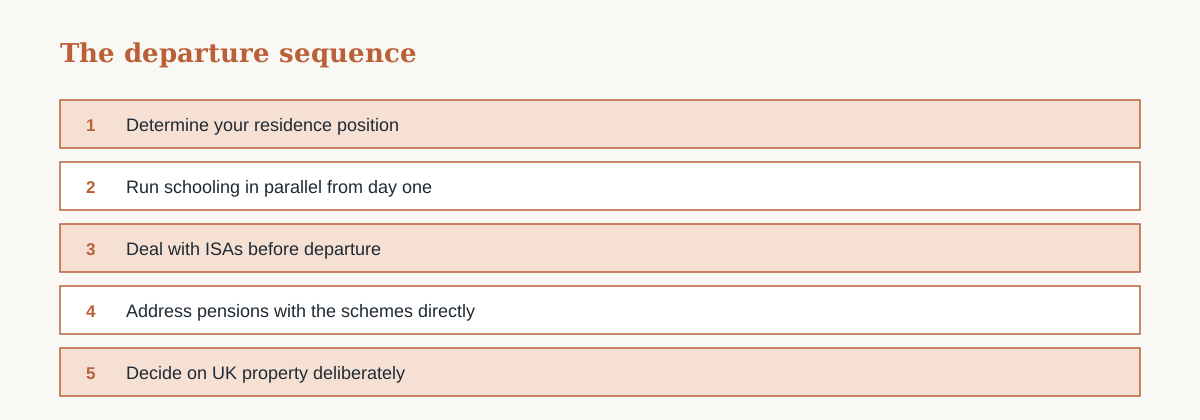
The departure sequence
Start at least six months out. The schooling and pension steps have the longest lead times.
Determine your residence position
Work through the Statutory Residence Test for the departure year, including the ties tests and whether split-year treatment applies. This is the foundation for every other decision.
Run schooling in parallel from day one
Identify target schools in the destination Indian city, confirm the admission window and the transfer documentation required, and apply within the window regardless of where the tax planning has reached.
Deal with ISAs before departure
Decide whether to retain without subscribing or to realise before you cease residence. Holding a UK tax-sheltered account while Indian-resident can mean paying Indian tax on income sheltered in the UK.
Address pensions with the schemes directly
Ask each workplace scheme how overseas members are handled, what payment options exist, and what documentation they need. Separately, check your State Pension record and any voluntary contribution options.
Decide on UK property deliberately
Sell or let. If letting, understand the non-resident landlord obligations and the tax position on rental income and any eventual disposal.
Protect account access before you lose the UK number
Update addresses, change two-factor authentication away from a UK mobile number, and download full statement and tax document histories from every institution.
Sequence the Indian side against your residential status
Compute your Indian residential status for the arrival year, identify RNOR years, and time any large UK asset realisation against that window rather than against convenience.
UK departure checklist
Complete in the final six months. The pension and schooling items should start first.
- Statutory Residence Test worked through for the departure year.
- Split-year treatment position established.
- Departure date fixed and used consistently with every institution.
- Indian school admission window identified and applications submitted.
- Transfer certificates and academic records obtained for each child.
- ISA position decided — retain without subscribing, or realise before departure.
- Each workplace pension scheme contacted about overseas members.
- State Pension record checked and voluntary contribution options considered.
- UK property decision made, with non-resident obligations understood if letting.
- Bank and investment account addresses updated to ones that receive post.
- Two-factor authentication moved off any UK-only mobile number.
- Full statement and tax document histories downloaded from every institution.
- NHS entitlement end date noted and Indian health cover arranged to start earlier.
- Indian residential status computed and RNOR years diarised.
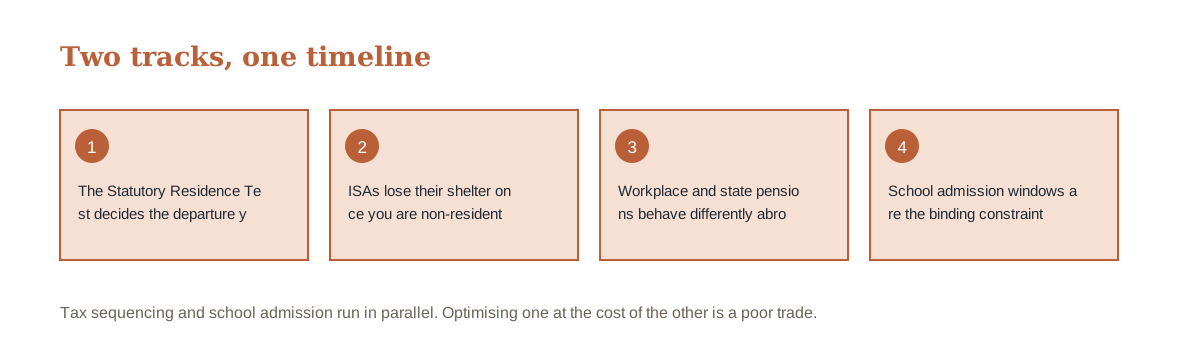
Two tracks, one timeline
Need help with Country Guides?
Share your blocker in one line. Our experts will reply with practical next steps.
Community signal: the ISA question comes up constantly
Unable to embed reddit content. View on reddit
"The recurring question is what happens to an ISA on leaving the UK, and the recurring surprise is that its shelter is not recognised by the destination country."
Read on reddit ->Community signal: school windows drive the timeline
Unable to embed reddit content. View on reddit
"Families consistently report that Indian school admission windows, not tax dates, ended up dictating when they actually moved."
Read on reddit ->UK-to-India family move diagram
Need help with Country Guides?
Share your blocker in one line. Our experts will reply with practical next steps.
An ISA is not tax-free once you are Indian-resident
UK tax-sheltered wrappers are generally not recognised by the Indian tax system. Income and gains inside an ISA can be taxable in India once you are Indian-resident and outside any RNOR shelter, which is a common and expensive surprise for UK families.
The one-sentence answer
A UK-to-India family move turns on the Statutory Residence Test and split-year treatment for the departure year, on deciding what happens to ISAs and pensions before you cease UK residence, and on Indian school admission windows — which usually end up setting the actual move date.
Animated decision map

Need help with Country Guides?
Share your blocker in one line. Our experts will reply with practical next steps.
Interactive checkpoint
Turn this guide into a decision file
0 of 4 checked
How do I know when I stop being UK resident?
Through the Statutory Residence Test, which is day-count based with a series of tie-breaker tests. Whether split-year treatment applies to divide the departure year into resident and non-resident parts is a separate question within the same framework.
What happens to my ISA when I move to India?
You generally cannot make new subscriptions once you are no longer UK-resident. Existing holdings can usually be retained, but the UK tax shelter is not recognised in India, so income and gains may be taxable in India once you are Indian-resident.
Can I keep my UK workplace pension?
Generally yes, but the access rules, taxation and payment-abroad arrangements vary by scheme. Contact each scheme directly, confirm how it handles overseas members, and update your address before you lose your UK correspondence route.
Will I receive the UK State Pension in India?
The State Pension can be paid abroad, but rules on annual increases differ by country. Check your National Insurance record and any voluntary contribution options well before retirement age rather than close to it.
What happens to my NHS entitlement?
NHS entitlement is residence-based and ends when you cease to be ordinarily resident in the UK. Arrange Indian health cover to start before that point so there is no gap.
Should I sell or let my UK property?
Either can be right depending on your plans and finances, but letting as a non-resident brings specific registration and tax obligations. Understand those before letting rather than after the first rent payment.
How do I move my children's schooling?
Identify Indian schools and admission windows early, obtain transfer certificates and academic records, and check whether the curriculum has a natural counterpart in India. Admission windows are fixed and frequently determine the actual move date.
When should I realise UK investments?
Sequence it against both your UK residence position and your Indian residential status. Realising during a year when you are non-resident in the UK and RNOR in India produces a very different outcome from realising after you become Resident and Ordinarily Resident.
What is the most common UK-to-India planning mistake?
Treating tax sequencing and school admission as sequential rather than parallel. Families that optimise the departure date and miss the admission window create a far larger problem than the tax saving is worth.
Your country's rules are the starting point, not the finish line.
Tax exits, pension continuity, banking notifications — the India side has its own rules too. Get both sides clear.