How to Move to India: The Complete Step-by-Step Sequence
A single ordered plan for moving to India — status and paperwork, timing the landing for tax, banking, shipping, housing, schooling, healthcare and the first year of...
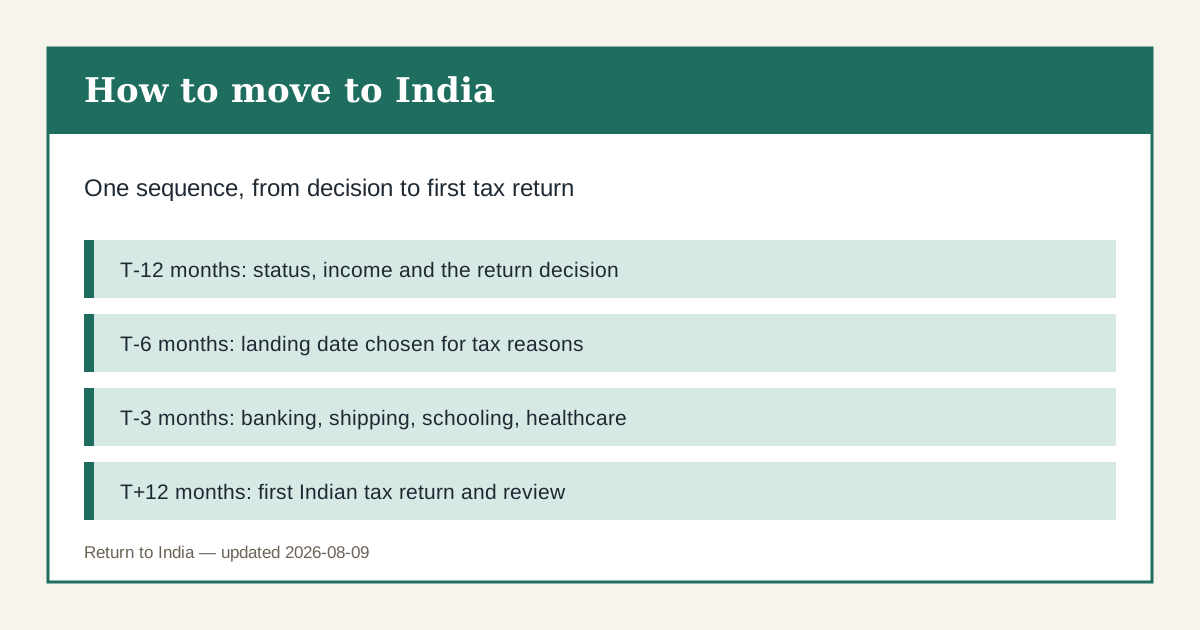
The 60-second version
Moving to India works when it is sequenced. Status decisions first, landing date chosen for tax reasons, banking and shipping in parallel, housing rented before bought, and the first Indian tax return planned from month one rather than month eleven.
Fast answer: the order matters more than the checklist
There are hundreds of moving-to-India checklists and most of them are the same list of tasks in an arbitrary order. The tasks are not the difficult part. The difficulty is that several of them have dependencies, a couple of them have deadlines set by other people, and two of them — the landing date and the status decisions — determine the cost of everything else.
The landing date is the clearest example. Arrive before roughly the start of October in the Indian financial year and you will usually be resident for that year. Arrive later and you may remain non-resident for that year, which effectively extends your RNOR shelter. That single choice can be worth a great deal if you have foreign retirement accounts or investments to unwind, and it is free to make deliberately.
The status decisions are the other pivot. Whether you keep an overseas immigration status, whether you need an OCI card or a visa, and what happens to a pending immigration process are all decisions that constrain the timeline rather than follow it. Make them first, then sequence the rest — banking, shipping, housing, schooling, healthcare — around the dates they produce.
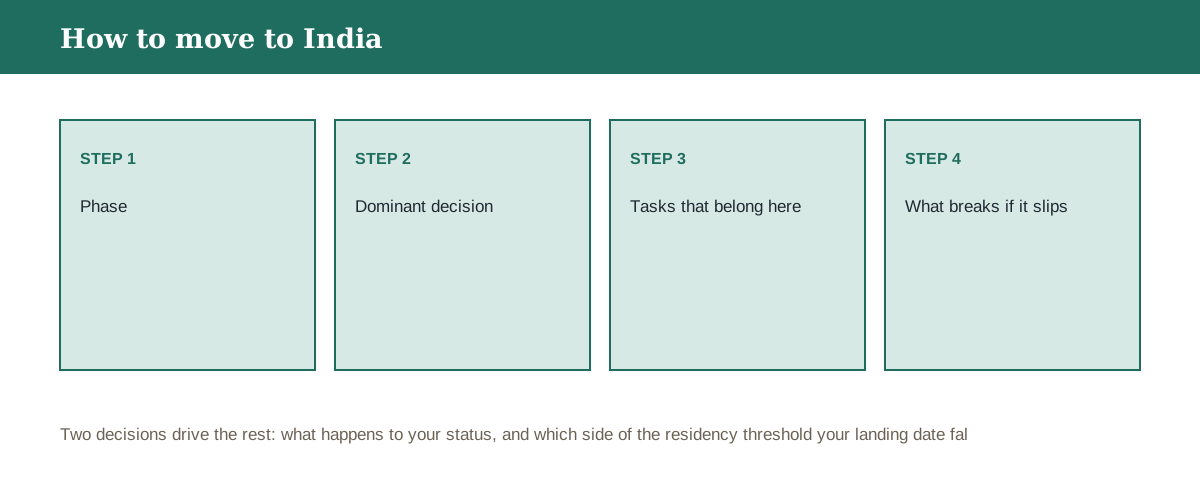
The four phases and what belongs in each
Move each task into the phase where its dependencies are satisfied. Doing things early is not always better — some tasks expire.
| Phase | Dominant decision | Tasks that belong here | What breaks if it slips |
|---|---|---|---|
| T-12 to T-9 months | Are we going, and on what trigger? | Return decision, income plan, family alignment, city shortlist, trial visit | Everything downstream compresses into an unrealistic window |
| T-9 to T-6 months | Status and landing date | Immigration status decisions, OCI or visa, day-count planning, landing date chosen for tax | The RNOR window shrinks, and foreign asset decisions get more expensive |
| T-6 to T-3 months | Money and logistics architecture | Account structure, foreign account clean-up, shipping quotes, school applications, insurance | School admission windows close; insurance underwriting takes longer than expected |
| T-3 months to landing | Execution | Shipping booked, foreign accounts settled, housing rented, healthcare established, documents assembled | Storage charges, temporary housing costs, and arriving without cover |
| Landing to T+3 months | Setup sprint | Bank redesignation, KYC, PAN and Aadhaar, address consistency, utilities, vehicle, school start | Paperwork drags across the whole first year and consumes attention |
| T+3 to T+12 months | Settling and compliance | Social rebuilding, spouse career plan, first Indian tax return, twelve-month review | First filing done badly, and the decision judged during the hardest months |
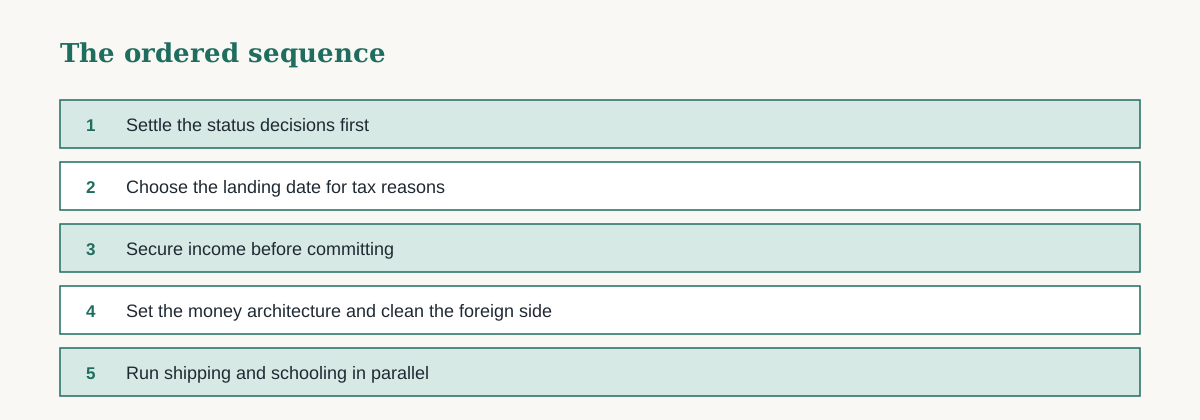
The ordered sequence
Seven steps. Steps one and two are the ones that determine the cost of the rest.
Settle the status decisions first
What happens to your current immigration status, whether a pending process continues, and whether you need an OCI card or a visa. These are constraints on the timeline, not tasks within it.
Choose the landing date for tax reasons
Work out your Indian residential status for each possible landing window using Section 6. A landing after roughly the start of October often keeps that financial year non-resident, extending the RNOR shelter.
Secure income before committing
An offer, a remote arrangement, a consulting pipeline or a defined runway in months. Housing, schooling and shipping decisions all depend on this being real.
Set the money architecture and clean the foreign side
Account structure in India, statements and tax documents downloaded from every foreign institution, addresses updated, and a plan for which foreign accounts close and when.
Run shipping and schooling in parallel
Both have external deadlines. School admission windows are fixed by the school, and shipping timelines are fixed by sailings. Start both at the same time, around six months out.
Rent before you buy, and establish healthcare before you need it
Twelve months of renting in the target neighbourhood, plus a named physician, a named hospital and a confirmed insurance policy in place before landing.
Plan the first Indian tax return from month one
Compute your residential status, identify the ITR form, note whether foreign asset disclosure applies, and keep the records from day one rather than reconstructing them in July.
Master move checklist
Ordered by dependency. Do not start an item until the one it depends on is resolved.
- Immigration status decisions made and documented.
- Any pending immigration process discussed with a qualified adviser.
- OCI card or visa position confirmed for every family member.
- Landing date chosen after computing residential status for each option.
- RNOR years computed and written down with their closing date.
- Income secured, or a runway defined in months with a written figure.
- Indian account structure decided, including whether an RFC account is needed.
- All foreign account statements and tax documents downloaded.
- Foreign account addresses updated to ones that will still receive post.
- Shipping quotes obtained with itemised Indian destination charges.
- School applications submitted within the admission window.
- Health insurance confirmed as issued for every family member.
- Named physician and hospital identified in the destination city.
- Rental agreement in place rather than a purchase.
- Bank redesignation and KYC completed in the first month.
- PAN, Aadhaar where applicable, and an Indian mobile number linked consistently.
- First Indian tax return planned, with the ITR form identified.
- Twelve-month review criteria written and agreed.
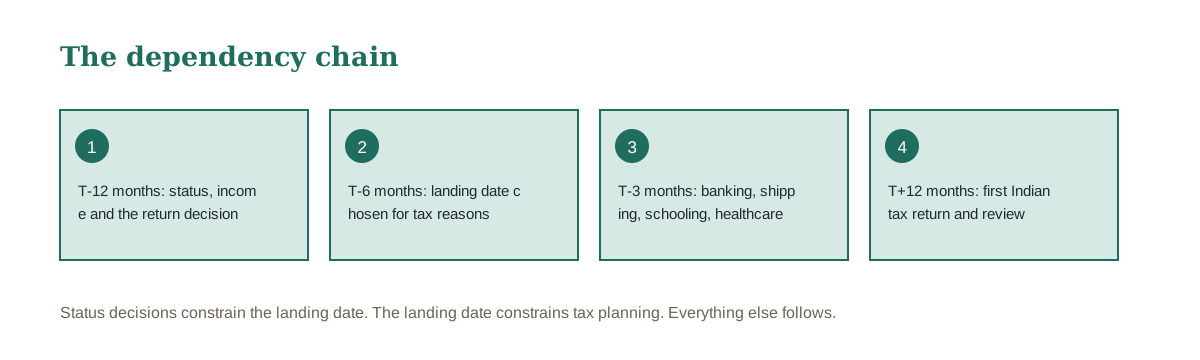
The dependency chain
Need help with Move Planning?
Share your blocker in one line. Our experts will reply with practical next steps.
Community signal: people start with shipping and end with tax
Unable to embed reddit content. View on reddit
"Most move plans begin with logistics and reach the residency and tax questions far too late, by which point the landing date is already fixed."
Read on reddit ->Community signal: the landing date is a free lever
Unable to embed reddit content. View on reddit
"Choosing the landing month deliberately costs nothing and can extend the RNOR shelter, but only if the calculation is done before flights are booked."
Read on reddit ->Move sequence diagram
Need help with Move Planning?
Share your blocker in one line. Our experts will reply with practical next steps.
Do not book flights before computing residential status
The landing date determines your Indian residential status for that financial year, which determines whether foreign income is inside or outside the Indian tax net. Book the flight after the calculation, not before.
The one-sentence answer
Moving to India works when it is sequenced — settle immigration status first, choose the landing date after computing your residential status, secure income, set the money architecture, run shipping and schooling in parallel, rent rather than buy, and plan the first Indian tax return from month one.
Animated decision map
Need help with Move Planning?
Share your blocker in one line. Our experts will reply with practical next steps.
Interactive checkpoint
Turn this guide into a decision file
0 of 4 checked
How do I move to India step by step?
Settle immigration status decisions first, choose the landing date after computing your Indian residential status, secure income, set the account structure and clean up foreign accounts, run shipping and schooling in parallel, rent before buying, and plan the first Indian tax return from month one.
When should I start planning a move to India?
Around twelve months out for the decision and income planning, nine months out for status and landing-date decisions, and six months out for shipping and school applications, which both have externally fixed deadlines.
Does the month I land in India matter?
Considerably. Your Indian residential status for the financial year depends on days of presence. Landing after roughly the start of October often keeps that year non-resident, which can extend the RNOR window during which foreign income stays outside the Indian tax net.
Can I move to India if I am a foreign citizen?
Entry and stay depend on your immigration position — an OCI card, a visa of the appropriate category, or another eligible status. Confirm the requirement for each family member individually through the official OCI and visa channels.
What should I do before leaving my current country?
Download every statement and tax document, update addresses on all accounts, resolve two-factor authentication that depends on a local phone number, deal with the departure-year tax filing, and settle whether foreign accounts close or continue.
Should I ship my belongings or rebuy in India?
Decide item by item by comparing freight cost for the packed volume, including Indian destination charges, against local replacement prices. Bulky low-value items usually lose that comparison.
Should I buy a home immediately?
Usually not. Renting for twelve months in the target neighbourhood reveals commute, water, power, noise and school access in ways no visit can, and buying early is one of the most commonly reported regrets.
When is my first Indian tax return due?
It depends on the financial year in which you become resident and the applicable due date for your ITR form. Compute your residential status early, identify the form, and keep records from the day you land rather than reconstructing them later.
What is the most common sequencing mistake?
Booking flights and shipping before computing residential status. Once the landing date is fixed, the tax consequences for that financial year are fixed with it, and the RNOR planning opportunity may already be gone.
The plan is only as good as the sequence.
Tax, banking, schools, shipping — they all have dependencies. A wrong order costs months and lakhs. Get it right.