Canada-India Social Security Agreement: The OAS Residence Trap
How the Canada-India social security agreement works for people who contributed in both countries, how CPP and OAS behave once you live in India, and the...
The 60-second version
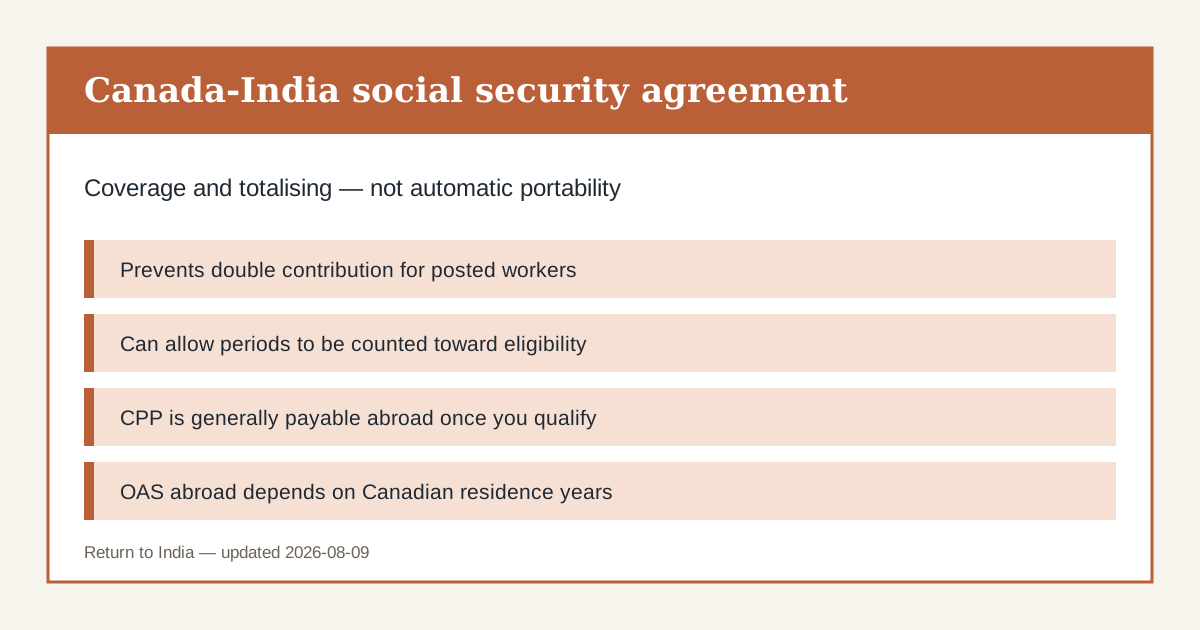
The agreement helps with coverage and, in defined situations, with counting periods across both systems. It does not make every benefit automatically portable. CPP generally travels; OAS depends on a Canadian residence-year condition that catches many returnees.
Fast answer: the agreement does two jobs, and portability is not one of them
Social security agreements between countries typically do two things. First, they stop people being required to contribute to two systems at once for the same work — the coverage function, which mostly matters to posted workers and their employers. Second, they allow periods of contribution or residence in one country to be counted toward the qualifying conditions of the other — the totalising function, which matters to people with a broken contribution record in either country.
What such agreements generally do not do is make every benefit freely payable anywhere. Portability is a separate question governed by each benefit's own rules. That distinction is exactly where Canada-to-India returnees get caught, because Canada's two main public pensions behave differently.
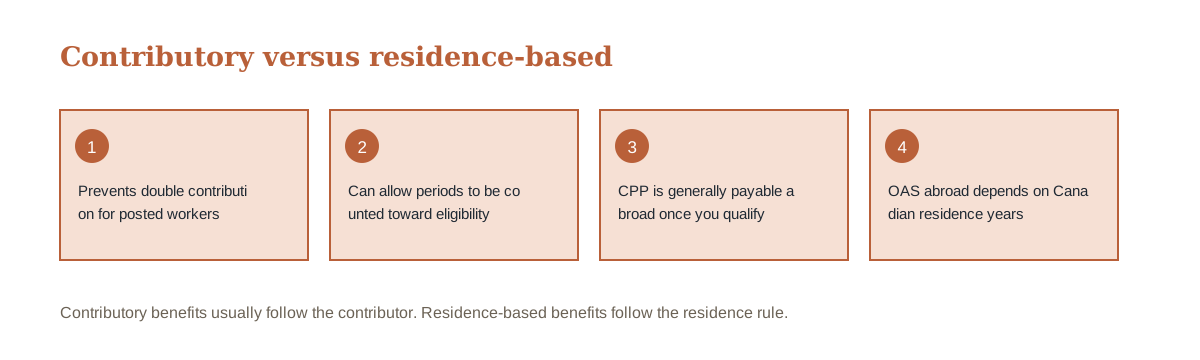
Canada Pension Plan retirement benefits are contributory and generally payable to eligible recipients living outside Canada. Old Age Security is residence-based, and payment outside Canada depends on meeting a Canadian residence-year condition. Someone who spent a decade in Canada, contributed to CPP throughout, and assumes both pensions will follow them to India is often right about one and wrong about the other.
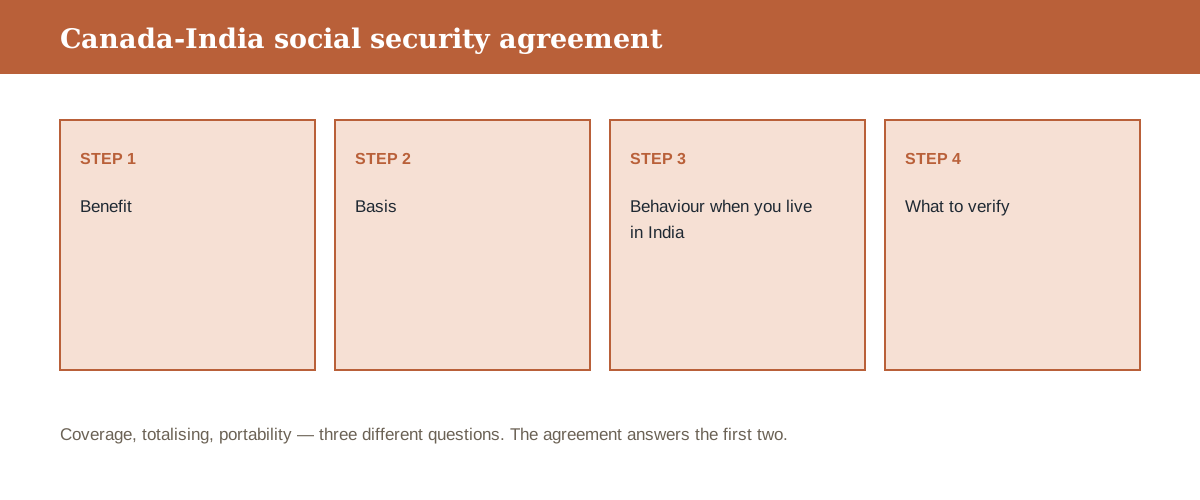
How each benefit behaves once you live in India
Check your own record against each row. The residence-year count is the one worth verifying before you commit to a move date.
| Benefit | Basis | Behaviour when you live in India | What to verify | Where it is decided |
|---|---|---|---|---|
| Canada Pension Plan retirement pension | Contributory — based on your CPP contributions | Generally payable abroad once you qualify | Payment destination, address, currency and any withholding | Service Canada |
| Old Age Security | Residence-based — years of Canadian residence after age 18 | Payable abroad only where the residence-year condition is met | Your exact count of Canadian residence years | Service Canada |
| Guaranteed Income Supplement | Income-tested supplement to OAS | Typically stops after a defined absence from Canada | Whether you are relying on it in your retirement budget | Service Canada |
| CPP disability and survivor benefits | Contributory, condition-specific | Rules differ by benefit; not all behave like the retirement pension | The specific benefit's own portability rule | Service Canada |
| Indian EPF and EPS | Contributory, Indian employment | Continues under Indian rules | Whether a certificate of coverage applies to any Canadian posting | EPFO |
| Withholding on Canadian payments | Tax rule, not a pension rule | Non-resident withholding may apply to Canadian-source payments | Whether treaty relief applies and what documentation it needs | Canada Revenue Agency |
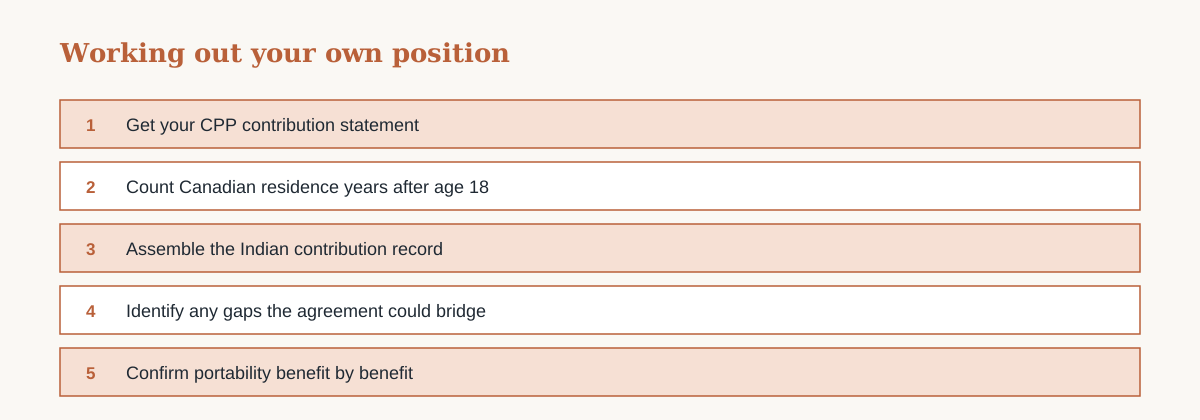
Working out your own position
This is a records exercise. Everything below can be established from statements you can request now.
Get your CPP contribution statement
Request your statement of contributions so you know the actual contributory record rather than an estimate. It is the input to every CPP calculation.
Count Canadian residence years after age 18
This is the OAS variable. Count carefully, because it determines both the benefit amount and whether it is payable outside Canada at all.
Assemble the Indian contribution record
EPF and EPS records for any Indian employment. If you were ever posted between the two countries, check whether a certificate of coverage was issued.
Identify any gaps the agreement could bridge
Totalising matters when you fall short of a qualifying threshold in one country. If you comfortably meet the thresholds in both, the agreement changes little for you.
Confirm portability benefit by benefit
Do not generalise from CPP to OAS or from either to income-tested supplements. Ask about the specific benefit you expect to receive.
Set the payment mechanics before you move
Destination country, receiving account, currency and address. Payments suspended for a stale address are the most common and most avoidable problem.
Plan the Indian tax treatment
Foreign pension income interacts with your Indian residential status. During RNOR years the treatment can differ from Resident and Ordinarily Resident years, and treaty relief needs documentation.
Pension portability file
Assemble this before you fix the move date — some items take weeks to obtain.
- CPP statement of contributions requested and saved.
- Canadian residence years after age 18 counted and documented.
- OAS eligibility and portability confirmed in writing where possible.
- Any reliance on income-tested supplements identified and stress-tested.
- Indian EPF and EPS records retrieved.
- Certificates of coverage located for any posting between the countries.
- Receiving bank account in India confirmed for foreign pension credits.
- Payment currency and any conversion charges understood.
- Overseas address registered with Service Canada.
- Non-resident withholding position and any treaty relief documented.
- Indian tax treatment mapped against expected residential status.
- A single file holding every reference number and correspondence.
Contributory versus residence-based
Need help with Country Guides?
Share your blocker in one line. Our experts will reply with practical next steps.
Community signal: the OAS residence rule surprises people
Unable to embed reddit content. View on reddit
"The residence-year condition is the single most misunderstood element for people planning to draw Canadian pensions from another country."
Read on reddit ->Search signal: 'agreement' is read as 'portability'
"Public answers frequently conflate the agreement with automatic benefit portability. The agreement's function is coverage and totalising, which is narrower."
Read on quora ->Agreement and portability diagram
Need help with Country Guides?
Share your blocker in one line. Our experts will reply with practical next steps.
Do not budget retirement on assumed OAS
Building an Indian retirement budget that assumes Old Age Security will arrive every month, without first verifying the Canadian residence-year count, is a serious planning risk. Verify the entitlement in writing before the number goes into a plan.
The one-sentence answer
The Canada-India social security agreement addresses double contribution and, in defined cases, allows periods to be counted across systems — but portability is decided benefit by benefit, and Old Age Security payment abroad depends on a Canadian residence-year condition that CPP does not share.
Animated decision map
Need help with Country Guides?
Share your blocker in one line. Our experts will reply with practical next steps.
Interactive checkpoint
Turn this guide into a decision file
0 of 4 checked
What does the Canada-India social security agreement actually do?
Broadly two things: it prevents double social security contribution for workers posted between the countries, and it can allow periods in one country to count toward the qualifying conditions of the other. It does not automatically make every benefit payable anywhere.
Will I receive CPP if I live in India?
Canada Pension Plan retirement benefits are generally payable to eligible recipients living outside Canada. Confirm your entitlement and update the payment destination and address with Service Canada.
Will I receive Old Age Security in India?
OAS payment outside Canada depends on meeting a Canadian residence-year condition. Unlike CPP, it does not follow the contributor automatically. Count your Canadian residence years after age 18 and verify the position before relying on it.
How many years of Canadian residence do I need for OAS abroad?
There is a published residence-year threshold for receiving OAS outside Canada. Because the exact rule and any exceptions matter to individual cases, verify your own count against the current Service Canada guidance rather than a general figure.
What is a certificate of coverage?
It is the document issued under a social security agreement that evidences continued coverage in the sending country during a posting, so the worker is not required to contribute to both systems for the same period.
Does the agreement help if I only worked in Canada?
Less than you might expect. Totalising helps people with split records who fall short of a qualifying threshold in one country. If your Canadian record already meets the thresholds, the agreement's totalising function adds little.
Will Canada withhold tax on pension payments sent to India?
Canadian-source payments to non-residents can attract withholding. Whether a reduced treaty rate applies, and what documentation is required to obtain it, should be confirmed with the payer and the Canada Revenue Agency.
How is a Canadian pension taxed in India?
It depends on your Indian residential status for the year. During RNOR years foreign income is generally outside the Indian net, while Resident and Ordinarily Resident years bring worldwide income in. Treaty relief requires the prescribed Indian documentation.
What is the most common mistake with Canadian pensions after moving?
Not updating the payment address and destination account, which causes payments to be suspended. The second most common is budgeting for OAS abroad without first verifying the residence-year condition.
Your country's rules are the starting point, not the finish line.
Tax exits, pension continuity, banking notifications — the India side has its own rules too. Get both sides clear.