The 60-second version
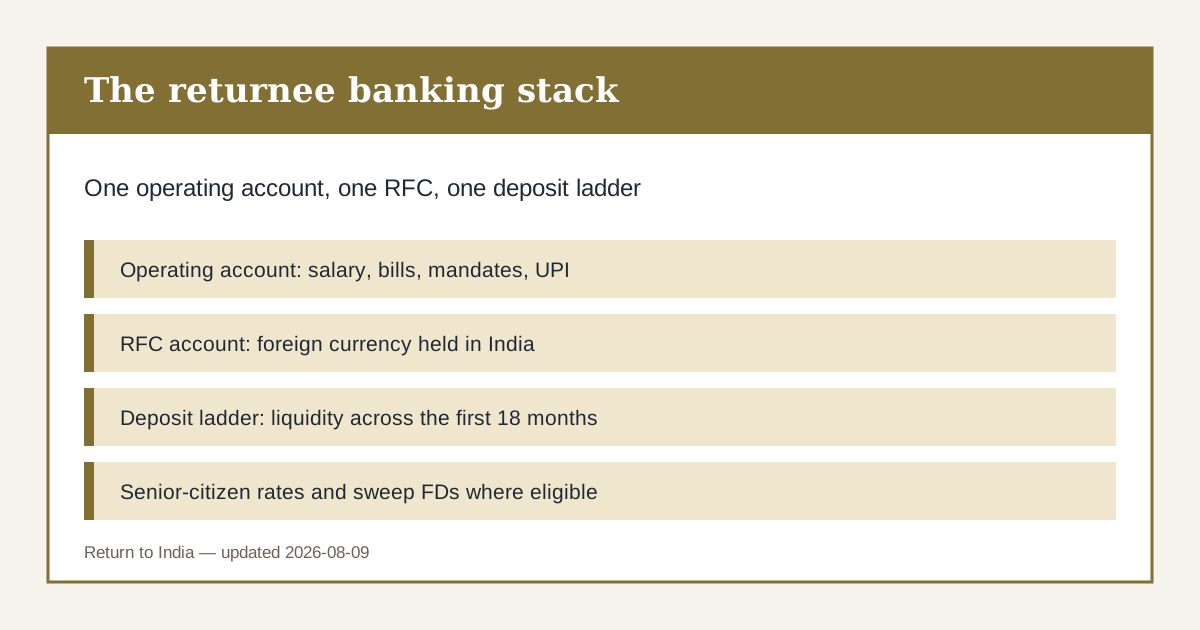
The best account for a returned NRI is rarely a single product. It is a stack: one operating resident savings account, one RFC account if foreign currency remains, and a fixed deposit ladder sized around the first eighteen months of Indian expenses.
Fast answer: stop looking for one best account
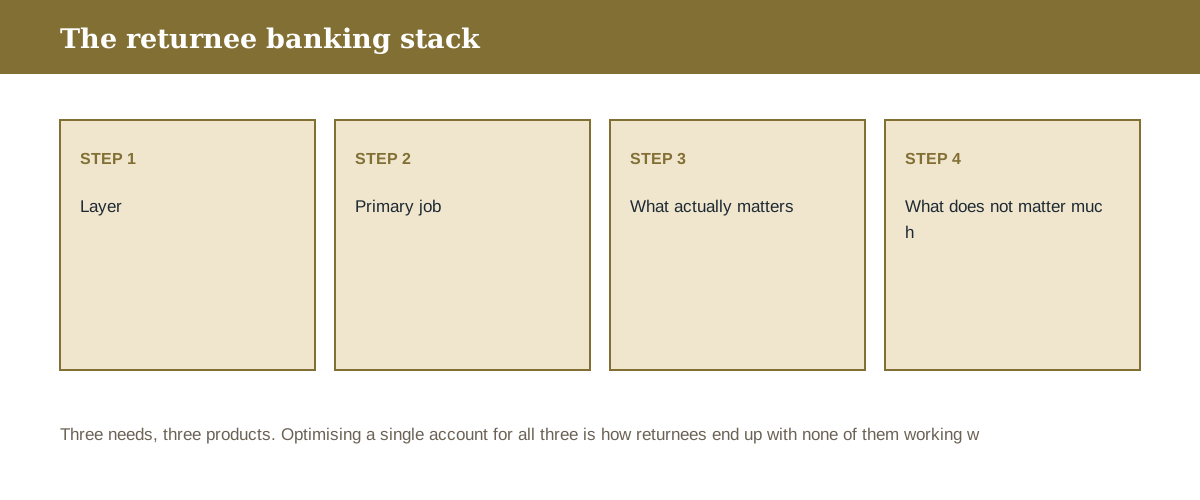
The question 'which is the best bank account for a returned NRI' assumes there is a single product that solves the problem. There is not, because a returnee has at least three distinct banking needs that no single account serves well: daily operation in rupees, holding residual foreign currency without forced conversion, and parking a relocation cash buffer at a decent rate with predictable access.
The daily operating account should be chosen for boring reasons — branch presence near where you will actually live, a working digital app with sensible transaction limits, clean UPI and mandate handling, and a relationship manager who can escalate. Interest rate on the savings balance is the least important criterion, because you should not be holding a large balance there anyway.
The Resident Foreign Currency account is the piece most returnees discover too late. It lets a person who has returned to India hold eligible foreign currency in India rather than converting everything to rupees on arrival. If you have any reason to expect future foreign expenses — children studying abroad, property abroad, planned travel — opening the RFC account before you force-convert is worth more than half a percentage point on a deposit rate.
What to optimise for, layer by layer
Use this to score shortlisted banks. Weight the criteria by which layer you are choosing for.
| Layer | Primary job | What actually matters | What does not matter much | Common mistake |
|---|---|---|---|---|
| Operating resident savings account | Salary credit, bills, mandates, cards, UPI | Branch near your actual address, app quality, transaction limits, escalation path | Headline savings interest rate | Keeping a large idle balance in a low-yield savings account |
| Resident Foreign Currency account | Hold eligible foreign currency in India without converting | Whether the bank offers it, currencies supported, minimum balance, outward transfer process | Marketing branding | Force-converting everything to rupees at landing and regretting it |
| Fixed deposit ladder | Relocation buffer with predictable access | Rate by tenure, premature-withdrawal terms, sweep facility, senior-citizen premium | Bank size or prestige | One large deposit with a single maturity date and a stiff break penalty |
| Sweep-in or auto-sweep facility | Earn deposit rates on idle operating balances | Sweep threshold, break order, whether partial breaks are allowed | Whether the feature has a catchy product name | Assuming the sweep breaks in the most favourable order — often it does not |
| Senior-citizen accounts | Higher deposit rates and softer service for a parent or for yourself if eligible | Age proof, rate premium, whether the premium applies to all tenures | Branch decor | Not asking for the premium; it is often not applied automatically |
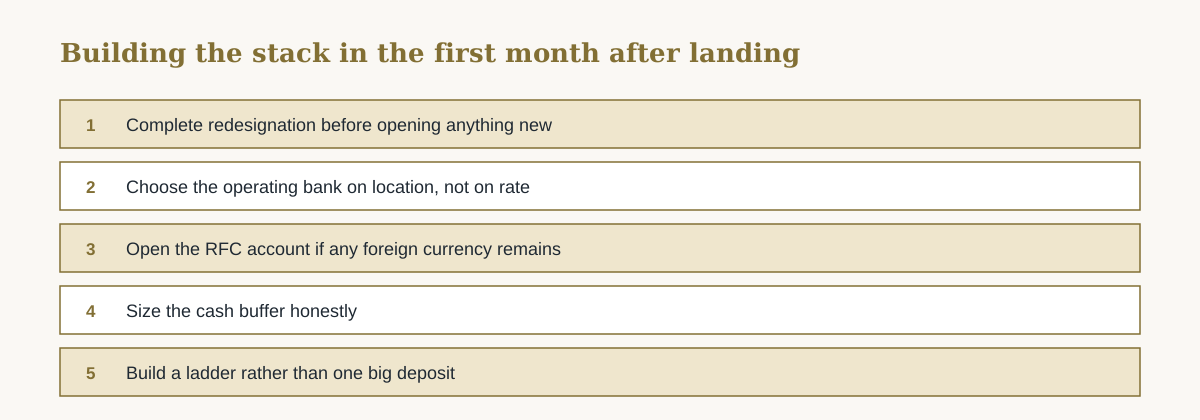
Building the stack in the first month after landing
This sequence assumes redesignation is either done or in progress.
Complete redesignation before opening anything new
Your existing NRE and NRO accounts must be converted. Opening a fresh resident account without dealing with the old ones leaves non-resident accounts running after your status changed.
Choose the operating bank on location, not on rate
Pick where you will actually live for the next two years. Physical branch access still matters in India for disputes, large transfers, locker access and paperwork that the app cannot do.
Open the RFC account if any foreign currency remains
Do this before converting balances. Once the money is rupees, putting it back into foreign currency means buying it again with the associated spread and annual limits.
Size the cash buffer honestly
Deposits, school fees, brokerage, furniture, a car, medical costs and an income gap. Most returnee budgets underestimate the first year by a wide margin.
Build a ladder rather than one big deposit
Split the buffer across staggered maturities so you can access part of it without breaking the whole. Match the maturities to known expense dates.
Turn on sweep only after reading the break order
Auto-sweep is useful, but ask specifically how the bank breaks deposits when the operating account is short — last-in-first-out or otherwise. It changes the effective yield.
Fix the KYC trail on day one
PAN, Aadhaar where applicable, Indian mobile number, and a consistent address across every account. Mismatched records cause frozen transactions at the worst moment.
Account-stack checklist for the first ninety days
If all of these are true at day ninety, the banking side of the move is genuinely done.
- All NRE and NRO accounts redesignated, with the bank's written acknowledgement saved.
- One primary operating resident account with a branch near your actual address.
- An RFC account opened if any foreign currency remains, before conversion.
- PAN linked and verified on every account.
- An Indian mobile number registered for one-time passwords on every account.
- Address consistent across bank, demat, mutual fund and insurance records.
- Cash buffer sized against a written first-year budget, not a guess.
- Deposits laddered across at least three maturity dates.
- Premature-withdrawal terms confirmed in writing for each deposit.
- Sweep break order confirmed in writing before enabling the facility.
- Nominations registered and current on every account and deposit.
- Senior-citizen rate premium claimed where anyone in the household is eligible.
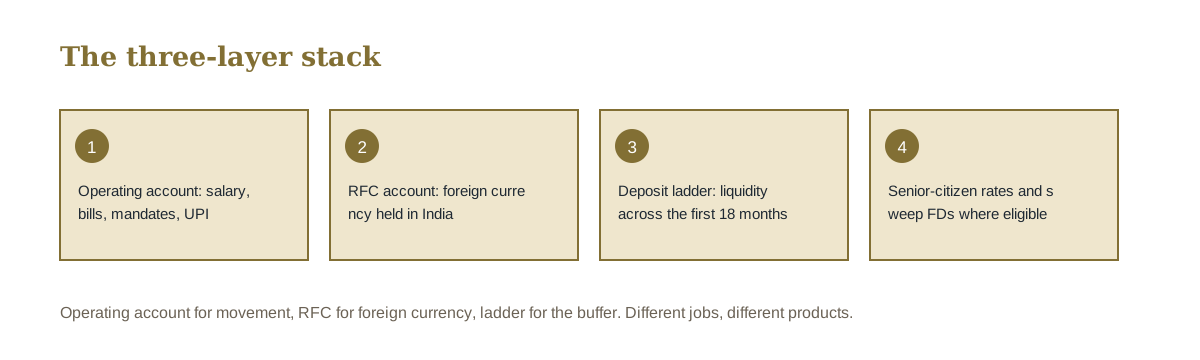
The three-layer stack
Need help with Banking?
Share your blocker in one line. Our experts will reply with practical next steps.
Community signal: everyone force-converts and regrets it
Unable to embed reddit content. View on reddit
"The most repeated regret in return-planning threads is converting the entire foreign balance to rupees on landing without opening an RFC account first."
Read on reddit ->Search signal: 'best account' really means 'least friction'
"Returnees asking for the best account are usually optimising for fewer branch visits and fewer blocked transactions, not for a marginally higher interest rate."
Read on quora ->Returnee banking stack diagram
Need help with Banking?
Share your blocker in one line. Our experts will reply with practical next steps.
Do not convert everything to rupees on day one
Converting your full foreign balance at landing locks in one day's exchange rate for money you may need in foreign currency later. Open the RFC account first and convert deliberately, in tranches, against actual rupee needs.
The one-sentence answer
There is no single best account for a returned NRI — build a stack of one well-located operating resident account, an RFC account opened before you convert any foreign currency, and a laddered deposit buffer sized against a written first-year budget.
Animated decision map

Need help with Banking?
Share your blocker in one line. Our experts will reply with practical next steps.
Interactive checkpoint
Turn this guide into a decision file
0 of 4 checked
Which bank account should I open after returning to India?
Choose your primary operating account on branch proximity to where you will live, app quality and transaction limits rather than on the savings interest rate. Then add an RFC account if you still hold foreign currency, and a laddered deposit for the cash buffer.
What is an RFC account and do I need one?
A Resident Foreign Currency account lets someone who has returned to India hold eligible foreign currency in India without converting to rupees. It is worth opening if you expect any future foreign-currency expenses such as overseas education, travel or property costs.
Can I keep my NRE account after returning?
Not in NRE form. On becoming a person resident in India, the account is redesignated as a resident account or the balance is moved to an RFC account. Continuing to run it as an NRE account is a compliance breach.
How much should I keep in a fixed deposit after moving back?
Enough to cover a realistic first-year budget including rental deposits, school fees, furnishing, a vehicle, medical costs and any income gap. Ladder it across several maturities rather than locking it in one deposit.
Is fixed deposit interest taxable after I return?
Yes. Interest on resident deposits is taxable and tax is deducted at source above the applicable threshold. The exemption that applied to NRE interest ends when your status changes.
Can I claim senior-citizen deposit rates?
If you or the account holder meet the bank's age criterion, a rate premium usually applies. It is not always applied automatically on redesignated accounts, so ask for it in writing and check the first interest credit.
Should I use an auto-sweep facility?
It can be useful for idle operating balances, but ask the bank exactly how deposits are broken when the account is short. An unfavourable break order can cost more in lost interest than the sweep earns.
Do I need more than one bank?
Many returnees keep two: one for daily operation and one holding the deposit buffer and RFC balance. It adds a little admin but provides a fallback if one bank freezes access during a KYC update.
What KYC will the bank ask for after I return?
Typically proof of the new Indian address, updated identity documents, PAN, and an Indian mobile number for one-time passwords. Keep the address identical across bank, demat, mutual fund and insurance records to avoid mismatches.
Your NRE account redesignation has a deadline.
Banks don't remind you. You need the right account stack before salary, rent, and EMIs start moving. Get the exact sequence.