US Estate Tax for NRIs Returning to India: 2026 Checklist
US estate tax exposure before you return: stocks, brokerage, property, 401(k)/IRA, beneficiaries, domicile, and India-side planning.
The 60-second version
Moving back to India does not automatically remove US estate tax questions. The risk starts with situs, domicile, ownership, treaty position, and beneficiary records.
Fast answer
If a non-US domiciled person dies holding US-situs assets, US estate tax can become relevant at much lower US gross-asset levels than many families expect. List US stocks, brokerage, real estate, retirement accounts, insurance ownership, and beneficiary structure before assuming the issue is only income tax.
Most return-to-India tax pages focus on income tax, RNOR, and Schedule FA. This adds the estate-tax layer because a family can be income-tax compliant and still leave survivors with a cross-border estate problem.
Decision table
Start with the decision that can create rework, not with the most familiar option.
| Situation | Better default | Verify before committing |
|---|---|---|
| US stocks in brokerage | Review situs exposure | Check ownership, domicile, treaty relevance, and beneficiaries. |
| US real estate | Get specialist review | Property location, debt, ownership, and liquidity matter. |
| 401(k), IRA, Roth IRA | Separate income and estate analysis | Check beneficiary designations and distribution rules. |
Execution sequence
Run the work in this order so the page answers real search intent instead of repeating generic advice.
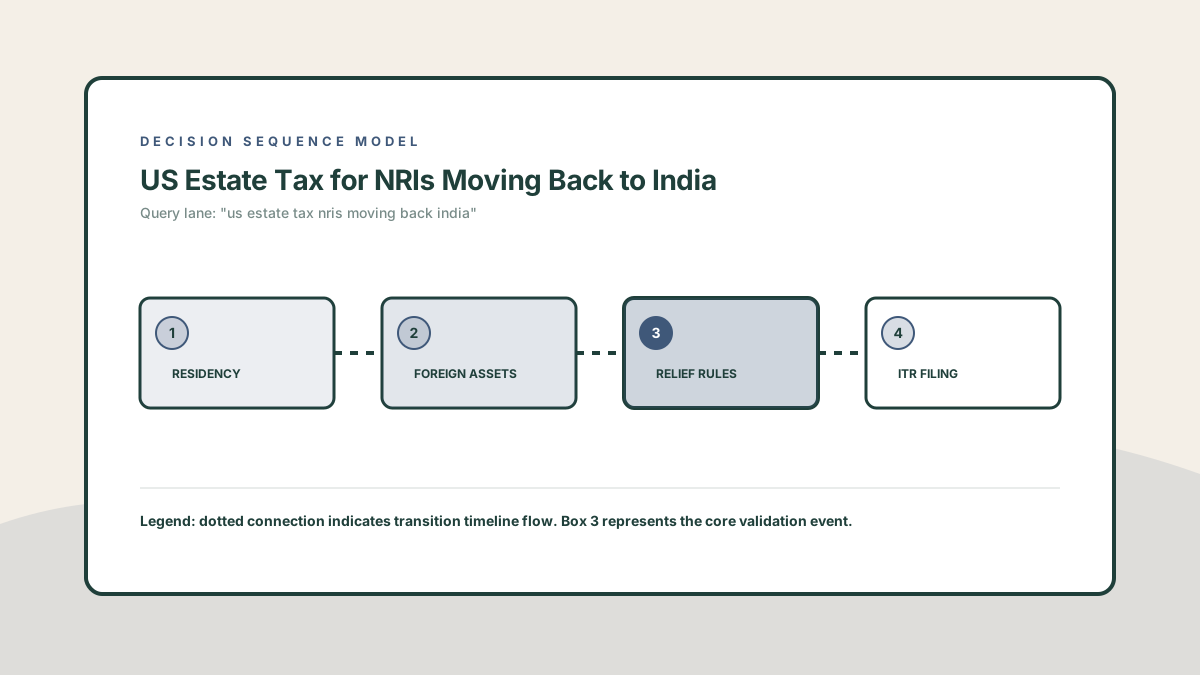
Inventory US-linked assets
List type, custodian, ownership, beneficiary, value, cost basis, and access process.
Separate income and estate tax
A good income-tax decision may not solve estate exposure.
Check domicile facts
Domicile is not the same as immigration status or Indian tax residency.
Update survivor access
Outdated beneficiaries can cause more damage than the tax rule itself.
Pre-commit checklist
Do not treat the decision as complete until these checks are written down.
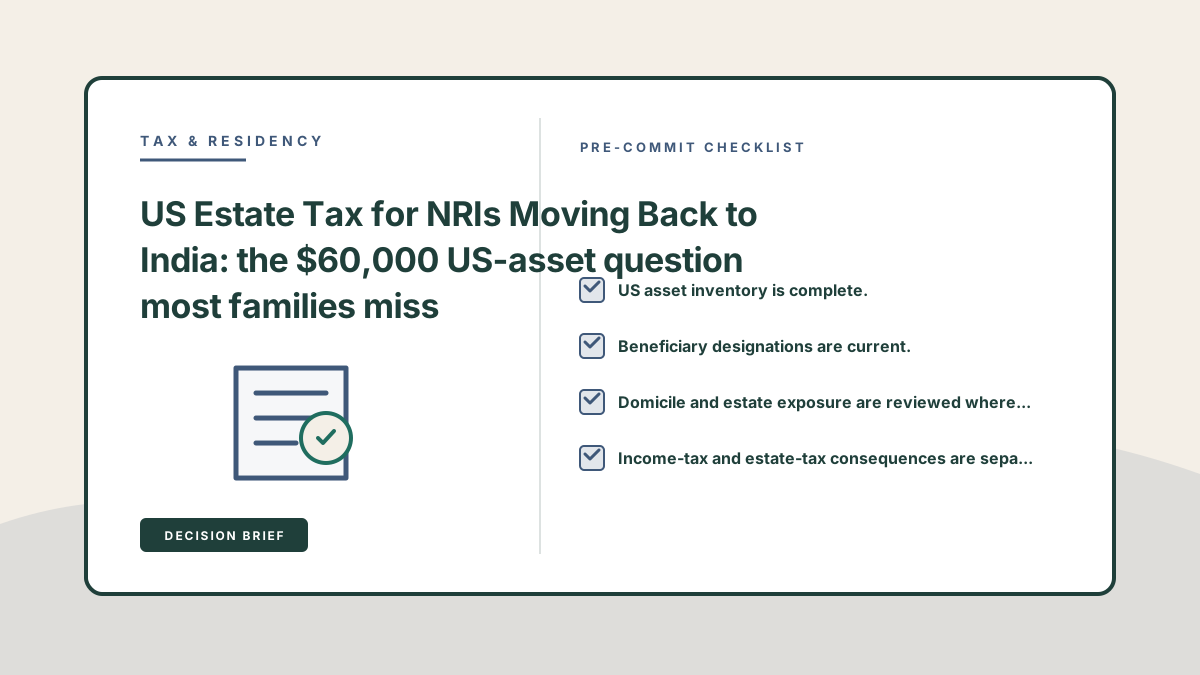
- US asset inventory is complete.
- Beneficiary designations are current.
- Domicile and estate exposure are reviewed where material.
- Income-tax and estate-tax consequences are separated.
- Executor access is realistic from India.
Animated worksheet
Need help with Tax & Residency?
Share your blocker in one line. Our experts will reply with practical next steps.
Workflow map
What makes this page different
Estate planning is hardest when the family is already handling death, banks, foreign custodians, and missing documents. Build the file while everyone can still answer questions.
Animated decision map

Community signal
What to watch in real discussions
Treat repeated complaints as risk signals rather than official advice. This page does not link to community search results.
Interactive checkpoint
Turn this guide into a decision file
0 of 4 checked
Can NRIs face US estate tax after moving back to India?
Yes, depending on domicile and US-situs assets such as US stocks, US property, and some account structures.
Is US estate tax the same as capital gains tax?
No. Estate tax is a transfer tax at death; capital gains tax is an income-tax issue when assets are sold.
Does RNOR status solve US estate tax exposure?
No. RNOR is an Indian income-tax residential status and does not decide US estate-tax exposure.
Your tax year is already running.
RNOR status, exit timing, and DTAA benefits all depend on decisions you make before you land. Don't guess.