RNOR Status: How Many Years You Get, and Who Qualifies
How long RNOR lasts depends on your landing month and your ten-year day count, not on a fixed rule. Work through the Section 6(6) eligibility test, the two-year...
The 60-second version
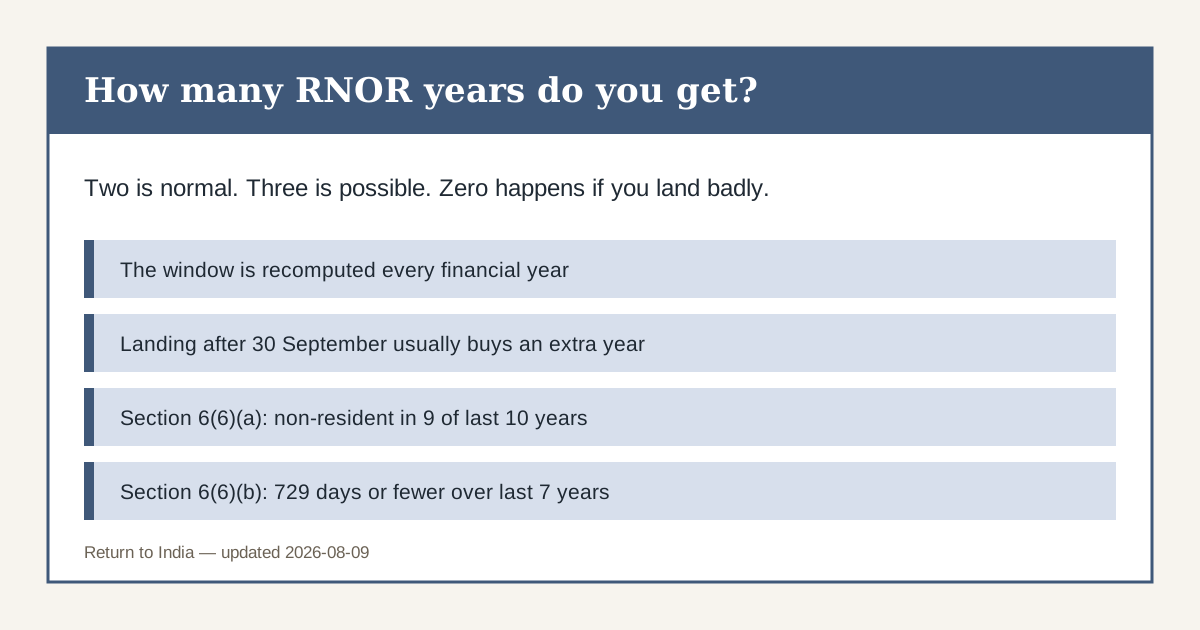
Most returnees get two RNOR years; some landing patterns produce three. The number comes from Section 6(6)(a) and 6(6)(b) applied year by year, so the answer is a calculation, not a constant.
Fast answer: two years is typical, three is a landing-date reward
There is no clause in the Income Tax Act that says 'RNOR lasts two years'. What exists is a test that gets re-run every financial year. For most people who return after a long stint abroad, the test keeps returning 'Not Ordinarily Resident' for two financial years and then stops. That is where the folk rule comes from.
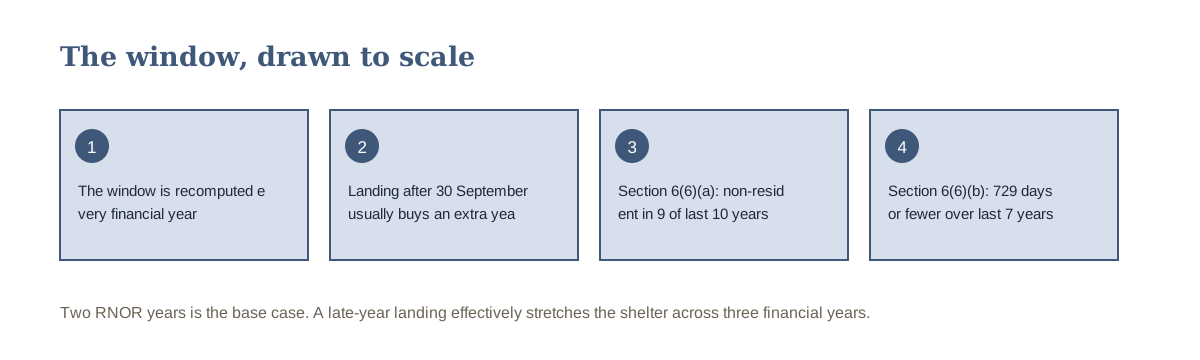
The reason a third year appears for some people is arithmetic, not luck. If you land in the second half of the Indian financial year — roughly after 30 September — you will usually be below 182 days for that year, so the landing year itself may still be a non-resident year. Your first resident year then starts the following April, and the two RNOR years run from there. That is effectively three financial years of shelter counted from the day you arrived.
The window can also be shorter than you expect. Long assignments back in India during your overseas years, frequent extended home visits, or a pattern of six-month stays can push you over the 729-day threshold and past the nine-of-ten test, killing RNOR in year one. This is why the day count has to be reconstructed from documents before you plan any large foreign-asset transaction.
Landing month versus RNOR window
These are the common patterns for someone who has been continuously non-resident for a decade. Verify against your own day count — a single long India assignment changes the answer.
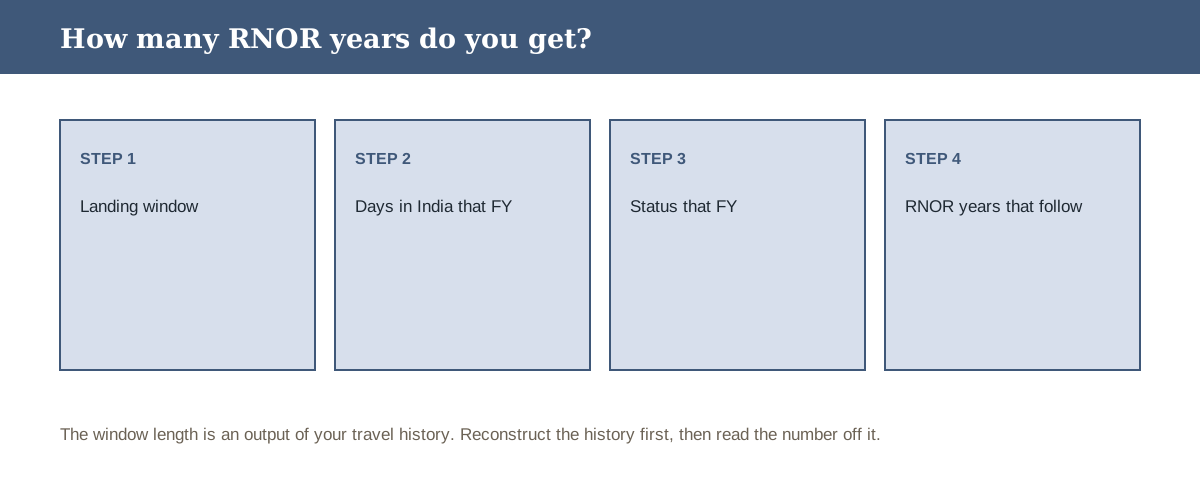
| Landing window | Days in India that FY | Status that FY | RNOR years that follow | Window closes |
|---|---|---|---|---|
| 1 April to 30 June | Usually well above 182 | Resident, and RNOR if Section 6(6) is satisfied | That year plus the next | End of the second financial year after landing |
| 1 July to 30 September | Usually above 182 | Resident, RNOR | That year plus the next | End of the second financial year after landing |
| 1 October to 31 December | Usually below 182 | Often still Non-Resident for that year | The next two financial years | Roughly three financial years from arrival |
| 1 January to 31 March | Clearly below 182 | Non-Resident for that year | The next two financial years | Roughly three financial years from arrival |
| Any month, but with heavy prior India travel | Varies | Resident | Possibly zero — both Section 6(6) tests may fail | Immediately; you may be ROR from year one |
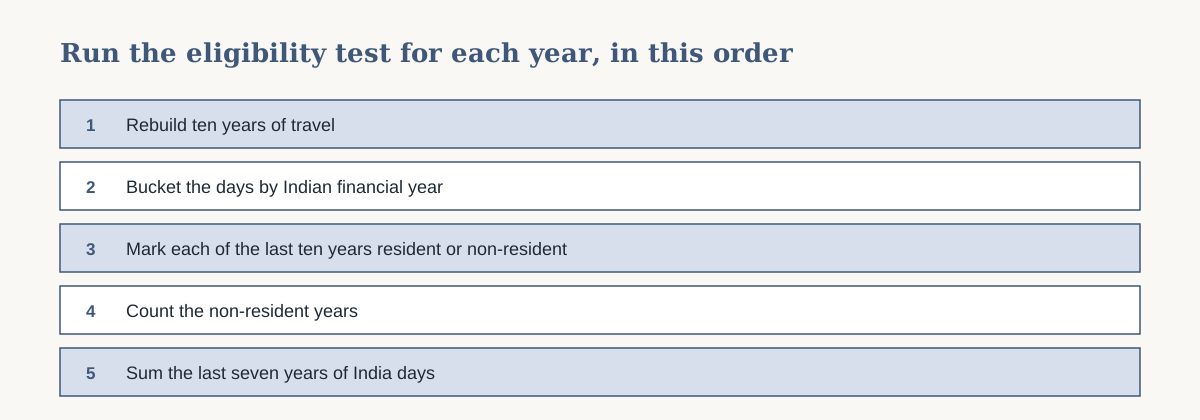
Run the eligibility test for each year, in this order
Do this once per financial year, not once per lifetime. The answer legitimately changes as the ten-year lookback rolls forward.
Rebuild ten years of travel
Pull every passport, including expired ones, plus any immigration or visa record you can access. Build one row per trip with arrival date, departure date and total days.
Bucket the days by Indian financial year
Split trips that straddle 31 March. A single trip can contribute days to two different financial years, and that split is often what decides the outcome.
Mark each of the last ten years resident or non-resident
Apply the 182-day test and the 60-day plus 365-day alternate test to every one of the ten preceding years. You need the labels, not just the day counts.
Count the non-resident years
Nine or more non-resident years out of the ten immediately preceding years satisfies Section 6(6)(a) and makes you Not Ordinarily Resident for the current year.
Sum the last seven years of India days
Add the days in India across the seven immediately preceding financial years. A total of 729 or fewer satisfies Section 6(6)(b), independently of the nine-of-ten result.
Roll the calculation forward one year
Repeat the whole thing for the next financial year with the window shifted. The year the test stops returning Not Ordinarily Resident is the year worldwide income becomes taxable.
Date the window and plan against it
Write the exact closing date on the plan. Foreign retirement withdrawals, foreign share sales and foreign property sales should be sequenced against that date, not against a vague sense of 'a couple of years'.
Before you assume you have an RNOR year
Every item here has changed someone's answer from 'two years of shelter' to 'none'.
- Every passport for the last ten years is physically in hand, including expired books.
- Trips that cross 31 March have been split across the correct financial years.
- Long India assignments during the overseas period have been counted, not ignored.
- Extended family visits, sabbaticals and work-from-India stretches are in the day count.
- The 60-day plus 365-day alternate residency test has been checked, not just the 182-day test.
- Both Section 6(6)(a) and Section 6(6)(b) have been computed separately.
- The deemed-resident provision has been checked if you have Indian-sourced income and no other tax residence.
- A closing date for the window is written down and shared with whoever advises on foreign assets.
- The plan for foreign asset sales is sequenced against that closing date.
The window, drawn to scale
Need help with Tax & Residency?
Share your blocker in one line. Our experts will reply with practical next steps.
Community signal: the two-versus-three-year question dominates
Unable to embed reddit content. View on reddit
"Return-planning threads keep circling the same question: how many RNOR years the landing month buys. The answer is always a day count, never a rule of thumb."
Read on reddit ->Forum signal: prior India assignments are the usual spoiler
"The most common way people lose the window is a forgotten multi-month India assignment during the overseas years. It shows up in passport stamps, not in memory."
Read on quora ->Year-by-year RNOR window diagram
Need help with Tax & Residency?
Share your blocker in one line. Our experts will reply with practical next steps.
Do not plan a foreign asset sale on an assumed window
Selling foreign shares or drawing a foreign retirement account one financial year later than planned can move the entire gain from an RNOR year into an ROR year, where India taxes it on a worldwide basis. Confirm the window with a computed day count before the transaction, not after.
The one-sentence answer
Most returnees get two RNOR financial years, a late-year landing can stretch the shelter across three, and heavy prior India travel can remove the window entirely — so compute Section 6(6) year by year instead of relying on the two-year folk rule.
Animated decision map

Need help with Tax & Residency?
Share your blocker in one line. Our experts will reply with practical next steps.
Interactive checkpoint
Turn this guide into a decision file
0 of 4 checked
How many years does RNOR status last?
Typically two financial years. If you land in the second half of the Indian financial year, the landing year is often still a non-resident year, which effectively spreads the shelter across about three financial years from arrival.
Who is eligible for RNOR status?
Anyone who is resident in India for the year and satisfies either Section 6(6)(a) — non-resident in nine of the ten preceding financial years — or Section 6(6)(b) — 729 days or fewer in India across the seven preceding financial years.
Can I get three years of RNOR?
In effect, yes, if you arrive late in the Indian financial year and stay below the residency threshold for that year. The landing year remains a non-resident year and the two RNOR years follow it.
Can I lose RNOR status in the first year itself?
Yes. If you spent long stretches in India during the overseas period, you may fail both the nine-of-ten test and the 729-day test, which makes you Resident and Ordinarily Resident from your first resident year.
Does the RNOR window depend on which country I return from?
No. Section 6 counts days in India. The country you are leaving affects treaty relief, exit taxes and reporting, but it does not change the Indian residency arithmetic.
Do days of arrival and departure count?
The standard practice is to count both the day of arrival and the day of departure as days of presence in India. Because the tests turn on exact thresholds, use documented dates rather than approximations.
How do I calculate the RNOR period myself?
Rebuild ten years of travel from passports, allocate days to Indian financial years, label each of the ten preceding years resident or non-resident, count the non-resident years, sum the seven-year day total, and re-run the test for each forward year until it fails.
Does RNOR eligibility get certified by anyone?
No authority issues an RNOR certificate. You self-declare the status in the residential-status schedule of your income tax return and keep the working papers as evidence.
What should I finish before the RNOR window closes?
Typically the foreign-side clean-up: retirement account decisions, foreign brokerage sales, stale account closures and any large foreign capital gain. Once you become Resident and Ordinarily Resident, India taxes worldwide income and the same transactions cost more.
Your tax year is already running.
RNOR status, exit timing, and DTAA benefits all depend on decisions you make before you land. Don't guess.