Return to India Jobs: How to Read and Negotiate an Offer
Reading an Indian cost-to-company structure, converting a foreign package into a comparable Indian one, what is genuinely negotiable, notice periods, equity, and the...
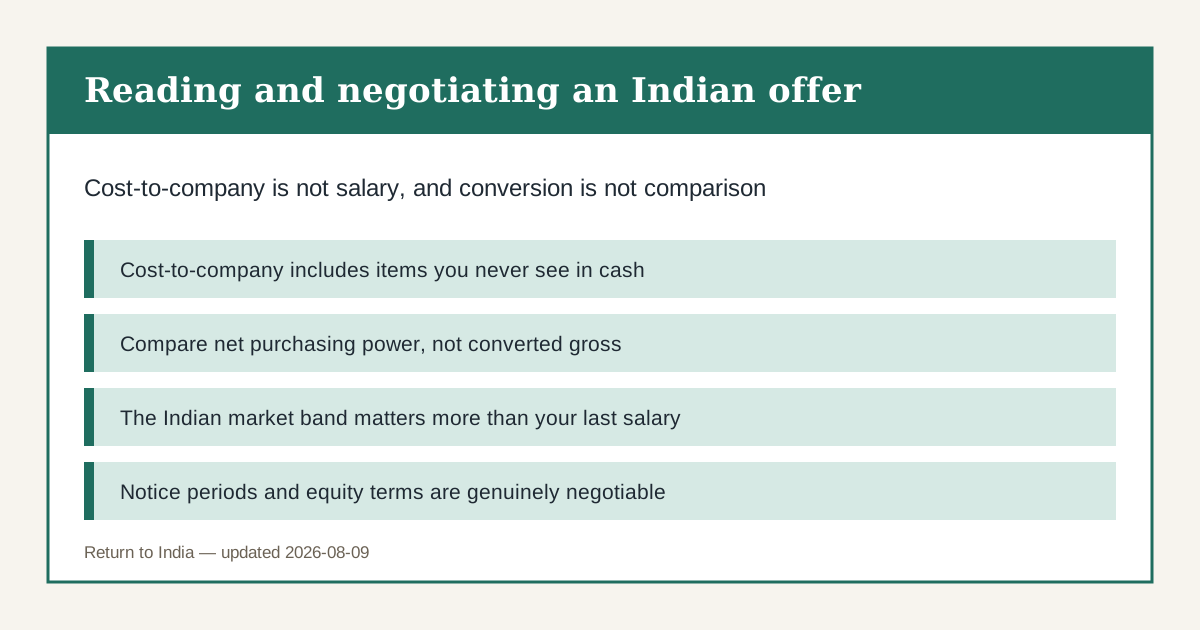
The 60-second version
Returning professionals lose money in Indian negotiations by comparing gross salaries across currencies instead of comparing net purchasing power after tax and cost structure, and by anchoring on their foreign number instead of on the Indian market band for the role.
Fast answer: stop converting your old salary
The first instinct of almost every returning professional is to convert their foreign salary into rupees and treat the result as a target. It is the single most damaging move in the negotiation, for two reasons. It anchors you to a number that has nothing to do with the Indian market for your role, and it invites the employer to explain why that number is unrealistic — which puts you on the defensive from the first conversation.
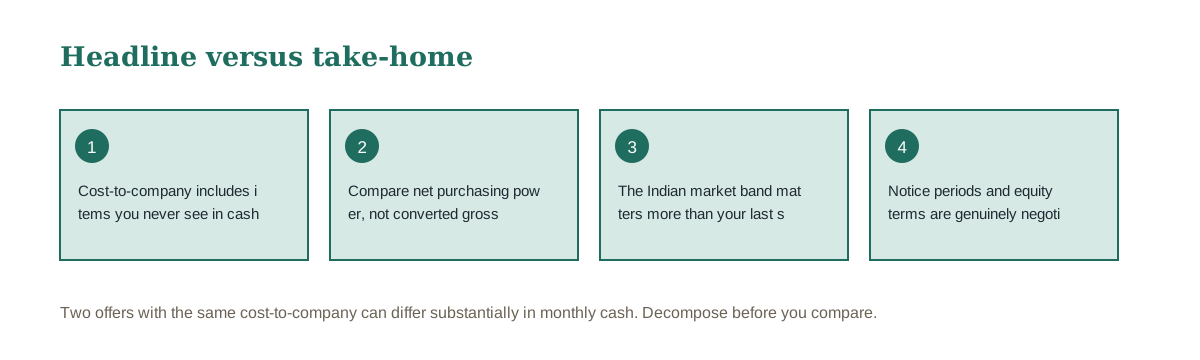
The second problem is structural. Indian offers are usually expressed as cost-to-company, which is not salary. It bundles fixed pay, variable or performance-linked pay, statutory contributions, benefits and sometimes notional items into a single headline figure. Two offers with identical cost-to-company can differ substantially in what actually reaches your bank account each month.
So the useful preparation is different. Establish the Indian market band for your role, level and city from multiple sources. Decompose any offer into its components and work out the monthly net. Compare offers on net purchasing power against your actual Indian cost base rather than on the headline figure. And treat the genuinely negotiable items — the fixed component, notice period, joining terms and equity treatment — as the levers, rather than trying to move the headline alone.
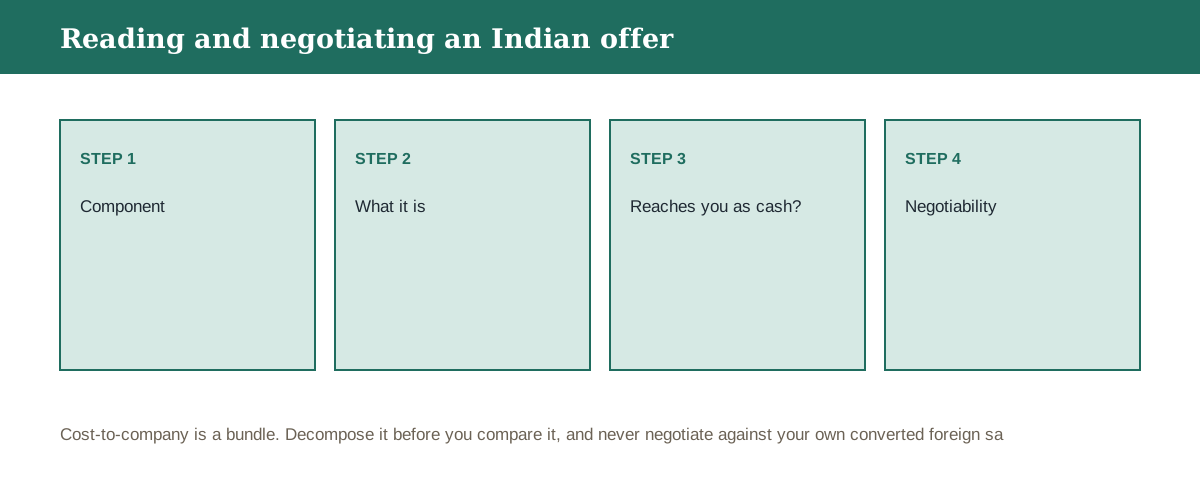
Decomposing an Indian offer
Ask for the full breakup in writing before responding to any offer. A single cost-to-company number is not enough to evaluate.
| Component | What it is | Reaches you as cash? | Negotiability |
|---|---|---|---|
| Fixed pay | Basic salary and fixed allowances | Yes, monthly, after tax deduction | The primary lever and the one to focus on |
| Variable or performance pay | Bonus linked to individual or company performance | Partly, and conditionally | Negotiable in structure; ask about historical payout rates |
| Retirement contributions | Employer provident fund and similar statutory contributions | No, it accrues to your retirement account | Structurally fixed, but the split affects take-home |
| Gratuity provision | A statutory end-of-service provision accrued notionally | Only on qualifying exit | Not usually negotiable; note it inflates the headline |
| Benefits | Health cover, life cover, meal or transport allowances | As benefits, not cash | Sometimes negotiable, especially family health cover |
| Equity or ESOPs | Options or units with a vesting schedule | Only on vesting and liquidity | Highly negotiable; the terms matter more than the quantum |
| Joining and relocation support | Sign-on payment, relocation allowance, temporary housing | Usually cash, often with a clawback period | Very negotiable, and often overlooked by candidates |
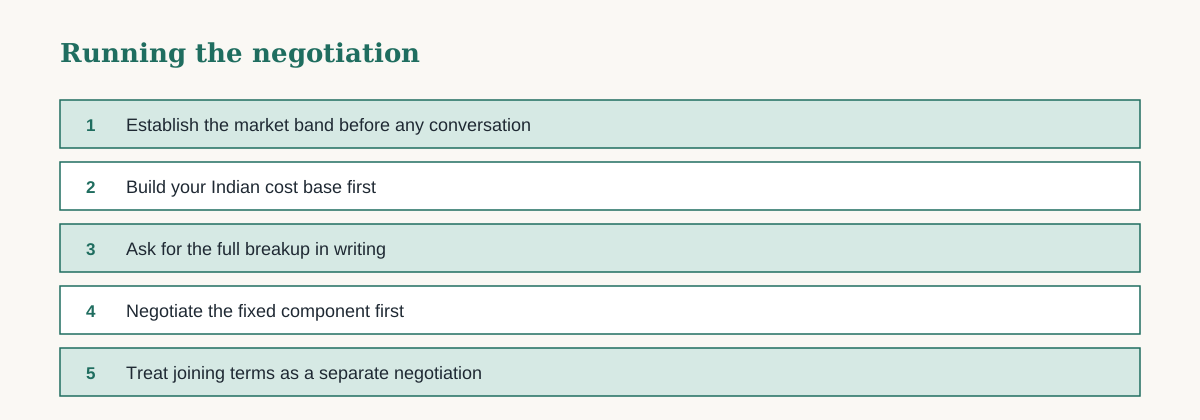
Running the negotiation
Six steps. The first is the one that decides how the rest go.
Establish the market band before any conversation
Role, level, city and industry. Use multiple sources — recruiters, peers who have moved recently, published salary data — and arrive at a band rather than a point.
Build your Indian cost base first
Rent in the target neighbourhood, school fees, healthcare, transport, help, utilities and savings target. This gives you a floor grounded in reality rather than in currency conversion.
Ask for the full breakup in writing
Every component, with the annual and monthly figures, plus an illustrative net take-home. Employers provide this routinely; not asking is what leaves candidates comparing incomparable offers.
Negotiate the fixed component first
It is the part that reaches you predictably, drives statutory contributions, and forms the base for future increases. A larger variable share flatters the headline without improving your position.
Treat joining terms as a separate negotiation
Relocation support, temporary accommodation, a sign-on payment and the start date are frequently more flexible than the salary itself, and they materially reduce the cost of the move.
Read the equity terms, not the equity number
Vesting schedule, cliff, exercise mechanics, what happens on exit, liquidity expectations and tax treatment. A large notional grant with poor terms is worth less than a smaller one with clean terms.
Check the notice period and exit terms
Indian notice periods are often longer than what you are used to, and buyout terms vary. This affects your flexibility for years, so read it before you sign rather than when you want to leave.
Offer evaluation checklist
Complete this before responding to any offer, not after.
- Market band established for your role, level, city and industry from at least three sources.
- Indian cost base built from actual rents, fees and quotes in the destination city.
- Full compensation breakup received in writing.
- Illustrative monthly net take-home figure obtained.
- Fixed versus variable split understood, with historical variable payout rates asked about.
- Retirement and gratuity components identified and excluded from cash comparisons.
- Health cover scope confirmed, including family and pre-existing condition treatment.
- Equity terms read in full — vesting, cliff, exercise, exit and tax treatment.
- Relocation and joining support negotiated as a separate item.
- Any clawback period on joining payments understood.
- Notice period and buyout terms read before signing.
- Offer compared against alternatives on net purchasing power, not headline figures.
Headline versus take-home
Need help with Move Planning?
Share your blocker in one line. Our experts will reply with practical next steps.
Community signal: candidates anchor on converted salaries
Unable to embed reddit content. View on reddit
"The most common negotiation failure is opening with a converted foreign figure, which immediately reframes the conversation around why it is unrealistic."
Read on reddit ->Community signal: notice periods surprise returnees
Unable to embed reddit content. View on reddit
"Indian notice periods are frequently longer than what returning professionals are used to, and buyout terms vary substantially between employers."
Read on reddit ->Offer evaluation diagram
Need help with Move Planning?
Share your blocker in one line. Our experts will reply with practical next steps.
A high variable share is not a high salary
Offers can be structured with a large performance-linked component that inflates the headline cost-to-company while reducing predictable monthly income. Ask what proportion of the variable component has historically been paid out, and negotiate the fixed portion accordingly.
The one-sentence answer
Do not convert your foreign salary — establish the Indian market band for your role and city, build a real Indian cost base, demand the full cost-to-company breakup with an illustrative monthly net, and negotiate the fixed component, joining terms and equity terms rather than the headline number.
Animated decision map

Need help with Move Planning?
Share your blocker in one line. Our experts will reply with practical next steps.
Interactive checkpoint
Turn this guide into a decision file
0 of 4 checked
How do I decide what salary to expect when returning to India?
Establish the market band for your role, level, city and industry from several independent sources, and build an Indian cost base from actual rents and fees. Converting your foreign salary produces a number unrelated to the Indian market for the role.
What is cost-to-company and why does it matter?
It is the total annual cost an employer attributes to employing you, bundling fixed pay, variable pay, statutory contributions, benefits and notional provisions. Two offers with identical cost-to-company can deliver very different monthly cash.
What part of an Indian offer is most negotiable?
The fixed component, joining and relocation support, and equity terms. Joining support in particular is often flexible and frequently left unasked for by candidates focused solely on the headline figure.
Should I accept a high variable component?
Only with information. Ask what proportion of the variable component has actually been paid out in recent years and on what criteria. A large variable share inflates the headline without improving predictable income.
How do Indian notice periods work?
They are often longer than in many other markets, and buyout provisions vary by employer. Read the clause before signing, because it constrains your flexibility for as long as you hold the role.
How should I evaluate an equity or ESOP grant?
Read the terms rather than the number — vesting schedule, cliff, exercise mechanics, what happens if you leave, realistic liquidity expectations and the tax treatment on exercise and sale.
Will my foreign experience command a premium?
Sometimes, particularly where the skill is scarce locally or the role is global in scope. It is not automatic, and presenting it as an entitlement rather than as demonstrated value tends to weaken rather than strengthen the position.
Should I ask for relocation support?
Yes, explicitly and as a separate conversation from salary. Relocation allowance, temporary accommodation and a start date that accommodates the move materially reduce the cost of returning and are frequently available.
How do I compare an Indian offer with staying abroad?
Compare net purchasing power against your actual cost base in each location, not converted gross figures. Include tax, housing, schooling, healthcare and savings rate in both cases to make the comparison meaningful.
The plan is only as good as the sequence.
Tax, banking, schools, shipping — they all have dependencies. A wrong order costs months and lakhs. Get it right.