IB vs IGCSE for Indian Students in USA Returning to India
Compare IB and Cambridge IGCSE for Indian students in the USA returning to India by grade entry, workload, exams, and support.
The 60-second version
The best curriculum is not the one with the most global branding. It is the one that fits the child's current academic language, family city choice, exam horizon, and likely undergraduate path.
The fast answer
IB can fit students who need inquiry-led learning, broad subject integration, and a global school environment. Cambridge IGCSE and A Levels can fit students who need subject clarity, exam portability, and a more modular path into Indian or overseas university admissions.
Returning from the USA is already a cultural, social, and academic transition. A child who is stable in one curriculum may struggle if the family chooses a board mainly for prestige, peer pressure, or the nearest school with an international label.
Decision table
Start with child fit and next exam horizon before comparing schools.
| Situation | Better default | What to verify |
|---|---|---|
| Child prefers project work and reflection | IB may fit | Check assessment load and teacher depth in that specific school. |
| Child needs subject-by-subject clarity | IGCSE/A Levels may fit | Check available subjects and Indian university recognition path. |
| Family may move again internationally | Either can work | Prioritize transcript portability and language continuity. |
| Indian entrance exams are likely | Cambridge or Indian boards may be simpler | Check whether coaching, school schedule, and exam load collide. |
| Child is entering Grades 9-11 | Avoid abrupt board switches | Ask for bridge support, placement tests, and academic counseling. |
Execution sequence
Choose the school only after this curriculum screen.
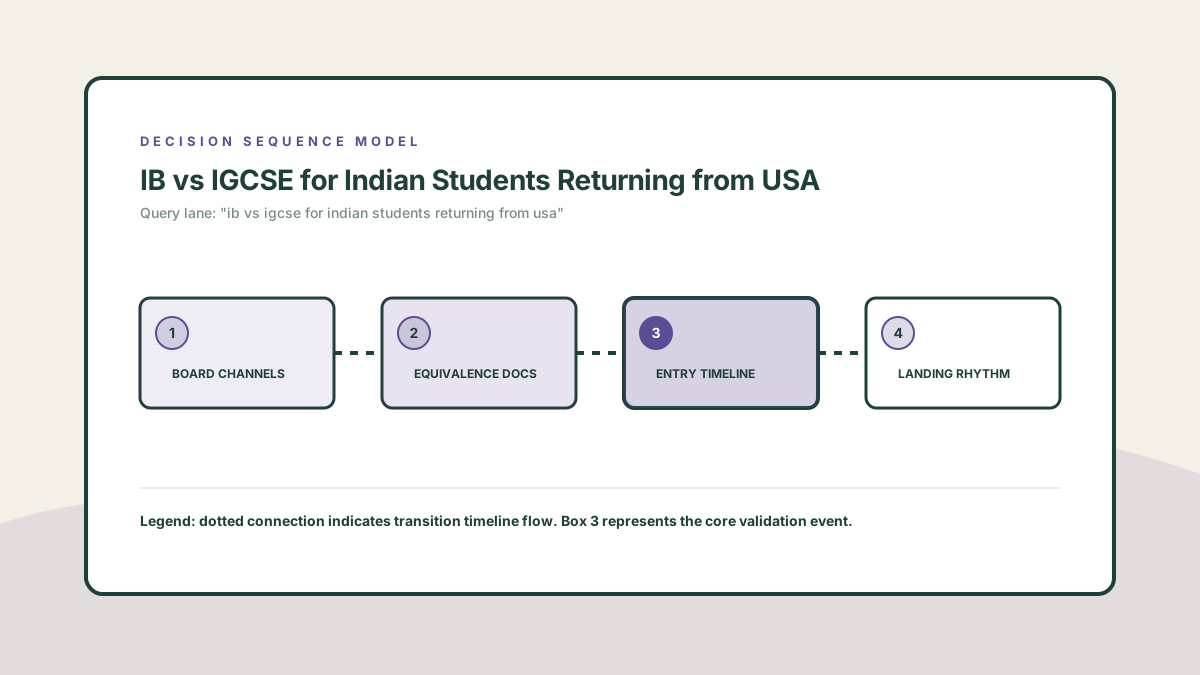
Map current US coursework
List math level, science track, writing ability, languages, and academic support needs.
Identify the next exam point
Risk changes if the child enters before Grade 8, during Grade 9, or close to Grade 11.
Check recognition and subject fit
Use official board recognition guidance, then ask schools for exact subject availability.
Interview the support system
Ask about bridge classes, counselor access, second-language support, and mid-year admissions.
Compare workload against family landing load
A demanding curriculum may still be wrong if housing, city, and social transition are unstable.
Before you commit
Before paying admission fees, get these answers from the school.
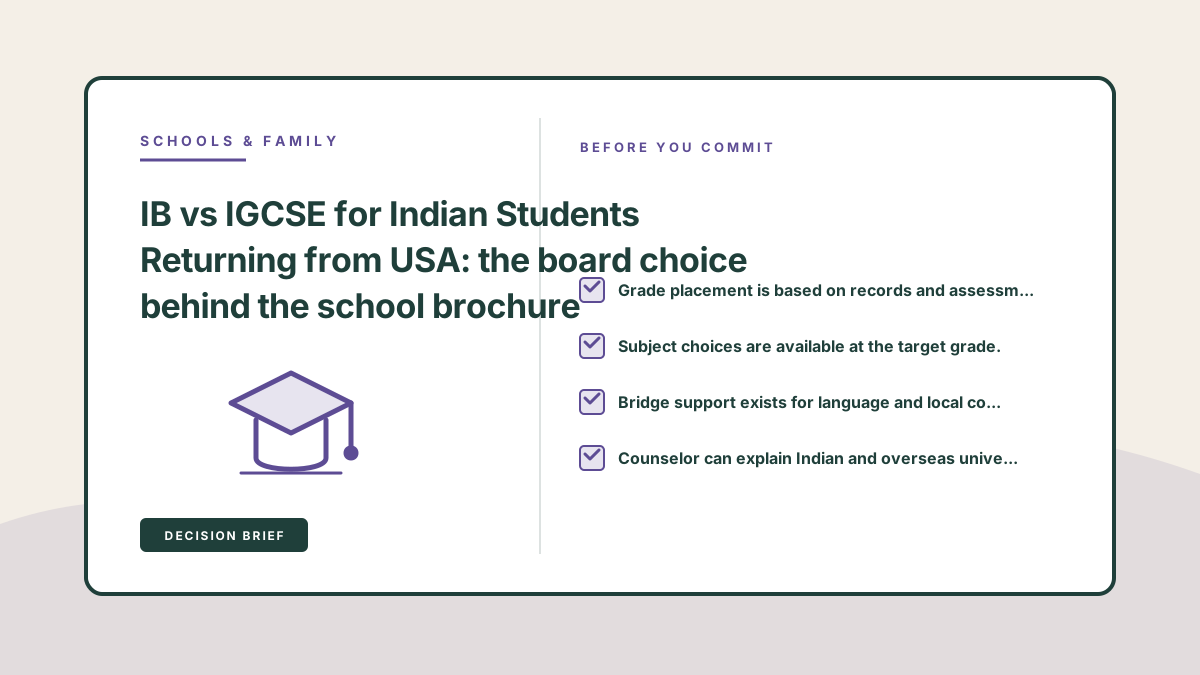
- Grade placement is based on records and assessment, not only age.
- Subject choices are available at the target grade.
- Bridge support exists for language and local context gaps.
- Counselor can explain Indian and overseas university implications.
- Assessment calendar does not collide with the family move timeline.
- The child has attended at least one trial, shadow, or counselor conversation where possible.
Animated curriculum fit map
Need help with Schools & Family?
Share your blocker in one line. Our experts will reply with practical next steps.
Curriculum fit map
The board is not the school
A strong curriculum in a weakly supported school is still a bad landing. Evaluate the campus implementation, not only the board name.
Animated decision map

Community signal
What to watch in real discussions
Treat repeated complaints as risk signals rather than official advice. This page does not link to community search results.
Interactive checkpoint
Turn this guide into a decision file
0 of 4 checked
Is IB better than IGCSE for returning Indian students?
Not universally. IB may fit inquiry-led learners, while Cambridge can fit students who need modular subjects and exam clarity. The child's grade and university path matter more.
Can an IGCSE student apply to Indian universities?
Cambridge publishes recognition guidance for India, but students still need to meet institution-specific subject and entrance requirements.
Is Grade 9 a risky time to switch boards?
It can be. Grade 9 often starts serious exam preparation, so placement, bridge support, and subject choice need extra attention.
Should US-returning children avoid Indian boards?
No. Some children do well in CBSE or ICSE, especially when Indian entrance exams are likely. The decision should be based on fit, not fear.
School admissions close fast — and some only take students in April.
Curriculum, timing, and location all need to be decided before you choose a neighborhood. Get clarity now.