IB and International School Admissions for NRI Kids (2026)
When international and IB schools in India open admissions, what fees total, which documents an overseas family needs, and whether IB is the right board.
The 60-second version
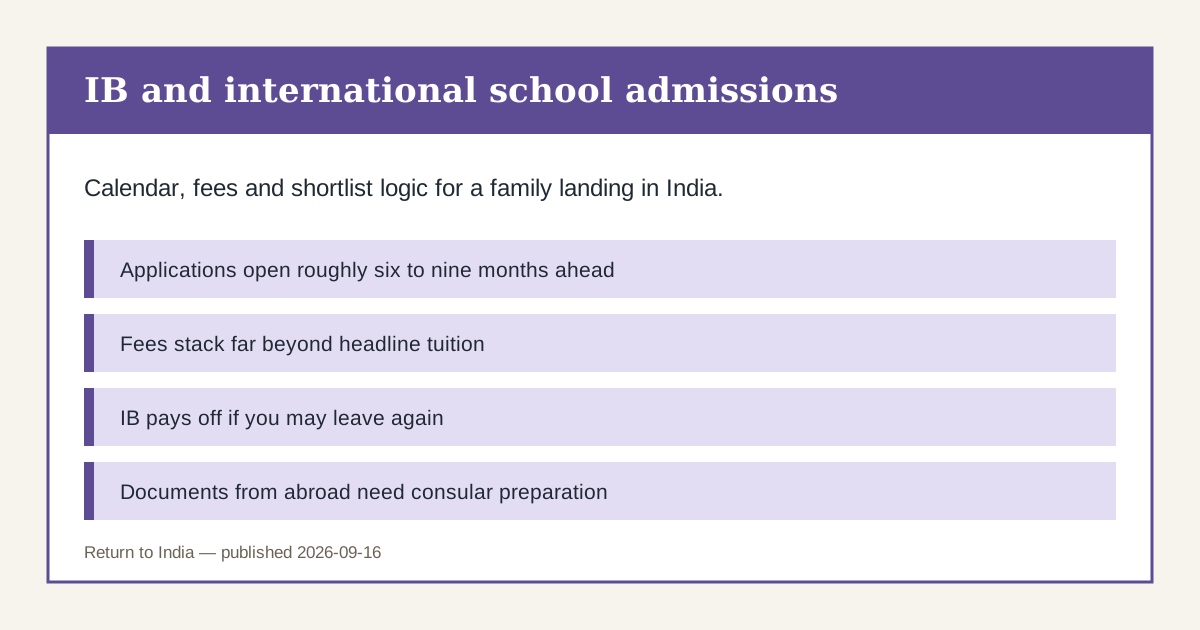
International-school admissions in India run on a rolling calendar with the heaviest intake for the June and August terms, so the decision window for a returning family is typically six to nine months ahead. Fees stack beyond tuition: admission, capital, transport, meals and annual charges. Whether IB is right depends on whether you plan to leave again, not on brand prestige.
The calendar decides more than the brochure does
Indian international schools run on rolling admissions, but the two heavy windows are the June term and the August term. Practically, the strongest seats are filled from applications made six to nine months earlier, which means a family planning a return for the middle of next year should be shortlisting now, not after the flights are booked. Mid-year entry exists almost everywhere, but it is capacity-dependent and usually means taking the seat that is left.
Fees are the second thing that surprises people. Tuition is the number on the website. The number you pay also includes a one-time admission or registration charge, an annual or capital fee, transport, meals, uniform and books, and often an annual activity or technology charge. Two IB schools with similar tuition can differ by a third in the first-year outlay, which is why the fee comparison has to be built from the full schedule rather than the headline.
On the board question — is IB good for NRI kids — the honest answer turns on your plan, not on prestige. IB's strength is portability: a student can move between IB schools across countries without a curriculum break, and the diploma is read the same way by admissions offices in several countries. If there is a realistic chance the family moves abroad again, or the child will apply to universities outside India, that portability is worth a premium. If the child is settling into India for the long run and will sit Indian competitive examinations, an Indian board with a strong science stream is usually the less disruptive and cheaper route.
One structural point that most parents only discover at the boundary: under Indian rules, an IB or Cambridge diploma is not automatically treated as equivalent to an Indian Class 12 certificate for every Indian entrance route. Equivalence is handled through the association that issues it. Build that into the plan early by reading this alongside the curriculum comparison.
Fee stack you should ask for in writing
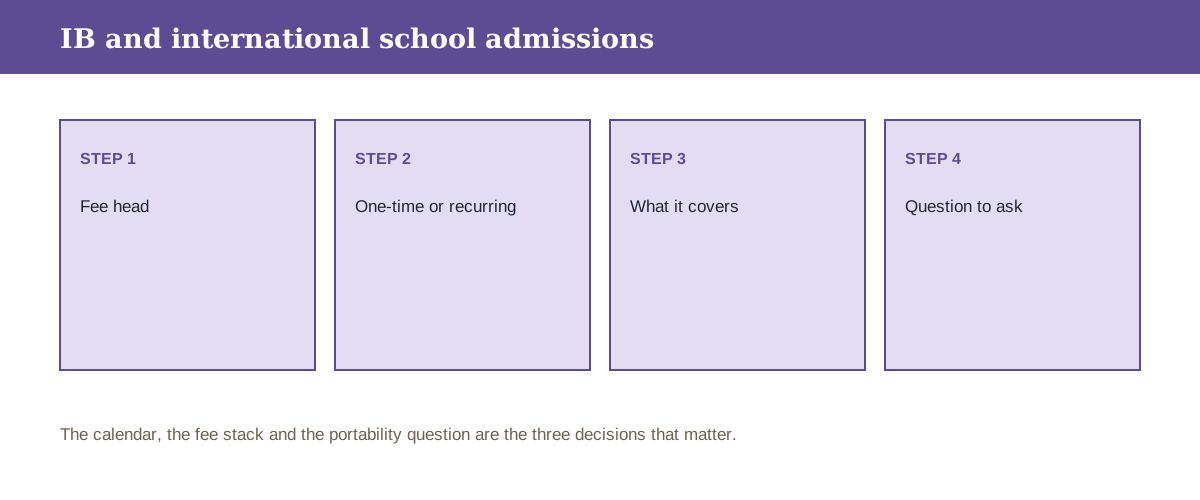
Request every line from the admissions office before comparing schools. The last two rows are the ones absent from most websites.
| Fee head | One-time or recurring | What it covers | Question to ask |
|---|---|---|---|
| Registration / admission | One-time | Application processing and seat confirmation | Is it refundable if the visa plan changes? |
| Capital or annual charge | One-time or annual | Infrastructure and campus | One-time, or billed every year? |
| Tuition | Per term or annual | Teaching | Number of terms and the escalation policy |
| Transport | Annual | Bus route to your area | Is my locality on a route at all? |
| Meals and uniform | Annual | Canteen and kit | Is it optional or bundled? |
| Books and materials | Annual | Workbooks and devices | Laptop or tablet mandatory? |
| Exam and IB registration | At milestone years | Board registration | Payable in which year, and in which currency? |
| Refund policy | On exit | Partial recovery | What is forfeited if you leave mid-term? |
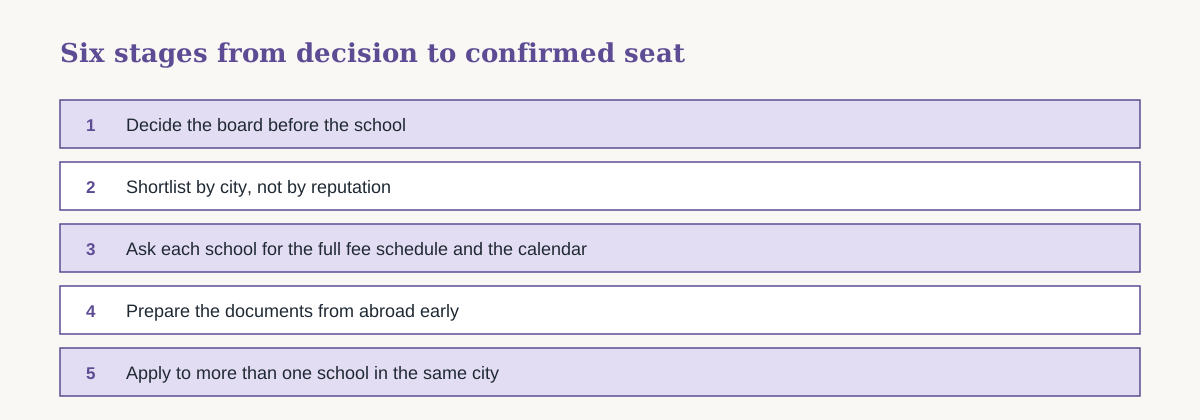
Six stages from decision to confirmed seat
Work backwards from your landing month. The stages below are why families who start early get the seat they wanted.
Decide the board before the school
Answer the portability question first: might the family leave India again, and will the child apply abroad? The board choice follows from that, not from a ranking list.
Shortlist by city, not by reputation
Restrict to the two or three areas you will actually live in. Transport time is the single most underweighted factor in Indian international-school decisions.
Ask each school for the full fee schedule and the calendar
In writing, including the refund policy and the escalation history. Compare the first-year total rather than the tuition line.
Prepare the documents from abroad early
Previous school records, transcripts, transfer certificates and identity documents often need attestation or consular legalisation. This is the step that slips past families.
Apply to more than one school in the same city
Capacity at a specific year group is the binding constraint, not your child's profile. Two applications in the same city is normal practice, not over-application.
Confirm the seat and the fee terms in writing
Before you pay, get the seat confirmation, the fee schedule and the refund terms on paper. Then keep the whole file with your relocation documents.
International-school application pack
Assemble this before you contact any admissions office and the process halves.
- Child's passport, visa record and, if held, OCI documentation
- Last two years of school reports and transcripts
- Transfer or leaving certificate from the current school
- Attestation or consular legalisation where the school requires it
- Passport photographs to Indian specification, not the previous country's size
- Your address plan in India, even if temporary
- Written fee schedule and refund policy from each shortlisted school
- Seat-confirmation letter before any payment is made
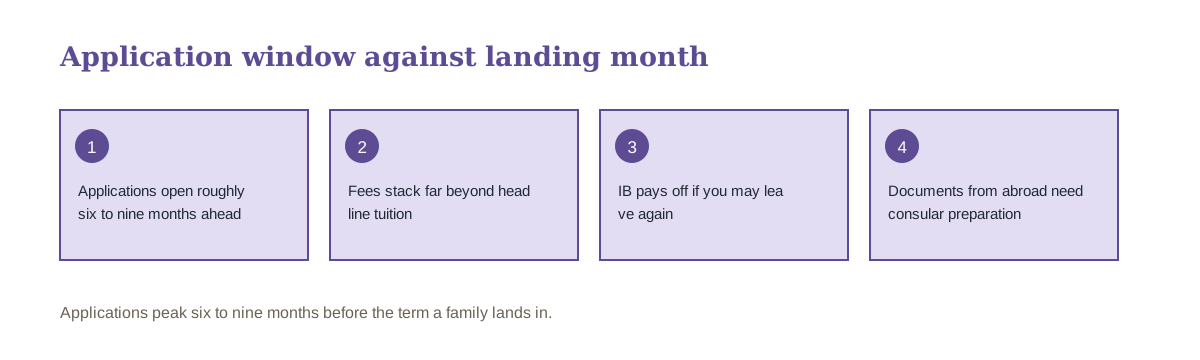
Application window against landing month
Need help with Schools & Family?
Share your blocker in one line. Our experts will reply with practical next steps.
Podcast: raising OCI kids and schooling in India
"A family conversation about what actually happened when children educated abroad moved into Indian schools."
Read on youtube ->Community explainer: the return rules around children and status
"The wider set of rules that shape a family return, useful context before you commit to a board."
Read on youtube ->Shortlist to seat
Need help with Schools & Family?
Share your blocker in one line. Our experts will reply with practical next steps.
Check equivalence before you commit to a diploma path
An IB diploma or a Cambridge qualification is not automatically treated as identical to an Indian Class 12 certificate for every Indian entrance route. Equivalence is handled through the issuing association. Confirm the specific route your child might need before you build four years around a board.
The one-sentence answer
International-school admissions in India are rolling but concentrated around the June and August terms, so apply six to nine months ahead, compare the full first-year fee stack rather than tuition, and choose IB on portability rather than prestige.
Animated decision map
Need help with Schools & Family?
Share your blocker in one line. Our experts will reply with practical next steps.
Interactive checkpoint
Turn this guide into a decision file
0 of 4 checked
Is IB good for NRI students in India?
IB is a good fit if the family may move countries again or the child is likely to apply to universities outside India, because the curriculum transfers without a break. If the child will sit Indian competitive examinations and settle long-term, an Indian board is usually the less disruptive and cheaper route.
When do international schools in India open admissions?
Admissions are rolling, with the heaviest intake for the June and August terms. Strongest availability goes to applications made six to nine months earlier. Mid-year entry depends on capacity in the specific year group.
What is the real total cost of an IB school in India?
Add registration or admission, capital or annual charges, tuition, transport, meals, uniform, books, and board registration fees at milestone years. Two schools with similar tuition can differ substantially in first-year outlay, so ask for the whole schedule in writing.
Are IB schools in India only for foreign nationals?
No. Indian students attend international schools in large numbers. Several schools do reserve a portion of seats for foreign nationals and overseas-citizen applicants, which is a separate admission route worth asking about.
Do OCI children need a student visa to attend school in India?
An OCI cardholder does not need a student visa for study in India. Keep the OCI documentation current and carry the passport that matches it, since admissions offices verify the identity documents against each other.
What documents do I need from the previous school abroad?
The last two years of reports, a transfer or leaving certificate, and transcripts where the school asks for them. Some schools require attestation or consular legalisation, and that takes weeks rather than days.
Can my child start mid-year?
Usually yes if the year group has capacity, but placement is on the seat available rather than the seat you want. If the term matters, apply to several schools in the same city.
How do I compare two IB schools that look identical on paper?
Compare the full first-year fee, the escalation history, the transport time from your actual locality, the student-teacher ratio in the specific year group, and the university destinations of the last two graduating cohorts.
Is Cambridge or IB better for an NRI child?
Both are international and portable. Cambridge is often described as more structured and examination-led; IB is broader and assessment-heavy across components. The right answer depends on how the specific child learns, which is why visiting the school matters more than the comparison table.
What happens if we move abroad again after two years?
That is the scenario IB is genuinely strong in, because the child continues in the same framework elsewhere. It is also the scenario to raise with the school at admission, so you understand the transfer and refund terms in advance.
School admissions close fast — and some only take students in April.
Curriculum, timing, and location all need to be decided before you choose a neighborhood. Get clarity now.