Best International Curriculum in India: IB, IGCSE, CBSE, ICSE
How to choose between IB, Cambridge IGCSE, CBSE and ICSE when your child is arriving mid-schooling from abroad — continuity, assessment style, university pathways,...
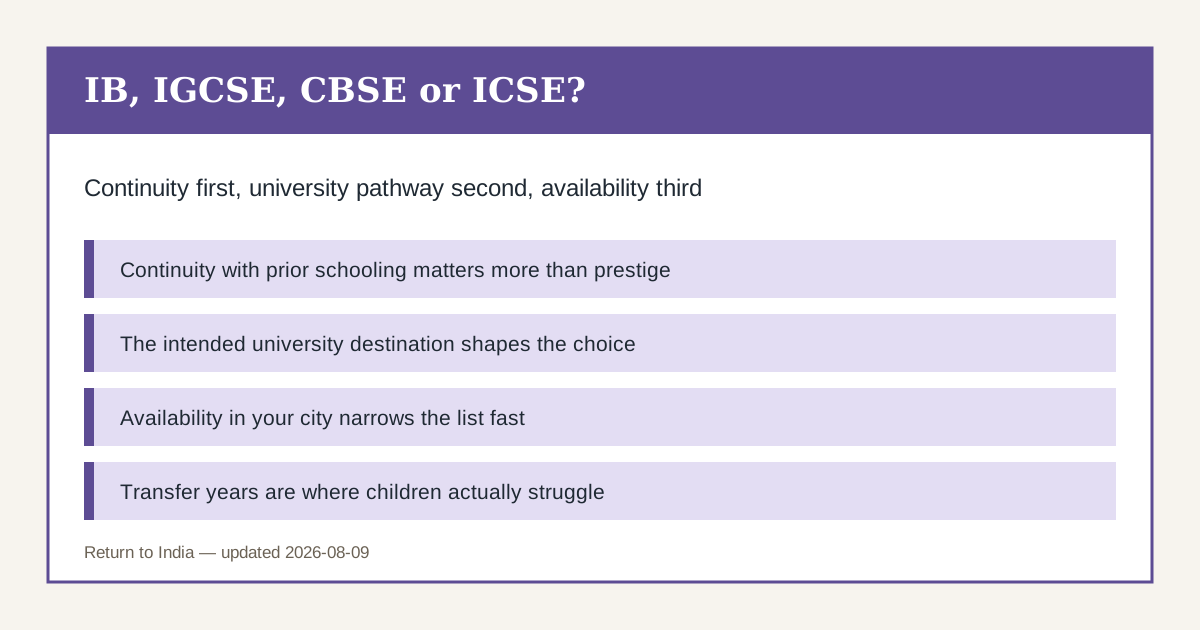
The 60-second version
There is no best curriculum, only the best fit for a specific child at a specific point in their schooling. The variables that matter most for returning families are continuity with what the child has been doing, the intended university destination, and what is actually available in your city.
Fast answer: pick for continuity and destination, not for reputation
Parents arriving from abroad usually approach this question as a ranking exercise — which curriculum is best. It is the wrong frame. Each of the four is capable of producing excellent outcomes, and each has produced students who struggled. What actually determines how well a returning child does is how far the new system sits from what they have been doing, and how much support the transfer year gets.
Continuity is the strongest single predictor. A child who has been in a broad, inquiry-led system and is dropped into a content-dense, examination-focused one mid-secondary faces a genuine adjustment, and the reverse is also true. Where the child's prior curriculum has a natural counterpart in India, that counterpart is usually the lower-risk choice regardless of which system looks more impressive.
Two further variables narrow the list quickly. The intended university destination matters because pathways and recognition differ, and because certain Indian entrance routes are heavily aligned to specific syllabi. And availability is a brutal filter — the number of schools offering a given curriculum in your specific city, with seats in your child's year group, at a fee level you accept, is often very small.
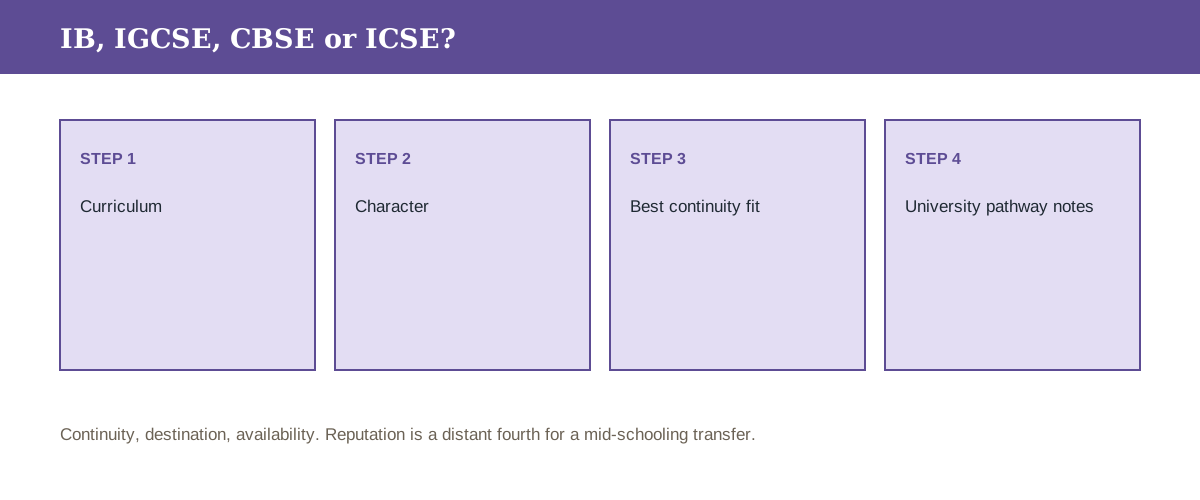
The four curricula compared for a returning family
Read the continuity and transfer-risk columns first. They matter more than the assessment description for a child arriving mid-schooling.
| Curriculum | Character | Best continuity fit | University pathway notes | Transfer risk |
|---|---|---|---|---|
| International Baccalaureate | Inquiry-led, broad, with an emphasis on written work, research and internal assessment | Children arriving from inquiry-based or international systems | Widely recognised internationally; check equivalence for Indian admissions | Lower for children from similar systems; higher from content-dense ones |
| Cambridge IGCSE and A Level | Subject-focused, modular, with externally examined subject certificates | Children arriving from British-pattern schooling | Recognised widely; check equivalence requirements for specific Indian routes | Lower from British-pattern systems; moderate otherwise |
| CBSE | Content-dense, nationally standardised, closely aligned to Indian competitive entrance syllabi | Children likely to sit Indian competitive entrance examinations | The most direct alignment with common Indian entrance routes | Higher for children arriving from broad, inquiry-led systems |
| ICSE and ISC | Broad and detailed, with strong emphasis on English and internal assessment | Children who want breadth within an Indian framework | Well recognised for Indian and many international routes | Moderate; the volume of content surprises transferring students |
| Open schooling | Flexible, self-paced, examination-based | Children with an interrupted or unusual academic path | Recognised, but check acceptance for specific onward destinations | Useful as a bridge for a difficult transfer year |
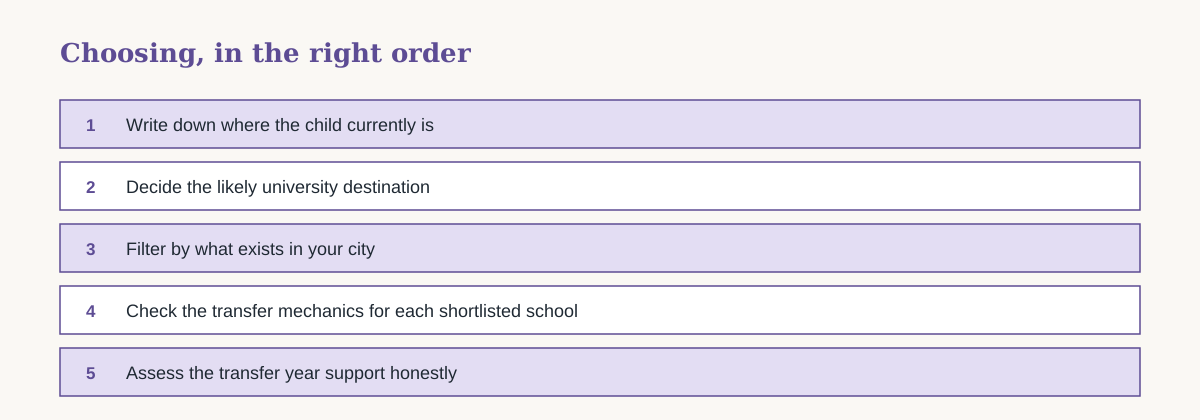
Choosing, in the right order
This sequence stops families falling in love with a school before checking whether their child can actually get in and cope.
Write down where the child currently is
Curriculum, year group, subjects taken, assessment style they are used to, and any subjects they are already behind or ahead in. This is the baseline for every subsequent decision.
Decide the likely university destination
Indian competitive entrance routes, Indian university admission generally, or overseas universities. Each pulls in a different direction, and being honest about it early narrows the choice usefully.
Filter by what exists in your city
List the schools offering each curriculum in your specific city, then eliminate those without seats in the child's year group. The list usually shrinks dramatically.
Check the transfer mechanics for each shortlisted school
Transfer certificate requirements, any equivalence documentation needed, subject prerequisites, and whether the school will admit mid-year or only at year boundaries.
Assess the transfer year support honestly
Ask what specific support exists for a student arriving from another system — bridging, subject catch-up, language support if applicable, and pastoral support. Generic reassurance is not an answer.
Weigh fees over the full remaining schooling
Model the total to the end of schooling including annual increases, not the first year's fee. Changing curriculum again later because of cost is worse than choosing a cheaper option now.
Let the child weigh in
For secondary-age children, the social and academic transition is theirs to live through. A child who has been part of the decision adjusts measurably better than one who has not.
Curriculum decision checklist
Complete this before applying anywhere. It prevents the most common mid-transfer problems.
- Child's current curriculum, year group and subject list written down.
- Assessment style the child is accustomed to identified.
- Subjects where the child is ahead or behind noted honestly.
- Likely university destination discussed and agreed as a family.
- Schools offering each curriculum in the destination city listed.
- Seat availability in the child's year group confirmed for each.
- Transfer certificate and documentation requirements confirmed per school.
- Equivalence requirements checked where relevant to the onward pathway.
- Mid-year versus year-boundary admission policy confirmed.
- Specific transfer-year support described in writing by each shortlisted school.
- Full remaining-schooling fee modelled, including annual increases.
- Child consulted, and their view recorded.
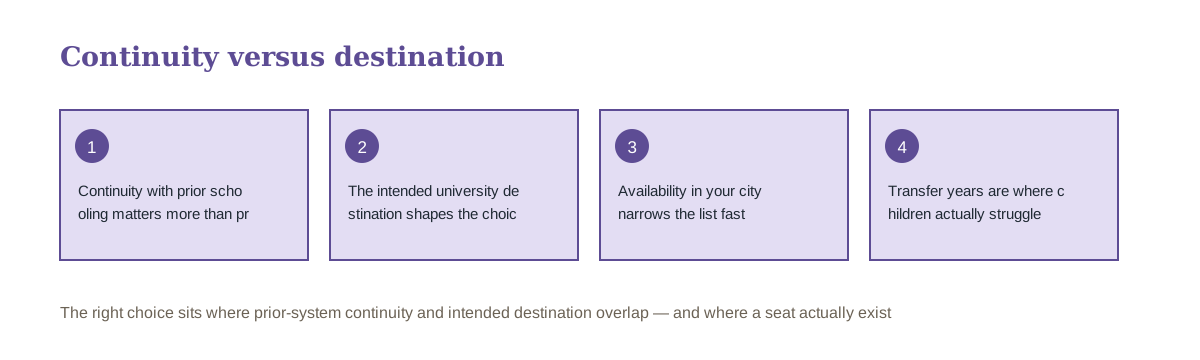
Continuity versus destination
Need help with Schools & Family?
Share your blocker in one line. Our experts will reply with practical next steps.
Community signal: the transfer year is the hard part
Unable to embed reddit content. View on reddit
"Families consistently report that the curriculum itself mattered less than how much support the school provided during the first transfer year."
Read on reddit ->Community signal: availability decides more than preference
"Parents often plan around a preferred curriculum and then discover that no school in their city has a seat in the required year group."
Read on quora ->Curriculum selection diagram
Need help with Schools & Family?
Share your blocker in one line. Our experts will reply with practical next steps.
Do not change curriculum twice
A second curriculum change part-way through secondary schooling is substantially harder than the first, and it is usually driven by fees or a school choice made without checking availability and support. Model the full remaining schooling cost and confirm transfer support before committing.
The one-sentence answer
Choose an Indian curriculum for continuity with what your child has already been doing, for the university destination you actually intend, and for what is genuinely available with seats in your city — then interrogate each shortlisted school on the specific support it provides during the transfer year.
Animated decision map
Need help with Schools & Family?
Share your blocker in one line. Our experts will reply with practical next steps.
Interactive checkpoint
Turn this guide into a decision file
0 of 4 checked
Which is the best international curriculum in India?
There is no single best. The right choice depends on continuity with your child's prior schooling, the intended university destination, and which curricula are actually available with seats in your city and year group.
Is IB better than IGCSE for a child returning from abroad?
Neither is inherently better. IB tends to suit children arriving from inquiry-led systems, while Cambridge IGCSE suits those from British-pattern schooling. The stronger predictor of a smooth transfer is continuity, not the label.
Will an international curriculum limit Indian university options?
International qualifications are widely accepted, but specific admission routes may require equivalence documentation, and some Indian competitive entrance examinations align closely with particular syllabi. Check requirements with the receiving institutions directly.
Is CBSE a disadvantage for overseas universities?
No. CBSE qualifications are recognised by universities internationally. What matters more is the strength of the academic record, subject choices and any additional requirements the destination institution sets.
How hard is it to switch curriculum mid-secondary?
It varies with the distance between the systems and the year group. Switching close to a public examination year is the most difficult. Ask each school specifically what bridging and catch-up support it provides.
What documents do I need to transfer my child?
Typically a transfer certificate from the previous school, academic records, and in some cases equivalence documentation for the onward pathway. Requirements vary by school and board, so confirm them individually.
Can my child join mid-academic-year?
Some schools admit mid-year and others only at year boundaries. This is one of the first things to confirm, because it can determine your entire landing timeline.
How should I compare school fees?
Model the total cost to the end of schooling, including expected annual increases and non-tuition charges, rather than comparing first-year tuition. Changing schools later because of cost is more disruptive than choosing affordably now.
Should my child be part of the decision?
For secondary-age children, yes. They live the social and academic transition, and children who have been genuinely consulted consistently adjust better than those presented with a completed decision.
School admissions close fast — and some only take students in April.
Curriculum, timing, and location all need to be decided before you choose a neighborhood. Get clarity now.